
Mini fridges are one of those appliances you don’t think much about until one suddenly stops cooling during a heatwave or right before a party. I’ve owned everything from cheap dorm-style cubes to sturdier under-counter units, and their lifespans have been… all over the place.
Because mini fridges are often used in tighter spaces and harsher conditions than full-size units, their lifespan can vary a lot more than people expect.
If you’re wondering how long a mini fridge should last (and how to tell when yours is nearing the end) here’s the breakdown I wish I’d known years ago.
The Short Answer: Most Mini Fridges Last 4-12 Years
That’s a big range, I know.
In my experience, the lifespan depends mostly on build quality, compressor type, and how the fridge is used. The tiny cube models tend to land on the shorter side, while sturdier compressor-driven units often run close to a decade or more.
A good general rule:
- Budget cube fridge: 3-5 years
- Mid-range compressor mini fridge: 6-10 years
- Higher-end under-counter unit: 10-12 years (sometimes longer)
If you’re already past year six with a small, inexpensive model, you’re doing better than most.
What Actually Determines a Mini Fridge’s Lifespan
A lot of people assume it’s all random, but there are a few predictable factors.
How Well the Fridge Is Built
Most of the sub-$150 mini fridges cut corners somewhere. Thin insulation, weaker compressors, or plastic components that wear out sooner. They’re fine for light use, but they rarely go the distance.
Mid-range models with metal interiors, better seals, and stronger compressors just hold up better over time.
Where You Keep It
This is the part most people underestimate.
Mini fridges hate heat. If you stick one in a tight cabinet, a garage in summer, or next to a radiator, it has to work twice as hard. That extra strain is one of the fastest ways to shorten its life.
I once burned out a dorm fridge in under three years just by keeping it under a counter with no airflow. Lesson learned.
How Often You Open It
Every time you open the door, warm air rushes in and the compressor has to cool everything again. Not a huge deal for a couple of drinks, but in shared spaces (like dorm rooms) the extra work adds up.
How Full It Stays
A mildly stocked fridge runs more efficiently because the cold items help stabilize temperature. A nearly empty one cycles more often, wearing down the compressor. This isn’t a massive factor, but it does matter over years of use.
Routine Maintenance
Mini fridges don’t need much, but the little they do need can make a big difference:
- Cleaning the coils if accessible
- Keeping the door seal clean
- Defrosting manually if it’s not frost-free
Skipping these won’t kill your fridge instantly, but it reduces longevity over time.
Signs Your Mini Fridge Is Nearing the End
Some issues are fixable. Others are warnings that the fridge is almost done. Here’s what I look for.
It Runs Constantly
A healthy fridge cycles on and off. If yours sounds like it never takes a break, the compressor may be struggling. If you’re unsure what normal behavior looks like, understanding typical refrigerator run cycles helps clarify when constant running is actually a problem.
Temperature Swings
If you’re finding half-warm drinks or ice forming where it shouldn’t be, the internal thermostat or cooling system may be wearing out.
Excessive Noise
Mini fridges aren’t silent, but loud humming, clicking, or rattling often signals compressor trouble.
The Exterior Gets Hot
Warm is normal. Hot to the touch on the sides or back is not. That usually means the cooling system is working overtime.
Rising Energy Use
Older fridges can start pulling more power as components wear down. You’ll feel this especially with older low-cost models.
If you’re noticing two or three of these symptoms at once, it’s usually more cost-effective to replace the fridge than repair it.
Situations Where Mini Fridges Wear Out Faster
From what I’ve seen (and unfortunately lived through), these setups shorten lifespan the most:
- Storing the fridge in a garage or uninsulated shed
- Using it outdoors or on covered patios
- Setting it directly on carpet
- Keeping it jammed into a tight cabinet with no ventilation
- Overloading it with warm items all at once
Mini fridges are at their best when they can breathe and maintain steady temperatures.
How to Make Your Mini Fridge Last Longer
You can realistically squeeze a couple extra years out of a decent unit with a few simple habits.
Give It Space
If possible, leave at least a few inches of clearance on the sides and back. Better airflow means less strain.
Level It
A fridge that tilts even slightly can make the compressor work harder. It also affects door seals over time.
Check the Door Seal
A weak or dirty seal leaks cold air. Wipe it down and make sure nothing is wedged in the gasket.
Don’t Overpack It
Stuffing the fridge blocks airflow inside. Try to leave space at the back so the cold air can circulate.
Keep It Clean Underneath
Dust buildup on the coils or vents acts like a blanket. A quick vacuum around the back once in a while helps a lot.
When It’s Worth Repairing (And When It’s Not)
Repairs on mini fridges are rarely cost-effective. A technician visit often costs more than a brand-new fridge. The only repairs that might be worth doing yourself:
- Replacing a broken shelf or hinge
- Swapping a bad thermostat (only if you’re handy)
- Fixing a damaged door seal
But if the compressor is failing, it’s almost always time to replace the unit.
Thinking About Replacing Yours? Here’s a Practical Tip
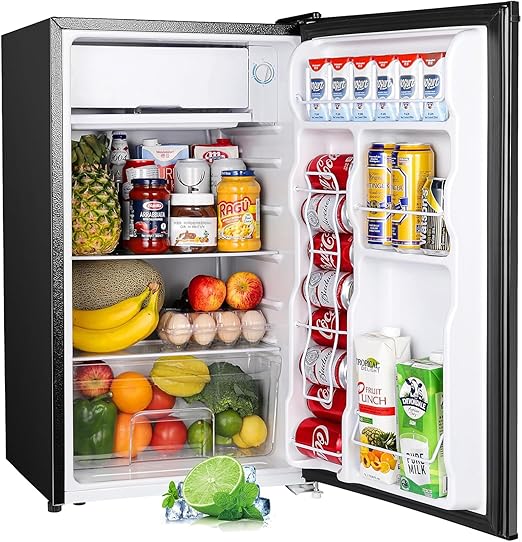
If your mini fridge is older than six years and starting to show signs of aging, it may be cheaper in the long run to upgrade. Modern models are more energy-efficient and hold temperature better anyways. Here’s one I often recommend:
Top PickUpstreman 3.2 Cu Ft Mini Fridge$159.99A compact single door mini fridge with a built in freezer and adjustable thermostat. Great for bedrooms, dorms, offices, or any small space that needs reliable cooling without taking up much room.
 04/02/2026 08:01 pm GMT
I usually recommend upgrading before the old one fully dies, especially if you rely on it for medications, breast milk, or anything temperature-sensitive.
Common Questions People Ask About Mini Fridge Lifespan
Do mini fridges last as long as full-size refrigerators?
Not usually. Full-size models can last 12-18 years. Mini fridges work harder in smaller bodies and have less robust components.
Do mini fridges run all the time?
They shouldn’t. If yours does, it’s either poorly ventilated or wearing out.
Can I leave a mini fridge on 24/7?
Yes. They’re designed for continuous use. Just keep the back ventilated.
Does unplugging the fridge at night help?
No. It makes the compressor work harder the next day to cool everything again.
My Honest Take After Owning Many
If you buy a low-cost mini fridge, expect 3-5 years. If you invest a bit more and treat it well, 8-12 years is very realistic.
The biggest difference I’ve noticed? Usage. My lightly used office fridge lasted more than a decade. My overstuffed dorm fridge barely made it to year three.
If you’re deciding whether to repair, replace, or keep limping along with yours, the signs above should help you make the call.
No comment