
If you’ve just plugged in a mini fridge and you’re standing there wondering whether it’s actually doing anything, you’re not alone. This is one of the most common questions people have after setting one up. And honestly, the answer isn’t as simple as “wait an hour.”
I’ve used mini fridges in dorm rooms, home offices, garages, and even as overflow drink fridges during holidays. They all cool a little differently. Some feel cold surprisingly fast. Others take their sweet time.
Let’s break down what’s normal, what affects cooling time, and when you should actually worry.
The Short Answer
Most mini fridges take between 4 and 8 hours to feel properly cold. To reach their final, stable temperature, especially if you want food-safe cold, plan on up to 24 hours.
If your fridge feels cool after an hour, that’s a good sign. It just doesn’t mean it’s done yet.
What “Cold” Really Means
A lot of confusion comes from what people expect “cold” to feel like.
When manufacturers talk about a fridge being cold, they usually mean it has reached around 37–40°F (3–4°C) inside. That’s the safe zone for food.
Your hand, on the other hand, will notice a temperature change much earlier. The walls might feel cool within the first hour, even though the air inside is still too warm for milk or leftovers.
In my experience, drinks get noticeably chilled before food is truly safe. That’s normal.
Typical Cooling Timeline
Here’s a realistic timeline for most mini fridges.
First 30–60 minutes:
The compressor kicks on. You may hear humming or clicking. The inside walls start to feel cool.
2–4 hours:
The fridge feels cold when you open it. Drinks begin to chill. This is where many people assume it’s “ready,” but it’s not fully there yet.
6–8 hours:
Internal temperature is much closer to food-safe. Lightly stocked fridges often hit this range faster.
12–24 hours:
The fridge reaches and maintains its target temperature. This is when it’s fully stabilized.
If you’re storing anything perishable, waiting overnight is the safest move.
Factors That Affect How Fast a Mini Fridge Gets Cold
Not all mini fridges cool at the same speed. A few small details make a big difference.
Size and Capacity
Smaller fridges usually cool faster. A compact 1.7-cubic-foot model has less air and space to chill than a larger 4.5-cubic-foot unit.
That said, bigger mini fridges often have better compressors, which can even things out.
Empty vs. Full
An empty fridge cools faster at first, but it doesn’t hold temperature as well.
A fully stocked fridge takes longer to cool down initially, especially if you load it with room-temperature drinks. Once it’s cold, though, the contents help keep it stable.
If I’m setting up a new mini fridge, I usually add a few bottles of water after the first couple of hours. It helps balance things out.
Room Temperature
This one matters more than people realize.
A mini fridge in a cool dorm room will outperform the same fridge in a warm garage every time. If the surrounding room is above 80°F, cooling will take longer and the fridge may struggle to stay cold.
Ventilation Space
Mini fridges need airflow to dump heat. If it’s shoved into a tight cabinet or pushed flat against the wall, it will cool slower.
Most manufacturers recommend leaving at least 1–2 inches of space around the sides and back. Ignoring this is one of the most common mistakes I see.
Temperature Setting
Many mini fridges come set to a middle or low cooling level.
If you want faster cooling on day one, turning it up slightly can help. Just remember to dial it back once everything is cold so you don’t accidentally freeze drinks or overwork the compressor.
Compressor vs. Thermoelectric Models
Not all mini fridges use the same cooling technology.
Compressor mini fridges
These are the most common. They cool faster, get colder, and are better for food.
Thermoelectric mini fridges
Often marketed as “ultra-quiet.” They cool slowly and usually only get about 20–30°F below room temperature. In a warm room, they may never feel truly cold.
If your mini fridge takes forever and never gets very cold, it might be thermoelectric.
When It’s Safe to Put Food Inside
This is where patience matters.
You can put sealed drinks in after a couple of hours without much risk. For food like dairy, meat, or leftovers, it’s best to wait at least 8 hours, and ideally overnight.
If your mini fridge has a built-in thermometer, use it. If not, a cheap fridge thermometer removes all guesswork.
Most people don’t realize how warm “cool” still is when it comes to food safety.
Signs Your Mini Fridge Is Cooling Normally
A mini fridge doing its job will usually show these signs:
The sides or back feel warm while running
You hear periodic humming or cycling
The interior gradually gets colder, not instantly
Condensation may appear briefly on cold surfaces
All of that is normal during the first day.
Signs Something Might Be Wrong
If you’re past the 24-hour mark and noticing these issues, it’s time to look closer.
The fridge is barely cool inside
No sound at all from the compressor
The back never warms up
Food spoils quickly even on the coldest setting
At that point, it could be a thermostat issue, a ventilation problem, or a defective unit.
Common Setup Mistakes That Slow Cooling
I’ve made at least one of these myself over the years.
Plugging it in right after transport
New fridges should sit upright for 4–6 hours before turning on. This lets the refrigerant settle.
Overloading it immediately
Stuffing it full of warm items on day one dramatically slows cooling.
Blocking air vents inside
Some mini fridges rely on internal airflow. Packing items too tightly can trap warm air.
Constantly opening the door
Every door opening dumps cold air. During the first few hours, that adds up fast.
How to Help a Mini Fridge Cool Faster (Safely)
If you want to speed things along without damaging anything, here’s what actually helps.
Place it in a cool, well-ventilated spot
Let it run empty for a few hours
Set the temperature slightly colder at first
Add room-temperature items gradually
Avoid opening the door unless necessary
Avoid tricks like adding ice packs or unplugging and restarting. Those usually do more harm than good.
When is it Time to Replace Your Mini Fridge?
If your mini fridge still isn’t getting cold after a full 24 hours and you’ve ruled out setup and ventilation issues, it may simply be time for a replacement. I’ve found that newer compressor-based mini fridges cool faster, hold temperature better, and are far more reliable than older or thermoelectric models.
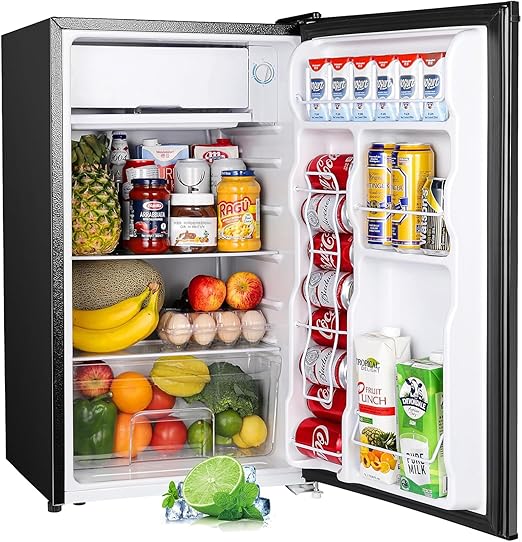
A well-reviewed, energy-efficient mini fridge can save a lot of frustration and actually keep food at safe temperatures instead of just “kind of cool.” Below is an option I recommend, and is a brand I’ve personally used for many years.
A compact single door mini fridge with a built in freezer and adjustable thermostat. Great for bedrooms, dorms, offices, or any small space that needs reliable cooling without taking up much room.
Final Thoughts
So how long does it take a mini fridge to get cold? Long enough that patience pays off.
You’ll usually feel cooling within an hour or two, but real, reliable cold takes most of a day. That’s normal. It doesn’t mean your fridge is slow or broken. Once it’s settled in, a good mini fridge can keep drinks icy and food safe just as well as a full-size fridge. It just needs time to get there.
For a better understanding of mini fridge performance and temperature control, these articles go deeper:
No comment