What are the best non toxic cookware options right now?
The safest cookware materials are multi-ply stainless steel, seasoned cast iron, and carbon steel, all of which avoid synthetic PTFE and PFAS coatings entirely. For cooks who want nonstick convenience without the chemistry lab, ceramic-coated pans from brands like Caraway and GreenPan are the strongest current options, provided you stay under medium heat and replace them when the coating shows wear.
Every product in this comparison has been evaluated on material safety, durability, price, and real-world cooking performance. The table below covers all 17 featured options.
| Product | Best For | Material Type | Safety Rating | Durability | Price |
|---|---|---|---|---|---|
| Caraway | Everyday low-to-medium heat | Ceramic-coated aluminum | ★★★★☆ | 2–4 years | $$ |
| GreenPan | Healthy nonstick at moderate temps | Ceramic-coated aluminum | ★★★★☆ | 2–4 years | $$ |
| Our Place | Multi-use health-conscious cooking | Ceramic-coated aluminum | ★★★★☆ | 2–3 years | $$ |
| Made In | High-heat and long-term use | Stainless steel / ceramic | ★★★★★ | Decades | $$$ |
| Alva Cookware | Searing and oven use | Cast iron | ★★★★★ | Decades | $$ |
| Xtrema | Oven and stovetop without synthetics | 100% ceramic | ★★★★★ | Decades | $$$ |
| Made In CeramiClad | Safe nonstick at moderate heat | Ceramic-coated stainless | ★★★★☆ | 3–5 years | $$$ |
| Lodge | Searing and high-heat applications | Cast iron | ★★★★★ | Decades | $ |
| Viking | Professional and serious home cooking | Multi-ply stainless steel | ★★★★★ | Decades | $$$$ |
| Carote | Quick stovetop and stir-fry | Carbon steel / ceramic | ★★★★☆ | 2–4 years | $ |
| GreenLife | Budget-friendly healthy cooking | Ceramic-coated aluminum | ★★★☆☆ | 1–2 years | $ |
| All-Clad D3 | Versatile everyday cooking | Tri-ply stainless steel | ★★★★★ | Decades | $$$$ |
| Staub Enameled Cast Iron | High-heat and acidic food cooking | Enameled cast iron | ★★★★★ | Decades | $$$$ |
| Demeyere Atlantis 7 | Controlled cooking and longevity | Multi-layer stainless steel | ★★★★★ | Decades | $$$$ |
| Cuisinart Multiclad Pro | Everyday budget-sensitive households | Triple-ply stainless steel | ★★★★☆ | Decades | $$ |
| CorningWare | Oven use, baking, and roasting | Glass-ceramic | ★★★★★ | Decades | $$ |
| Emile Henry | Baking and oven cooking | Ceramic (lead and cadmium free) | ★★★★★ | Decades | $$$ |
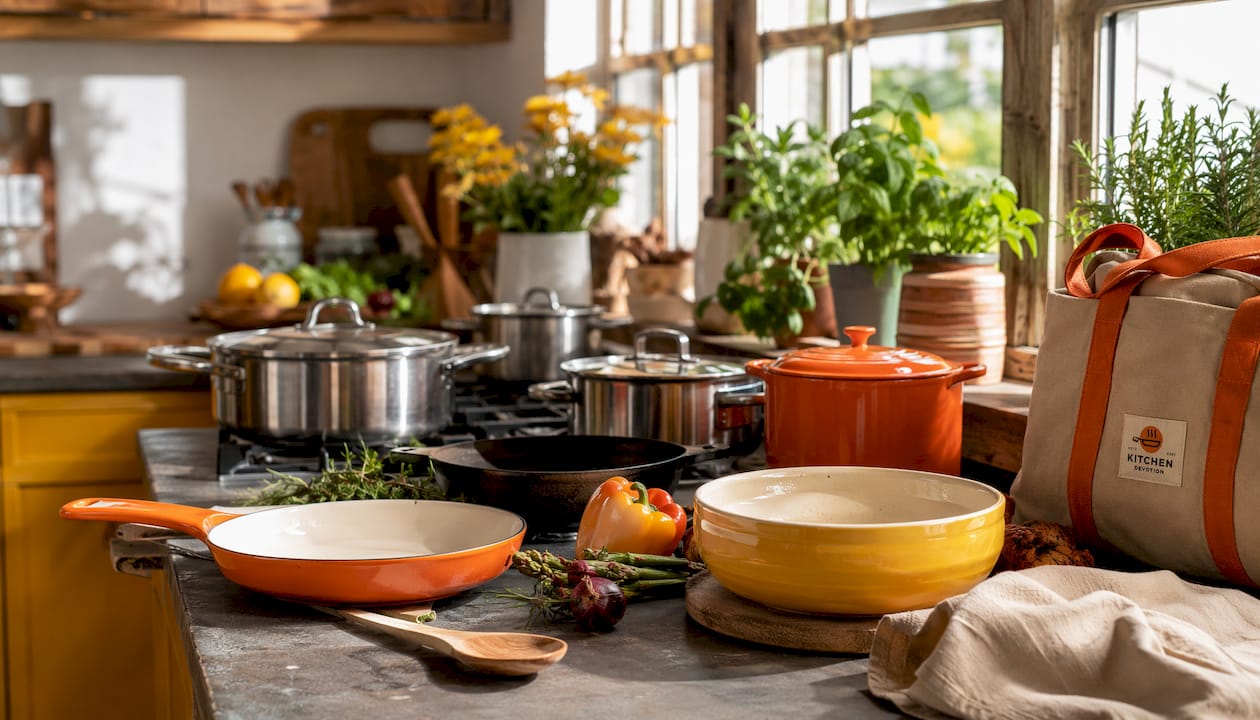
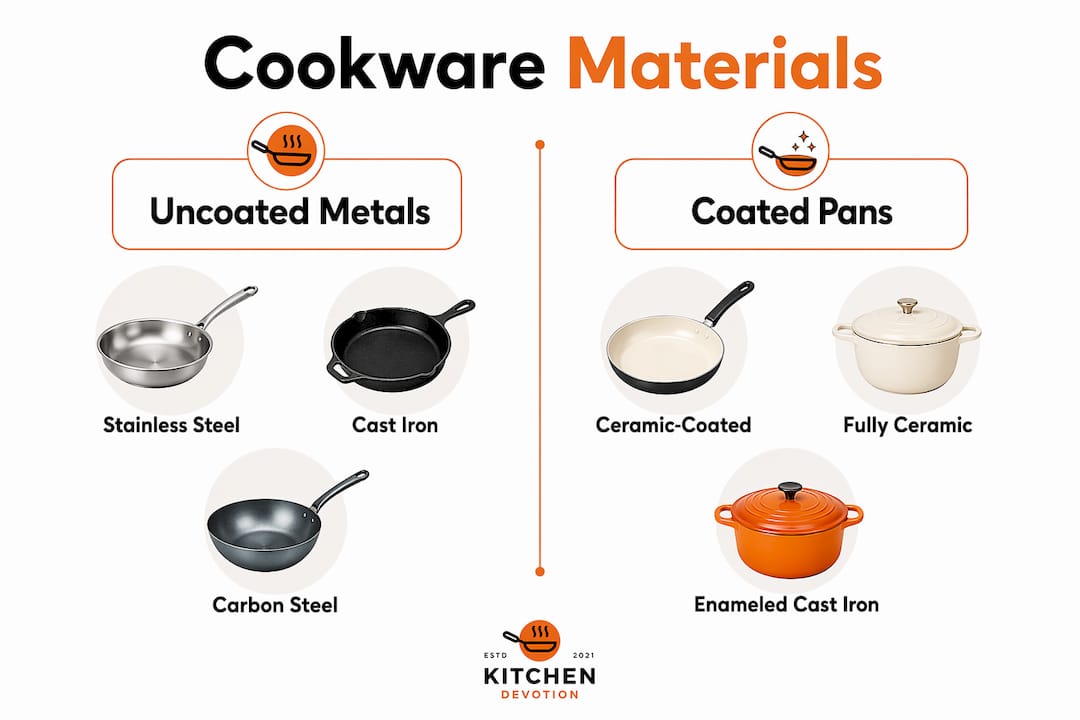
A few things stand out immediately. The uncoated options, stainless steel, cast iron, and fully ceramic, consistently earn the highest safety ratings because there is no coating to degrade. Ceramic-coated pans occupy a middle ground: safer than traditional PTFE nonstick, but with a shorter lifespan and more care requirements. Price does not always track with safety. Lodge cast iron costs less than $50 for most pieces and lasts generations. GreenLife is the most affordable ceramic option, but its coating wears faster than Caraway or GreenPan at a similar price tier.
How do the leading brands actually compare?
The 17 options above split cleanly into three categories based on how they handle the core safety question: no coating at all, a ceramic coating, or a fully ceramic body.
Uncoated metals: the longest-lasting choice
Stainless steel is the healthiest day-to-day option for most cooks. It is nonreactive, works on every stove type including induction, and survives decades of hard use. All-Clad D3 and Demeyere Atlantis 7 sit at the top of this category. All-Clad D3 uses a tri-ply construction bonded across the full pan, not just the base, which means heat spreads evenly up the sides. Demeyere Atlantis 7 goes further with a seven-layer base engineered for precise temperature control, making it the pick for cooks who want restaurant-level consistency at home.
Viking multi-ply stainless steel is another serious option. It distributes heat well and carries no harmful coatings whatsoever. Made In’s stainless steel line, built with a five-ply construction, bridges professional performance and home-cook accessibility at a slightly lower price than All-Clad. Cuisinart Multiclad Pro brings triple-ply construction to a genuinely accessible price point, making it the strongest value in the stainless steel category.
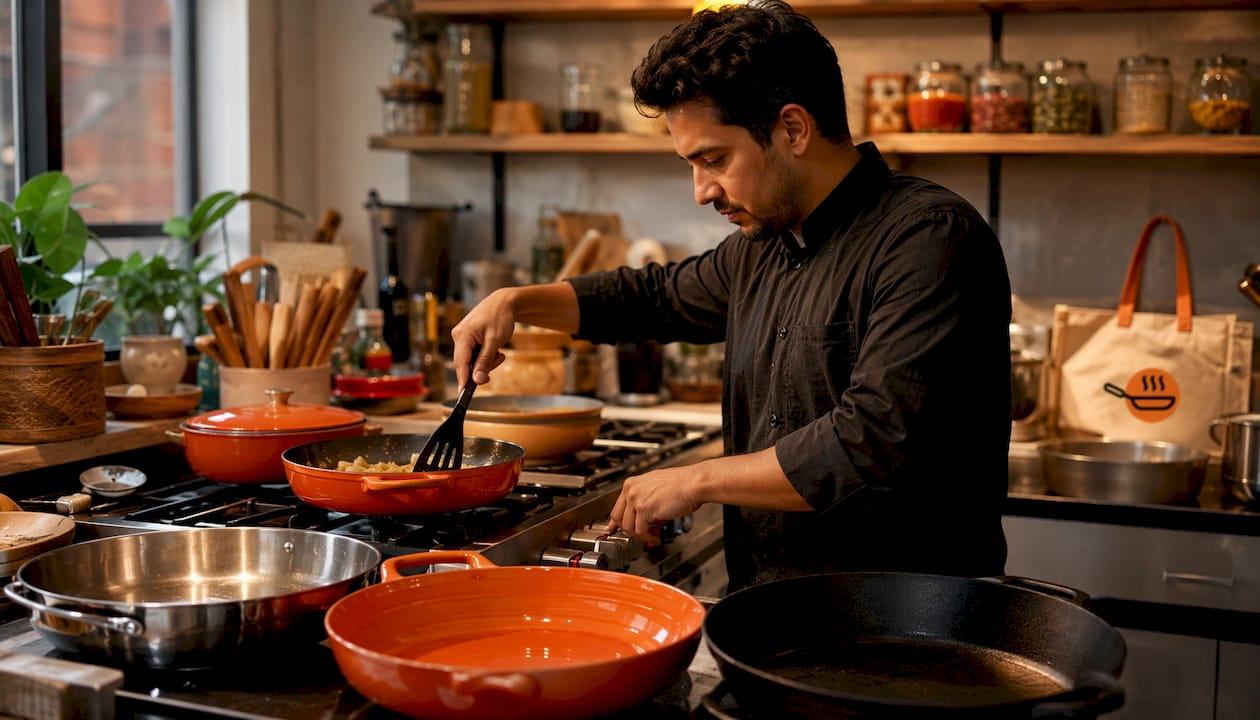
Cast iron is the other uncoated workhorse. Lodge is the obvious starting point: widely available, pre-seasoned, and built to outlast the person who buys it. Alva Cookware takes a more eco-conscious manufacturing approach, appealing to cooks who care about the full supply chain, not just what ends up in their food. Staub Enameled Cast Iron adds a non-reactive enamel finish that eliminates the seasoning requirement and makes it safe for acidic foods like tomato sauce, where bare cast iron can impart a metallic taste.
Ceramic-coated pans: safer nonstick, with caveats
Caraway is the brand that put ceramic-coated cookware on the mainstream map. Its PFAS-free coating, stylish color options, and included storage solutions made it a genuine cultural moment. GreenPan has been in the ceramic-coated space longer and offers a wider range of price points, from entry-level to professional. Its Thermal barrier technology is designed to reduce the risk of overheating damage to the coating. Our Place’s Always Pan is the multi-use option here, combining skillet, sauté pan, steamer, and more into one piece, which suits cooks who want to minimize cabinet clutter.
Made In CeramiClad applies a ceramic coating to a stainless steel body rather than aluminum, which gives it better heat distribution and a longer coating lifespan than most competitors. Carote offers a lighter, more affordable entry into ceramic-coated cooking, with a pre-seasoned carbon steel option that suits stir-fry and quick stovetop work. GreenLife is the budget pick, but its thinner construction means the coating degrades faster under regular use.
Fully ceramic and glass: the purest option
Xtrema is the only brand here that builds the entire pan from 100% ceramic, with no metal substrate and no synthetic coating of any kind. It has been tested for heavy metals and withstands high oven temperatures. The tradeoff is weight and fragility compared to cast iron or stainless. CorningWare’s glass-ceramic material is fully non-reactive and ideal for baking and oven-to-table use. Emile Henry uses a Burgundy clay-based ceramic that is certified free of lead and cadmium, making it a strong choice for bakeware and roasting dishes.
Pro Tip: When shopping ceramic-coated pans, look for “fluorine-free” on the label rather than just “PFOA-free.” A pan can be PFOA-free and still contain other PFAS compounds.
What toxic chemicals are actually in conventional cookware?
The core issue with traditional nonstick cookware is PTFE, a fluoropolymer better known by the brand name Teflon. PTFE belongs to the PFAS family, the so-called “forever chemicals” that persist in the environment and in the human body. The problem is not just what PTFE is made of. It is what happens when it gets hot or scratched.
PTFE coatings degrade above 400–500°F, releasing smaller PFAS molecules into the air and potentially into food. A 2022 study found that a crack in a PTFE coating released thousands of particles. Prolonged exposure to the fumes can cause flu-like symptoms in humans and is fatal to pet birds. Most home cooks never push a pan that hot intentionally, but a dry pan left on a burner can reach those temperatures faster than you might expect.
Here is what the labels actually mean, and where they mislead:
- PFOA-free: PFOA was phased out of PTFE manufacturing by 2012. A “PFOA-free” label tells you almost nothing about current safety because virtually all new pans already meet this standard. The pan may still contain PTFE and other PFAS.
- PFAS-free: A stronger claim, but no legal definition enforces it. Manufacturers self-certify.
- Non-toxic: No legal definition exists for this term in cookware. It is a marketing label, not a regulated safety standard.
- Ceramic: Also unregulated. A pan labeled “ceramic” may be a metal pan with a siloxane-based sol-gel coating that contains organic polymers, titanium dioxide nanoparticles, or other undisclosed materials.
- Green or eco-friendly: No enforceable definition. Treat it as marketing until you see third-party certification.
The FDA revoked all authorizations for PFAS grease-proofing substances on paper food packaging in January 2025, signaling a clear regulatory direction. But PFAS in nonstick cookware coatings remains a separate, still-active category under FDA review.
Ceramic coatings avoid PTFE, but they are not entirely risk-free. Many sol-gel coating formulations are proprietary, meaning the manufacturer does not disclose every ingredient. When a ceramic coating degrades, the organic polymers in the sol-gel matrix can leach into food. Some ceramic-coated pans have also been found to contain other PFAS compounds despite being marketed as Teflon-free. The safest move for anyone with serious health concerns is to choose uncoated stainless steel, cast iron, or fully ceramic cookware like Xtrema.
How do you choose truly safe cookware for your kitchen?
Choosing chemical free pans comes down to three questions: what is the pan actually made of, how is that verified, and how will you use it? Work through these in order.
Step 1: Identify the material and coating
- Stainless steel: Look for 18/10 grade (18% chromium, 10% nickel). Fully clad construction, where the metal layers run up the sides, not just across the base, distributes heat better and lasts longer.
- Cast iron: Bare cast iron requires seasoning. Enameled cast iron (Staub, Le Creuset) does not, and it handles acidic foods without issue.
- Carbon steel: Lighter than cast iron, seasons similarly, and heats faster. Carote’s carbon steel option is a good entry point.
- Ceramic-coated: Confirm the pan is labeled “fluorine-free,” not just “PFOA-free.” Check whether the brand publishes third-party test results.
- Fully ceramic: Xtrema publishes heavy metal test results. Emile Henry certifies lead and cadmium free. These are the transparency benchmarks to look for.
Step 2: Check certifications
No single certification covers everything, but these are the most meaningful:
- NSF certification: The public health and safety organization NSF offers cookware certification that verifies freedom from PFOA and other specified forever chemicals.
- FDA compliance: Cookware materials should comply with FDA food-contact regulations. The FDA’s authorized uses list for PFAS is the relevant document.
- California Prop 65 compliance: Requires disclosure of chemicals known to cause cancer or reproductive harm. A Prop 65-compliant label is a useful baseline.
- Lead and cadmium free: Particularly relevant for ceramic and enamel cookware. Emile Henry and Xtrema both publish this data.
Step 3: Match the pan to the cooking task
No single pan does everything well. Healthy cooking means matching material to task: stainless for everyday sautéing and sauces, cast iron for searing and high-heat roasting, glass or ceramic for baking. Trying to use a ceramic-coated pan for high-heat searing will degrade the coating faster and push you toward replacement sooner.
Care and maintenance tips that preserve safety
- Use wood or silicone utensils on any coated surface. Metal utensils damage coatings and accelerate particle shedding.
- Hand-wash ceramic-coated pans. Dishwasher cycles erode the coating over time.
- Never preheat a coated pan empty. Dry pans heat faster than expected and can reach coating-degrading temperatures within minutes.
- Store pans with felt or cloth dividers between them to prevent surface scratches.
- Replace any coated pan that shows flaking, deep scratches, or discoloration of the coating. The greatest health risks come from misuse, particularly overheating and scratching nonstick surfaces.
- Season cast iron and carbon steel pans regularly with a thin layer of high-smoke-point oil (flaxseed, grapeseed, or refined avocado oil work well).
- Avoid storing acidic foods in stainless steel pots. Cooking acidic foods is fine; long-term storage can cause the steel to break down into the food over time.
Pro Tip: A cast iron pan that has been properly seasoned over years of use is genuinely nonstick for eggs and fish. The learning curve is real, but the payoff is a pan that never needs replacing.
What are the pros and cons of each non toxic cookware material?
Each material has a distinct profile. The right choice depends on your cooking style, your stove type, and how much maintenance you are willing to do.
| Material | Best For | Heat Tolerance | Durability | Reactivity | Key Limitation |
|---|---|---|---|---|---|
| Stainless steel (multi-ply) | Everyday cooking, sauces, searing | Very high | Decades | Non-reactive | Food sticks without proper preheating |
| Cast iron (bare) | Searing, frying, oven use | Very high | Generations | Slight (acidic foods) | Heavy; requires seasoning |
| Enameled cast iron | Braises, acidic foods, soups | High | Decades | Non-reactive | Expensive; enamel can chip |
| Carbon steel | Stir-fry, searing, eggs | High | Decades | Slight (acidic foods) | Requires seasoning; no dishwasher |
| Ceramic-coated | Low-to-medium heat cooking | Medium (max safe temperature) | 1–3 years | Non-reactive | Coating degrades; shorter lifespan |
| 100% ceramic | Oven and stovetop without synthetics | Very high | Decades | Non-reactive | Heavy; fragile if dropped |
| Glass-ceramic | Baking, roasting, oven-to-table | High | Decades | Non-reactive | Not suitable for stovetop |
Stainless steel
Stainless steel is nonreactive, durable, and safe on all stove types, including induction. Professional kitchens rely on it for a reason. The main learning curve is heat management: preheat the pan properly, add oil, and food releases cleanly. All-Clad D3, Demeyere Atlantis 7, and Made In are the strongest performers in this category. Cuisinart Multiclad Pro delivers comparable construction at a fraction of the price, making it the practical choice for cooks who want stainless without the premium spend.
Cast iron
Cast iron can enhance the iron content of food, which is a genuine nutritional benefit for people with low iron intake. It handles higher temperatures than any coated pan and improves with use as the seasoning builds up. Lodge is the most accessible entry point. Alva Cookware appeals to cooks who prioritize eco-conscious sourcing. The limitation is weight: a 12-inch Lodge skillet runs around 8 pounds, which is not ideal for everyone.
Enameled cast iron
Staub Enameled Cast Iron eliminates the seasoning requirement and the reactivity concern with acidic foods. The enamel interior is non-reactive and easy to clean. It is the best material for long braises, soups, and tomato-based dishes where bare cast iron would impart a metallic flavor. The tradeoff is cost and the risk of chipping if the pan is dropped or subjected to sudden temperature changes.
Carbon steel
Carbon steel sits between cast iron and stainless steel. It is lighter than cast iron, heats faster, and develops a natural nonstick surface through seasoning. Carote’s carbon steel option is pre-seasoned and ready to use out of the box. It cannot go in the dishwasher and needs the same oil-based maintenance as cast iron, but it is the preferred pan for stir-fry and high-heat egg cooking in professional kitchens.
Ceramic-coated
Ceramic coatings avoid PTFE risks but have a shorter lifespan, typically 1–3 years under regular use, and may contain undisclosed materials. Caraway and GreenPan are the most transparent brands in this space. Buyers should look for “fluorine-free” labeling and published third-party test results. GreenLife is the budget option, but its thinner construction means faster coating wear.
Fully ceramic and glass-ceramic
Xtrema’s 100% ceramic construction and CorningWare’s glass-ceramic material are the most chemically inert options available. Neither contains metal substrates, synthetic coatings, or proprietary sol-gel formulations. Emile Henry’s Burgundy clay ceramic is certified free of lead and cadmium. These materials excel in the oven but have limitations on the stovetop, particularly glass-ceramic, which is not designed for direct flame or electric coil use.
What do experts and researchers say about cookware safety?
The scientific and regulatory picture on cookware safety has sharpened considerably in recent years, and the consensus points in a clear direction.
The FDA’s january 2025 ruling revoked the effectiveness of 35 food contact notifications related to PFAS-containing grease-proofers on paper packaging, completing a phase-out that began in 2020. For cookware specifically, the FDA notes that the manufacturing process for PTFE nonstick coatings polymerizes the PFAS molecules at very high temperatures, which vaporizes off the smaller, migratable molecules. The result is a highly polymerized coating that shows negligible PFAS migration to food under normal use conditions. That is the industry’s strongest argument for PTFE safety.
The counterargument, and it is a serious one, comes from researchers and environmental scientists who point to the full lifecycle of fluoropolymers. Making PTFE requires PFAS molecules with uncertain toxicity profiles, and those chemicals have contaminated air and water supplies for decades. Gillian Miller, senior scientist at the Ecology Center, puts it plainly:
Professional chefs favor uncoated stainless steel, carbon steel, and cast iron for durability and chemical safety over coated pans. Josh Hershkovitz, chef and proprietor at Hersh’s in Baltimore, has been switching to ceramic-coated pans for nonstick stovetop cooking specifically because of concerns about PTFE’s toxicity and environmental impact.
The “non-toxic” label is often a marketing term with no legal backing. No federal standard defines what “non-toxic” or even “ceramic” means on a cookware label. The Environmental Working Group’s 2024 PFAS-free cookware guide reinforces this: some ceramic-coated pans contain undisclosed materials including titanium dioxide nanoparticles or heavy metals, and third-party certifications like NSF are the most reliable way to verify safety claims independently.
The practical takeaway from the research is consistent: proper heat management and the right utensils protect cookware safety as much as the material itself. A stainless steel pan used correctly is safer than a ceramic-coated pan overheated daily.
How do these pans perform in real-world testing?
Expert testing across consumer publications and independent labs reveals a consistent pattern: uncoated pans outperform coated ones over time, while ceramic-coated pans win on convenience in the short term.
Caraway consistently scores well in consumer testing for its even heat distribution and easy cleanup. Reviewers note that the coating holds up well for 12–18 months of regular use before showing wear, which aligns with the 1–3 year ceramic coating lifespan noted in independent research. GreenPan’s Thermal barrier technology earns credit in testing for reducing the risk of hot spots that accelerate coating degradation.
All-Clad D3 and Demeyere Atlantis 7 are the benchmark performers in stainless steel testing. Both handle high heat without warping, clean up without staining when properly maintained, and show no degradation after years of use. Lodge cast iron earns near-universal praise for heat retention and searing performance. The pre-seasoning is functional out of the box, though most reviewers note the surface improves significantly after several months of regular cooking.
Xtrema’s fully ceramic construction draws mixed reviews on stovetop performance because it heats more slowly than metal pans, but it earns top marks for chemical safety and oven use. CorningWare’s glass-ceramic is the standard recommendation for baking and roasting, with decades of consumer use validating its durability and non-reactivity.
GreenLife performs adequately in short-term testing but shows coating wear faster than Caraway or GreenPan under the same conditions. For cooks on a tight budget, it is a reasonable starting point, with the understanding that replacement will come sooner.
Made In CeramiClad’s ceramic-over-stainless construction outperforms ceramic-over-aluminum in durability testing because the stainless base conducts heat more evenly and is less prone to warping. Emile Henry’s ceramic bakeware consistently earns high marks for even browning and thermal stability in oven testing.
How do you spot counterfeit or falsely labeled non-toxic cookware?
The cookware market has a real problem with misleading labeling, and some of it crosses into outright deception. Here is how to protect yourself.
Watch for vague coating trade names. The Ecology Center’s testing found PTFE coatings on pans sold under names like QuanTanium, Granitestone, DuPont Autograph, and Greblon. These names are not widely recognized as PTFE, which is exactly the point. If a pan lists a proprietary coating name rather than the actual material, treat it with skepticism until you can verify the chemistry.
“PFOA-free” is the oldest misdirection in the category. Since PFOA was phased out of PTFE manufacturing by 2012, virtually every pan on the market qualifies for this label. A pan can be PFOA-free, PTFE-coated, and still release other PFAS compounds when overheated. The label that actually matters is “fluorine-free” or “PTFE-free.”
Check for third-party certification, not just brand claims. NSF certification is the most credible independent verification available for cookware. Brands that publish third-party heavy metal test results, as Xtrema and Emile Henry do, are demonstrating a level of transparency that self-certified “non-toxic” claims cannot match.
Price can be a signal. A ceramic-coated pan priced at $15 almost certainly uses a thinner, lower-quality coating that will degrade faster and may contain undisclosed materials. That does not mean expensive pans are automatically safe, but it does mean that rock-bottom pricing on “non-toxic” cookware warrants extra scrutiny.
Look at the country of manufacture and the brand’s disclosure practices. Brands that publish their coating formulations, testing results, and material sourcing are easier to trust than those that offer only marketing language. Caraway, GreenPan, Xtrema, and Emile Henry all publish meaningful safety information. If a brand’s website cannot tell you what the coating is actually made of, that is a red flag.
Inspect the packaging claims carefully. Phrases like “eco-friendly,” “green,” “natural,” and “healthy” have no legal definitions in cookware. They are marketing terms. A pan described as “granite stone coating” is almost certainly a PTFE-based coating with mineral particles added for aesthetics, not a literal stone surface.
Key Takeaways
The safest non toxic cookware avoids synthetic coatings entirely: multi-ply stainless steel, seasoned cast iron, and fully ceramic options like Xtrema offer the longest lifespan and the lowest chemical risk.
| Point | Details |
|---|---|
| Uncoated metals last longest | Stainless steel and cast iron last decades; ceramic coatings typically last 1–3 years before needing replacement. |
| “PFOA-free” does not mean PFAS-free | Look for “fluorine-free” labeling and NSF certification to verify real chemical safety. |
| Heat management matters as much as material | Overheating any coated pan accelerates degradation; stay under 450°F with ceramic-coated cookware. |
| Mix materials for best results | Use stainless for everyday cooking, cast iron for searing, and glass-ceramic for baking rather than one pan for everything. |
| Kitchendevotion for curated selection | Kitchendevotion’s cookware sets collection covers stainless steel, cast iron, and ceramic options reviewed for health-conscious home cooks. |
The case for going uncoated (and why ceramic is still worth it for some cooks)
The conventional wisdom says ceramic-coated pans are the safe middle ground between toxic nonstick and the learning curve of cast iron. That framing is mostly right, but it undersells how good uncoated cooking actually is once you get past the first few weeks.
Stainless steel gets a bad reputation for sticking, and that reputation is almost entirely a technique problem, not a material problem. Preheat the pan until a drop of water skitters across the surface, add your oil, and let it heat for another 30 seconds. Food releases cleanly. That is the same technique professional kitchens use, and it works. The payoff is a pan that never needs replacing, never releases particles into your food, and can handle anything from a delicate fish fillet to a screaming-hot sear.
Cast iron has a longer learning curve, but the seasoning process is genuinely satisfying once you understand it. A well-seasoned Lodge skillet is nonstick enough for eggs. More importantly, it is a pan you will pass down, not throw away in two years when the coating gives out.
That said, ceramic-coated pans from Caraway or GreenPan are a legitimate choice for cooks who are not ready to change their technique. They are safer than PTFE nonstick, easier to use than bare metal, and the coating lasts long enough to be practical. The key is treating them correctly: medium heat, silicone utensils, hand washing, and replacement when the coating shows damage.
What I would push back on is the idea that any single pan is the answer. A stainless steel skillet, a cast iron pan, and a glass baking dish cover nearly every cooking task with zero synthetic chemistry involved. That combination costs less than most premium ceramic-coated sets and outlasts them by decades.
Kitchendevotion makes it easier to find cookware you can actually trust
Sorting through 17 brands, competing safety claims, and marketing language designed to obscure rather than inform takes real time. Kitchendevotion’s curated cookware sets cut through that by focusing on materials that hold up to scrutiny: stainless steel, cast iron, and ceramic options that have been reviewed for health-conscious home cooks.
The site also covers the full picture beyond the pan itself. Whether you are building a kitchen from scratch and need a new homeowner appliance list or want to understand how to choose cookware materials before you spend, Kitchendevotion’s guides are written for cooks who want straight answers, not sales copy. If you are ready to replace a scratched nonstick pan or build a safer kitchen setup from the ground up, that is the right place to start.
FAQ
What is the most non-toxic cookware available?
Fully uncoated options, specifically multi-ply stainless steel, seasoned cast iron, and 100% ceramic cookware like Xtrema, carry the lowest chemical risk because there is no synthetic coating to degrade or release particles.
What is the healthiest material for everyday pots and pans?
Multi-ply stainless steel is the healthiest choice for daily cooking. It is nonreactive, durable, safe on all stove types, and does not require the maintenance that cast iron demands.
Which pan is not associated with cancer risks?
Uncoated stainless steel, cast iron, enameled cast iron, and fully ceramic pans carry no PTFE or PFAS compounds, which are the chemicals linked to cancer and immune system concerns in cookware research.
Is Caraway actually non-toxic?
Caraway uses a PFAS-free ceramic coating and publishes safety information supporting its claims. It is a safer choice than PTFE-coated nonstick pans, though like all ceramic-coated cookware, the coating has a lifespan of roughly 1–3 years and should be replaced when it shows wear or damage.



No comment