What does healthy eating actually mean?
Healthy eating is not about perfection or following a rigid set of rules. At its core, it means building a consistent pattern of meals dominated by whole, nutrient-dense foods while keeping the less beneficial stuff in check. The Harvard Healthy Eating Plate offers one of the clearest visual frameworks: half your plate goes to vegetables and fruits, a quarter to whole grains like quinoa, oats, or brown rice, and the final quarter to quality protein sources such as fish, beans, eggs, or poultry. Healthy oils like olive and canola round things out.
The American Heart Association reinforces a similar message: prioritize plant-based foods, limit saturated fats, and cut back on added sugars and sodium. These are not trendy guidelines. They reflect decades of nutritional research and are echoed by the Dietary Guidelines for Americans, which consistently link dietary patterns rich in vegetables, fruits, legumes, and whole grains to lower risks of cardiovascular disease, type 2 diabetes, and other chronic conditions.
Core principles of a balanced, nutritious diet:
- Fill at least half your plate with vegetables and fruits at every meal, aiming for a variety of colors
- Choose whole grains (barley, oats, quinoa, brown rice) over refined grains like white bread and white rice
- Prioritize lean protein: fish, legumes, nuts, seeds, eggs, and poultry
- Use healthy unsaturated fats (olive oil, avocado, nuts) and limit butter and saturated fat
- Limit added sugars, refined carbohydrates, and heavily processed foods
- Keep sodium low; over 70% of sodium Americans consume comes from packaged and restaurant foods, not the salt shaker
- Drink water, coffee, or unsweetened tea; skip sugary drinks and limit juice
Moderation, variety, and consistency are what separate a sustainable eating pattern from a short-term diet.
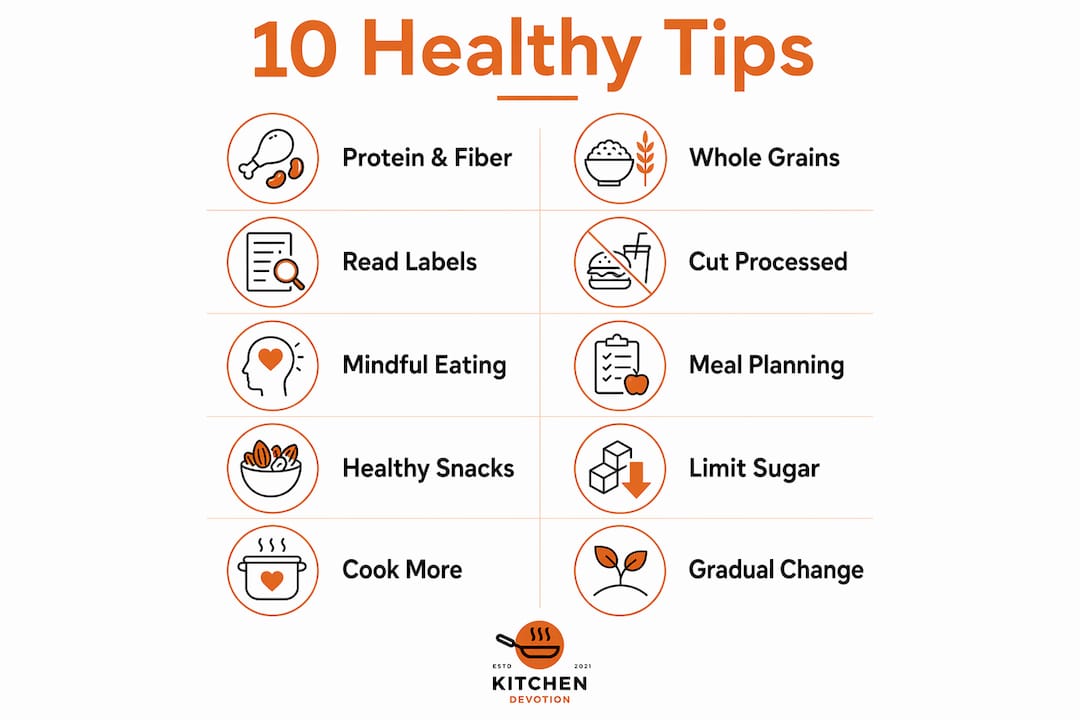
10 practical tips for building healthy eating habits
1. Build every meal around protein and fiber
Meals that combine protein, fiber, and healthy fats keep you fuller longer and reduce the urge to snack on processed foods between meals. Think grilled salmon with roasted broccoli and a side of farro, or a lentil soup loaded with leafy greens. Balanced meals with protein and fiber sustain energy and reduce hunger more reliably than meals built around refined carbohydrates alone.
2. Swap refined grains for whole grains
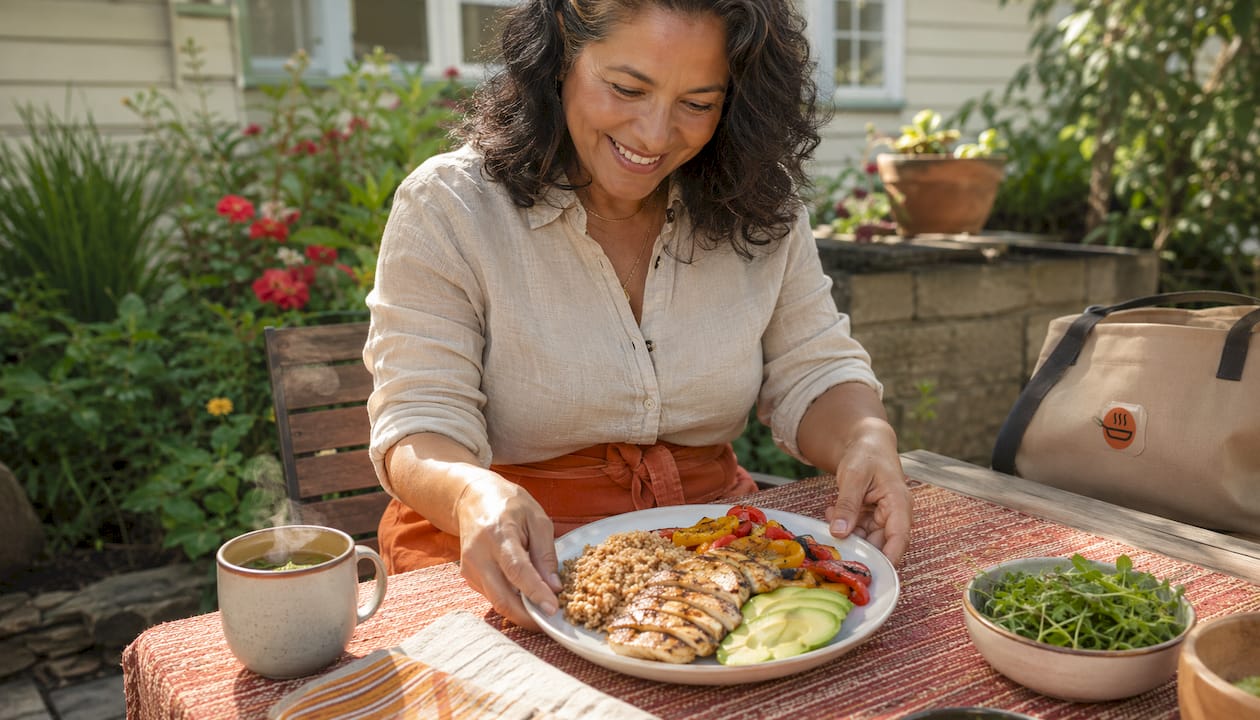
White bread, white pasta, and white rice are not inherently harmful in small amounts, but they offer far less fiber and fewer nutrients than their whole-grain counterparts. Switching to whole-grain pasta, brown rice, or oats is one of the simplest upgrades you can make without overhauling your entire routine.
3. Read nutrition labels before you buy
The ingredient list tells you more than the front of the package ever will. Look for added sugars hiding under names like corn syrup, dextrose, or fructose. Check sodium levels, especially on sauces, soups, and dressings. The CDC recommends avoiding products with excess sodium, added sugars, and saturated fat as a baseline habit.
4. Cut back on ultra-processed foods
Shifting from ultra-processed to minimally processed foods is one of the most impactful changes you can make for long-term cardiovascular health. Experts emphasize that whole foods support longevity far more than any specific macronutrient ratio. Chips, packaged pastries, and fast food are not off-limits forever, but they should be the exception rather than the daily default.
5. Practice mindful eating at meals
Mindful eating means slowing down, removing distractions, and paying attention to hunger and fullness cues. People who eat quickly and while distracted tend to consume more calories without realizing it. Put your phone down, sit at a table, and give yourself at least 20 minutes per meal. Your body’s satiety signals need that time to catch up with your fork.
6. Plan your meals before the week starts
Meal planning is one of the most reliable tools for staying on track. Even a rough weekly outline reduces the number of last-minute decisions that lead to takeout or vending machine runs. Harvard Health recommends mixing easy, no-recipe go-to dishes with one or two new recipes on less busy days to keep things from feeling monotonous.
7. Keep healthy snacks within reach
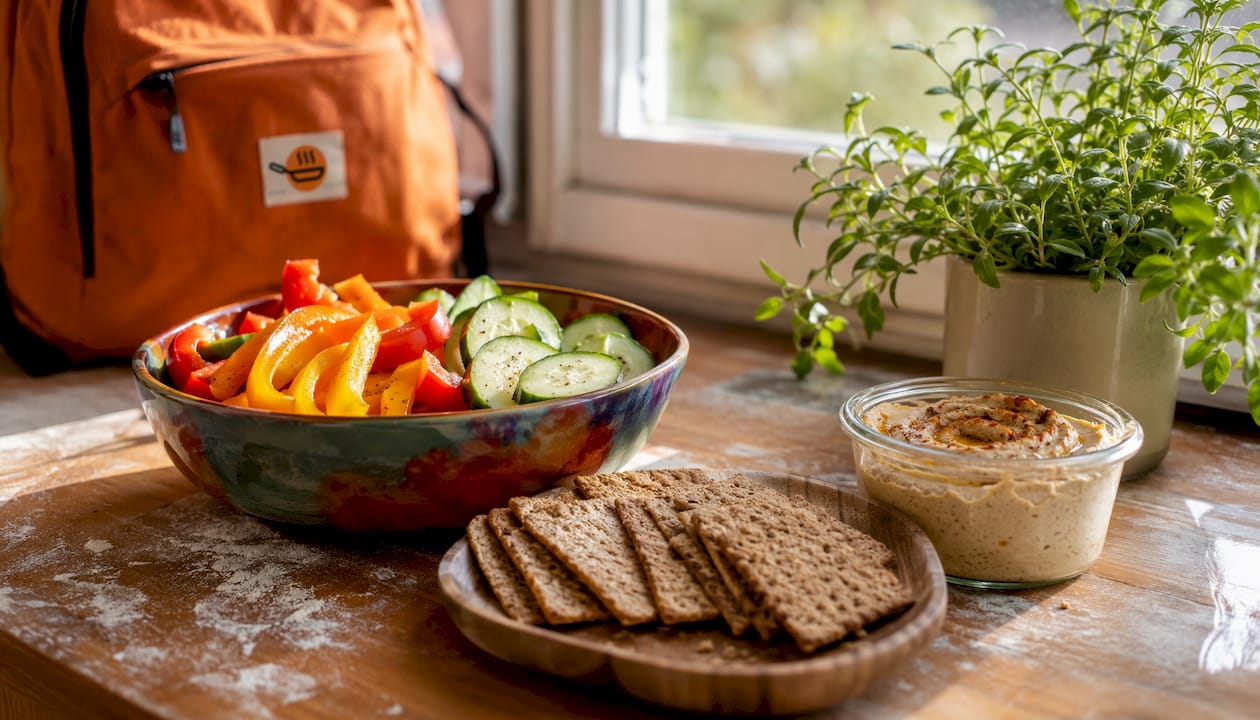
What you grab when you’re hungry and in a hurry is almost always whatever is most visible and accessible. Stock your counter with fruit, keep nuts and seeds in a jar on your desk, and pre-portion raw vegetables in the fridge. Removing friction from the healthy choice is more effective than relying on willpower alone.
8. Limit added sugars deliberately
Added sugars contribute to weight gain, type 2 diabetes, and heart disease, and they appear in far more products than most people expect, including bread, pasta sauce, and flavored yogurt. Swapping sugary drinks for water is the single fastest way to cut added sugar from your daily intake without changing anything else.
9. Cook at home more often
Home cooking gives you direct control over ingredients, portion sizes, and cooking methods, especially when you have premium kitchen essentials like balsamic, olive oil, and Rivsalt on hand. Sautéing, roasting, baking, and poaching are all far lower in added fat than deep-frying. Having the right kitchen prep tools on hand makes the process faster and less intimidating, especially if you’re just getting started.
10. Make gradual changes, not dramatic ones
Overhauling your entire diet overnight is the fastest route to burnout. Pick one or two changes per week, build them into your routine, and then add more. Consistency over months matters far more than perfection over a few days.
Pro Tip: Don’t aim for a “clean” diet. Aim for a better average. If 80% of your meals are built around whole, nutrient-dense foods, the other 20% will not derail your health.
How to build and maintain a balanced diet over time
Start with the plate model
The Harvard Healthy Eating Plate is the most practical visual guide available for structuring nutritious meals. Half vegetables and fruit, a quarter whole grains, a quarter quality protein. That framework works whether you’re cooking a stir-fry, assembling a grain bowl, or packing a lunch. You don’t need to count calories to follow it.
Understand your portion needs
Calorie needs vary by age, sex, activity level, and body size. Rather than obsessing over exact numbers, use your hand as a rough guide: a fist for grains, a palm for protein, and fill the rest of your plate with vegetables. The 2025 Dietary Guidelines Advisory Committee emphasizes that dietary patterns, not individual nutrients, are the strongest predictor of long-term health outcomes.
Meal prep makes consistency possible
Prepping ahead removes the biggest barrier to eating well: the moment when you’re tired and hungry and nothing is ready. Thawing fish the night before, soaking beans in the morning, or chopping vegetables on Sunday afternoon all reduce the mental load of cooking on weekdays. Meal prep actions like these lower the friction between good intentions and actual meals.
Pro Tip: Build a meal prep station in your kitchen with dedicated space for cutting, portioning, and storing. A well-organized workspace cuts prep time and makes cooking feel less like a chore.
Adapt for special dietary needs
Vegetarian and vegan diets can absolutely meet all nutritional needs with careful planning. Focus on legumes, tofu, tempeh, and fortified foods for protein and iron. For food allergies or intolerances, the substitution principle applies: replace the allergen with a whole-food alternative that fills the same nutritional role. Gluten-free whole grains like quinoa, buckwheat, and millet work well for people avoiding wheat.
Key habits for label reading:
- Check serving size first; all other numbers on the label are based on it
- Look for fiber content above 3g per serving as a marker of a whole-grain product
- Sodium above 600mg per serving is high; aim for products under 400mg where possible
- Ingredients are listed by weight; if sugar or a refined grain is in the first three, reconsider
Practical steps to start eating healthier today
Getting started is usually the hardest part. These steps are designed to lower the barrier as much as possible.
- Reorganize your kitchen: Move fruits, vegetables, and whole-grain snacks to eye level in the fridge and pantry. Put processed snacks out of sight or out of the house entirely.
- Stock pantry staples: Canned beans, frozen vegetables, whole-grain pasta, eggs, and oats let you assemble a nutritious meal on any night without a grocery run.
- Start with easy swaps: Add a handful of spinach to scrambled eggs. Replace chips with apple slices and almond butter. Swap white rice for cauliflower rice or brown rice one night a week.
- Keep a food journal: Tracking what you eat, even loosely, increases awareness and accountability. Studies find that journaling food intake significantly improves success in developing lasting healthy habits.
- Plan your grocery trips: Shop when you’re not hungry and not rushed. A written list keeps you from impulse-buying processed foods that weren’t in the plan.
- Be flexible: Missing one meal or eating something off-plan is not failure. Rigid all-or-nothing thinking is what causes people to abandon healthy eating entirely after one slip.
Pro Tip: Choose one “anchor meal” to get right every day, whether that’s breakfast or lunch. Once that meal is consistent, build from there rather than trying to fix everything at once.
How physical activity and hydration support your diet
Movement amplifies what good nutrition starts
Physical activity guidelines recommend at least 150 minutes per week of moderate activity, and that total can be broken into shorter sessions spread across the week. A 30-minute walk five days a week qualifies. Exercise supports metabolism, improves insulin sensitivity, and reinforces the energy benefits that come from eating well. The two work together; neither fully compensates for the absence of the other.
Hydration is a nutritional priority, not an afterthought
Water supports digestion, nutrient absorption, and energy regulation. Aiming for roughly 2–3 liters per day, spread throughout the day, is a practical benchmark for most adults. Drinking a third of your daily water needs before mid-afternoon helps avoid the afternoon energy slump that often gets misread as hunger.
Practical tips for staying active and hydrated:
- Keep a water bottle visible at your desk or workspace as a constant reminder
- Pair water intake with existing habits: a glass before each meal, one after waking up
- Walk after meals when possible; even 10 minutes aids digestion and blood sugar regulation
- Use time-saving appliances that make cooking whole foods faster, freeing up time for movement. Kitchendevotion’s guide to time-saving kitchen appliances is a good starting point for busy cooks
- Choose activities you actually enjoy; adherence over months matters more than intensity over days
Key Takeaways
A balanced diet built around vegetables, fruits, whole grains, and lean protein, combined with consistent hydration and regular movement, is the most evidence-backed path to long-term health.
| Point | Details |
|---|---|
| Build meals around whole foods | Fill half your plate with vegetables and fruit, a quarter with whole grains, and a quarter with lean protein. |
| Limit sodium from packaged foods | Over 70% of the sodium Americans consume comes from processed and packaged foods, not table salt. |
| Meal prep reduces barriers | Prepping staples like beans, frozen vegetables, and whole grains ahead of time makes healthy cooking far easier on busy nights. |
| Move at least 150 minutes weekly | Moderate physical activity spread across the week amplifies the benefits of a nutritious diet. |
| Hydrate consistently | Aiming for roughly 2–3 liters of water per day, spread throughout the day, supports digestion and energy. |
FAQ
How do I start eating healthier?
Start with one or two small changes, like adding vegetables to a meal you already cook or swapping sugary drinks for water. Building pantry staples such as canned beans, frozen vegetables, and whole grains makes it easier to assemble nutritious meals without extra planning.
What are the five rules for healthy eating?
A widely accepted framework includes: eat mostly whole, minimally processed foods; fill half your plate with vegetables and fruit; choose whole grains over refined grains; prioritize lean protein sources; and limit added sugars, sodium, and saturated fat. These align with both the Harvard Healthy Eating Plate and American Heart Association guidance.
What is the 3-3-3 rule for healthy eating?
There is no single clinically validated 3-3-3 rule. Common versions suggest eating three balanced meals, drinking a third of your daily water by mid-afternoon, and meeting weekly movement goals. These are useful habit-building reminders, not strict medical protocols.
How often should I eat per day?
Most adults do well with three balanced meals per day, with optional snacks if needed. The priority is meal quality and consistency rather than a specific number of eating occasions. Eating at regular intervals helps maintain steady energy and reduces overeating later in the day.





No comment