
Coat your carbon steel pan in a thin film of high smoke point oil, heat it until that oil polymerizes, and repeat two to three times. That’s carbon steel pan seasoning in one sentence; it builds the nonstick, rust-resistant surface your pan needs before it ever touches food.
You have two solid paths to get there:
- Oven method: even coverage on all sides, about 1 hour at high heat, repeated 2 to 3 times.
- Stovetop burn-in: faster, single-layer passes, better for a quick fix or a smaller pan.
America’s Test Kitchen has documented both approaches for years, and materials-science writers like the ones at WeekendKitchen frame the result less as a coating and more as a bonded film fused to the metal. Kitchendevotion’s own cookware guides lean on the same logic: thin layers, patience, repeat.
Key Takeaways
Building durable carbon steel pan seasoning comes down to thin oil layers, adequate heat, and repeating the process two to three times before regular use.
| Point | Details |
|---|---|
| Season before first use | Strip factory coating, dry fully, then build seasoning rather than relying on slow self-seasoning through cooking. |
| Thin coats beat thick ones | Wipe oil until the pan looks nearly dry; visible pooled oil turns sticky instead of bonding cleanly. |
| Oven gives the most even base | Bake at 420 to 475°F for about an hour, upside down, repeated two to three times. |
| Pick oils by smoke point | Grapeseed, refined canola, and refined avocado outperform flaxseed and unrefined olive oil for this process. |
| Kitchendevotion helps you choose the right pan | Its cookware materials guide and curated pan selections give home cooks a starting point before or after seasoning. |
Table of Contents
- What Is Carbon Steel Pan Seasoning and Why Does It Matter?
- How Do You Prep a New Carbon Steel Pan Before Seasoning?
- How Do You Season Carbon Steel in the Oven?
- Can You Season Carbon Steel on the Stovetop?
- What Is the Best Oil for Seasoning Carbon Steel?
- How Do You Maintain a Carbon Steel Pan Day to Day?
- How Do You Fix Rust, Stickiness, or Uneven Seasoning?
- What Mistakes Ruin a New Seasoning Job?
- What Actually Happens to the Oil When You Season a Pan?
- Ready to Pick the Right Pan for Your Kitchen?
- Sources
- FAQ
What Is Carbon Steel Pan Seasoning and Why Does It Matter?
Seasoning is what happens when oil heats past its smoke point and polymerizes, chemically bonding to the steel instead of just sitting on top of it. That bonded layer is what gives you rust protection and a slick, low-stick cooking surface. Skip it, and bare carbon steel behaves badly. It rusts fast when it meets moisture, and food, especially anything acidic like tomatoes or wine, sticks and tears instead of releasing cleanly.
Pro Tip: A solid initial seasoning session saves you weeks of frustration. Pans with a good base patina season further just from normal cooking, while unseasoned pans fight you every time you reach for a spatula.
How Do You Prep a New Carbon Steel Pan Before Seasoning?
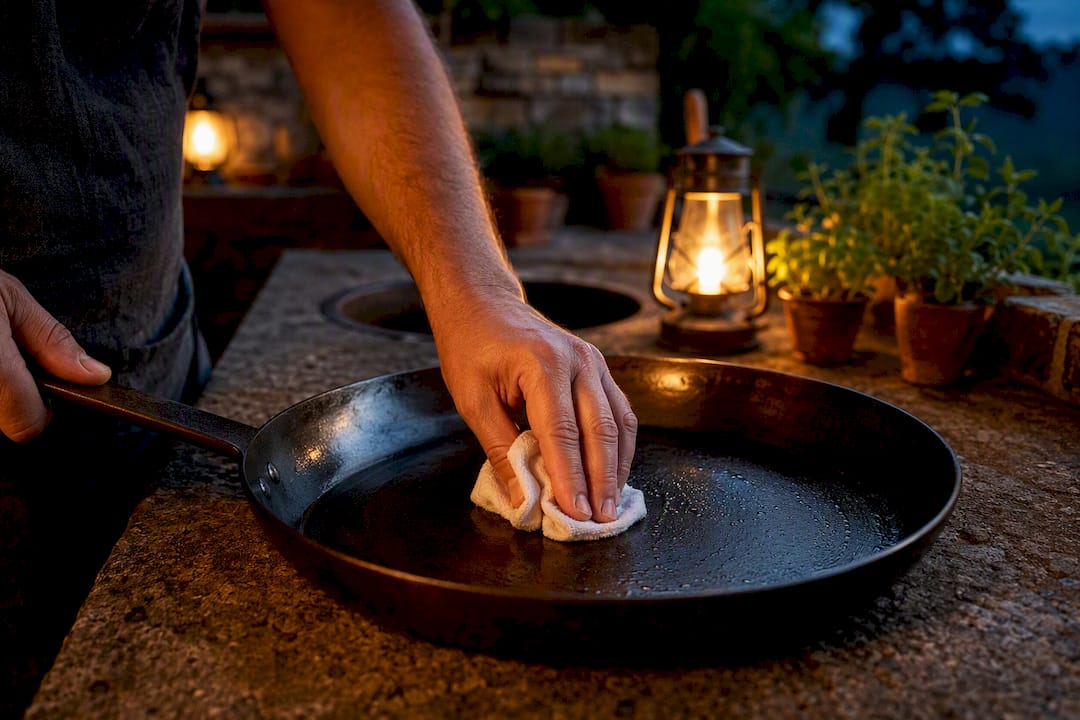
New pans typically arrive with a factory coating of wax or oil meant to prevent shipping rust, and it has to come off before any seasoning oil will bond. Skip this step and you’ll end up with a patchy, uneven patina.
- Scrub the pan with hot water, dish soap, and a stiff brush until the surface feels uniformly matte, not slick.
- Rinse thoroughly and dry it with a towel.
- Set it on a burner over low heat for a minute or two to drive off any remaining moisture from the pores of the metal.
- Pick your oil and decide whether you’re heading to the oven or working stovetop.
Work in a ventilated kitchen once you start heating oil. Some smoke is normal and expected, more than most cooks anticipate the first time.
How Do You Season Carbon Steel in the Oven?
The oven method gets you the most even coat, because heat surrounds the pan instead of hitting it from one direction. It’s the version ATK recommends when you want a dependable base layer rather than a rushed fix.
- Rub a very thin coat of oil over the entire pan, inside, outside, and the handle if it’s all metal.
- Wipe it down with a clean paper towel until the surface looks almost dry. Any visible pooling of oil will turn gummy instead of glossy.
- Place the pan upside down on the oven rack with a sheet pan or foil underneath to catch drips.
- Bake at 420 to 475 degrees Fahrenheit for about an hour, depending on the oil’s smoke point.
- Turn off the oven and let the pan cool down inside before handling it.
- Repeat the whole cycle multiple times to build a base layer that holds up to regular cooking.
Pro Tip: If you can still see a wet sheen of oil before it goes in the oven, wipe more. Visible oil is the single biggest cause of sticky, blotchy seasoning, not too little oil.
Cooling slowly matters more than most guides admit. Rapid temperature swings can warp thin steel and interrupt the bond forming between oil and metal.
- Expect roughly one hour per bake cycle.
- Budget an afternoon for two to three full passes with cooling time built in.
- A stronger base now means less touch-up work later.
Can You Season Carbon Steel on the Stovetop?
Yes, and it’s the faster route when you don’t want to run your oven for an afternoon or you’re working with a smaller pan that won’t sit evenly on an oven rack.
- Apply a very thin film of oil across the cooking surface only.
- Heat over medium-high until the oil starts smoking, then let it continue until the smoke tapers off and the metal darkens slightly.
- Remove from heat, let it cool, wipe away any excess, and repeat.
Stovetop seasoning tends to build patina unevenly on the sides and rim compared with an oven bake, since direct heat concentrates on the bottom of the pan. It’s a great option for maintenance touch-ups or a quick single layer, less ideal as your only method for a brand-new pan.
- Good for: small pans, quick fixes, last-minute prep before dinner.
- Repeat several short cycles in one sitting if you want a noticeably stronger finish by the end.
- Less good for: building fully even coverage on tall-sided woks or large skillets.
What Is the Best Oil for Seasoning Carbon Steel?
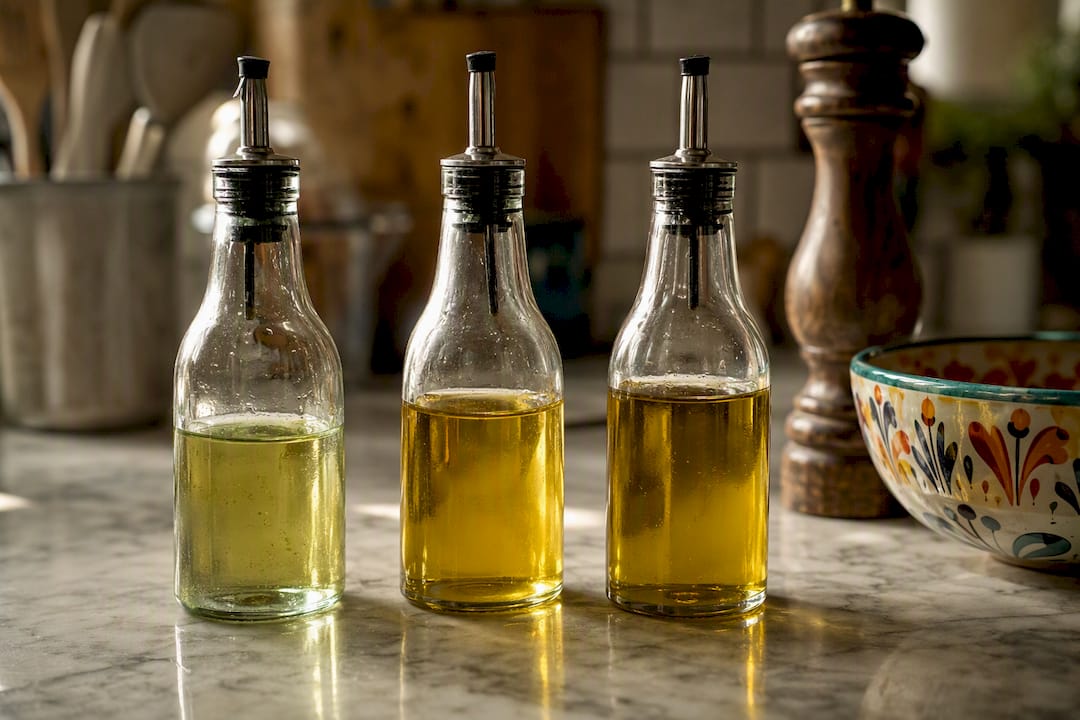
Oil choice comes down to smoke point and how the fat behaves as it polymerizes. Grapeseed oil (around 420°F), refined canola (around 400°F), and refined avocado oil (around 520°F) all top the list because they cross-link into flexible, durable coatings that hold up to real cooking heat.
Skip flaxseed oil for your initial seasoning. It’s popular online for producing a dark, glassy finish fast, but its chemistry tends toward brittle coatings that flake off with normal thermal expansion, according to materials-science commentary from WeekendKitchen. Unrefined extra-virgin olive oil is another one to avoid in the oven; its smoke point is too low for the temperatures this process needs.
- Use: grapeseed, refined canola, refined avocado.
- Avoid: flaxseed (initial seasoning), unrefined olive oil (oven method).
Pro Tip: Pick an oil rated near 400°F or higher, then apply it thinner than feels right. Thin coats polymerize cleanly; thick ones turn sticky.
How Do You Maintain a Carbon Steel Pan Day to Day?
Good maintenance is mostly about not undoing the work you already did. After cooking, ATK recommends a light touch rather than a deep scrub.
- Rinse with hot water while the pan is still warm.
- Scrub gently with a soft brush or non-abrasive sponge if food residue clings.
- Dry it completely, ideally by setting it back on the burner for a minute over low heat.
- Wipe on a very thin film of oil before it goes back in the cabinet.
Skip steel wool and harsh scouring pads. They’ll strip seasoning you spent an afternoon building. Avoid letting a pan air-dry, since trapped moisture is exactly what rust needs. Mild dish soap is fine once your patina is well established, but hold off on frequent soap use in the first few months while the coating is still thin.
How Do You Fix Rust, Stickiness, or Uneven Seasoning?
Every carbon steel pan runs into one of these problems eventually. None of them require replacing the pan.
- Tacky or sticky surface after cooking
- Small rust spots, usually near the rim or handle
- Flaking or patchy patina
- Food sticking more than it used to
- For a tacky surface, scrub with coarse salt and a splash of oil, rinse, dry, and reapply one thin layer of oil with heat.
- For rust spots, scour with coarse salt or fine steel wool just on the affected area, then re-season that section.
- For serious flaking or a badly uneven patina, strip the pan back to bare metal and repeat the full oven process from the start.
Reseason as issues appear rather than on a fixed schedule. Heavy regular use actually improves a patina over time, but a visible problem is worth fixing right away before it spreads.
What Mistakes Ruin a New Seasoning Job?
Most seasoning failures trace back to a handful of repeat offenders, and they’re avoidable once you know what to watch for.
- Using too much oil per coat instead of wiping it nearly dry.
- Skipping the drying step before oil ever touches the pan.
- Choosing a low smoke point oil that burns instead of polymerizing.
- Rushing the cool-down and handling a hot pan too soon.
- Reaching for flaxseed oil out of habit rather than checking how it actually performs.
Pro Tip: Less oil, more patience. If you’re ever unsure, heat the pan until the oil smokes briefly, pull it off the heat, let it cool, and check the finish before adding another layer. If a coat comes out sticky, a coarse salt scrub and a thinner reapplication usually solves it.
What Actually Happens to the Oil When You Season a Pan?
Seasoning isn’t dried oil sitting on metal. It’s a chemical transformation: heat drives oxidation and cross-linking reactions that turn liquid fat into a solid, bonded film fused to the steel’s surface.
Materials-science writers describe a fully seasoned pan surface as an organic glass, an irregular, cross-linked layer that behaves more like a thin polymer coating than a film of cooking oil. That’s why thin, repeated layers beat one thick application. Each pass adds structural strength to a film that’s still, chemically, glass.
WeekendKitchen’s materials-science framing and ATK’s practical steps come from different angles, chemistry versus kitchen testing, but they land on the same advice: build it in layers, and give each one time to bond.
A cook’s take on getting this right
Go with the oven for your first real base. It’s slower, but the even heat forgives small mistakes. Save the stovetop for touch-ups between big cooking sessions. Honestly, the pan you use every week will outseason the one you babied for a perfect first attempt.
Ready to Pick the Right Pan for Your Kitchen?
If you’re still deciding between carbon steel, cast iron, or something nonstick, the seasoning process above only tells half the story. The material you start with shapes how much maintenance you’re signing up for long term. Carbon steel rewards patience with a lighter, more responsive pan than cast iron, but both need a real seasoning routine to perform their best, unlike nonstick coatings that skip the process entirely but wear out faster.

Kitchendevotion’s guide on how to choose the right cookware materials walks through the tradeoffs between carbon steel, cast iron, and nonstick in plain terms, so you’re not guessing which pan fits your cooking habits. Once you’ve settled on carbon steel or you’re ready to add a piece to your rotation, browse curated options built for home kitchens rather than restaurant lines. Start there, pick your pan, and come back to this guide the day it arrives.
Sources
- How to Season a Carbon-Steel Skillet or Wok | America’s Test Kitchen
- Guide to carbon steel pan seasoning and care – WeekendKitchen
- Is it absolutely necessary to season a carbon steel pan? | Cooking StackExchange
FAQ
Does a carbon steel pan need to be seasoned?
Yes. Without seasoning, carbon steel rusts quickly and sticks far more than a properly seasoned surface, especially with acidic foods.
What is the best oil for seasoning carbon steel?
Grapeseed, refined canola, and refined avocado oil are top choices because their smoke points and fat profiles polymerize into flexible, durable coatings. Avoid flaxseed oil, which tends to flake.
How many times should you season a carbon steel pan?
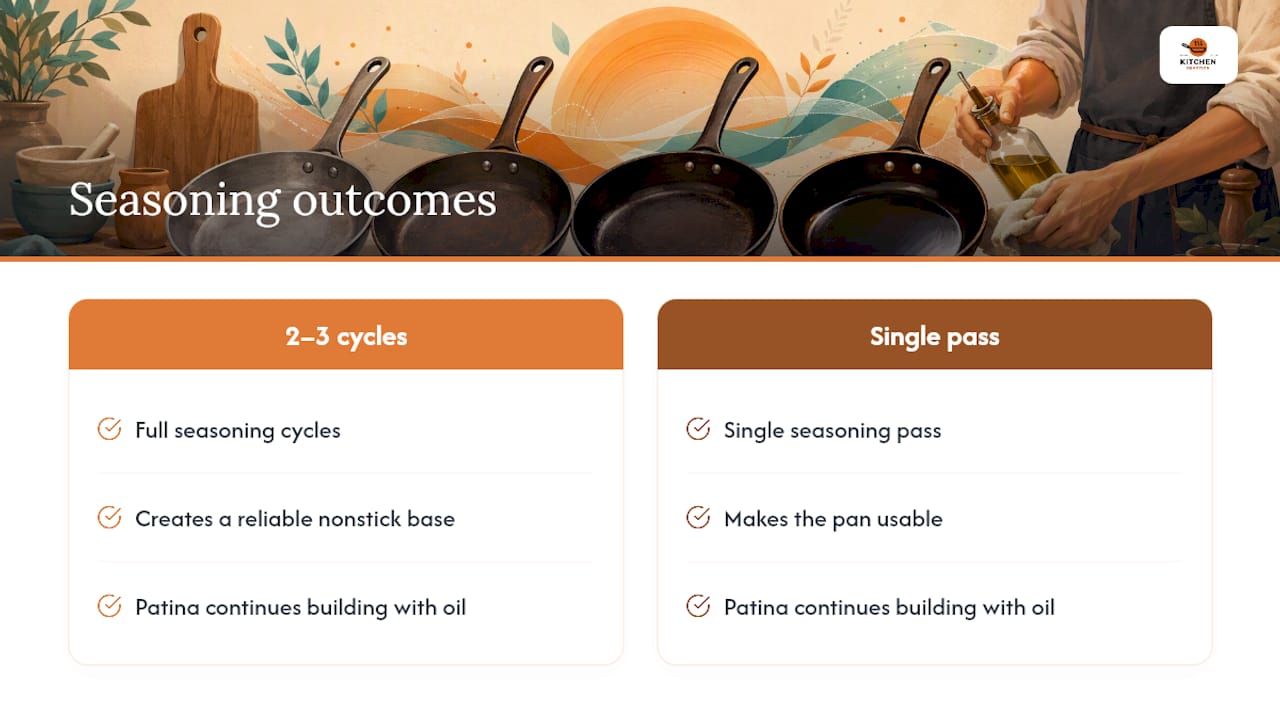
Two to three full seasoning cycles create a reliable nonstick base, though a single pass makes the pan usable. Regular cooking with oil continues building the patina afterward.
How do you season a carbon steel frying pan on the stovetop?
Apply a thin oil film, heat on medium-high until smoking stops and the surface darkens, then cool and repeat. Three to five short cycles in one session gives a noticeably stronger finish.




No comment