
The best fix for a cramped cabinet is a slim-profile, stackable or nesting dinnerware set made from a durable, food-safe material, paired with two cheap storage tools. Uniform sizing lets plates and bowls sit flush instead of wobbling into wasted air space, so a full set fits where a mismatched one wouldn’t. Before you buy anything, grab a tape measure: check your cabinet’s height, shelf depth, and how far the door swings open, then count how many place settings your household actually uses daily.
TL;DR:
- Choose dinnerware with a slim rim width and flat profiles to minimize vertical space when stacking, especially if using a combination of stacking plates and nesting bowls.
- Measure your cabinet’s height, depth, and door swing before purchasing to ensure the set and storage tools will fit comfortably in your space.
- Use vertical storage tools like risers, plate racks, and tension rods to maximize cabinet capacity and keep frequently used items within easy reach.
- Select durable, food-safe materials such as tempered glass or slim-profile stoneware to save space while ensuring longevity and safety.
- Prioritize buying a set that matches your household’s eating habits and includes versatile, multipurpose pieces to reduce clutter and maximize efficiency.
Table of Contents
- What Makes Dinnerware Actually Space Saving?
- How Do You Choose the Right Dinnerware for a Small Kitchen?
- Storage Tools That Make Any Cabinet Hold More
- Which Material Actually Saves the Most Space?
- How Kitchen Devotion Curates Space Saving Picks
- How Do Space Saving Dinnerware Brands and Styles Compare?
- What Should You Budget for a Space Saving Dinnerware Set?
- How Do You Keep Compact Dinnerware Looking New?
- What the Research Actually Supports
- Shop Kitchen Devotion’s Curated Space Saving Picks
- Sources
- FAQ
What Makes Dinnerware Actually Space Saving?
Stackable and nestable aren’t the same thing; the difference matters more than most shoppers realize. Stackable pieces sit flat on top of each other, plate on plate, bowl on bowl, with uniform diameters keeping the pile straight instead of leaning. Nestable pieces, usually bowls, taper inward so a smaller one drops partway into a larger one, cutting vertical height dramatically. A set that does both, flat stacking plates and tapered nesting bowls, gives you the smallest possible footprint for the same number of place settings.
Uniform sizing across a set is the detail that separates genuinely compact dinnerware from dishware that just looks minimal in a product photo. If your dinner plates are 10.5 inches and your salad plates are 8 inches with matching rim widths, they stack in a clean column. Mismatched rims create gaps, and gaps waste shelf height you don’t have.
A few features to check on any product page before buying:
- Slim rim width. Rims under half an inch add up fast across a stack of eight plates.
- Flat, not curved, plate profiles. A slight dip in the center is fine; a deep curve wastes vertical space when stacked.
- Nesting bowls with a visible taper. Straight-sided bowls stack tall; tapered ones telescope into each other.
- Chip-resistant glaze or tempered composition. Stacked dishes rub against each other constantly, and a soft glaze chips within months.
- Multipurpose pieces. A deep coupe bowl that works for cereal, pasta, and salad cuts the number of separate items you need to store.
Fewer SKUs in a set often means less total volume in your cabinet, even when the piece count looks the same on paper. A 16-piece set with four genuinely interchangeable bowl sizes beats a 20-piece set with six near-duplicate shapes.
How Do You Choose the Right Dinnerware for a Small Kitchen?
Measure before you shop. It sounds obvious, but it’s the single step most people skip, and it’s why so many “space saving” sets get returned. Grab a tape measure and a notepad, or just use the notes app on your phone, and record three numbers for every cabinet you plan to use for dishes.
- Interior height, from the shelf floor to the shelf above it, or to the cabinet ceiling if there’s no shelf.
- Shelf depth, front to back, since deep-rimmed platters and oversized bowls often don’t fit standard 12 inch shelves.
- Door swing clearance, especially in galley kitchens where a cabinet door can hit a counter edge or another open door.
Write these numbers down before you start browsing. It turns “does this look like it’ll fit” guesswork into an actual comparison.
For piece counts, a single person or couple usually does fine with a 4 or 8 place setting set: dinner plate, salad plate, bowl, mug, repeated four or eight times. A family of four should look at 12 to 16 pieces, and anyone who hosts occasionally should add two to four extra place settings rather than buying a second full set, since a mismatched extra set doubles your storage problem instead of solving it.
On any product page, look for the exact dimensions of each piece, not just “fits standard cabinets.” Confirm dishwasher and microwave safety explicitly, not implied. Check whether the glaze or material carries a lead-free or food-safe certification. And read the return policy before checkout, since dinnerware is one of the most commonly returned kitchen categories when sizing doesn’t match expectations.
Red flags worth walking away from: a listing with no stated dimensions, a set where individual pieces come in inconsistent diameters despite being marketed as “matching,” or vague safety language like “generally considered safe” instead of a specific dishwasher or microwave rating.
Pro Tip: Tape a printout of your cabinet measurements inside the cabinet door itself. You’ll never have to remeasure before your next dinnerware purchase, and it’s the fastest gut-check when you’re standing in a store aisle.
Storage Tools That Make Any Cabinet Hold More
Even a well-chosen set benefits from the right cabinet setup, and this is where most kitchens leave usable space on the table. Vertical storage techniques like shelf risers, plate racks, and tension rods create layers and slots inside a single shelf, which raises how much a cabinet can hold without adding a single inch of cupboard footprint, according to The Kitchn. A basic wire riser that splits one shelf into two effectively doubles that shelf’s capacity for lighter items like bowls and mugs.
Storing plates upright, like records in a crate, is more space efficient than stacking them flat when your cabinet is wider than it is tall. A tension rod mounted vertically, or a simple wire plate rack, holds plates on their edges instead of piled flat. Leave a little spacing between each plate when you set this up. Tight upright storage looks neat, but it makes single-plate removal a two-hand wrestling match and increases chip risk, according to The Kitchn’s storage guidance.
A few more tools worth adding, roughly in order of cost:
- Cabinet-door hooks for mugs, which frees an entire shelf that would otherwise hold nothing but handles poking out.
- Rotating trays (lazy Susans) for small items like ramekins or lid organizers, so nothing gets pushed to the back and forgotten.
- Magazine or file holders, repurposed to store flat items like serving trays, cutting boards, and pot lids upright instead of stacked flat.
- Under-shelf baskets that hang from the shelf above, adding a storage layer in what’s usually just dead air.
Even a single cabinet can comfortably hold a household’s everyday dishes once you edit down to what you actually use and apply vertical organization, according to Cozy Corner At Home, which covers studio-kitchen storage where a single cabinet does all the work.
The layout principle that ties all of this together is the one-motion rule: if you have to move two or three other items to grab the plate you actually want, your cabinet is organized wrong. Keep daily-use plates, bowls, and mugs in the primary zone closest to the sink and dishwasher, and push occasional-use pieces, the good serving platter, the extra mugs for guests, to a higher or lower shelf. This zoning approach comes directly from professional cabinet organizers who treat accessibility as the design goal, not just capacity, per Shelf Genie’s accessibility guide. If you’re also wrestling with pots and pans competing for the same cabinet space, a dedicated storage approach for bulky cookware keeps those items out of your dish zone entirely.
Which Material Actually Saves the Most Space?
Material choice affects both how thin a piece can be made and how safely it stacks, so it’s worth weighing against your household’s actual habits rather than picking on looks alone.
- Tempered or borosilicate glass runs slim by nature, since glass doesn’t need the thickness that some ceramics do to stay durable. It’s inert, meaning it won’t absorb odors or stains, and most glass dinnerware is both microwave and dishwasher safe. The tradeoff is breakage risk if a piece takes a hard drop, so it’s a better fit for careful households than for a kitchen with toddlers underfoot.
- Porcelain and stoneware offer the classic dinnerware look and hold up over years of daily use, but standard collections often run thicker than glass or melamine. Look specifically for lines marketed as “slim profile” or “coupe style,” and confirm lead-free glaze claims on the product listing rather than assuming.
- Stainless steel and food-grade silicone are lightweight, nearly unbreakable, and a strong match for families with young kids. Silicone in particular is durable and space-friendly, though neither material gives you the traditional dinnerware presentation some households want for everyday meals, per The Good Life Designs’ material safety comparison.
- Melamine and other disposable-style plastics stack thin and light, which makes them genuinely space saving. But melamine cannot go in the microwave and isn’t built for years of daily heavy use the way glass or stoneware is, so treat it as a good option for outdoor dining or kids’ plates rather than your primary everyday set, per The Good Life Designs.
If your household microwaves leftovers daily, glass or stoneware beats melamine outright. If you’re outfitting a kitchen with young kids, silicone or stainless steel removes the breakage worry entirely. For dishwasher-safe dinnerware that also stacks thin, glass and well-made stoneware collections tend to check both boxes at once.
How Kitchen Devotion Curates Space Saving Picks
A good curation process for dinnerware picks includes confirmed dimensions for a cabinet-fit check, dishwasher-safe rating, a genuinely slim profile rather than a marketing claim, and compatibility with common storage tools like risers and vertical racks.
That checklist shows up directly in how the site organizes its tableware and accessories pages, where fit and care information sit alongside the product itself instead of buried in a spec sheet you have to dig for.
This article is written by K. Connors, drawing on kitchen organization research and hands-on category knowledge of dinnerware materials and storage systems. The goal is simple: help you buy once, buy right, and avoid the return-and-reorder cycle that eats up time and money when dimensions get guessed instead of measured.
How Do Space Saving Dinnerware Brands and Styles Compare?
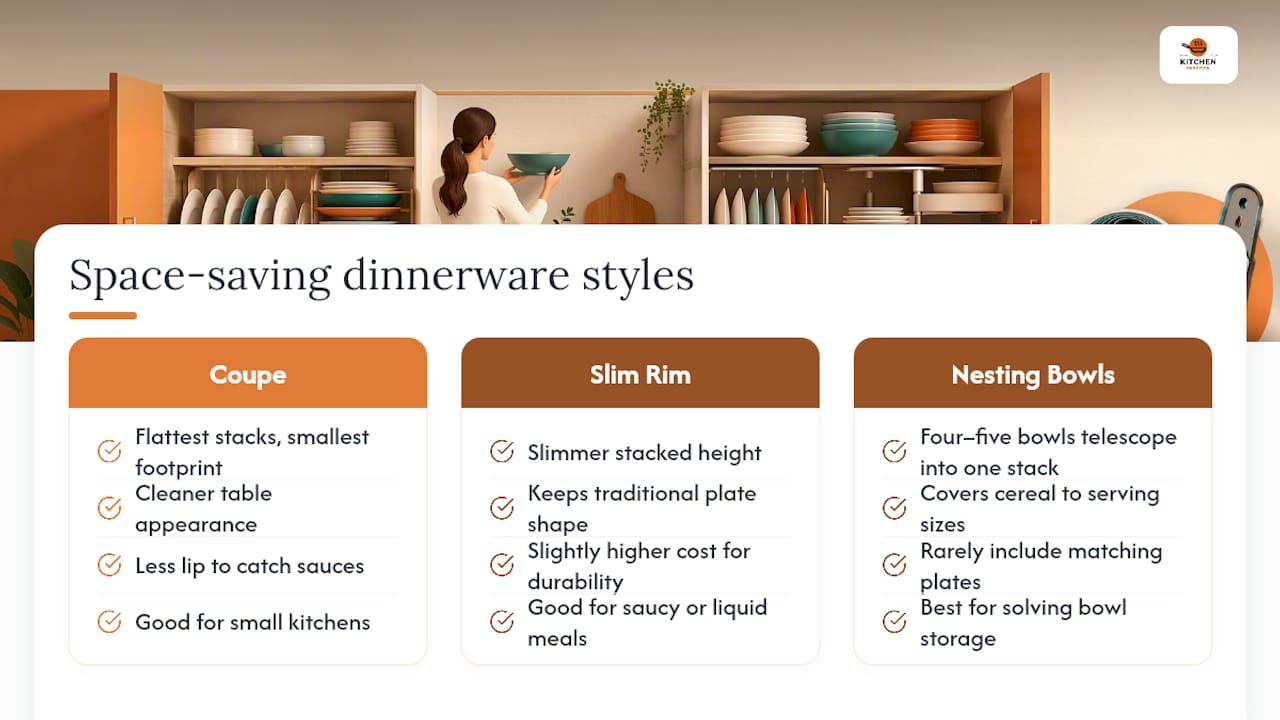
Space saving dinnerware generally falls into three design camps, and each comes with real tradeoffs worth knowing before you commit.
Modular coupe-style sets ditch the traditional rimmed plate for a shallow, rimless design that stacks flatter and nests more predictably. The upside is a smaller footprint per piece and a cleaner look on the table. The downside is less lip to catch sauces or contain a full dinner for messier eaters, which matters if you’re feeding kids.
Classic rimmed sets built in slim-profile lines keep the traditional plate shape home cooks are used to, but manufacturers thin the rim and reduce the plate’s base thickness to cut stacked height. These tend to cost slightly more than standard rimmed sets from the same brand, since the engineering to keep a thin plate durable adds to production cost.
All-in-one nesting bowl systems, where four or five bowl sizes telescope into a single stack barely taller than the largest bowl alone, solve the bowl-storage problem specifically. They’re excellent for cereal-to-serving-size range in one compact stack, but they rarely include matching plates, so you’ll likely mix brands.
None of these is universally “best.” A rimmed slim-profile set suits a household that eats a lot of sauced or liquid meals. A coupe-style set suits smaller kitchens prioritizing footprint above all else. Match the style to how your household actually eats, not to which set photographs best.
What Should You Budget for a Space Saving Dinnerware Set?
Space saving dinnerware spans a wide price range, and the price often tracks material and piece count more than it tracks how compact the set actually is. Basic melamine or stoneware 12 piece sets sit at the affordable end, while glass and premium slim-profile stoneware collections run higher, particularly when the brand engineers thinner walls without sacrificing durability, which adds manufacturing cost.
A few budgeting habits that help:
- Buy for your real headcount, not your hosting fantasy. Extra place settings you use twice a year cost cabinet space every single day in between.
- Price per piece, not per set. A 16 piece set and a 12 piece set at similar total prices aren’t the same value if you only need place settings for four.
- Factor in replacement pieces. Open-stock availability, meaning you can buy a single replacement bowl or plate later, saves money over rebuying a whole set when one piece chips.
- Weigh material against lifespan. A slightly pricier glass or stoneware set that lasts a decade often beats a cheaper melamine set you’ll replace in two or three years of daily use.
If you’re also budgeting for other kitchen upgrades this year, it helps to prioritize which appliances and tools actually earn their cabinet space first, rather than buying dinnerware and cookware separately without a plan.
How Do You Keep Compact Dinnerware Looking New?
Stacked dishware takes more physical contact than dishware stored spread out, so a few habits go a long way toward preventing chips and glaze wear over time.
Let glass and ceramic pieces cool slightly before stacking them straight from the dishwasher. Stacking hot glass against room-temperature glass is one of the more common causes of hairline cracks that show up months later. Dry pieces fully before stacking, too. Trapped moisture between stacked bowls invites mineral spotting and, on porous stoneware, occasional mildew smell if it sits for days.
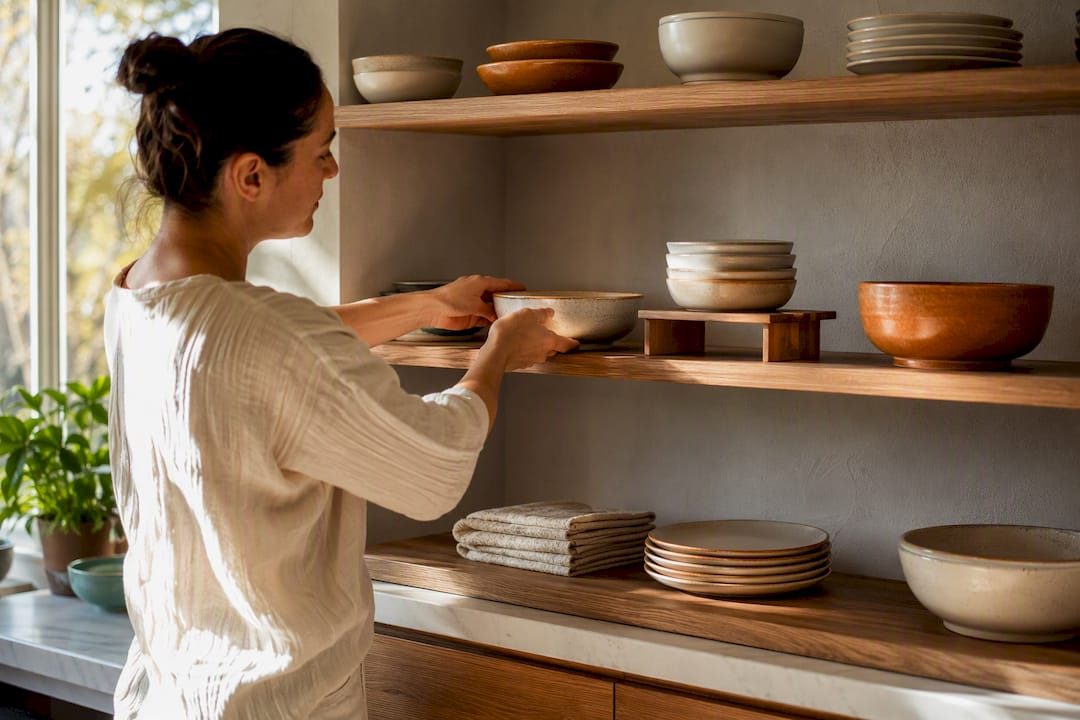
Rotate which pieces sit on top of the stack rather than always grabbing from the same spot. Constant top-of-stack pieces see more wear from being lifted and set down repeatedly. Wipe glaze surfaces occasionally with a soft cloth even between dishwasher cycles, since hard water spots left to sit can dull a glossy glaze over months.
For nesting bowls specifically, check that you’re not forcing a bowl that’s slightly too large into a slot meant for a smaller one. That small resistance you feel when nesting is often the glaze rims grinding against each other, and it’s a slow but steady cause of chip damage at the rim edge, exactly where it’s most visible.
What the Research Actually Supports
Most dinnerware advice online treats “space saving” as a marketing label instead of a measurable trait, and that’s the gap this guide tries to close. The conventional wisdom says buy a smaller set. The better advice says buy a set with the right geometry, uniform sizing, flat profiles, tapered nesting, and then pair it with cabinet tools that were never part of the dinnerware purchase decision in the first place.
Where most guides fall short is treating storage as an afterthought rather than a purchase criterion. A gorgeous slim-profile set still wastes cabinet space if you never add a shelf riser. A basic set organized with vertical racks and zoned by frequency of use can outperform a “premium” compact set that just gets piled flat.
Prioritize measurement first, geometry second, material third, and brand last. That order rarely matches how people actually shop, which is exactly why so many kitchens end up with dinnerware that looks compact in a photo and fights you every time you open the cabinet.
— K. Connors
Shop Kitchen Devotion’s Curated Space Saving Picks
A curated resource helps avoid the need to cross-reference multiple retailer listings just to confirm a plate’s actual diameter. Dinnerware selections benefit from checking fit-first standards including real dimensions, dishwasher-safe ratings, and a genuinely slim profile to avoid marketing descriptions that may not hold up in practice.

Browse the curated tableware and accessories selection to see slim-profile sets that pair well with the storage tools covered in this guide, and check the kitchen appliance priority list if you’re outfitting a small kitchen from scratch and want to sequence purchases sensibly. If your cabinets also need a better system for pots, lids, and bakeware, One Day Doors & Closets offers custom organization builds worth a look for a bigger overhaul. Start with the dinnerware page, measure your cabinet, and shop from there.
Sources
- The Kitchn — Best shelf risers
- Cozy Corner At Home — Store dishes in a studio kitchen with one cabinet
FAQ
What Are the Biggest Dinnerware Trends for 2026?
Slim-profile plates and modular, stackable collections that reduce the number of separate pieces you need are leading the shift, driven by smaller kitchens and a growing preference for quality over sheer piece count, according to design trend coverage.
What Is the Healthiest Dinnerware to Eat Off Of?
Inert materials like tempered glass, porcelain, and stainless steel don’t leach into food and are considered among the safest daily options, while melamine should be limited to cold or room-temperature use since it’s not built for microwave heat, per material safety guidance.
How Should You Store Dishes When Space Is Limited?
Use vertical tools like shelf risers, wire plate racks, or tension rods to add layers to a single shelf, and keep your most-used pieces in the primary zone closest to the sink for one-motion access, following storage principles from The Kitchn and Shelf Genie.
What Is the Best Dinnerware Set for Everyday Use in a Small Kitchen?
A stackable or nesting set with uniform diameters, slim rims, and a dishwasher-safe, food-grade material like glass or stoneware fits most households best, since it combines durability with a footprint that actually matches small-cabinet space. Kitchen Devotion’s dishwasher-safe dinnerware collection is curated specifically around that combination.





No comment