
Yes, silicone utensils are safe for typical home cooking when they’re made from genuine food-grade silicone and used within their rated temperature range. The main risks come from two things: cheap, unlabeled silicone that skips proper manufacturing standards, and pushing any utensil past the heat or wear it’s built for. Check the rating, inspect for damage, and replace anything that’s torn, sticky, or smells off. The specifics on both fronts follow below.
TL;DR:
- Food-grade silicone utensils are safe for use within their rated temperature limits, typically between 400°F and 500°F, with some bakeware reaching only about 428°F.
- Reputable brands clearly label their products with temperature ratings and food-grade certifications; unlabeled or extremely low-cost items should be avoided.
- Silicone can gradually release volatile compounds like siloxanes under aggressive lab conditions, but normal kitchen use, especially with rated products, presents minimal risk.
- Proper care involves washing before first use, avoiding abrasives, inspecting for damage every few months, and replacing worn or damaged utensils.
- Silicone remains a practical choice compared to plastic, which often has lower heat tolerance, or metal and wood, which have their own specific risks and benefits.
Table of Contents
- Quick Safety Checklist for Using Silicone Utensils
- What Does “Food-Grade Silicone” Actually Mean?
- What Do Migration Studies Actually Show?
- How to Use Silicone Utensils Safely, Step by Step
- Silicone vs. Plastic, Metal, and Wood: Which Is Actually Safer?
- When Should You Avoid Silicone Utensils?
- The Kitchendevotion Take on Silicone Safety Claims
- Browse Kitchendevotion’s Curated, Food-Safe Picks
- Sources
- FAQ
Quick Safety Checklist for Using Silicone Utensils
Most silicone kitchen tools carry a heat ceiling somewhere between 400°F and 500°F, though LeafScore’s testing notes that many silicone bakeware pieces top out closer to 428°F (220°C). If your utensil has no printed rating at all, treat it as a budget item and keep it away from direct heat, hot oil, or the stovetop’s hottest burner.
Here’s what to check before your next cookout:
- Dishwasher: Most food-grade silicone is dishwasher-safe, but top-rack placement reduces warping over time.
- Freezer: Silicone stays flexible at sub-zero temperatures, which is why it’s popular for ice trays and freezer molds.
- Microwave: Fine for reheating, but avoid using silicone lids to trap steam at very high power for extended stretches.
- Retire it when: you see melting, tearing, a sticky or tacky film, discoloration that won’t wash out, or a persistent chemical odor after washing.
Wash new silicone tools before first use, skip abrasive scrubbers that can create micro tears, and dry pieces completely before storing them stacked.
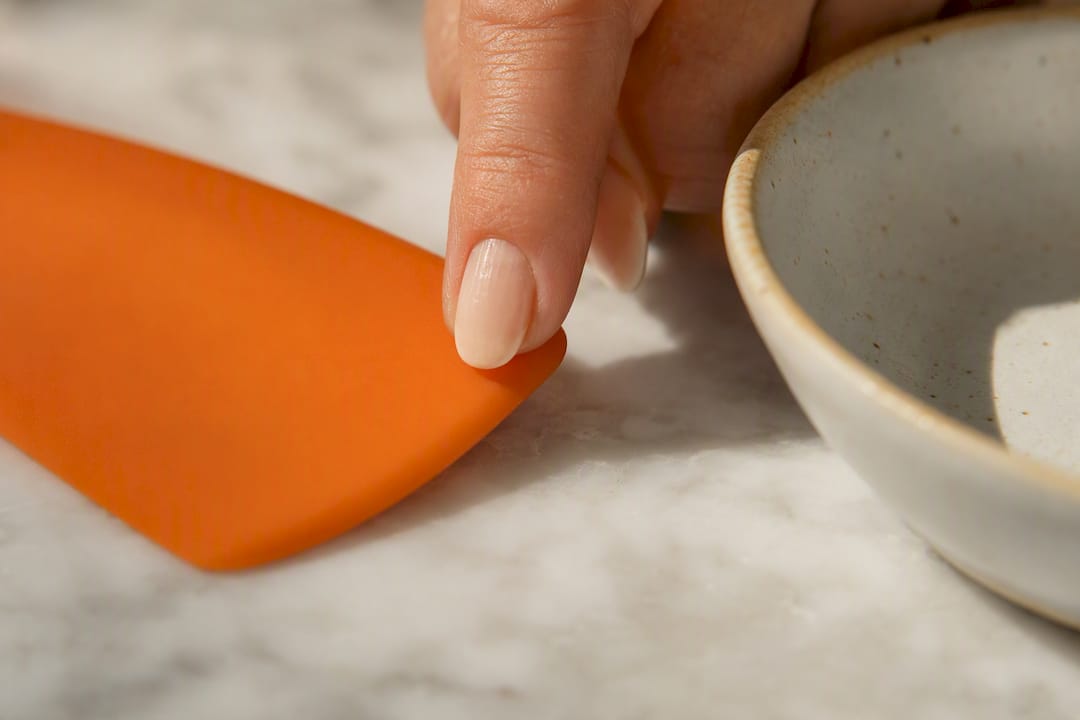
Pro Tip: Run a fingernail lightly across the surface after a few months of use. If it feels tacky rather than smooth, that’s early degradation, and it’s time to replace the piece even if it looks fine.
What Does “Food-Grade Silicone” Actually Mean?
Silicone itself is a silica-based polymer, essentially sand transformed through a chemical process into a flexible, heat-stable material. What makes a piece “food-grade” isn’t the silicone alone. It’s how it’s cured and crosslinked, and whether the formulation avoids fillers and additives not approved for food contact.
In the United States, rubber articles meant for repeated food contact, including silicone utensils, fall under 21 CFR 177.2600, which spells out the base materials and additives permitted in these products. This regulation doesn’t guarantee a specific brand’s quality. It sets the boundaries manufacturers are supposed to operate within, and compliant products are expected to resist excessive breakdown or leaching under normal use conditions.
Regulators test migration, meaning how much of a material transfers into food or a food simulant, because that’s the actual exposure pathway that matters. A silicone spatula that never touches heat above 200°F behaves very differently than the same spatula pressed into a pan of frying oil at 400°F.
Comparable international guidance reinforces the same idea. Germany’s Federal Institute for Risk Assessment, BfR, recommends silicone rubber food-contact products contain no more than 0.5% volatile organic compounds and 0.5% extractable components, a benchmark widely referenced in industry safety reviews as a marker of well-manufactured silicone.
Silicone rubber products vary significantly by production formula, and residual chemicals like siloxane oligomers can migrate into food, particularly from lower-quality items. Manufacturers and regulators should emphasize stricter production standards and testing.
When a label just says “silicone” with no temperature rating and no mention of food-grade compliance, that absence is the signal. Reputable brands print the rating on the packaging because they’ve actually tested for it.
What Do Migration Studies Actually Show?
Migration studies test the worst case, not your kitchen. That distinction shapes almost every headline you’ll see about silicone leaching chemicals.
A 2025 review of silicone food contact materials found measurable migration of both cyclic and linear siloxanes, compounds like D4, D5, and D6, when samples were tested under aggressive lab conditions: extended exposure to ethanol-based food simulants at elevated temperatures, sometimes mimicking scenarios well beyond a home stovetop. In some samples, total migration exceeded proposed action limits, with the researchers flagging particular concern for exposure simulations involving children.
Here’s what those numbers mean once you strip away the lab conditions:
| Test scenario | Conditions used | Relevance to home cooking |
|---|---|---|
| Standard migration test | ethanol simulant, extended contact | Roughly mimics prolonged contact with hot, fatty foods |
| Accelerated extraction | 95% ethanol at 70°C for 2 hours | Far more aggressive than typical stir-frying or baking |
| Real-world reuse study | Silicone molds used up to 1,700 times | Approximates years of normal kitchen use |
That third row matters more than headlines usually give it credit for. A long-term migration study tracking silicone molds through 1,700 uses found volatile compound release actually dropped, from 0.44% down to 0.14%, as the material aged. Silicone tends to shed its most volatile compounds early, then stabilizes.
NIAS, or non-intentionally added substances, is the term researchers use for byproducts that weren’t deliberately formulated into the silicone but end up there anyway, often from incomplete curing or contaminated raw materials. A separate analysis of 42 silicone kitchenware products found many samples showed mild or greater cytotoxicity and endocrine activity after harsh extraction, a finding that points to real quality variation across products rather than a universal hazard in silicone as a category.
The honest takeaway: these studies are genuinely useful for regulatory screening and for flagging bad manufacturing. They’re less useful for predicting what happens when you stir a pot of pasta sauce with a name-brand spatula rated to 450°F.
How to Use Silicone Utensils Safely, Step by Step
Buying decisions set the tone for everything after. Look for an explicit “food-grade” claim, a printed temperature rating, and a manufacturer you can actually identify, not just a generic storefront name with no traceable brand behind it. Kitchendevotion’s guide to responsible sourcing in kitchenware walks through the quality signals worth checking before you add anything to your cart.
- Wash before first use. A warm soapy wash removes manufacturing residue, even on products labeled ready to use.
- Clean with mild dish soap and a soft sponge. Abrasive pads create micro scratches that trap food particles and bacteria over time.
- Keep utensils away from open flame. Silicone doesn’t ignite easily, but direct flame contact exceeds any rated ceiling almost instantly.
- Respect the printed temperature limit. Extended contact with very hot fat, like deep-frying oil above 400°F, stresses silicone faster than dry-heat baking at the same number.
- Dry completely before storing. Trapped moisture in silicone’s slightly porous surface texture is exactly the environment biofilm needs to establish itself.
- Inspect every few months. Look for tackiness, discoloration, tearing at stress points like the handle junction, and swap out anything showing wear.
Pro Tip: Store silicone utensils upright in a crock or hanging rather than stacked flat in a drawer. Stacking under weight is one of the most common causes of permanent creasing that eventually cracks.
Kitchendevotion’s maintenance guide for kitchen appliances covers similar inspection habits that apply well beyond utensils, including cookware and small appliances that see daily heat cycling.
Silicone vs. Plastic, Metal, and Wood: Which Is Actually Safer?
No single material wins across every category. Each one trades a strength for a weakness, and knowing which weakness matters for your kitchen is the real decision.
- Plastic: Cheap and lightweight, but many consumer plastics have lower heat tolerance than silicone and carry ongoing questions around BPA and PFAS in certain formulations.
- Metal: Chemically inert even at high heat, making it the safest choice for extreme temperatures, but it scratches nonstick coatings and conducts heat fast enough to burn hands without insulated handles.
- Wood: Very low chemical migration and a pleasant feel in hand, but its porous surface can harbor microbes if it’s not dried and oiled regularly.
- Silicone: Flexible, heat-tolerant within its rating, and gentle on nonstick surfaces, making it the practical pick for flipping delicate foods in a nonstick pan.
For nonstick cookware specifically, silicone spatulas and tongs remain a smart default because metal edges genuinely damage those coatings over repeated use. Readers weighing pan material alongside utensil choice may find Kitchendevotion’s breakdown of non-toxic cookware options useful for matching materials to cooking style.
When Should You Avoid Silicone Utensils?
A few scenarios call for extra caution rather than a blanket switch away from silicone.
- Infant feeding products: Some researchers single these out because children’s smaller body weight means the same migration level translates to a higher relative exposure; silicone-free glass or stainless options are worth considering here.
- High-frequency commercial-style use: Repeated heat cycling accelerates aging, so items used daily at high heat should be inspected more often and replaced sooner than occasional-use tools.
- Unlabeled, ultra-low-cost silicone: Missing brand information, no temperature rating, and suspiciously low prices are red flags; return anything that arrives smelling strongly of chemicals even after washing.
The Kitchendevotion Take on Silicone Safety Claims
Most of the fear around silicone utensils comes from studies that were never designed to describe your kitchen. They were designed to find the outer edge of what’s possible under punishing lab conditions, which is exactly the right approach for regulatory screening and exactly the wrong lens for deciding whether tonight’s stir-fry is dangerous.
What actually separates a safe silicone utensil from a risky one has less to do with silicone as a material and more to do with who made it and how carefully. The 2023 review on silicone rubber safety makes this point directly: quality control and manufacturing standards drive outcomes far more than the base chemistry does. That’s an uncomfortable answer for anyone hoping for a simple yes-or-no on the material itself, but it’s the honest one.
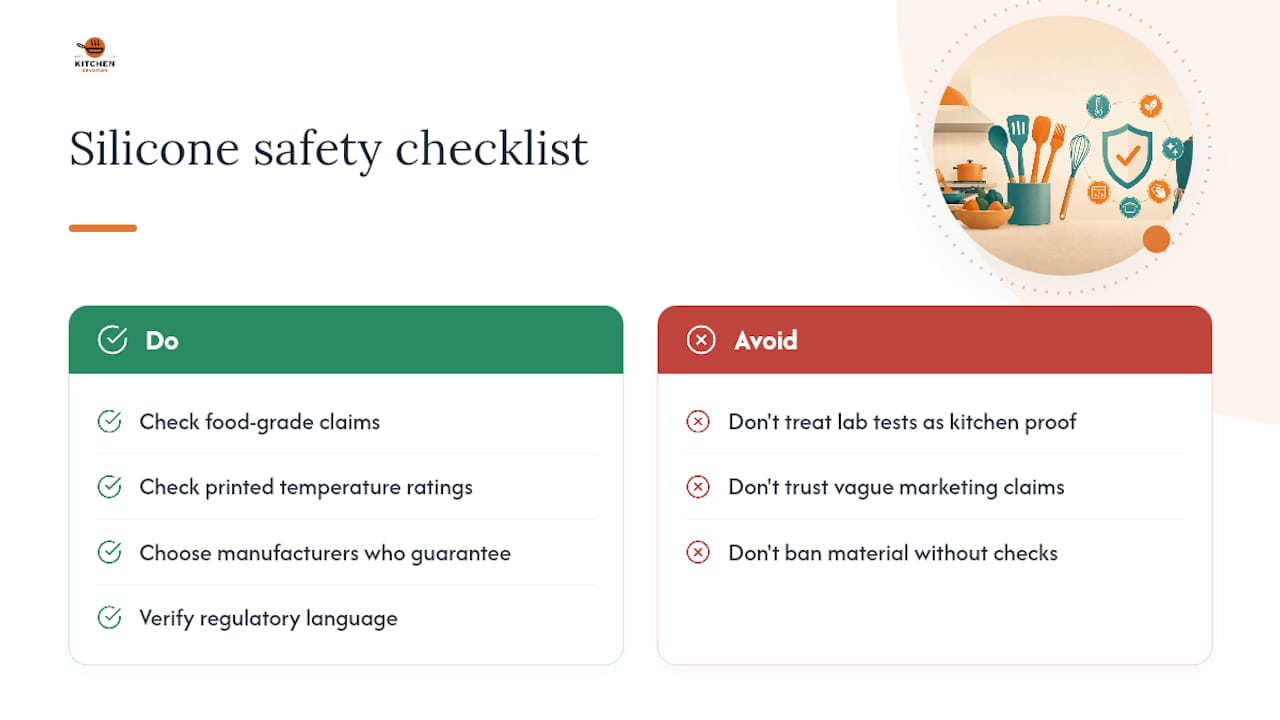
This article builds kitchen tool recommendations around that reality rather than around blanket material bans. It looks for explicit food-grade claims, printed temperature ratings, and manufacturers willing to stand behind their products, steering readers toward those signals instead of vague reassurance. Guides on cookware and utensils, including this one, get reviewed with that same standard applied consistently, focusing on verifiable regulatory language and peer-reviewed migration data rather than marketing claims. Readers deserve a verdict they can actually check, not just one they’re told to trust.
— K. Connors
Browse Kitchendevotion’s Curated, Food-Safe Picks
Reading labels helps, but nothing beats starting from a shortlist that’s already been checked against the standards this article just walked through. Curated guides filter out the unlabeled, unrated silicone clutter that fills most marketplace search results, so you’re choosing between options that already meet the food-grade and temperature-rating checks covered above.

If you’re replacing worn-out utensils or building out a kitchen from scratch, our best kitchen prep tools for beginners guide highlights pieces with clear food-grade credentials and printed heat ratings. Working with a tighter budget? The new kitchen tools under $50 roundup covers affordable options that still meet the sourcing standards this article recommends. Run the checklist from earlier in this piece against anything you’re about to buy, and you’ll skip most of the products worth worrying about in the first place.
Sources
- 21 CFR 177.2600 | Rubber articles intended for repeated use
- Progress in research on the safety of silicone rubber products in food processing
- Silicone food contact materials: migration profiling and exposure risk assessment
- Cytotoxicity, endocrine disrupting activity, and chemical analysis of 42 food contact silicone rubber products
FAQ
Does Silicone Give Off Microplastics?
Silicone is a synthetic polymer, not a plastic in the conventional sense, and current research focuses on siloxane migration rather than microplastic shedding as the primary concern with these products.
Does Silicone Release Toxins When Heated Within Its Rated Limit?
Well-manufactured, food-grade silicone used within its printed temperature rating shows low migration in most testing, though worst-case lab conditions using extreme heat and ethanol simulants can detect measurable siloxane transfer that doesn’t reflect typical stovetop use.
What Is the Safest Cooking Utensil Material?
No single material wins outright: stainless steel is the most chemically inert at high heat, wood has minimal chemical migration but needs careful drying, and food-grade silicone rated for your cooking temperature is a safe, nonstick-friendly choice for everyday use.
Are Silicone Utensils Just as Risky as Plastic Ones?
Not typically. Many common consumer plastics have lower heat tolerance and separate concerns around BPA and PFAS, while food-grade silicone generally tolerates higher heat and shows different, generally lower-risk migration behavior when it meets FDA-recognized standards.





No comment