
A garage-ready refrigerator is a model engineered and tested to keep food safe across wider ambient temperature swings than a standard kitchen fridge handles, typically designed to operate at lower temperatures than standard fridges which usually start around 55°F. The label matters if your fridge lives in an unheated garage, workshop, or three-season space where temperatures swing with the seasons. Before buying or relocating a unit, check its published ambient operating range in the owner’s manual.
TL;DR:
- Garage-ready refrigerators include built-in heater kits, external condenser fans, and upgraded insulation to operate reliably at lower ambient temperatures.
- Their lower temperature threshold typically reaches around 38°F, compared to standard models that usually start at 55°F, preventing cycling issues in cold garages.
- Checking the ambient operating range, heater kit presence, and airflow features on spec sheets and owner’s manuals is essential before purchasing.
- Proper installation requires adequate airflow clearance, off wet floors, away from direct sunlight, and a dedicated outlet with GFCI if needed.
- For uninsulated or frequently cold garages, a garage-ready fridge reduces risks of compressor damage and food spoilage, making the extra cost worthwhile.
Table of Contents
- What Does Garage-Ready Fridge Mean Compared to a Standard Model?
- How Garage-Ready Refrigerators Handle Temperature Swings
- What Should You Check on the Spec Sheet Before Buying?
- Is a Garage-Ready Refrigerator Worth the Extra Cost?
- Where and How to Install a Garage Refrigerator
- Common Garage Fridge Problems and Quick Fixes
- Kitchen Devotion Resources for Sizing and Setup
- My Take: Measure Before You Shop
- Let Kitchen Devotion Help You Shop With Confidence
- Sources
- FAQ
What Does Garage-Ready Fridge Mean Compared to a Standard Model?
The core difference comes down to one number: the ambient operating range. A standard refrigerator is built and tested to run properly between about 55°F and 110°F of surrounding air temperature. Drop below that floor, and the thermostat gets confused. It reads the cold room air, thinks the interior is already cold enough, and stops the compressor from cycling. Your freezer section can thaw even though the fridge looks like it’s running fine.
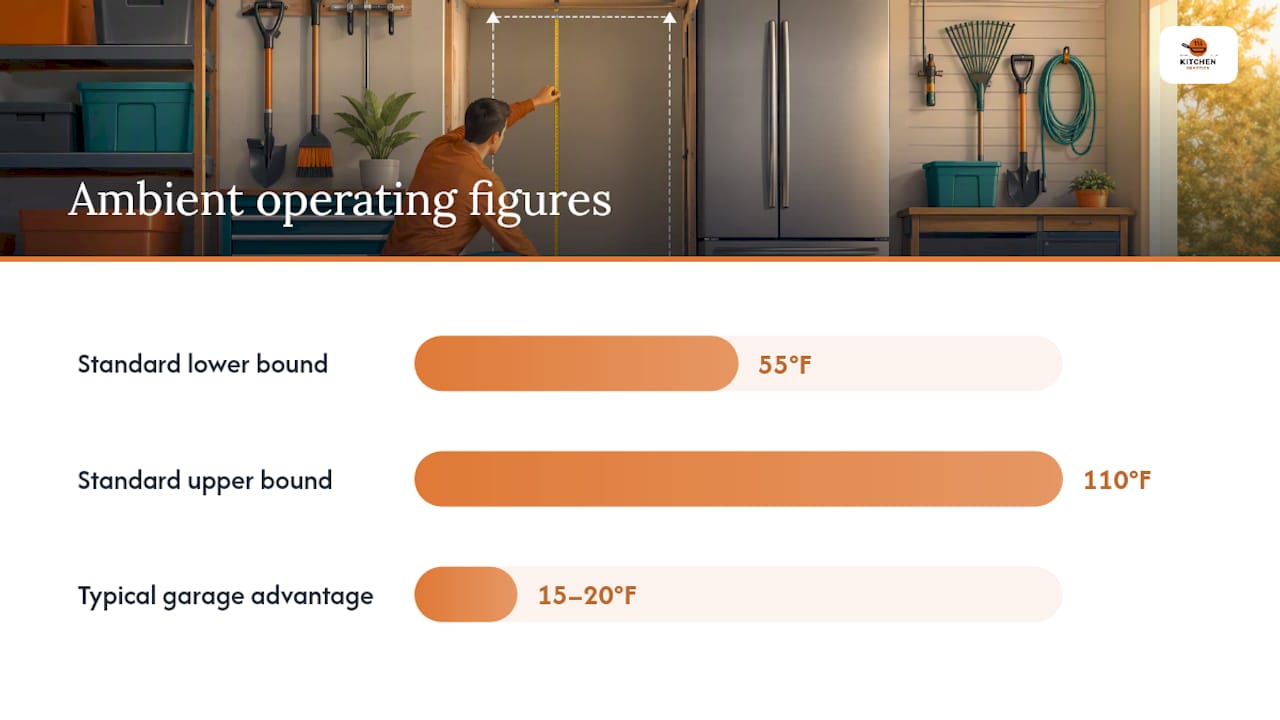
Garage-ready models push that lower threshold down, designed to operate safely at lower ambient temperatures to handle colder environments, though the exact lower limit varies by manufacturer and model, and that gap of 15 to 20 degrees is the entire reason the category exists.
You’ll find the ambient range listed a few places:
- The spec sheet or product page, usually under “installation requirements” or “environmental specifications”
- The printed owner’s manual, typically in the first few pages under setup instructions
- Manufacturer product-help pages, which walk through exactly how these systems are tested
If a listing doesn’t mention an ambient range at all, assume it’s a standard model and treat the garage as a gamble.
How Garage-Ready Refrigerators Handle Temperature Swings
Four systems do the heavy lifting here, and they work together rather than independently. A small heater kit warms the compressor housing and the thermostat sensor when ambient air drops low enough to fool the control board. That heater is the single biggest difference between a fridge that survives a Minnesota garage in January and one that doesn’t.
On the hot end, a beefed-up condenser fan and reworked coil layout move more air across the compressor when the garage hits 90°F or higher in July. Insulation and door gaskets get upgraded too, since garages carry more dust, humidity, and temperature swings than a climate-controlled kitchen ever will.
The features involved:
- Heater kits around the compressor and thermostat sensor for reliable cold starts
- External condenser fans that push more airflow in hot ambient conditions
- Thicker insulation rated for humidity and dust exposure
- Reinforced door gaskets that hold their seal through temperature cycling
Pro Tip: If you’re inspecting a used fridge someone offers you for the garage, look inside the back panel or check the manual for a heater wire around the compressor. No heater, no cold-weather guarantee, no matter what the seller tells you.
Manufacturer product-help documentation from brands like KitchenAid confirms these four systems as the standard approach across the industry, not just one brand’s marketing pitch.
What Should You Check on the Spec Sheet Before Buying?
Reading a spec sheet takes two minutes once you know what to look for. Skip this step and you’re guessing.
- Find the ambient operating range. Look for a number like “38°F to 110°F” or “temperate zone” ratings. If your garage regularly drops below 40°F in winter, pick a model rated for that low end specifically.
- Confirm the heater kit is built in. Some brands sell add-on freezer kits separately. Don’t assume one is included unless the listing says so.
- Check for an external condenser fan. This detail is sometimes buried in the technical specifications PDF rather than the main product page.
- Read the gasket and service notes. A line about “suitable for garage or basement installation” is the manufacturer’s own confirmation, not marketing language.
- Verify through the owner’s manual, not just the sales page. Retailer listings occasionally drop details the manual includes.
Pro Tip: Search the model number plus “owner’s manual PDF” before you buy. Manufacturer sites bury these details deeper than retailer product pages ever do, and the manual is the most reliable source you’ll find.
Is a Garage-Ready Refrigerator Worth the Extra Cost?
It depends entirely on where the fridge is going to live. If your garage sits uninsulated and unheated, a garage-ready model earns its price difference fast. Compressor damage from failed cold starts is not a cheap repair, and a fridge that stops cycling in January can spoil everything inside before you notice.
The upside:
- Reliable performance across all four seasons without babysitting it
- Lower risk of compressor burnout from repeated failed cold starts
- Gaskets and insulation built for humidity and dust, not just temperature
- Fewer food-safety surprises from a freezer that silently thaws
The tradeoff:
- Higher upfront price than a comparable standard model
- Slightly higher energy use in extreme heat, since the compressor works harder
- Even garage-rated units have limits. Push ambient temps below the model’s floor and you’ll still have problems
If your garage is insulated, attached, or stays within 20 degrees of your house year-round, a standard fridge may perform fine and save you the premium; for planning extra refrigerator space during busy seasons, check out these holiday meal prep tips for busy home cooks. The smartest move before spending anything: track your garage’s temperature swings for about a week with a simple thermometer before you commit either way.
Where and How to Install a Garage Refrigerator
Placement affects performance as much as the fridge itself does. Follow a few basics and most garage-fridge complaints disappear before they start.
- Leave clearance for airflow. Don’t box the fridge into a corner or closet setup. Condenser fans need open air on at least the back and one side.
- Keep it off wet floors and out of direct sun. Concrete slabs near garage doors collect moisture, and afternoon sun through a window adds unnecessary heat load.
- Use a dedicated outlet, never an extension cord. Manufacturer cautions consistently flag extension cords as a fire and voltage-drop risk for compressor-driven appliances. Check local code for GFCI requirements near garage outlets.
- In winter, monitor ambient lows against your model’s rated minimum. If your garage regularly dips below that number, a manufacturer-approved heater kit or heated enclosure may be your only fix, if the manufacturer permits one.
- In summer, shade the unit and confirm airflow around the coils. Reduced heat load means less compressor strain and steadier energy use.
Pro Tip: Mount a $10 indoor/outdoor thermometer near the fridge, not just outside the garage door. Temperatures near the floor and in corners often run several degrees colder than the middle of the room.
Common Garage Fridge Problems and Quick Fixes
Most garage-fridge trouble shows up as one of four symptoms: the compressor won’t cycle in cold weather, the freezer section is thawing while the fridge still runs, run times stretch long during summer heat, or you hear hard-start clunking noises from the compressor.
Run these checks before calling a technician:
- Place a separate fridge and freezer thermometer inside to confirm actual temps against the display
- Inspect door gaskets for gaps, cracks, or debris preventing a full seal
- Clean dust off the condenser coils, especially if the garage sees workshop activity
- Confirm the outlet delivers proper voltage, since a struggling circuit can mimic compressor failure
- Check current ambient temperature against your model’s rated minimum and maximum
One detail people miss: moving a used kitchen fridge into the garage can void its warranty, since most standard models aren’t warrantied for that environment. Check the manufacturer’s documentation before you relocate anything still under coverage.
Kitchen Devotion Resources for Sizing and Setup
Getting the size right matters as much as the ambient rating does, especially in a garage where clearance is often tighter than it looks. Kitchen Devotion’s Refrigerator Size Guide walks through measuring doorways, clearance, and capacity before you buy anything.
Once the fridge is in place, small adjustments help it run efficiently in a tougher environment. Our guide on making a refrigerator more energy efficient covers practical fixes, and our refrigerator accessories for organization roundup includes bin and shelf setups that improve airflow and cut down on spoilage.
My Take: Measure Before You Shop
Skip the spec-sheet guessing game and put a thermometer in your garage first. Track the highs and lows for seven days, then compare that range against a model’s published ambient rating and heater kit before you spend a dollar. Kitchen Devotion’s size and accessory guides make the rest of that decision easier once you know the number you’re shopping against.
— K. Connors
Let Kitchen Devotion Help You Shop With Confidence
You can find resources that provide a clear path from “what does this number mean” to “here’s what actually fits my space.” Instead of cross-referencing multiple manufacturer PDFs on your own, look for straightforward measurement guidance and accessory picks built for exactly this kind of decision.

A few places to start:
- Use the Refrigerator Size Guide to confirm your garage space fits the model you’re considering
- Browse time-saving kitchen appliances if a second fridge is part of a bigger appliance upgrade
- Check refrigerator accessories for organization to cut down on spoilage once the unit is installed
If a garage fridge is one piece of a larger appliance plan, the Kitchen Appliance Priority List for New Homeowners helps you figure out what to buy first and what can wait. Kitchen Devotion won’t promise a fridge will survive your specific garage. It will help you measure, compare, and shop for the right one with a clear head.
Sources
- How Garage-Ready Refrigerators Work – Product Help | Whirlpool
- How Garage-Ready Refrigerators Work – Product Help | KitchenAid
- Should You Use Your Garage Fridge in the Winter? Here’s What Experts Say | BHG
FAQ
What Is the Difference Between a Garage-Ready and a Normal Refrigerator?
A normal refrigerator is rated to operate between roughly 55°F and 110°F of ambient air, while a garage-ready model extends that lower threshold, often down to 38°F or lower, using a built-in heater kit and adjusted thermostat sensing.
Is It Worth Buying a Garage-Ready Refrigerator?
It’s worth it if your garage is unheated or uninsulated and swings well outside a standard fridge’s range; if your garage stays mild and insulated year-round, a standard model may perform just fine and save you the premium.
Can a Garage-Ready Fridge Be Used Inside the House?
Yes. A garage-ready refrigerator works fine indoors since its wider ambient range simply gives it more tolerance, not a requirement to run in extreme conditions.
Do I Need a Special Outlet for a Garage Refrigerator?
You need a dedicated outlet rather than a shared circuit or extension cord, and depending on your local electrical code, that outlet may need GFCI protection since it’s in a garage.
Can I Just Put My Old Kitchen Fridge in the Garage Instead?
You can try, but a standard fridge’s thermostat can get fooled by cold garage air and stop cycling properly, and moving it may void any remaining warranty coverage.





No comment