
Start with four changes: stop microwaving anything in plastic, move food storage to glass or stainless steel, replace plastic cutting boards, and drink from stainless or glass instead of plastic bottles. Heat and abrasion are what push microplastics and chemicals into your food, so these four swaps hit the biggest exposure points first. This list was put together to provide the order that offers the most protection for the least money.
TL;DR:
- Heating plastics in the microwave releases over 4 billion microplastic particles and 2 trillion nanoplastic particles per square centimeter, making it the highest priority for reduction.
- Replacing scratched nonstick pans and plastic cutting boards significantly reduces invisible plastic particle release caused by wear and heat.
- Switching from plastic water bottles to stainless steel or glass models, and from plastic wrap to beeswax wraps, greatly decreases daily microplastic ingestion.
- Food contact plastic containers labeled “BPA-free” often contain similar hormone-disrupting chemicals like BPS or BPF, so glass and stainless steel are safer alternatives.
- Most effective early swaps can be made for under $80, focusing on heat-related sources like microwaves, stovetops, and containers, for optimal health impact.
Table of Contents
- Plastic-Free Kitchen Swaps for Every Zone of Your Kitchen
- Which Swaps Cut the Most Exposure First
- Labels and Materials That Deserve a Closer Look
- Your Step-by-Step Plastic-Free Swap Plan
- Why We Built This List Around Priority, Not a Shopping Spree
- Start Your Plastic-Free Kitchen at Kitchendevotion
- Sources
- FAQ
Plastic-Free Kitchen Swaps for Every Zone of Your Kitchen
You don’t need to replace your whole kitchen in one weekend. Working zone by zone makes the project manageable, and it mirrors how plastic actually enters your food, through storage, prep, cooking heat, cleaning tools, and what you drink out of.
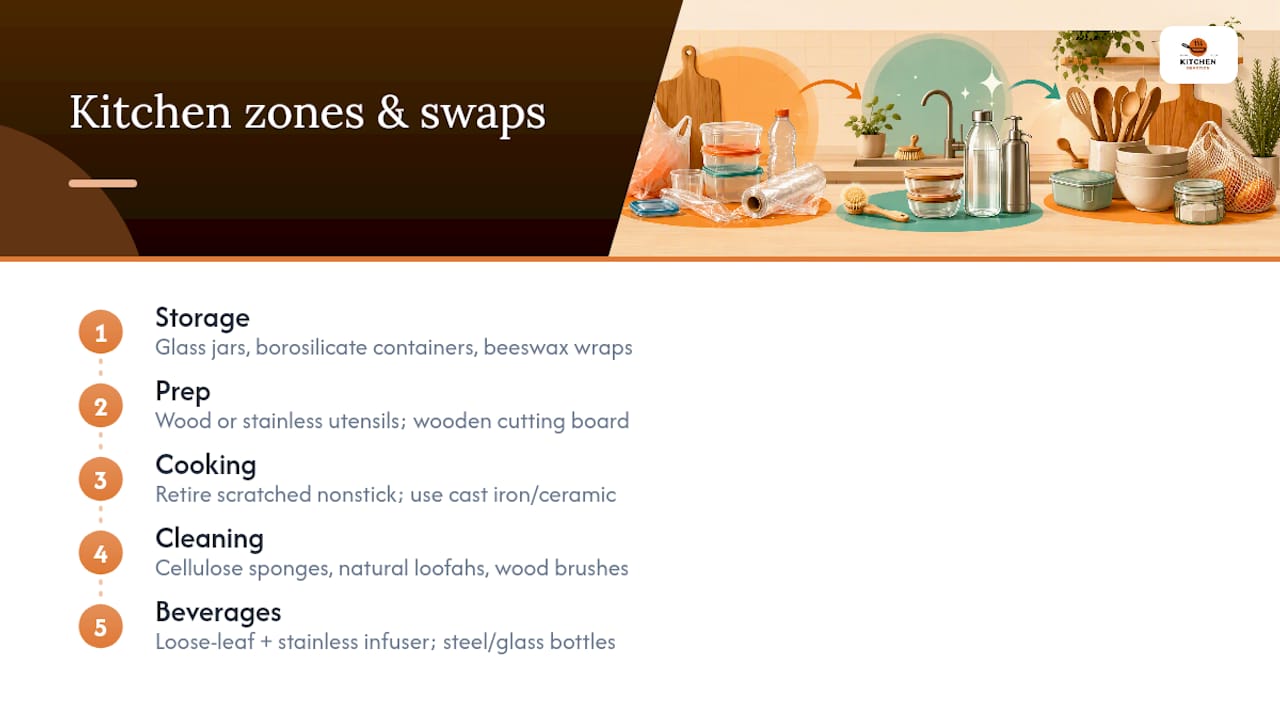
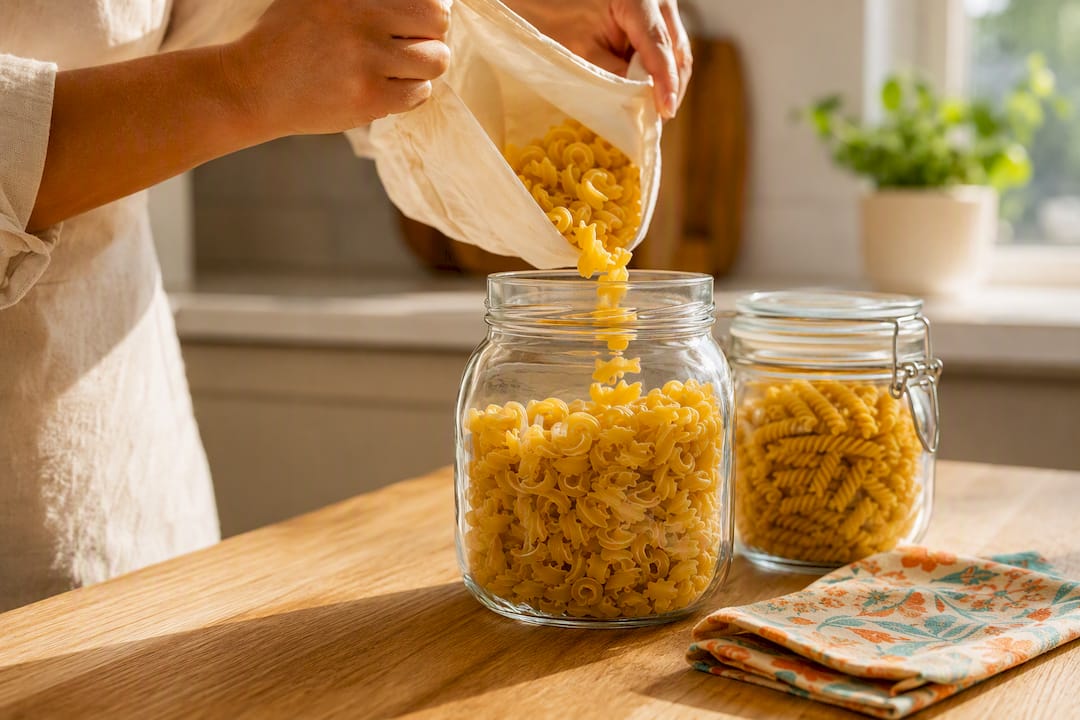
Storage is the easiest place to start. Old pasta sauce jars, pickle jars, and jam jars make free glass storage containers. If you want a matched set, borosilicate glass containers with locking lids stack cleanly and go straight from fridge to oven. Beeswax wraps replace plastic cling film for cheese, cut fruit, and bread. Silicone storage bags are a reasonable middle step for dry goods, but they’re not a full solution. Silicone can still shed particles under heat and repeated flexing, so treat it as better than plastic, not equal to glass.
Prep tools matter more than people assume. Swap plastic spatulas, tongs, and mixing spoons for wood or stainless steel versions. They last longer, don’t melt near a hot pan, and don’t shed the fine plastic dust that builds up on scratched plastic utensils over time. A wooden cutting board should replace any plastic board with visible knife grooves, since those grooves trap bacteria and shed plastic fragments every time a blade passes over them.
Cooking is where heat does the most damage. A scratched or clouded nonstick pan is a pan that’s actively releasing coating particles into your food, and it’s time to retire it. Cast iron, stainless steel, and quality ceramic cookware handle high heat without breaking down the way PTFE nonstick coatings can. If you’re shopping for replacements, non-toxic cookware options built around these materials are worth comparing before you buy.
Cleaning tools shed too. Synthetic sponges and cheap microfiber cloths release microfibers with every scrub, especially once they start falling apart. Cellulose sponges, natural loofahs, and wood-handled dish brushes do the same job without adding to the problem, and cloth towels work better than a roll of paper or wipes for daily cleanup.
Beverages deserve their own line item, because tea bags are a bigger source of exposure than most people realize. Loose-leaf tea with a stainless steel infuser sidesteps that problem entirely, and a retailer comparison of loose leaf versus tea bags breaks down why the switch is worth it beyond just the plastic angle. For everyday drinking, stainless steel or glass bottles replace single-use plastic water bottles and hold up far longer.

Pro Tip: Keep one glass jar by the stove filled with wooden utensils and one drawer for stainless prep tools. When you reach for a tool without thinking, you’ll grab the safer one by habit instead of the plastic one by default.
Which Swaps Cut the Most Exposure First
Not every swap carries equal weight. Some plastic habits release orders of magnitude more particles than others, so the order you tackle them in actually matters.
- Stop microwaving plastic containers. Microwaving polypropylene containers can release more than 4 billion microplastic particles and 2 trillion nanoplastic particles per square centimeter of container surface. Heat is the accelerant here, and it’s the single biggest lever you can pull today.
- Replace plastic cutting boards. Scratches and grooves from knife use are exactly the kind of physical wear that a review of kitchenware and food-prep processes identifies as a major contributor to particle release.
- Retire scratched or aging nonstick pans. Damaged coatings release more than intact ones, and the damage is often invisible until you look closely.
- Stop single-use plastic bottles. Repeated reuse and sun exposure both accelerate breakdown in bottles never designed for it.
By the numbers: A single plastic tea bag can release 11.6 billion microplastic and 3.1 billion nanoplastic particles per cup at brewing temperature. Researchers estimate people ingest roughly 5 grams of microplastic a week, about the weight of a credit card, largely through food preparation and packaging.
Budget wise, the first three swaps can often run under $80 total if you shop secondhand for a cast iron pan and buy a basic glass container set. A full plastic-free kitchen overhaul costs more, but the first three items on this list deliver most of the health benefit for the smallest spend.
Labels and Materials That Deserve a Closer Look
“BPA-free” sounds like a safety guarantee, but it usually isn’t one. Manufacturers often swap bisphenol A for close chemical relatives like BPS or BPF, and research on these replacements suggests they can carry similar hormone-disrupting effects. A BPA-free plastic container is still plastic. When food contact matters, glass and stainless steel skip the substitution problem entirely.
Watch for these physical warning signs on anything currently in your kitchen:
- Clouding or dullness on clear plastic means the surface is breaking down and shedding faster than it looks.
- Scratches or grooves on cutting boards and nonstick pans create more surface area for particles to release.
- Warping from heat exposure signals a container that’s already past safe reuse.
Silicone sits in a gray area. It handles moderate heat well and works fine for baking mats or ice trays, but skip it for high-abrasion tools or anything from a brand that doesn’t disclose its grade. Nonstick coatings can release fumes when overheated or scratched, which is the core reason cast iron and stainless steel make better long-term replacements. Where you can, look for cookware tested to standards like NSF-51 or LFGB, since those migration tests check what actually leaches under heat rather than relying on a marketing label.
Your Step-by-Step Plastic-Free Swap Plan
You don’t need to buy everything at once. Spreading the changes over a few months keeps cost manageable and avoids tossing usable items before they’re actually worn out.
- This week: Swap in repurposed glass jars for pantry storage, grab a stainless steel water bottle, and switch any daily-use plastic wrap for reusable cloths.
- Within one to three months: Replace your cutting board, retire any nonstick pan with visible scratches, and stop reheating food in plastic containers.
- Longer term: Upgrade to a full cast iron or stainless cookware set and invest in matched glass storage as your budget allows.
- Ongoing: Buy secondhand where you can, check for migration-testing labels like NSF-51 instead of trusting “food grade” alone, and skip anything marketed mainly on a “BPA-free” claim.
Pro Tip: Don’t toss a working plastic item just to feel virtuous. Use it until it shows cracking, clouding, or warping, then replace it. That’s better for your wallet and for the landfill.
Why We Built This List Around Priority, Not a Shopping Spree
Most plastic-free guides read like a checklist to buy everything at once, and that’s backwards. Kitchen tools with black plastic tend to carry the least regulatory oversight, yet they often sit at the bottom of people’s replacement lists simply because they’re cheap and easy to ignore. That’s the opposite of where attention should go.
The swaps that matter most are the ones touching heat directly: your microwave, your stovetop, your kettle. A glass container set paired with a cast iron skillet can eliminate the bulk of daily exposure for most home cooks, often for less than the cost of one restaurant dinner out. Kitchendevotion curates around durability and usability precisely because a swap you abandon in six months protects nobody. Replace on attrition, donate what still works, and let the upgrade happen naturally instead of all at once.
— K. Connors
Start Your Plastic-Free Kitchen at Kitchendevotion
If you’re ready to act on the priority list above, Kitchendevotion gives you a curated starting point instead of endless scrolling through mixed-quality listings. The cookware sets collection focuses on stainless steel and ceramic options built to replace scratched nonstick pans, which is swap number three on your list and one of the highest-impact changes you can make.
For storage, the tableware, accessories, and dining sets category covers glass and stainless containers alongside reusable water bottles, so you can knock out two swaps from your week-one list in a single stop. And if part of your plastic reduction plan includes cooking differently, browsing air fryers is worth a look too, since they cut down on the need for a nonstick pan in daily use. Start with whichever category matches the swap you’re tackling first, and build from there.
This article is general information, not a substitute for advice from a qualified doctor. Consult a qualified healthcare professional about your own circumstances before acting on anything here.
Sources
- Uninvited guest: your cup of tea (McGill University summary)
- Environmental Science & Technology (microwaving plastics study)
- Narrative review on micro- and nanoplastic release from kitchenware and processes (PMC)
FAQ
What kitchen utensils do not release microplastics?
Wood, stainless steel, and cast iron utensils don’t shed microplastics the way plastic tools do, especially once plastic starts scratching or clouding. They’re also more heat stable, which matters since heat is the primary accelerant of plastic particle release.
Is Pyrex free of microplastics?
Glass Pyrex itself doesn’t shed microplastics, since it’s an inert material rather than a plastic. The plastic lids that come with many Pyrex sets can still leach if microwaved, so it’s worth pairing glass containers with glass or stainless lids for reheating.
What are chefs using instead of plastic wrap?
Beeswax wraps, silicone lids, and simple glass containers with fitted lids have largely replaced plastic cling film in health-focused kitchens. Beeswax wraps work well for cheese and cut produce, while a glass container with a lid handles leftovers without any plastic touching hot food.
What should I replace my plastic utensils with?
Wooden or stainless steel spoons, spatulas, and tongs are the standard swap, and they tend to outlast plastic versions by years. Skip utensils with unknown-grade silicone heads for high-heat cooking, since quality varies widely between brands.
Does Kitchendevotion sell plastic-free cookware?
Kitchendevotion curates cookware sets that include stainless steel and ceramic options suited to replacing nonstick pans. Current pricing and availability are listed on the site itself.



No comment