
A new air fryer smelling like hot plastic for the first few uses is normal off-gassing and usually clears up after washing the basket and running multiple empty cycles. A burnt or chemical smell that shows up later, gets stronger, or comes with smoke, melting, or flaking means something is actually wrong. Ventilate the room, unplug the unit if the smell is strong, and inspect the basket before you cook anything else in it.
TL;DR:
- A new air fryer may emit a plastic smell during initial use due to manufacturing materials off-gassing, which can be remedied by thorough cleaning and one to three burn-off cycles.
- Persistent or stronger smells, especially with signs of melting, smoke, or coating flaking, indicate damage or wear that requires immediate replacement of parts to prevent safety hazards.
- Scratches, chips, or flaking in the nonstick coating allow odors and particulates to escape, making regular replacement of worn baskets crucial to avoid ongoing issues.
- Proper maintenance, including routine cleaning, avoiding overfilling, and ensuring vents are unblocked, can prevent most smell-related problems in everyday use.
- Signs like smoke, melting, or eye irritation demand unplugging the unit immediately and replacing damaged components before further use.
Table of Contents
- What To Do the Moment Your Air Fryer Smells Off
- Why Does My Air Fryer Smell? The Four Real Causes
- How To Fix an Air Fryer Burnt Smell By Cause
- When To Stop Using Your Air Fryer Immediately
- Stopping Smells Before They Start
- What We Look For When an Air Fryer Starts to Smell
- A Home Cook’s Bottom Line on That Smell
- Ready for an Air Fryer That Won’t Make You Second-Guess That Smell
- Sources
- FAQ
What To Do the Moment Your Air Fryer Smells Off
Don’t guess. Work through this in order, and stop the moment something looks wrong.
- Smoke or a sharp chemical odor? Unplug the unit and step away from it before you do anything else.
- Mild smell, no smoke? Open a window or turn on the range hood first, then let the unit cool.
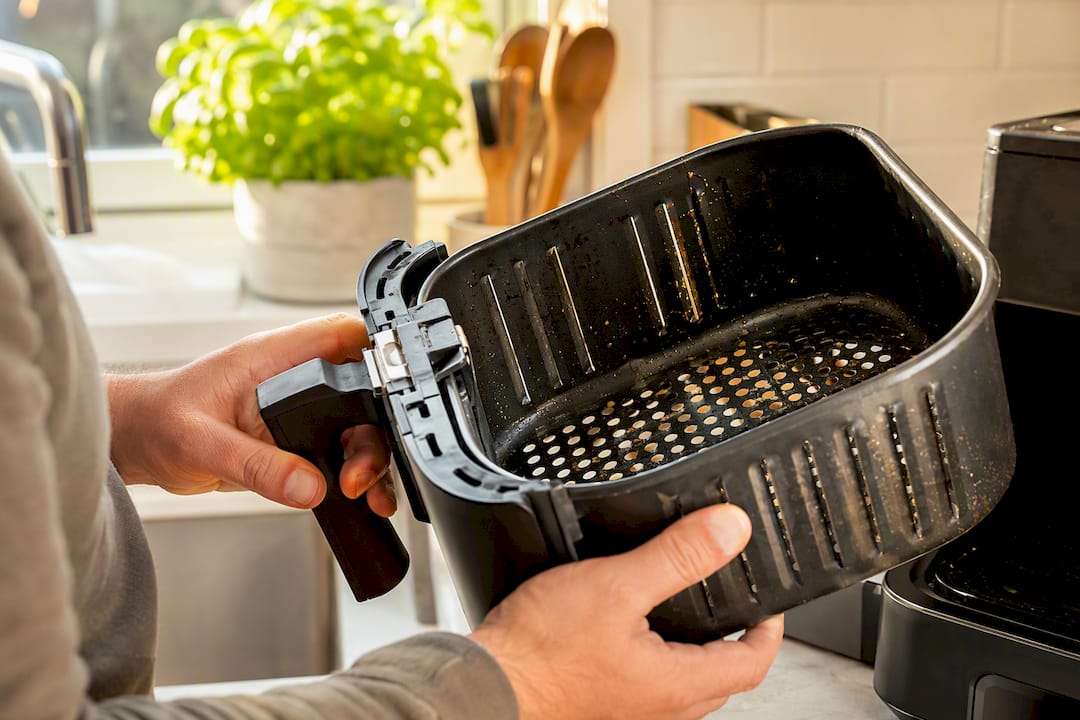
- Once it’s cool, pull the basket and tray. Check for stuck food, melted plastic, scratches, or coating flaking off.
- Wash every removable part in warm, soapy water and rinse thoroughly. Soap film left behind smells almost as bad as burnt food.
- Only if the unit is new and the smell is mild, run one short empty cycle following your manual’s maximum temperature. That’s it for now.
- See any damage at all? Stop using the basket, photograph it, and note your model number before you contact the manufacturer.
Pro Tip: Keep a phone photo of your air fryer’s rating label. If you ever need to call support about a smell or a damaged basket, having the model and serial number ready cuts the call in half.
Why Does My Air Fryer Smell? The Four Real Causes
Not every burnt smell means the same thing, and matching the smell to its source is the whole game here.
- New-unit off-gassing. Manufacturing lubricants, adhesives, and the curing process on PTFE coatings release a plastic-y smell during the first few heat cycles. Philips confirms this is expected and tells owners to wash the removable parts and run an empty cycle at the model’s top temperature to burn it off.
- Nonstick coating wear. PTFE is chemically stable at normal cooking temperatures, but ExpertReviews notes that scratches, chips, or repeated overheating let it release odors and fine particulates it wouldn’t otherwise produce.
- Burnt food and trapped grease. Crumbs and fat that collect near the heating element scorch on the next cook and throw off a smoky, burnt smell that has nothing to do with plastic at all.
- Soap residue or blocked airflow. Leftover packaging film, dish soap that wasn’t rinsed off, or vents partly covered by foil or an overfilled basket all create a chemical-ish smell when heated.
How To Fix an Air Fryer Burnt Smell By Cause
Once you know which of the four causes fits, the fix is usually quick.
- New-unit smell: Wash every removable part, then run one to three empty cycles at your model’s recommended top temperature in a room with a window open. TheTakeout warns against pushing past your manual’s stated limit, since forcing PTFE hotter than it’s rated for is what actually risks unsafe decomposition, not normal use.
- Grease and burnt residue: Deep clean the basket, drawer, and the underside of the heating element where crumbs collect. Run one short empty cycle afterward to burn off anything you couldn’t reach with a cloth.
- Soap smell: Rewash and rinse until no film remains, dry completely, then run a short empty cycle only after rinsing is done. Skipping the rinse just bakes the soap in.
- Coating damage: Check the basket under bright light for scratches, chips, or flaking. If you see any, stop using it. ExpertReviews treats a worn basket as a replace-it situation, not a clean-it situation.
- Warranty and returns: Write down your model and serial number, when the smell started, and what you’ve already tried, then photograph any damage before you contact support.
One diagnostic detail worth knowing: manufacturer-style guides note that new-unit smell typically fades within the first several uses, while a smell that shows up months later usually points to wear or buildup rather than manufacturing residue.
When To Stop Using Your Air Fryer Immediately
Some signs aren’t a cleaning problem. They’re a stop-using-it-now problem.
- Visible smoke, melting, bubbling, or warping anywhere on the basket or housing.
- Sparking, or a burning-plastic smell that gets worse the longer the unit runs instead of fading.
- A chemical smell that’s just as strong, or stronger, after two or three clean, empty cycles.
- Peeling or flaking coating that exposes bare metal underneath.
- Anyone in the house getting a headache or eye irritation during or after use. Pet birds are especially sensitive to fumes from overheated coatings, and what’s usually a mild irritant for people can be fatal for them.
If you hit any of these, unplug it, let it cool untouched, and don’t cook in it again until you’ve replaced the basket or the unit.
Stopping Smells Before They Start
A little routine maintenance keeps most of these problems from happening in the first place.
- Wipe the basket and interior after every use; do a full deep clean weekly or right after anything greasy.
- Check the area around the heating element once a month for crumbs or grease buildup.
- Never block the vents, and don’t run temperatures higher than your manual calls for just to speed up cooking.
- Use only liners approved for air fryers, and skip abrasive scrubbers on nonstick surfaces since Cosori’s cleaning guidance points out that scratching the coating is often what starts the odor problem in the first place.
- If you’d rather sidestep PTFE concerns entirely, a ceramic (PTFE-free) basket removes that variable. Kitchendevotion’s air fryer cleaning guide walks through the weekly routine in more detail.
Pro Tip: Replace a scratched basket before it fails, not after. A worn basket left in service to avoid buying a new one is the single most common way a manageable smell turns into a real problem.
What We Look For When an Air Fryer Starts to Smell
K. Connors and the Kitchendevotion team check three things before recommending any fix: whether removable parts have actually been washed and dried, whether the manufacturer’s empty burn-off cycle was run at the correct temperature (not guessed at), and whether there’s photographic proof of any coating damage before reaching out to support. If a basket shows flaking, deep scratches, or a chemical smell that survives a proper wash and burn-off, replacement is the right call, not another round of scrubbing. Readers weighing that decision can check Kitchendevotion’s air fryer collection for PTFE-free baskets and replacement parts.
A Home Cook’s Bottom Line on That Smell
Most of the time, this is simpler than it feels in the moment. Ventilate the kitchen, pull the basket, wash it properly, and run one empty cycle if the unit is new. If you see smoke, melting, or flaking anywhere, stop and replace the part instead of pushing through it. My habit now is opening a window before any burn-off cycle and setting a 15-minute timer, so I never forget the unit is running while I do something else.
— K. Connors
Ready for an Air Fryer That Won’t Make You Second-Guess That Smell
If your current basket is scratched, flaking, or just a few years past its prime, the smell you’re dealing with is a symptom, not the root problem, and no amount of washing fixes worn coating. Kitchendevotion’s curated lineup includes PTFE-free ceramic models built specifically to cut that off-gassing and degradation risk at the source, alongside replaceable-basket designs so a worn part is a $20 fix instead of a new appliance.

Browse the Air Fryers collection to compare PTFE-free options, or work through the basket cleaning guide first if you’re not sure your current unit needs replacing yet. Either way, checking the kitchen appliance priority list for new homeowners is a quick way to see where an upgrade actually fits your setup.
Sources
Claims here draw on Philips support guidance, ExpertReviews, TheTakeout, Tom’s Guide, and Cosori.
- There is a plastic smell coming from my Philips Airfryer
- Why does my air fryer smell like plastic? — ExpertReviews
- Why Your Brand New Air Fryer Stinks And How You Can Fix It — TheTakeout
FAQ
How Can I Tell If My Air Fryer Is Toxic?
Check for scratches, chips, or flaking on the nonstick coating under bright light. Intact PTFE is stable at normal cooking temperatures, but visible damage means it can release odors and particulates it shouldn’t.
Are Air Fryer Fumes Bad for You?
A brief whiff of new-unit off-gassing in a ventilated room isn’t a concern for most adults, but repeated exposure to fumes from a damaged coating is riskier, especially for children, people with asthma, and pet birds, which are far more sensitive to fluorinated fumes.
Is It Normal for an Air Fryer To Have a Smell?
Yes, for the first few uses. A mild plastic smell from a brand new unit typically fades within several heat cycles once you’ve washed the parts and run an empty burn-off cycle.
Why Does My Air Fryer Smell Like Old Grease?
Grease and food particles trapped under the heating element scorch every time you cook and throw off a persistent burnt-oil smell. A deep clean of the basket, drawer, and heating area usually clears it.





No comment