

Most built-in dishwashers are about 24 inches wide. Compact models run around 18 inches, and oversized units stretch from 30 to 42 inches for large households or commercial-style kitchens. Before you shop, the single fastest fit check is this: measure your rough opening’s narrowest width, its height from floor to the underside of the countertop, and its depth from the back wall to the front cabinet face. Use the smallest reading in each direction, and pull the manufacturer spec sheet before you buy.
Here’s what to record right now:
- Width: measure inside-to-inside at the top, middle, and bottom of the opening
- Height: measure from the floor to the countertop underside at the left, center, and right
- Depth: measure from the back wall to the front cabinet face on both sides
- Smallest reading wins in every direction — that’s the number that matters
- Grab the spec sheet for any model you’re considering and compare exact exterior dimensions, including door and handle projection
Key Takeaways
Most built-in dishwashers fit a 24-inch rough opening, but manufacturing tolerances of 23.5–24.5" and cabinet variances mean you must measure at multiple points and verify the spec sheet before purchasing.
| Point | Details |
|---|---|
| Measure at multiple points | Take width, height, and depth readings at three positions each; always use the smallest number. |
| Nominal vs. actual sizes | A “24-inch” model commonly measures 23.5–24.5"; confirm exact exterior dimensions on the spec sheet. |
| Clearances matter too | Confirm ~27" of door-swing space, toe-kick clearance, and utility positions before ordering. |
| Alternatives when 24" won’t fit | An 18" compact built-in, countertop unit, or minor cabinet modification covers most tight openings. |
| Kitchendevotion for fit-first shopping | Kitchendevotion’s dishwasher pages include the spec details needed to match models to your measured opening. |
Table of Contents
- What does a dishwasher size guide actually tell you?
- How do you measure a dishwasher opening correctly?
- What clearances actually cause installation surprises?
- What are your options when a 24" built-in won’t fit?
- Why do nominal sizes and actual sizes differ?
- Your pre-purchase and installation checklist
- Kitchendevotion makes finding the right fit easier
- Sources
- FAQ
What does a dishwasher size guide actually tell you?
As Maytag’s dishwasher size guide explains, the three main categories cover most households. Here’s how they break down:
A few things worth knowing about those numbers:
- “24 inch” is a nominal label, not a guarantee. Many models actually measure 23.5–24.5" — close enough for most openings, but enough to cause a problem in a tight or renovated kitchen.
- Depth figures often exclude the door. When the door is open and the handle projects forward, the effective footprint changes. Always check the spec sheet for door-open depth.
- Height varies with adjustable feet. Most built-ins have legs that extend or retract to fit openings between roughly 33.5" and 35" high, but the exact range depends on the model.
Brands like Bosch, KitchenAid, and Whirlpool all publish downloadable spec sheets on their product pages. Use them.
How do you measure a dishwasher opening correctly?
A steel tape measure, a notepad (or your phone camera), and a flashlight for dark cabinet interiors are all you need. Work through these steps in order.
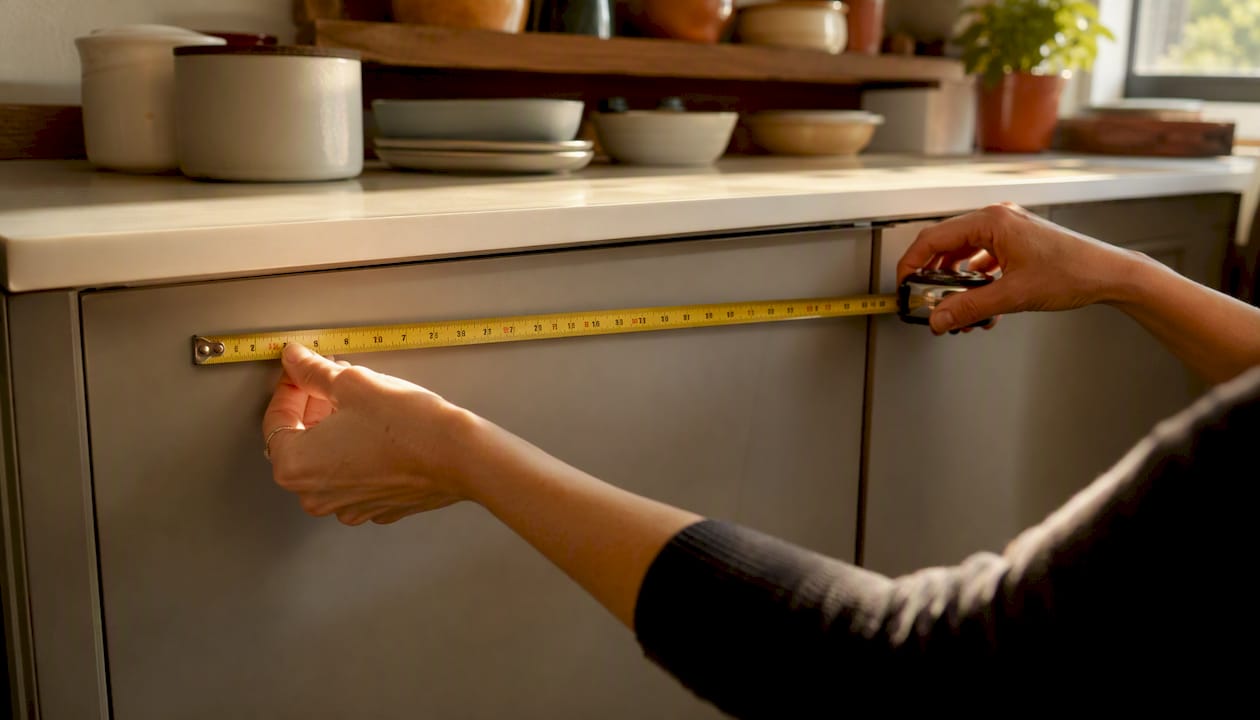
Step 1 — Width
Measure inside-to-inside at the top, middle, and bottom of the opening. Note any molding, trim strips, or cabinet lips that reduce the usable space. Measure at multiple points and use the narrowest reading — that’s the number the dishwasher has to clear.
Step 2 — Height
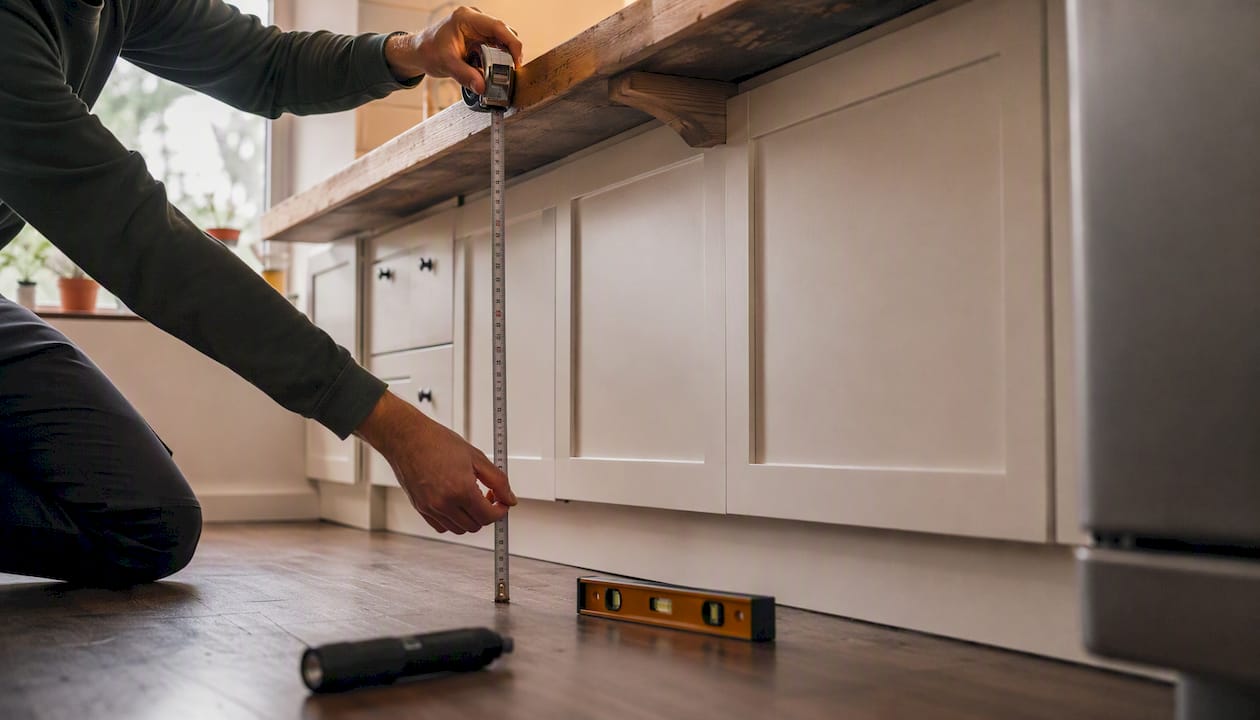
Measure from the finished floor to the underside of the countertop at the left, center, and right. Countertop thickness and any flooring layers added during a renovation can quietly eat into this number. Use the smallest of the three readings.
Step 3 — Depth
Measure from the back wall to the front cabinet face. Then measure again on the opposite side — walls aren’t always perfectly square. Standard rough openings run approximately 24" deep, but older kitchens often vary.
Checkpoints before you move on:
- Toe-kick clearance: confirm the motor housing won’t hit the floor or a raised subfloor
- Door swing: you need roughly 27" of clear space in front of the unit to load the bottom rack comfortably
- Electrical and plumbing: locate the junction box, water supply line, and drain — confirm none of them will block the dishwasher from sliding fully into the opening
Pro Tip: Photograph the inside of the cabinet and your tape measure readings in the same shot. When you’re standing in a showroom comparing a Bosch 500 Series or a KitchenAid KDTM354DSS spec sheet to your opening, a photo is faster and more reliable than memory.
What clearances actually cause installation surprises?
Width gets most of the attention, but height and depth are where installs go sideways.
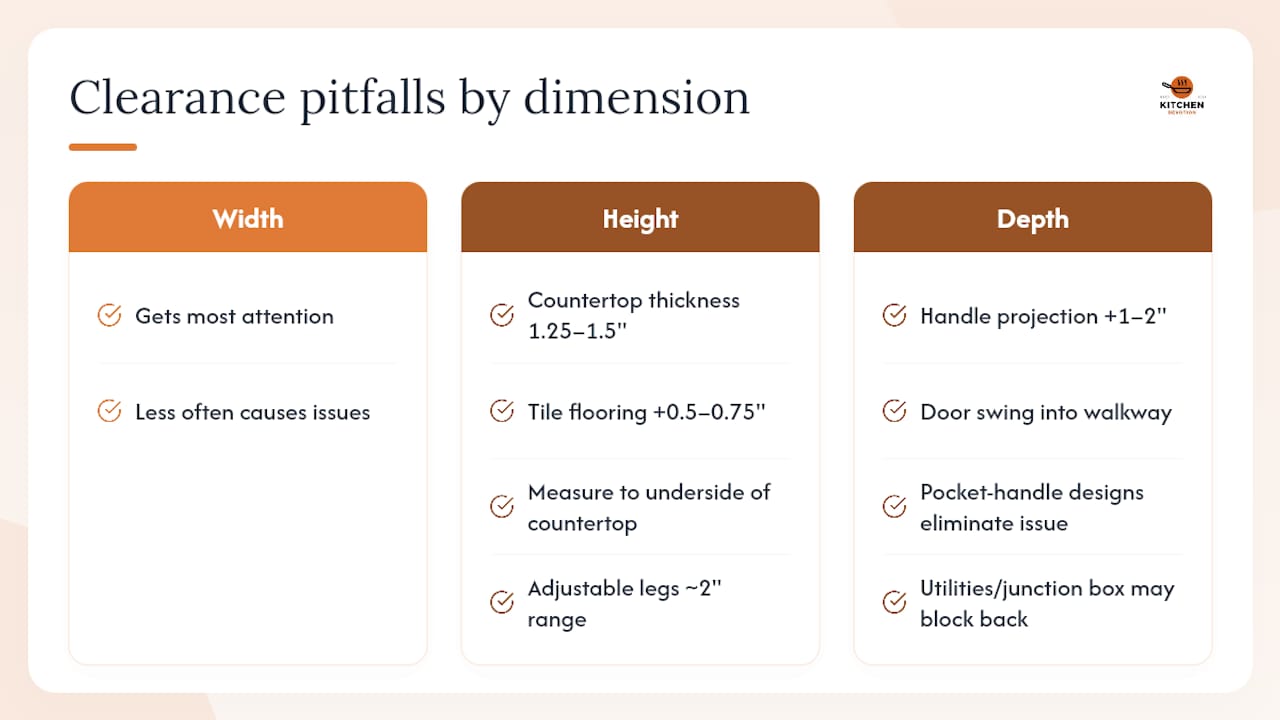
Height and countertop thickness. A granite or quartz countertop can be 1.25–1.5" thick. If the previous owner added tile flooring over hardwood, you may have lost another 0.5–0.75" of vertical clearance. Measure to the underside of the countertop, not to the cabinet frame above it. Most built-ins have adjustable legs that cover a range of roughly 2 inches, but if your opening is shorter than the unit’s minimum height, no amount of leg adjustment fixes it.
Toe-kick and floor obstructions. An uneven floor, a raised subfloor seam, or carpeting that wasn’t removed before installation can prevent the unit from sliding in flush. Check with a flashlight before ordering.
Door swing and handle projection. A protruding handle adds 1–2" to the effective depth when the door is closed. In a narrow galley kitchen where the dishwasher door opens into a walkway, that matters. Pocket-handle designs (common on Bosch and some KitchenAid models) eliminate this issue entirely.
Utilities. The electrical junction box, water shut-off valve, and drain connection all need to sit where they won’t block the dishwasher from reaching the back wall. If the junction box is mounted high on the back wall and the dishwasher’s cord exits from the same area, you may need an extension or a relocated outlet.
Pro Tip: If a flooring project added even 1" of height, check the dishwasher’s adjustable-leg minimum before purchasing. A unit whose legs only retract to 33.5" won’t fit a 33.25" opening — shims won’t help here, but a model with a lower minimum leg height will.
What are your options when a 24" built-in won’t fit?
A tight or non-standard opening doesn’t mean you’re stuck hand-washing. Here are the realistic paths, roughly in order of effort:
- 18" compact built-in: fits openings as narrow as ~18.5" and installs the same way as a full-size unit. Capacity drops (typically 6–8 place settings vs. 12–16 for a standard), but brands like Honeywell and EdgeStar make solid options worth considering.
- Countertop or portable dishwasher: no cabinet modification required. Countertop models connect to a faucet and sit on the counter; portable roll-up units hook to the sink and store in a closet. The trade-off is counter space or the inconvenience of connecting and disconnecting. Kitchendevotion’s compact dishwasher picks for small spaces cover the best options here.
- Dishwasher drawers: single or double-drawer units fit a standard 24" opening but offer more flexibility in loading height. They cost more than conventional built-ins and aren’t available from every brand.
- Cabinet modification: filler panels can close a gap if the opening is slightly too wide; trimming a cabinet side or removing a filler strip can widen a slightly narrow opening. Ready-to-assemble cabinet sizing and tolerances are worth understanding before you commit to any structural change.
Decision rule: prefer the smallest change that keeps your countertop and plumbing alignment intact. If structural work is needed, get an installer’s opinion before ordering the appliance.
Pro Tip: If your opening measures 23.75", don’t assume you need a cabinet modification. Many “24-inch” models actually measure 23.5–24.5" — check the spec sheet first. You may already have a fit.
Why do nominal sizes and actual sizes differ?
Manufacturing tolerances are real, and so are the variances in cabinet construction. A dishwasher listed as “24 inches” commonly measures anywhere from 23.5" to 24.5" once it’s built. Cabinet openings in renovated kitchens can vary by a quarter inch or more from top to bottom.
That’s why measuring at multiple points matters. The narrowest reading is the constraint. Home Depot’s installation guidance recommends leaving a little breathing room rather than forcing a tight fit — a small gap is easier to manage with filler strips than a unit that won’t slide in.
Installers typically plan for shims and filler panels from the start. Adjustable feet handle minor height differences; filler strips close width gaps and give a finished look. If your opening measures 24.25" and the unit is 23.875", a filler panel on one side is a 20-minute fix.
Pro Tip: When you’re between two models and one is slightly narrower, go with the narrower one. A small gap is always fixable. A unit that’s even 0.25" too wide is not.
Your pre-purchase and installation checklist
Bring this to the store or share it with your installer before anything is ordered.
Measurements to record:
- Smallest width reading (top/middle/bottom)
- Smallest height reading (left/center/right), floor to countertop underside
- Depth on both sides, back wall to front cabinet face
Clearances to confirm:
- Countertop underside height vs. appliance height range (adjustable legs)
- Flooring layers and toe-kick depth
- ~27" of clear space in front for door swing and loading
Utilities to locate:
- Electrical junction box or outlet position
- Water supply shut-off location
- Drain connection point
- Confirm none of these block the unit from sliding fully in
At the store or online:
- Ask for the exact exterior dimensions from the spec sheet, door and handle included
- Confirm whether an installation bracket or trim kit is required
- Download the spec sheet from the manufacturer’s product page and compare it to your measurements before checkout
- Photograph your measurements and the cabinet interior — delivery day goes much smoother when everyone is working from the same numbers
One thing worth doing before you leave the house
Carry your spec sheet to the store. It sounds obvious, but most installation headaches trace back to one moment: a homeowner who measured the opening but didn’t compare those numbers to the appliance’s actual exterior dimensions before purchase. Kitchendevotion curates dishwasher options with measurement-friendly product pages so you can cross-reference specs without hunting through PDFs.
Kitchendevotion makes finding the right fit easier
Picking a dishwasher gets a lot simpler when the product pages show you what you actually need: exterior dimensions, adjustable-leg ranges, and handle-type details in one place. Kitchendevotion’s dishwasher category is organized around real buying decisions, not just brand names.

If your opening is tight or non-standard, the compact and countertop dishwasher guide walks through the best small-space options with the specs you need to confirm fit before ordering. New to appliance planning altogether? The kitchen appliance priority list for new homeowners is a good place to start. Browse the options, match them to your measurements, and order with confidence.
Sources
- Are All Dishwashers 24 Inches Wide? A Practical Width Guide | Dishwasher Tips
- How To Measure a Dishwasher: Standard Dishwasher Sizes | Maytag
- How to measure your kitchen for a new dishwasher | Best Buy Blog
FAQ
How do you determine what size dishwasher you need?
Measure your rough opening’s width, height, and depth at multiple points and use the smallest reading in each direction. Compare those numbers to the appliance’s exact exterior dimensions on the manufacturer spec sheet before purchasing.
Are all 24-inch dishwashers the same size?
No. “24 inch” is a nominal label; actual exterior widths typically range from 23.5" to 24.5" depending on the manufacturer and model. Always check the spec sheet for exact dimensions.
Are all dishwashers 30 inches wide?
No. The standard built-in width is 24 inches, not 30. Oversized models range from 30 to 42 inches, but those are designed for large households or commercial-style kitchens and require a wider rough opening.
Are there 23-inch dishwashers?
Not as a standard category. The two common built-in widths are 18 inches (compact) and 24 inches (standard). If your opening measures close to 23 inches, check whether a compact 18-inch model or a slim 24-inch unit with an actual width near 23.5" fits your space.





No comment