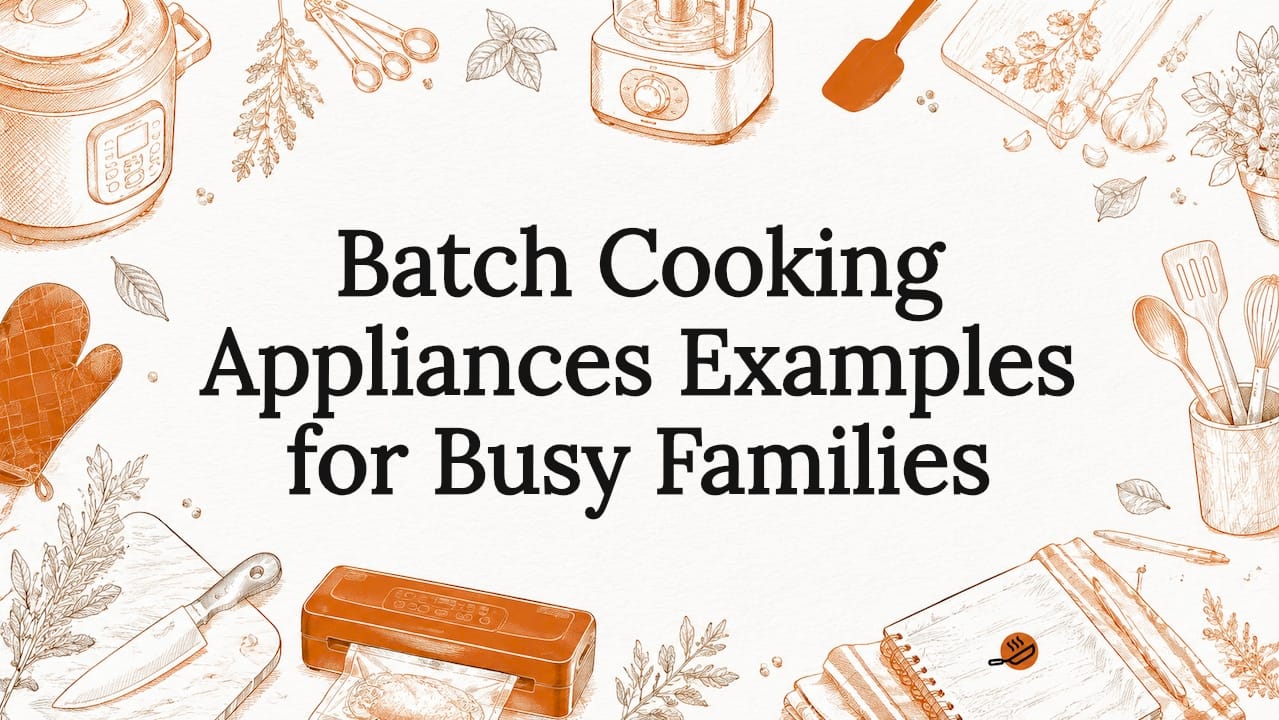
Batch cooking appliances are defined as kitchen tools designed to cook large quantities of food in a single session, saving hours of daily prep time. The right set of batch cooking appliances examples includes multi-cookers like the Instant Pot, food processors, vacuum sealers like the FoodSaver Premier, and air fryers. Together, these tools form the backbone of any efficient meal prep system. Busy families who invest in the right equipment cook once and eat well all week, without standing over a stove every night.
1. What are the best batch cooking appliances examples for families?
The most effective batch cooking appliances combine large capacity with multiple cooking functions in a single unit. Multi-cookers sit at the top of that list. A food processor handles the prep work, a vacuum sealer locks in freshness, and an air fryer handles reheating and quick proteins. Each appliance solves a specific bottleneck in the batch cooking workflow.
The right appliance set tailored to your recipes and kitchen saves both time and energy. That means you do not need a dozen gadgets. You need four or five tools that cover the full cycle from prep to storage.
2. Multi-cookers: the core appliance for batch cooking
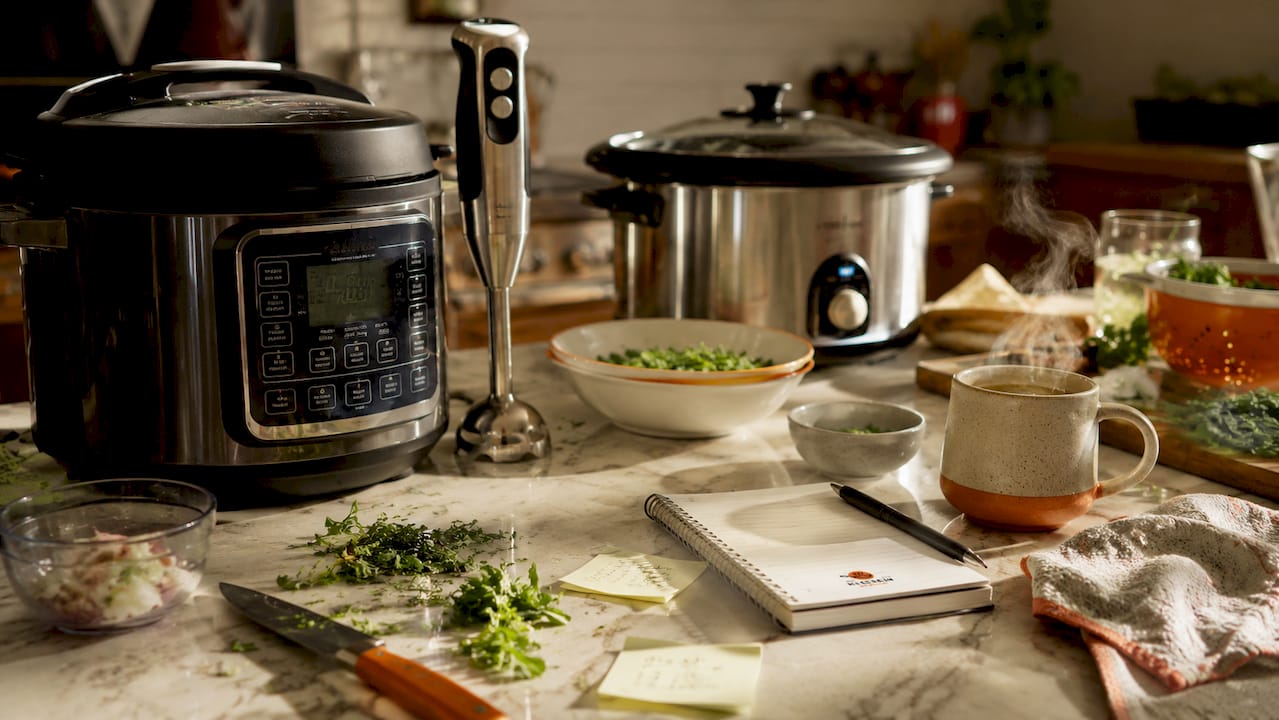
Multi-cookers are the single most useful batch cooking tool for home kitchens. They combine slow cooking, pressure cooking, sautéing, steaming, and sometimes air frying in one pot. That multifunctionality means one appliance handles the bulk of your weekly cooking load.
Capacity is the most important spec to get right. Multi-cookers of 6L or more are best suited for families and serious batch cooking. Smaller units in the 1.8L–4.5L range work for one or two people. Getting the size wrong means either running multiple batches or wasting energy on a half-full pot.
Strong examples for family batch cooking include:
- Instant Pot XL 7.1L: A proven workhorse for soups, stews, beans, and grains at family scale.
- Ninja Foodi Mini 4.7L: A compact option that pressure cooks and air fries, suited for smaller households.
- Sage The Fast Slow Go 6L: A well-built unit that handles pressure and slow cooking with precise temperature control.
One common mistake is buying a multi-cooker based on the number of functions rather than how well it performs each one. Some all-in-one units excel at pressure cooking but underperform at baking or air frying. Pick the functions you will actually use, and confirm the unit does those well.
Pro Tip: Use the keep warm function after batch cooking to hold food safely at temperature while you prep the next item. This sequential cooking approach removes the need to reheat and keeps your workflow moving.
3. How food processors and blenders speed up batch prep
A food processor is the fastest way to cut prep time in a batch cooking session. It chops, slices, shreds, and purees in seconds what would take ten minutes by hand. For families prepping vegetables, sauces, dips, or doughs in bulk, a food processor is not optional. It is the difference between a two-hour Sunday session and a four-hour one.
Key batch prep tasks a food processor handles well:
- Chopping onions, carrots, and celery for large soup or stew batches
- Shredding cabbage or cheese for meal prep containers
- Making hummus, pesto, or tomato sauce in large volumes
- Mixing pie or pizza dough for multiple portions
Blenders cover a different set of tasks. They process soups, smoothies, and large-volume sauces that need a completely smooth texture. The Oster Classic Series 8-Speed Blender handles high-volume blending with multiple speed settings, making it a practical choice for batch soup prep.
Pro Tip: Use the pulse function on your food processor for vegetables. Continuous running over-processes them into mush. Short pulses give you even, consistent cuts that hold up in soups and stir-fries.
The blade type matters more than most buyers realize. A standard S-blade handles chopping and pureeing. A slicing disc cuts uniform rounds for roasted vegetables. A shredding disc processes cheese or carrots in bulk without effort. Buying a processor with all three attachments covers every batch prep scenario.
4. Vacuum sealers: keeping batch meals fresh longer
Vacuum sealers are the most underrated appliance in a batch cooking setup. Most home cooks spend hours preparing food and then lose it to freezer burn within two weeks. A vacuum sealer solves that problem directly.
The FoodSaver Premier multi-use system is the most cited example in this category. It extends food freshness in the freezer up to 5 times longer than standard storage methods. That means a batch of chicken you cooked in october stays good through january instead of going bad after two weeks. The built-in handheld sealer adds flexibility for containers and zipper bags beyond standard rolls.
Benefits of vacuum sealing for batch cooks:
- Prevents freezer burn on proteins, grains, and cooked meals
- Extends usable freezer life up to 5x compared to zip-lock bags
- Reduces food waste and saves money over time
- Keeps the freezer organized with flat, stackable sealed bags
- Works for both raw ingredients and fully cooked meals
The organization benefit is underappreciated. Flat vacuum-sealed bags stack neatly in a freezer drawer. Standard containers take up three times the space. For families batch cooking weekly, that space efficiency changes how much food you can realistically store.
5. Specialty appliances that add real value to batch cooking
Beyond the core tools, several specialty appliances handle specific batch tasks better than a multi-cooker can. Each one earns its counter space by doing one job exceptionally well.
Air fryers
Air fryers reheat batch-cooked proteins and snacks without making them soggy. They also cook chicken thighs, fish fillets, and roasted vegetables faster than a conventional oven. For families eating reheated batch meals throughout the week, an air fryer keeps food tasting fresh rather than microwaved. Kitchendevotion covers the full range of air fryer options for every kitchen size and budget.
Rice cookers
A rice cooker produces perfect batch rice and grains every time without monitoring. Set it, walk away, and return to a full pot of cooked rice, quinoa, or farro. For families who eat grains daily, a rice cooker removes one of the most repetitive tasks from the weekly batch session.
Dutch ovens and large skillets
A Dutch oven is the best tool for batch searing proteins before slow cooking. Batch-searing proteins in a large skillet or Dutch oven before transferring to a slow cooker builds richer flavor than cooking from raw. The Maillard reaction that happens during searing cannot be replicated in a pressure cooker alone.
Convection ovens
The convection setting on a standard oven reduces batch cooking time by about 25% through hot air circulation. That means a tray of roasted vegetables that takes 40 minutes on conventional heat takes around 30 minutes on convection. For families roasting large quantities of proteins and vegetables, that time saving adds up across a full batch session.
| Appliance | Best batch use | Key advantage |
|---|---|---|
| Air fryer | Reheating proteins, quick snacks | Speed and texture retention |
| Rice cooker | Grains and rice in bulk | Hands-free, consistent results |
| Dutch oven | Searing and braising | Flavor development at scale |
| Convection oven | Roasting large trays | 25% faster cooking time |
Pro Tip: When using a convection oven for batch roasting, reduce the temperature by 25°F from the recipe’s standard setting. The fan circulates heat more aggressively, so the lower temperature prevents over-browning.
6. How to choose the right batch cooking appliances for your kitchen
The best approach to selecting batch cooking equipment is to start with a small set of versatile appliances that address your specific cooking bottlenecks. Buying every gadget available creates clutter and complexity without proportional benefit.
Follow this selection process:
- Assess your household size. Families of four or more need appliances with 6L or greater capacity. Smaller households can work with compact versions.
- Identify your biggest time drain. If chopping takes the most time, prioritize a food processor. If you lose food to freezer burn, start with a vacuum sealer.
- Choose multi-function over single-function. A multi-cooker that pressure cooks and slow cooks replaces two separate appliances and frees up counter space.
- Check your kitchen space. Compact kitchens need appliances that store easily. Kitchendevotion’s guide to small-space kitchen appliances covers the best options for limited counter space.
- Start with one core appliance. Beginners succeed by mastering one large-volume tool, like an 8-quart multi-cooker, before adding specialty items.
- Add specialty tools only when needed. Once you have a working batch routine, identify the gaps. If reheating is slow, add an air fryer. If grains are a daily task, add a rice cooker.
- Consider energy efficiency. Multi-cookers and air fryers use significantly less energy than a full oven for equivalent cooking tasks. That matters when you are running appliances for several hours each week.
Avoiding overlap is as important as choosing the right tools. A multi-cooker with an air frying lid and a separate air fryer do the same job. Pick one. Efficient batch cooking balances multi-tasking appliance use with minimizing complexity and clutter in the kitchen.
Key takeaways
The most effective batch cooking setup combines a large multi-cooker, a food processor, a vacuum sealer, and one or two specialty appliances matched to your household’s specific cooking habits.
| Point | Details |
|---|---|
| Multi-cooker capacity matters | Choose 6L or more for families; smaller units suit one to two people. |
| Vacuum sealers prevent waste | FoodSaver-style sealers extend freezer freshness up to 5 times longer than standard bags. |
| Food processors cut prep time | A food processor handles chopping, shredding, and pureeing faster than any manual method. |
| Convection ovens save time | Using the convection setting reduces batch roasting time by about 25%. |
| Start simple, then expand | Master one core appliance before adding specialty tools to avoid clutter and overlap. |
What I have learned from years of batch cooking with real appliances
The biggest mistake I see home cooks make is buying a six-function multi-cooker and using only the slow cook setting. The appliance is not the problem. The workflow is. Before you add any new gadget to your kitchen, spend three or four weeks getting genuinely good at the one you already own.
The keep warm function on a multi-cooker changed my batch sessions more than any other feature. I finish a pot of lentil soup, switch it to keep warm, and start searing chicken thighs in a skillet while the soup holds temperature safely. That overlap cuts my total batch time by nearly a third without any extra appliances.
I am also a strong advocate for the Dutch oven as a batch cooking tool that gets overlooked in favor of electric gadgets. Searing a full batch of chicken thighs or beef chunks in a large Dutch oven before transferring them to a slow cooker produces a depth of flavor that no pressure cooker shortcut replicates. The extra fifteen minutes of searing pays off every time you open a container mid-week.
The honest truth about batch cooking appliances is that the right three tools beat a cluttered counter of ten. A large multi-cooker, a food processor, and a vacuum sealer cover 80% of what any busy family needs. Everything else is a bonus you add when you have identified a real gap in your routine.
— K. Connors
Stock your kitchen with the right tools from Kitchendevotion
Kitchendevotion curates appliances specifically for home cooks who want to cook smarter, not longer. The collection covers multi-cookers, air fryers, and storage solutions selected for capacity, ease of use, and real-world performance in busy family kitchens.
Whether you are building your first batch cooking setup or upgrading an existing one, the time-saving appliances guide at Kitchendevotion walks you through the best options at every price point. You will find detailed product reviews, buying guides, and current deals on the appliances that make weekly meal prep faster and less stressful. If you are just getting started, the beginner prep tools guide is the right place to begin.
FAQ
What appliances do I need to start batch cooking?
The three core batch cooking tools are a large multi-cooker (6L or more for families), a food processor, and a vacuum sealer. These three cover cooking, prep, and storage in a single weekly session.
How much capacity does a multi-cooker need for family batch cooking?
Multi-cookers with a capacity of 6L or more are recommended for families. Units in the 1.8L–4.5L range suit one to two people but will require multiple batches for larger households.
Can a vacuum sealer really make a difference for meal prep?
A vacuum sealer extends freezer freshness up to 5 times longer than standard zip-lock bags, preventing freezer burn and reducing food waste. For families batch cooking weekly, that extended shelf life means less wasted food and more flexibility in meal planning.
Is an air fryer worth adding to a batch cooking setup?
An air fryer is worth adding once you have a core batch routine in place. It reheats batch-cooked proteins and vegetables quickly without the sogginess of a microwave, and it cooks fresh proteins faster than a conventional oven.
What is the biggest mistake people make when buying batch cooking appliances?
The most common mistake is buying appliances based on the number of functions rather than how well the unit performs the functions you actually need. Focus on one or two core tasks per appliance and confirm it does those well before purchasing.




No comment