
A kitchen essential is defined as any tool, piece of cookware, or pantry staple you use frequently enough that cooking without it creates a real bottleneck. The term “kitchen essentials” is the standard phrase used by culinary educators and home cooking guides alike, and it draws a clear line between tools that earn their counter space and gadgets that collect dust. Understanding what does kitchen essential mean helps you build a kitchen that works for your actual cooking habits, not someone else’s aspirational setup. The right collection covers the full range of daily tasks, from chopping and sautéing to storing leftovers, without filling your drawers with single-use tools you reach for twice a year.
What does kitchen essential mean, and what qualifies?
A kitchen essential is any item that covers everyday cooking tasks without requiring you to own hundreds of gadgets. The definition centers on frequency of use and versatility, not on price or brand recognition. If you cook dinner four nights a week and a tool sits unused for a month, it does not qualify as an essential for your kitchen.
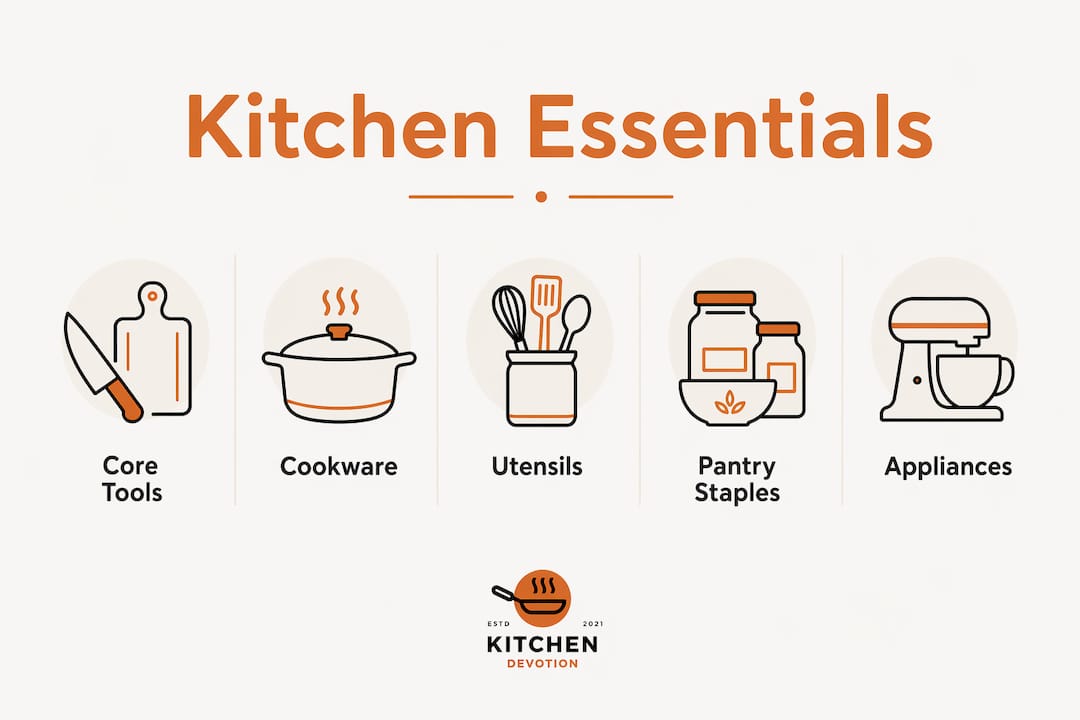
The definition of kitchen essentials breaks naturally into five categories: cookware, utensils, small appliances, pantry staples, and cleaning or storage supplies. Each category solves a different set of daily problems. Cookware handles heat. Utensils handle prep and serving. Small appliances handle tasks that would otherwise take too long by hand. Pantry staples give you the building blocks for most meals. Storage and cleaning supplies keep the whole system running.
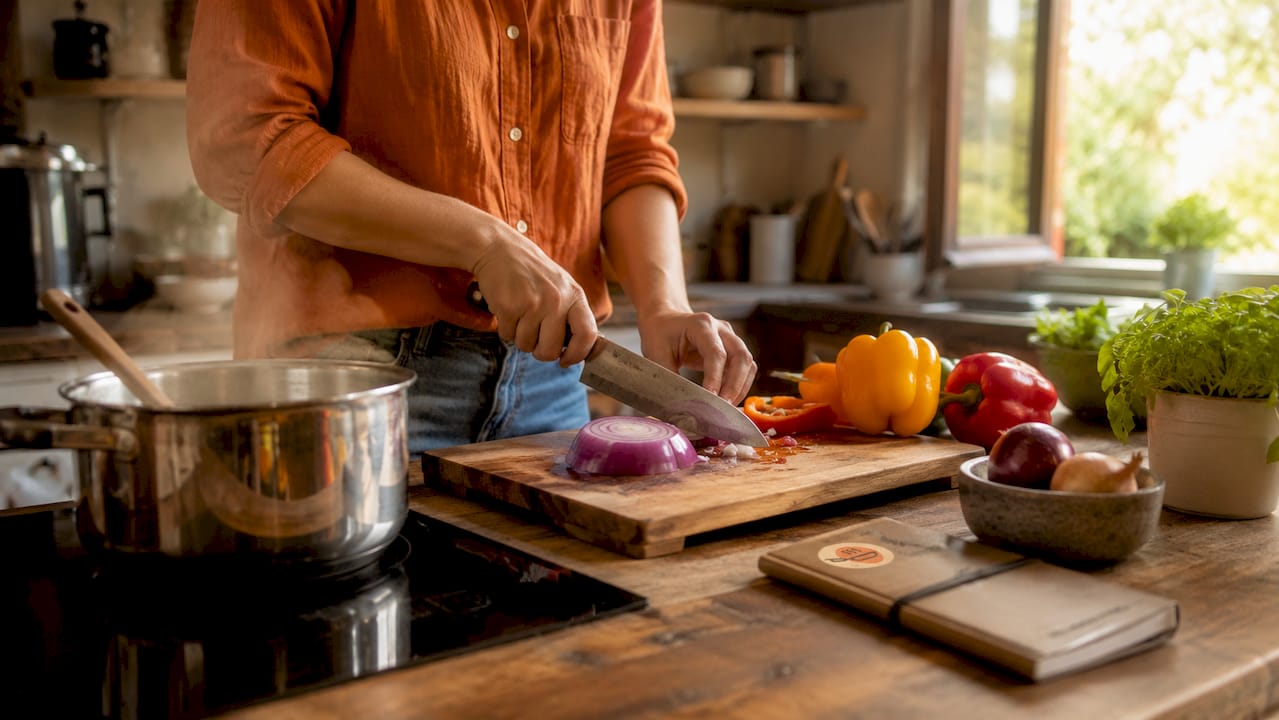
About 10 core tools cover roughly 90% of everyday cooking tasks. That number is worth sitting with. Most home cooks own far more than 10 tools, yet a lean set handles nearly everything. The gap between what you own and what you actually use is where clutter lives.
What qualifies as a kitchen essential comes down to three criteria: the item solves a frequent problem, it works across multiple recipes or techniques, and it holds up to regular use. A chef’s knife qualifies on all three counts. A strawberry huller fails all three for most cooks.
The core essential items list
These are the tools that meet the definition across nearly every cooking style:
- Chef’s knife: The single most used prep tool in any kitchen. A quality 8-inch chef’s knife handles chopping, slicing, and mincing for almost every recipe.
- Cutting board: Protects your counters and your knife edge. Wood or plastic both work; size matters more than material.
- Cast iron skillet or stainless steel pan: Handles searing, sautéing, frying, and oven finishing. One good skillet replaces several specialty pans.
- Saucepan (2–3 quart): For sauces, soups, grains, and boiling eggs. Used daily in most kitchens.
- Mixing bowls (set of 3): Prep, marinating, and serving all happen in mixing bowls. Stainless steel nests flat and lasts for decades.
- Colander: Draining pasta, rinsing produce, and straining stocks. A colander with feet is easier to use.
- Measuring cups and spoons: Volume measurement for recipes. A kitchen scale adds weight-based accuracy, which improves recipe results especially in baking.
- Spatula and tongs: Flipping, tossing, and serving. Silicone spatulas protect nonstick surfaces; metal tongs handle high heat.
- Can opener: Overlooked until you need it. A manual can opener takes up almost no space.
- Food storage containers: Airtight containers for leftovers and meal prep. Glass containers are durable and do not absorb odors.
Pro Tip: Before buying any new kitchen tool, ask yourself: will I use this at least once a week? If the answer is no, skip it and put the money toward a better version of something you already own.
Cookware comparison: which type fits which task?
| Cookware type | Best use | Key material advantage |
|---|---|---|
| Cast iron skillet | Searing, frying, oven baking | Retains heat evenly; lasts generations |
| Stainless steel pan | Sautéing, deglazing, sauces | Durable, non-reactive, dishwasher safe |
| Nonstick pan | Eggs, fish, delicate foods | Easy release; requires gentle utensils |
| Dutch oven | Braises, soups, bread baking | Heavy lid traps moisture; stovetop to oven |
| Saucepan | Boiling, simmering, sauces | Tall sides prevent splatter |
Materials like wood, metal, and silicone are the preferred choices for durability and practicality. Cheap plastic tools warp, stain, and crack within months. Spending more on a silicone spatula or a stainless steel mixing bowl pays off over years of daily use.
Why kitchen essentials matter for your cooking
The importance of kitchen essentials goes beyond convenience. The right tools make cooking faster, safer, and less expensive over time. Home cooks with a solid set of quality basics waste less food, cook more often, and spend less money replacing cheap items that break or underperform.
Safety is a direct benefit that often goes unmentioned. A dull knife requires more force and slips more easily than a sharp one. A pan that heats unevenly creates hot spots that burn food and increase the risk of splattering. The right tools reduce both types of risk without requiring any extra skill.
Cooking confidence grows when your tools do not fight you. A cook who struggles with a flimsy cutting board or a pan that warps on the burner is less likely to try new recipes. A cook with a stable board and a reliable skillet focuses on the food, not the equipment.
The importance of kitchen essentials also shows up in your grocery budget. Food storage containers and organized pantry staples directly reduce food waste. When leftovers have a proper home in airtight containers, they get eaten instead of thrown out. That habit alone saves a meaningful amount of money over the course of a year.
Here is where the right tools pay off most clearly:
- Speed: A sharp chef’s knife cuts prep time in half compared to a dull blade.
- Safety: Stable cutting boards and properly sized pans reduce accidents.
- Food quality: Even heat distribution from quality cookware produces better results.
- Cost savings: Durable tools do not need replacing every year.
- Less waste: Proper storage keeps ingredients and leftovers usable longer.
- Cooking frequency: Cooks with functional kitchens cook at home more often, which reduces spending on takeout.
What are the most common mistakes when choosing kitchen essentials?
The most common mistake is buying a large set before you know what you actually cook. A 15-piece knife block sounds like a good deal until you realize you use two knives and the rest take up drawer space. Starting with large sets or too many gadgets wastes money and creates clutter that makes the kitchen harder to use.
Single-use gadgets are the second most common trap. An avocado slicer, a strawberry corer, or an egg separator each solve one narrow problem. A chef’s knife solves all three and a hundred more. Specialty tools have their place, but they belong later in your kitchen’s life, after you have covered the basics.
Prioritizing price over quality is the third mistake. A $10 nonstick pan from a discount store will warp, lose its coating, and need replacing within a year. A $40 stainless steel pan from a reputable brand will outlast a decade of daily use. Investing in core quality items over full cheap sets gives you a higher return on every dollar spent.
Watch out for these specific pitfalls:
- Buying a full cookware set when you only need two or three pieces
- Choosing gadgets based on social media trends rather than your actual meals
- Ignoring storage and cleaning tools, which are just as essential as cookware
- Skipping a kitchen scale because it seems unnecessary (it is not, especially for baking)
- Buying duplicates of items you already own instead of filling real gaps
Pro Tip: Write down the five meals you cook most often before buying anything new. Every tool you purchase should serve at least three of those five meals. If it does not, it is not an essential for your kitchen.
Versatility and actual cooking patterns determine which items are truly essential. An item that appears on every “must-have” list but does not match your cooking style is not essential for you. A rice cooker is indispensable for someone who eats rice daily and optional for someone who rarely does.
How to build a practical kitchen essentials setup
A practical first kitchen setup starts with basic cookware, a few utensils, one or two small appliances, simple pantry staples, and cleaning supplies. That sequence matters. Cookware and utensils come first because they cover the widest range of tasks. Small appliances come second because they save time on specific tasks you do regularly.
Follow this order when building your setup:
- Start with three cookware pieces: A 10-inch skillet, a 2-quart saucepan, and a large pot for pasta or soups. These three cover the majority of stovetop cooking. Check out basic cookware options to understand which materials suit your cooking style.
- Add five core utensils: A chef’s knife, a cutting board, a spatula, tongs, and a set of measuring cups and spoons. These handle prep and cooking for nearly every recipe.
- Choose one or two small appliances: A toaster or toaster oven covers breakfast and reheating. A blender handles smoothies, soups, and sauces. An air fryer covers fast, lower-fat cooking for proteins and vegetables. Pick based on what you actually eat, not what looks good on the counter.
- Stock basic pantry staples: Olive oil, salt, black pepper, garlic, canned tomatoes, dried pasta, rice, and broth cover the foundation of most weeknight meals.
- Add storage and cleaning supplies: Airtight containers in two or three sizes, a dish brush, dish soap, and a drying rack. Food storage and cleaning tools are part of the essential set because they protect your food and keep your kitchen functional.
- Organize for workflow: Store your most-used tools within arm’s reach of the stove. Keep prep tools near the cutting board. Put storage containers in a cabinet you can reach with one hand while holding a pot.
Budget guidance by category
| Category | Minimum spend | Quality benchmark |
|---|---|---|
| Chef’s knife | $40–$80 | Full tang, high-carbon steel, comfortable grip |
| Skillet (10-inch) | $30–$60 | Heavy base, oven-safe to 400°F |
| Saucepan (2-quart) | $25–$50 | Thick base, tight-fitting lid |
| Cutting board | $20–$40 | Large enough for a whole chicken |
| Food storage set | $25–$50 | Airtight seal, microwave and dishwasher safe |
| Small appliance (air fryer) | $60–$100 | 4-quart minimum capacity, easy-clean basket |
A beginner-friendly cooking setup does not require spending a lot at once. Buy the cookware and utensils first, then add appliances as your cooking habits become clearer. Spending $200 on the right five items beats spending $200 on a 20-piece set where you use four pieces.
Key Takeaways
A kitchen essential is any tool or item you use frequently enough that cooking without it slows you down, reduces safety, or increases waste.
| Point | Details |
|---|---|
| Definition of kitchen essentials | Tools, cookware, and staples used frequently enough to remove real cooking bottlenecks. |
| Core set size | About 10 items cover 90% of everyday cooking tasks for most home cooks. |
| Quality over quantity | One durable skillet or knife outperforms a full cheap set in longevity and results. |
| Storage counts as essential | Airtight containers and cleaning supplies prevent food waste and keep the kitchen functional. |
| Build in stages | Start with cookware and utensils, then add appliances based on your actual cooking habits. |
The essentials I actually use every day
I spent years accumulating kitchen tools before I realized most of them were solving problems I did not have. The turning point came when I moved into a smaller apartment and had to cut my kitchen down to what fit in two drawers and one cabinet. That constraint forced me to be honest about what I actually reached for.
The tools that made the cut were predictable: a chef’s knife, a cast iron skillet, a saucepan, a cutting board, and a set of mixing bowls. What surprised me was how much better my cooking got. Without the clutter, I could find everything instantly. Without the excess pans, I learned each piece of cookware deeply instead of grabbing whatever was closest.
The lesson I keep coming back to is this: essentials are personal. A kitchen essentials checklist from a food magazine reflects the author’s cooking life, not yours. The real definition of kitchen essentials is the set of tools that removes friction from the meals you actually make. A home baker needs a kitchen scale and a stand mixer before they need a wok. A weeknight pasta cook needs a large pot and a colander before they need a mandoline.
My honest advice is to resist the pull of aspirational lists. Build your kitchen around the five meals you cook most often, then add tools only when a specific task becomes a real obstacle. That approach produces a kitchen that feels good to work in, not one that looks impressive but slows you down.
— K. Connors
Kitchendevotion’s picks for your essential kitchen setup
Knowing what a kitchen essential means is the first step. Finding the right products is the next one. Kitchendevotion curates tools and appliances specifically for home cooks who want quality without overcomplicating their setup.
The time-saving appliances list at Kitchendevotion covers the small appliances that genuinely earn their counter space, including air fryers, blenders, and toaster ovens selected for real-world performance. For cookware, the cookware sets guide breaks down which materials and configurations make sense for different cooking styles and budgets. Every product on the site is chosen with the same standard: does it solve a real problem for a real home cook?
FAQ
What does kitchen essential mean?
A kitchen essential is any tool, piece of cookware, or pantry staple used frequently enough that cooking without it creates a real bottleneck. The standard definition focuses on frequency of use, versatility, and durability rather than price or brand.
What qualifies as a kitchen essential for beginners?
For beginners, the core qualifiers are a chef’s knife, cutting board, skillet, saucepan, spatula, tongs, measuring tools, and food storage containers. These items cover the full range of basic cooking tasks without requiring specialty skills or extra space.
How many kitchen essentials do you actually need?
About 10 core tools cover 90% of everyday cooking tasks for most home cooks. Starting with a lean set and adding items based on actual cooking habits avoids wasted spending and kitchen clutter.
Why are food storage containers considered kitchen essentials?
Food storage containers prevent food waste by keeping leftovers and prepped ingredients fresh and accessible. Organized storage directly supports kitchen workflow and reduces the cost of throwing out unused food.
Is a kitchen scale a kitchen essential?
A kitchen scale qualifies as an essential for anyone who bakes regularly, since weight-based measurement improves recipe accuracy over volume cups and spoons. For cooks who rarely bake, it moves from essential to optional.



No comment