
Minimal packaging in kitchenware is defined as the use of the least amount of material necessary to protect, transport, and present a product without waste. The role of minimal packaging kitchenware goes well beyond aesthetics. It directly cuts landfill contributions, lowers freight costs, and signals a brand’s genuine commitment to sustainability. Brands like Seed and Sprout already ship eco-friendly prep sets in simple, plastic-free cardboard. Walki produces paper-based packaging with over 90% renewable fiber content. Consumer demand for this approach is growing fast, and the design strategies behind it are more sophisticated than most shoppers realize.
What materials and design strategies define minimal packaging in kitchenware?
Minimal packaging in kitchenware relies on a specific set of material choices and design rules. The goal is to protect the product using the fewest layers, the least weight, and the most recyclable or compostable materials available.
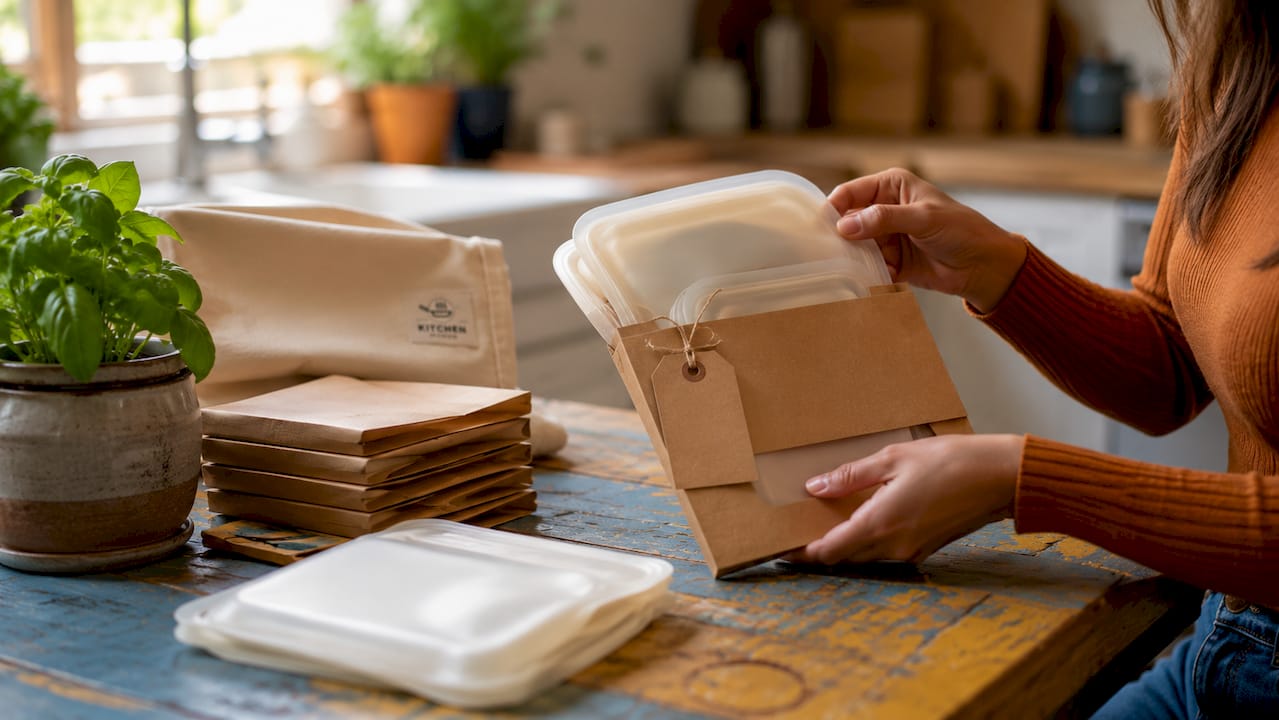
Core materials in use today
The most common materials in sustainable kitchenware design include:
- Mono-material paper and cardboard. Single-material packaging is fully recyclable at curbside. Mono-material packaging can reduce packaging mass by 20–30%, cutting freight and storage costs for retailers significantly.
- Renewable natural fibers. Wheat straw fiber, bagasse (sugarcane pulp), and FSC-certified beechwood are now used in plastic-free kitchenware sets, often with LFGB food-safety certification.
- Water-soluble and bio-based materials. SmartSolve’s X-Series bio-based pouches disperse in under 30 seconds and carry a carbon-negative lifecycle, eliminating microplastic pollution entirely.
- Bioplastics and bioplates. These carbon-negative alternatives to conventional plastic film are home-compostable and resist industrial dishwashing cycles.
The right-sizing principle
Right-sizing is the single most effective design strategy in eco-friendly packaging solutions. It means matching the package dimensions precisely to the product volume, eliminating the empty space known as slack-fill. Right-sizing packaging signals environmental commitment more effectively than material choice alone. A smaller box uses less cardboard, ships more units per pallet, and generates less frustration when the consumer opens it.
Pro Tip: When shopping for kitchenware, squeeze the box before you buy. If the product rattles or shifts significantly, the packaging is oversized. Brands that right-size their packaging tend to take sustainability seriously across the board.
The table below compares the most common minimal packaging materials by recyclability, compostability, and consumer familiarity.
| Material | Recyclable | Compostable | Consumer familiarity |
|---|---|---|---|
| Mono-material cardboard | Yes | No | High |
| Wheat straw fiber | Varies | Yes | Medium |
| Bagasse | No | Yes | Low |
| Water-soluble film | No | Yes | Low |
| Bioplastic film | No | Yes (certified) | Low |
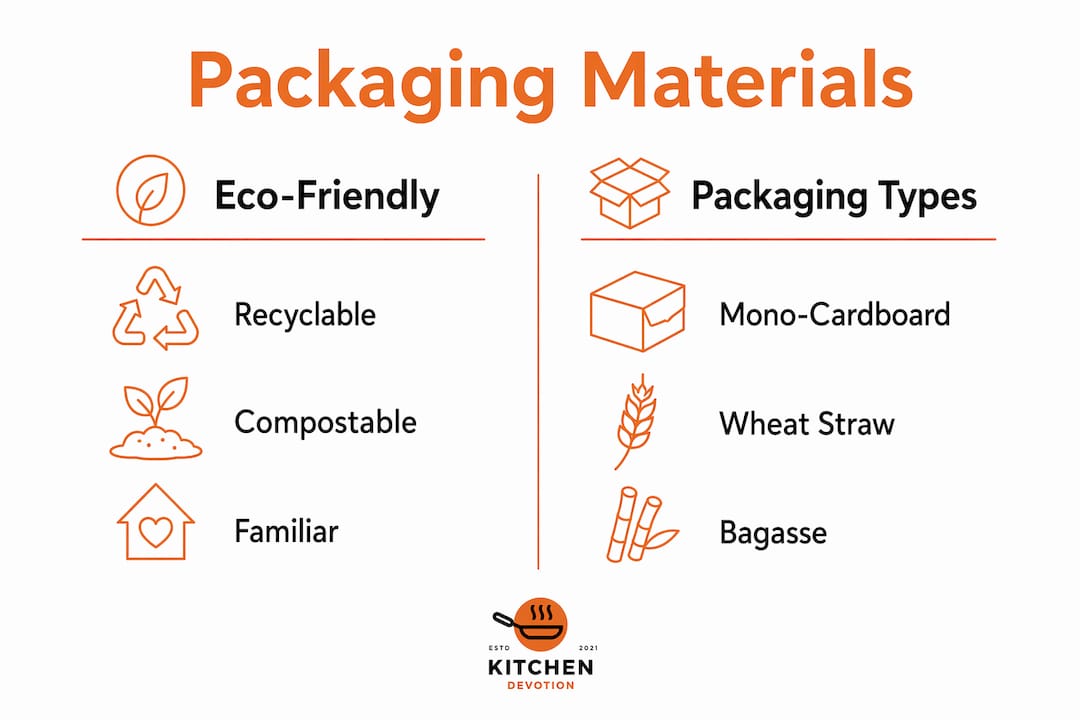
Understanding this table matters because “recyclable” and “compostable” are not interchangeable. Choosing the wrong bin for bagasse or bioplastic defeats the environmental purpose entirely.
How does minimal packaging kitchenware influence consumer perception and brand positioning?
Packaging design shapes how consumers judge a product before they ever use it. Minimal packaging sends a clear message, but that message can be misread.
When simplicity builds trust
Simplicity in packaging conveys honesty and transparency, increasing consumer trust when paired with clear sustainability claims. Mintel research confirms that consumers associate clean, uncluttered packaging with “clean” ingredients and ethical sourcing. This is a genuine advantage for kitchenware brands that want to build long-term loyalty with eco-conscious buyers.
The financial case is strong too. 82% of consumers are willing to pay up to 10% more for sustainable packaging formats that balance minimalism with practical benefits. That willingness to pay is a direct revenue opportunity for brands that execute minimal packaging well.
When minimalism backfires
Minimalism carries real risks. Packaging that looks too sparse can signal low quality, especially for premium or indulgent products. Consumers often associate overly simple packaging with store-brand or generic items. A cast iron skillet in a plain brown box with no tactile finish or clear brand identity can feel cheap, even if the product inside is exceptional.
The fix is not more packaging. It is smarter packaging. Premium brands use precise sizing, quality paper stock, and embossed or foil-printed brand marks to maintain luxury cues without adding material waste.
“Minimal packaging is not about stripping everything away. It is about keeping only what earns its place.” — Mintel packaging insights, 2026
Key risks and solutions for brand positioning with minimal packaging:
- Risk: Product looks generic. Solution: Use tactile paper finishes and precise sizing to communicate quality.
- Risk: Consumer assumes low quality. Solution: Add clear certifications (LFGB, FSC, home compostable) directly on the pack.
- Risk: Sustainability claims feel vague. Solution: Print specific disposal instructions, not just recycling symbols.
- Risk: Minimalism mismatched to product tier. Solution: Match packaging weight and finish to the product’s price point.
For a deeper look at how material choices connect to brand credibility, Kitchendevotion’s guide on responsible sourcing practices covers the full picture.
What practical benefits does minimal packaging offer in the kitchenware supply chain and retail experience?
The benefits of minimal kitchen packaging extend well past the consumer’s recycling bin. They run through every stage of the supply chain, from the factory floor to the retail shelf.
Here are the five most concrete supply chain and retail benefits:
-
Lower freight costs. Reducing packaging mass by 20–30% means more units fit on each pallet and each truck. Fewer shipments cover the same order volume. For high-volume kitchenware retailers, this is a measurable cost reduction per quarter.
-
Reduced Extended Producer Responsibility fees. EPR regulations in the European Union and several U.S. states charge brands based on the weight and material type of packaging they put into the market. Lighter, mono-material packaging lowers EPR fees directly. This is one of the fastest-growing financial incentives for brands to switch.
-
Simpler recycling for consumers. Mono-material packaging goes into a single recycling stream. Multi-material laminates require consumers to separate layers, which most do not do. Simpler packaging means higher actual recycling rates, not just higher theoretical recyclability.
-
Better shelf appeal. Clean, right-sized packaging stands out on a crowded retail shelf. It communicates confidence. A brand that does not need excess packaging to sell its product signals that the product speaks for itself.
-
E-commerce compatibility. Minimal packaging ships flat, stacks efficiently, and generates less void-fill waste inside shipping boxes. For kitchenware sold online, this reduces both dimensional weight charges and the amount of secondary packaging needed.
The packaging functions framework confirms that effective minimal packaging still delivers on all four core jobs: protecting contents, preserving quality, attracting customers, and providing information. Less material does not mean less function. It means every gram of material is working harder.
Kitchendevotion’s resource on reducing kitchen waste connects these supply chain gains to everyday habits consumers can adopt at home.
What are current trends shaping the future of minimal packaging in kitchenware?
Kitchenware packaging trends in 2026 are moving in two directions at once: toward materials that do more with less, and toward design philosophies that treat the product as a long-term investment rather than a disposable purchase.
Emerging materials worth watching
The most significant material shift is the move toward certified home-compostable packaging. Home compostable certifications, such as NF T51-800, are more meaningful to consumers than industrial composting claims. Industrial composting requires facilities that most households cannot access. Home compostable packaging breaks down in a backyard compost bin, which is a practical and verifiable claim.
Bio-based bioplates represent the next step beyond paper. These materials are carbon-negative across their lifecycle, resist industrial dishwashing, and leave no microplastic residue. SmartSolve’s X-Series bio-based packaging is one example already in commercial use.
Pro Tip: Look for the NF T51-800 or TÜV Austria “OK compost HOME” mark on kitchenware packaging. These certifications mean the packaging breaks down at home, not just in a commercial facility.
The furniture-like design philosophy
The most forward-thinking brands are rethinking kitchenware packaging as part of a longer product story. Dezeen’s coverage of the Tiny Kitchen Green Line by Neuvermoebelt shows modular kitchen units built from bamboo and eco-linoleum, designed to age well and feel like furniture. The packaging philosophy follows the product: minimal, honest, and built for longevity rather than a single unboxing moment.
This approach reframes minimal packaging as part of the entire product lifespan experience. The comparison below shows how traditional and minimal packaging philosophies differ across key dimensions.
| Dimension | Traditional packaging | Minimal packaging |
|---|---|---|
| Material layers | 3–5 mixed materials | 1–2 mono-materials |
| End-of-life | Mixed recycling or landfill | Single-stream or compost |
| Consumer instruction | Recycling symbol only | Specific disposal steps |
| Brand signal | Volume and protection | Confidence and honesty |
| Supply chain cost | Higher per unit | Lower per unit |
Transparency as a design requirement
Clear end-of-life instructions are becoming a design requirement, not an optional label. Consumers who buy eco-friendly kitchenware want to know exactly what to do with the box when they are done. Brands that print specific disposal steps, not just a generic recycling triangle, build more trust and see higher repeat purchase rates.
Kitchendevotion’s guide on recycled materials in kitchenware explains how these material choices connect to broader sustainability goals for 2030 and beyond.
Key Takeaways
Minimal packaging in kitchenware reduces waste, lowers supply chain costs, and builds consumer trust when brands pair right-sized, mono-material packaging with clear disposal instructions.
| Point | Details |
|---|---|
| Right-sizing is the top strategy | Matching package size to product volume cuts waste more effectively than material choice alone. |
| Mono-material packaging recycles cleanly | Single-material packs go into one recycling stream, raising actual recycling rates at home. |
| 82% of consumers pay more for sustainability | Shoppers accept up to 10% higher prices for packaging that balances minimalism with real benefits. |
| Minimalism can signal low quality | Brands must use tactile finishes and certifications to maintain premium perception with simple packaging. |
| EPR fees reward lighter packaging | Reducing packaging mass by 20–30% directly lowers Extended Producer Responsibility costs for brands. |
Why I think most consumers are still reading packaging wrong
Most people I talk to assume that brown kraft paper automatically means sustainable. It does not. A brown paper box laminated with a plastic moisture barrier is a multi-material product that cannot be recycled at curbside. The brown color is a design choice, not a sustainability credential. This is one of the most persistent and costly misconceptions in the kitchenware space right now.
What I have found actually works is looking past the color and asking two questions: Is this one material? And does the brand tell me exactly where to put it when I am done? If the answer to both is yes, you are holding genuinely minimal packaging. If the brand just prints a recycling symbol and calls it a day, that is a red flag.
The other thing I have noticed is that consumers underestimate how much right-sizing matters. A product that fits snugly in its box, with no tissue paper stuffing or foam inserts, tells you something real about how the brand operates. It means they measured. It means they cared enough to redesign the box around the product, not the other way around. That discipline tends to show up in the product quality too.
My honest recommendation: treat packaging as a proxy for brand values. Brands that invest in certified home-compostable materials, precise sizing, and clear disposal instructions are the ones most likely to have also invested in the quality of what is inside the box. The packaging is the first thing you touch. Make it count.
— K. Connors
Discover eco-conscious kitchenware at Kitchendevotion
Kitchendevotion curates cookware and kitchen tools that take both performance and packaging seriously. The collections prioritize products shipped in right-sized, minimal packaging that protects without excess. Whether you are building out a full kitchen or replacing a single piece, you will find options that align with a lower-waste lifestyle. Browse the full range of cookware sets designed with eco-conscious buyers in mind, or explore the time-saving kitchen appliances list for tools that arrive without unnecessary waste. Every product on the site is chosen to deliver real value, from the first unboxing to years of daily use.
FAQ
What is the role of minimal packaging in kitchenware?
Minimal packaging in kitchenware protects the product using the least amount of material necessary, reducing waste, lowering freight costs, and signaling a brand’s environmental commitment. It serves all four core packaging functions: protection, quality preservation, shelf appeal, and consumer information.
What materials are used in eco-friendly kitchenware packaging?
Common materials include mono-material cardboard, wheat straw fiber, bagasse, water-soluble film, and certified bioplastics. Each material differs in recyclability and compostability, so checking the disposal instructions on the pack is the most reliable guide.
Does minimal packaging affect product quality perception?
Yes. Overly sparse packaging can signal low quality, especially for premium kitchenware. Brands counter this by using precise sizing, quality paper stock, and certifications like LFGB or FSC to maintain a premium feel without adding material waste.
How do I choose minimal packaging kitchenware?
Look for mono-material packaging with specific disposal instructions, not just a recycling symbol. Check for home compostable certifications such as NF T51-800 or TÜV Austria “OK compost HOME,” and favor brands whose packaging fits the product snugly with no excess void fill.
Are consumers willing to pay more for sustainable kitchenware packaging?
Yes. 82% of consumers will pay up to 10% more for sustainable packaging that delivers real benefits alongside minimalism. That premium reflects both environmental values and the trust that clear, honest packaging builds with buyers.



No comment