What makes a meal high in protein?
A high-protein meal delivers 20–40 grams of quality protein per serving. That range isn’t arbitrary. The International Society of Sports Nutrition identifies 20–40g per meal as the effective dose for stimulating muscle protein synthesis, and researchers consistently find that spreading those doses throughout the day outperforms loading protein into one or two sittings.
Why does it matter beyond muscle? Protein slows digestion, blunts the hunger hormone ghrelin, and keeps blood sugar steadier than carbohydrate-heavy meals. Research also links consistent protein intake to better mood, deeper sleep, and improved cognitive function, benefits that go well beyond the gym.
Good protein sources span every dietary style:
- Animal proteins: chicken breast, salmon, eggs, Greek yogurt, cottage cheese
- Plant proteins: lentils, black beans, chickpeas, tofu, edamame, quinoa
- Pescatarian options: canned tuna, shrimp, sardines, tilapia
- Dairy: milk, cheese, kefir
Easy high-protein meal ideas across every dietary style
The recipes below are built around affordability and speed. Each one hits that 20–40g target with straightforward ingredients most home cooks already keep on hand. For a deeper look at setting up your kitchen for this kind of cooking, Kitchendevotion’s guide to building a meal prep station is worth bookmarking.
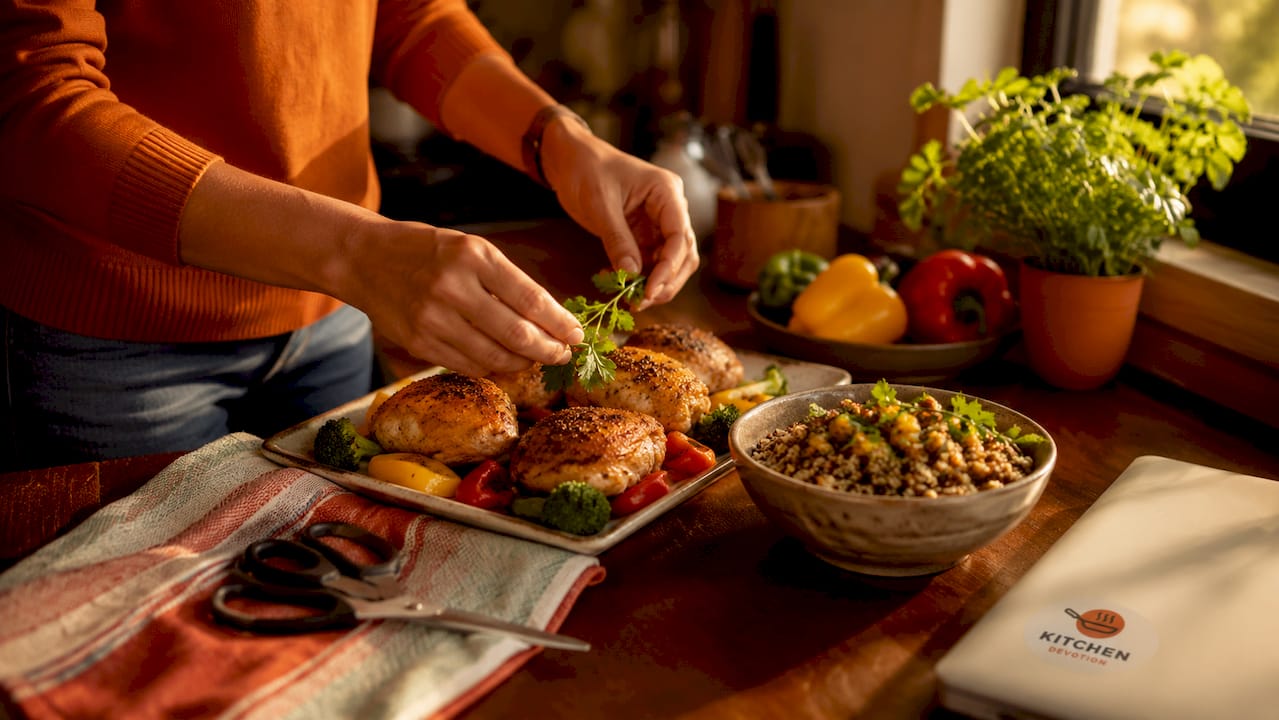
- Chicken and quinoa grain bowl: Six ounces of cooked chicken breast paired with a cup of quinoa and roasted vegetables clears 45g of protein. Drizzle tahini or a yogurt-based sauce to keep it interesting.
- Salmon with farro: A 4-ounce salmon fillet over farro with steamed broccoli delivers over 35g of protein plus omega-3 fatty acids. Canned salmon works just as well for a weeknight shortcut.
- Greek yogurt parfait: One cup of plain Greek yogurt (roughly 22g of protein) layered with berries, nuts, and seeds makes a fast breakfast or post-workout snack that requires zero cooking.
- Lentil curry: A bowl of lentil curry with spinach and tomatoes can provide a substantial amount of protein per serving. Lentils also cook in under 25 minutes, no soaking needed.
- Tofu stir-fry: A serving of extra-firm tofu stir-fried with edamame and vegetables can deliver a moderate to high amount of protein. Pair with brown rice to round out the macros.
- Egg and bean scramble: Three eggs scrambled with half a cup of black beans and a handful of spinach gives you a 30g breakfast in about ten minutes.
- Tuna and white bean salad: Canned tuna mixed with white beans, olive oil, lemon, and herbs is one of the most affordable high-protein lunches you can make. Total prep time: five minutes.
- Cottage cheese and veggie wrap: Half a cup of cottage cheese spread inside a whole-wheat tortilla with cucumber, tomato, and arugula is a no-cook lunch that clears 20g easily.
- Shrimp and cauliflower rice bowl: Eight ounces of shrimp sautéed with garlic over cauliflower rice and topped with avocado is a low-carb, high-protein dinner option that comes together in under 20 minutes.
- Tempeh and vegetable sheet pan: Sliced tempeh marinated in tamari and maple syrup, roasted alongside sweet potato and Brussels sprouts, gives plant-based eaters a satisfying 30g dinner.
Pro Tip: Batch-cook one or two proteins on Sunday — a sheet pan of chicken thighs and a pot of lentils — and you have the base for five different meals without repeating the same dish twice.
How to distribute protein throughout the day
Hitting a daily protein target matters less than how you spread it. Research from the ISSN shows that doses spaced roughly every 3–4 hours sustain muscle protein synthesis far better than irregular intake. Eating 80g at dinner and skipping protein at breakfast simply doesn’t work the same way.
Breakfast is where most people fall short. Nutrition researchers recommend at least 25–40g of high-quality protein at the first meal of the day, particularly for adults over 35, when anabolic resistance starts to develop. A bowl of cereal won’t cut it.
A practical daily structure looks like this:
- Breakfast (7–8 AM): Greek yogurt parfait or a three-egg scramble with beans — 25–35g
- Lunch (12–1 PM): Chicken grain bowl or tuna and white bean salad — 30–40g
- Snack (3–4 PM): Cottage cheese with fruit, or a handful of edamame — 10–15g
- Dinner (6–7 PM): Salmon with farro, or tofu stir-fry — 30–40g
For most active adults, 1.2–1.7g of protein per kilogram of body weight per day covers muscle maintenance and growth. A person weighing about 150 pounds may aim for a daily protein intake that supports muscle maintenance and growth. Going beyond 2g per kilogram offers no added muscle benefit for most people and may crowd out fiber, healthy fats, and micronutrients.
Plant-based eaters need one extra consideration: plant proteins tend to be lower in leucine, the amino acid that triggers muscle building. Combining sources — lentils with quinoa, tofu with edamame — or eating larger portions closes that gap effectively.
How to balance macronutrients alongside high protein intake
Protein shouldn’t crowd out the rest of your plate. The Mass General Brigham nutrition team suggests a practical macro split of roughly 30% protein, 30% fat, and 40% carbohydrates as a starting point for active adults. That leaves real room for whole grains, vegetables, and healthy fats.
Carbohydrates paired with protein do two things: they replenish glycogen after exercise, and they blunt the blood sugar spikes that come from eating carbs alone. Brown rice with chicken, sweet potato with salmon, or whole-grain toast with eggs are all examples where the combination works better than either food on its own.
Healthy fats from sources like olive oil, avocado, and nuts slow digestion and support hormonal health. Cutting fat too aggressively while chasing protein targets is a common mistake. Fat also carries fat-soluble vitamins (A, D, E, K) that a high-protein diet alone won’t provide.
Fiber is the other piece people overlook. High-protein foods like chicken and eggs contain no fiber, so loading up on them without vegetables, legumes, or whole grains can cause digestive issues. Aim for vegetables or a legume at every meal, and you cover both fiber and additional protein in one move.
Kitchendevotion makes high-protein cooking faster and easier
Cooking protein-rich meals consistently is much easier with the right equipment. An air fryer crisps chicken thighs, salmon fillets, and tofu in a fraction of the oven time, with less cleanup. A quality nonstick skillet handles eggs and fish without sticking or tearing. A rice cooker frees up your attention while grains and legumes cook hands-free.

Kitchendevotion curates appliances specifically chosen for home cooks who want speed without sacrificing quality. Whether you’re just getting started or upgrading a busy kitchen, the time-saving appliances list covers the tools that make weekly protein meal prep genuinely manageable. For air fryer options that work especially well for high-protein cooking, the air fryer collection is a good place to start.
FAQ
How much protein should each meal contain?
Most adults should aim for 20–40 grams of protein per meal, spaced every 3–4 hours. This range maximizes muscle protein synthesis and keeps hunger in check throughout the day.
How do I get 150g of protein a day?
Spread intake across four meals and snacks: a 35g breakfast, two 40g meals, and a 15–20g snack gets you there. Focus on chicken, salmon, eggs, Greek yogurt, and legumes as your primary sources.
What meal is the highest in protein?
Meals built around chicken breast, salmon, or extra-firm tofu combined with a legume or dairy source consistently hit the top of the range. A chicken and quinoa grain bowl provides over 35g of protein.
How can I get 40g of protein in a single meal?
Combine two protein sources: three eggs plus half a cup of black beans, or a 4-ounce salmon fillet with a cup of Greek yogurt as a sauce base. Pairing sources is faster than trying to hit 40g from one food alone.
Is 200g of protein a day too much?
For most people, yes. Research shows muscle-building benefits plateau at roughly 1.6–2.2g per kilogram of body weight. Eating 200g daily only makes sense for athletes over 90kg training intensely four to six times per week.
Key Takeaways
High-protein meals built around 20–40g of quality protein per serving, distributed evenly across the day, deliver the strongest results for muscle health, satiety, and sustained energy.
| Point | Details |
|---|---|
| Target 20–40g per meal | This range maximizes muscle protein synthesis and keeps hunger controlled throughout the day. |
| Space meals every 3–4 hours | Consistent protein timing sustains muscle building better than loading protein into one or two meals. |
| Prioritize breakfast protein | Aim for at least 25–40g at your first meal, especially if you’re over 35. |
| Balance macros alongside protein | Pair protein with carbohydrates, healthy fats, and fiber-rich vegetables at every meal for complete nutrition. |
| Kitchendevotion for meal prep | Air fryers, nonstick cookware, and time-saving appliances from Kitchendevotion make consistent high-protein cooking practical. |





No comment