

The air gap is the safer choice because it creates a physical break in the drain line that gravity or pressure can’t bridge. A high loop only works because wastewater has to flow uphill to reach your dishwasher, which is usually enough, but it’s not foolproof. Your local plumbing code decides which one you’re actually allowed to install, so check the adopted code and any state amendments before you buy either part.
TL;DR:
- Local codes vary, with some states like California and Wisconsin mandating a physical air gap over a high loop for dishwasher drain protection.
- An air gap must be mounted above the sink’s flood level rim, while a high loop needs to be secured at about 32 inches under the countertop and fastened tightly.
- Proper installation and securing of the high loop are critical, as loose or sagging loops can fail inspection and increase backflow risk.
- Regular maintenance involves cleaning the air gap overflow ports or checking fasteners on the high loop to prevent clogs or dislodgement.
- When in doubt, check with local authorities first, since choosing the right method depends heavily on regional plumbing codes and specific home setup constraints.
Table of Contents
- Air Gap vs High Loop: A Side-by-Side Comparison
- How an Air Gap Works and What Inspectors Look For
- How a High Loop Works and How to Install It Right
- Code Rules: Where Air Gaps Are Actually Required
- DIY Installation Checklist for Both Methods
- Weighing the Trade-Offs and Inspection Risk
- Keeping Drain Protection Working Long-Term
- Making the Call: Air Gap or High Loop for Your Kitchen
- A Practical Take on Choosing Between the Two
- Planning Your Install? Start With the Right Sink Setup
- Where to Verify the Rules Yourself
- Sources
- FAQ
Air Gap vs High Loop: A Side-by-Side Comparison
The two methods solve the same problem in completely different ways. One relies on physics you can see; the other relies on physics you have to trust.
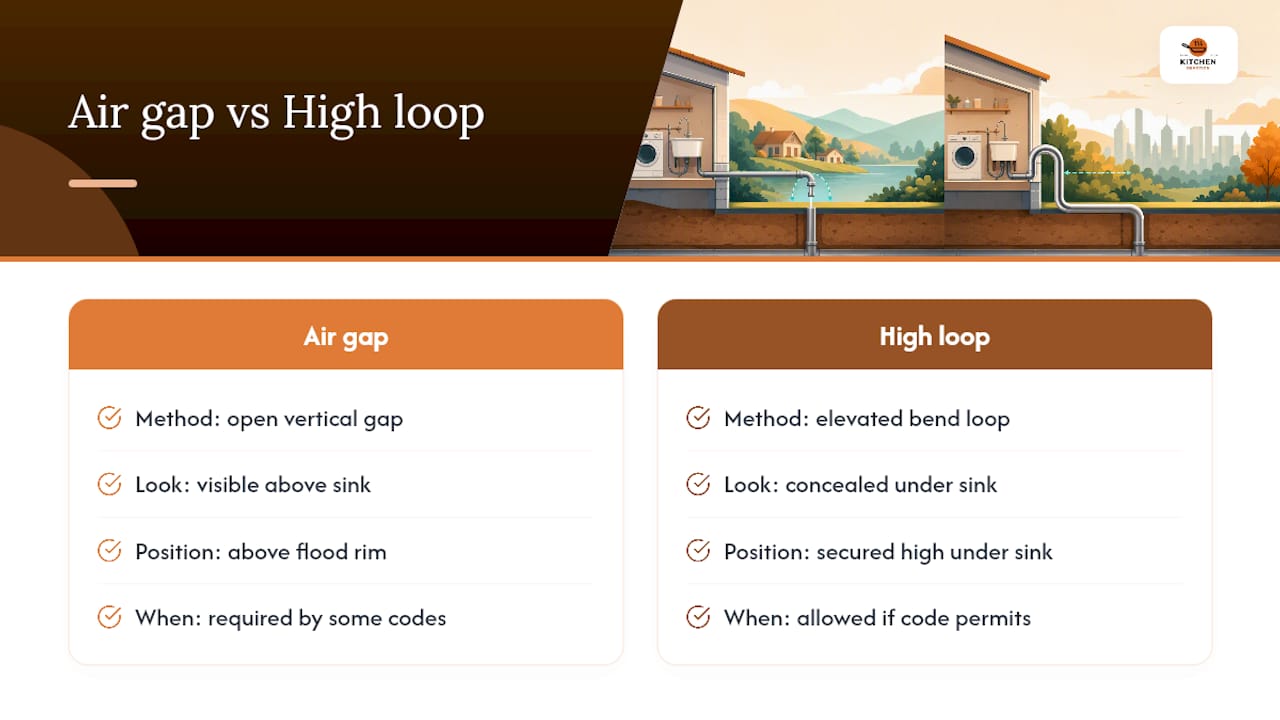
If your local code requires an air gap, or you’d rather not think about drain backflow again, install the air gap. If your jurisdiction allows a high loop and you value the hidden look under your sink, a properly secured loop does the job in most homes.
How an Air Gap Works and What Inspectors Look For
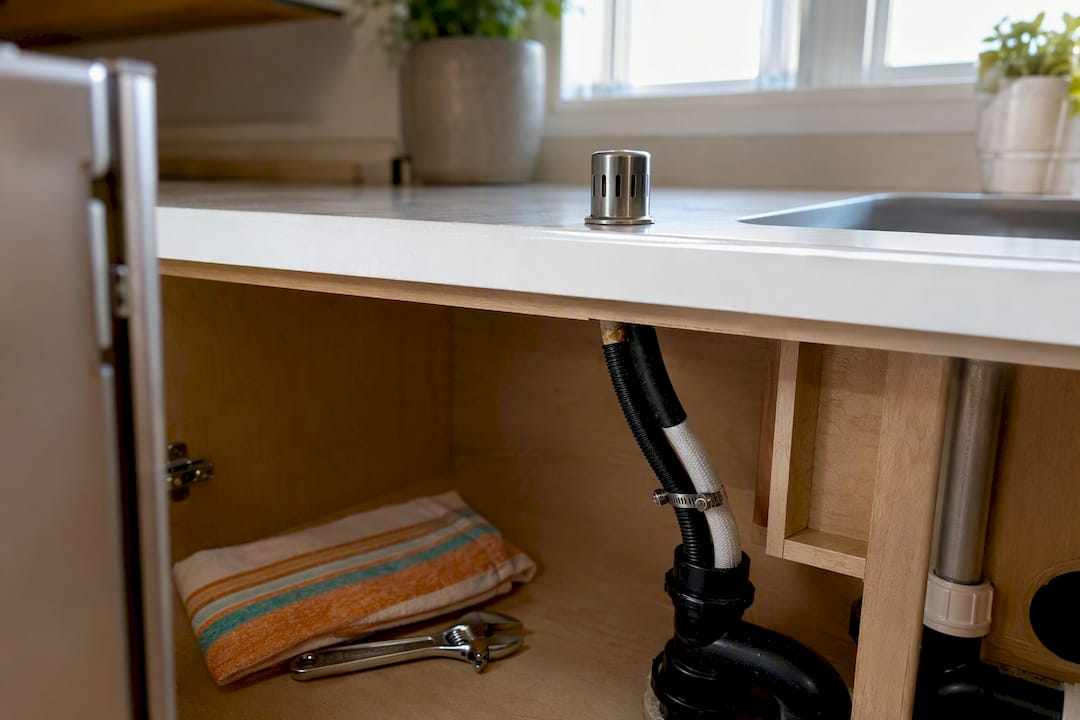
An air gap works by creating a literal gap of open air between the dishwasher’s drain hose and the sink’s drain system, so there’s no physical path for wastewater to travel backward into the machine. It’s the most fail-safe option because there’s nothing to fail: no valve, no check mechanism, just distance.
Installation is straightforward on paper. You mount the air gap fitting on the sink deck or countertop, above the flood level rim of the sink, then connect the inlet hose from the dishwasher and the outlet hose to the drain or disposal. That “above the flood rim” detail is non-negotiable. Mount it below the rim and you’ve defeated the entire purpose, which is exactly what inspectors check first, according to plumbing guidance from Bryco Plumbing. Beyond height, inspectors also confirm the cap is seated and hose clamps are tight.
How a High Loop Works and How to Install It Right
A high loop protects your dishwasher through gravity alone. As long as the top of the loop sits above both the drain connection and the trap weir, wastewater has no way to climb back up into the machine, even if the disposal or drain line backs up temporarily.
The installation detail that trips people up is securing the loop. It has to be fastened to the underside of the countertop at its highest practical point, not just draped over the cabinet wall. Installation guides commonly cite a target height around 32 inches for the fastened point, using a zip tie, clamp, or dedicated bracket, according to Dishwasherdrain. The hose that comes pre-looped from the factory almost never counts. Home-inspection sources note that a loop left loose or unfastened is one of the most common reasons a dishwasher connection fails inspection, since gravity only protects the drain when the loop stays put under water pressure and vibration.
Code Rules: Where Air Gaps Are Actually Required
Model codes disagree on this, which is exactly why “it depends on where you live” isn’t a cop-out answer. The Uniform Plumbing Code generally requires a physical air gap for dishwasher drains. The International Residential Code permits a high loop as an acceptable alternative. States and municipalities then layer their own amendments on top of whichever base code they’ve adopted, and those amendments win.
Certain states, including California, Washington, Minnesota, and Hawaii, are commonly cited as air gap states, largely because they’ve adopted UPC-based plumbing codes with little tolerance for high loops. Wisconsin goes further than most: its administrative code explicitly bans the high loop outright and mandates a physical air gap, spelled out in SPS 382.33(9)(d).
Don’t assume your state’s general reputation tells you the whole story, though. Counties and cities amend adopted codes constantly. The fastest way to know for certain is a five-minute call to your local building or plumbing department, or a quick look at the code edition your county has posted online. That call costs you nothing and can save you a failed inspection later.
DIY Installation Checklist for Both Methods
Here’s how to actually do the install once you know which method your code requires.
For an air gap:
- Measure your sink deck or countertop and mark the mounting hole location, usually next to the faucet.
- Drill the hole to the size specified by your air gap kit. If your countertop is granite, quartz, or another stone, hire a pro. Stone drilling isn’t a beginner DIY job.
- Mount the air gap fitting so its base sits above the sink’s flood level rim.
- Connect the inlet hose from the dishwasher and the outlet hose to the disposal or drain tailpiece.
- Run a full wash cycle and watch for leaks or overflow at the air gap cap.
For a high loop:
- Route the dishwasher drain hose up to the highest accessible point under the countertop.
- Secure it with a zip tie, hose clamp, or bracket, aiming for a peak around 32 inches where your cabinet layout allows it.
- Check that the hose doesn’t sag anywhere between the loop and the drain connection.
- Fill the sink completely and let it drain while the dishwasher is idle, watching the loop area for any backflow.
Pro Tip: Before connecting either method to a garbage disposal, remove the disposal’s drain knockout plug. Skipping this step is one of the most common DIY mistakes, and it leaves the dishwasher connection either blocked or drizzling wastewater under the sink.
Call a plumber if you’re unsure which code applies, if your countertop material rules out DIY drilling, or if your disposal’s knockout won’t budge.
Weighing the Trade-Offs and Inspection Risk
Each method has a real upside and a real annoyance attached to it.
- Air gap pros: virtually foolproof against backflow; satisfies UPC-based code without question.
- Air gap cons: visible on the counter next to your faucet; overflow ports can clog with food debris over time.
- High loop pros: completely hidden under the sink; cheaper and faster to install.
- High loop cons: depends entirely on secure mounting, so a loose or sagging loop can fail; not accepted everywhere.
Inspectors flag the same mistakes over and over: air gaps mounted below the flood rim, high loops that were never actually fastened to anything, and disposal knockouts left in place. Retrofitting an air gap onto an existing high loop setup can often be completed relatively quickly and affordably depending on parts and labor costs. Going the other direction, from air gap to high loop, is even faster since there’s no drilling involved, but it only makes sense where your local code allows it.
Keeping Drain Protection Working Long-Term
An air gap needs the least attention, but it isn’t maintenance-free. Twist off the chrome cap periodically and clear out any buildup in the overflow ports, especially if you notice water pooling around the base during a wash cycle. That pooling is usually the first sign of a clog, not a failed unit.
A high loop needs a different kind of check: fastener integrity. Give the clip or bracket a tug every few months, particularly after any under-sink plumbing work, since loosened fasteners are the leading cause of high-loop failure. If your dishwasher smells musty, drains slowly, or you spot water backing up at the air gap, the fix usually traces back to a clogged air gap port, a disposal knockout that was never removed, or, less often, a dishwasher that isn’t draining for reasons unrelated to backflow protection at all.
Making the Call: Air Gap or High Loop for Your Kitchen
Run through this short checklist before you buy parts. If your local code requires an air gap, that settles it, don’t fight city hall on this one. If you’re selling your home soon, renting the property out, or you simply live in a UPC-based state, install the air gap anyway even if a high loop might technically pass, since it removes any future inspection risk entirely.
If you’re in an IRC jurisdiction, want the hardware hidden, and you’re confident you can secure a loop properly at the right height, a high loop is a reasonable, code-compliant choice. Just don’t cut corners on securing it. The whole system depends on that loop staying exactly where you put it, through years of cabinet vibration, hose flexing, and the occasional bump from stored items underneath the sink.
A Practical Take on Choosing Between the Two
Most homeowners overthink this decision because they’re weighing aesthetics before they’ve weighed code. That’s backwards. Check your state and local amendments first, because that answer often makes the choice for you before personal preference even enters the conversation.
Where you do have a genuine choice, I’d lean toward the air gap almost every time, even in states where a high loop passes inspection. It’s not because high loops are unreliable when installed correctly, they’re not, but because “installed correctly” is doing a lot of work in that sentence. A loop that’s fastened today can work itself loose after a few years of use, and you won’t know until something backs up. An air gap has no moving parts to loosen.
If you’re planning a broader kitchen update alongside this fix, Kitchen Devotion’s kitchen sink resources and measurement guides are worth a look before you drill anything, since sink deck space and countertop material both affect which air gap kit will actually fit.
— K. Connors
Planning Your Install? Start With the Right Sink Setup
If you’re drilling a new air gap hole, the sink you already have might not leave enough deck space, or the countertop material might rule out DIY drilling entirely. Kitchen Devotion is where you check that before you buy a single fitting, not after you’ve already got a hole half drilled.

Kitchen Devotion runs as an affiliate resource, so the product pages you’ll find here link out to retailers like Amazon when you’re ready to buy. Start with the kitchen sinks category to see deck layouts that accommodate an air gap fitting without crowding your faucet, or check the dishwasher size guide if you’re not sure how much clearance you have under the counter for a high loop bracket. Measure first, confirm your local code, then shop the hardware that actually fits your setup.
Where to Verify the Rules Yourself
For the actual legal text and inspection standards behind everything above, start with the Uniform Plumbing Code, the IRC dishwasher drain provisions, Wisconsin’s SPS 382.33(9)(d) as a state example, and Structure Tech’s inspection notes. Then call your local building department to confirm what’s actually adopted where you live.
Sources
- Wisconsin SPS 382.33(9)(d) — residential plumbing requirements
- Dishwasher drains — Structure Tech Home Inspections
- IRC 2024 dishwasher drain: High loop vs air gap requirements | Jaspector
- Dishwasher High Loop Installation + Code Compliance (2026)
FAQ
Can I use a high loop instead of an air gap?
Only if your local plumbing code allows it. The IRC generally permits a high loop, but UPC-based jurisdictions and states like Wisconsin require a physical air gap instead.
Do modern dishwashers still need a high loop?
Yes, unless the installation uses an air gap. Modern dishwashers still rely on one of these two backflow prevention methods, and skipping both risks wastewater siphoning back into the machine.
What states require air gaps for dishwashers?
California, Washington, Minnesota, Hawaii, and Wisconsin are commonly cited as requiring air gaps, though local amendments can add stricter rules even in states that don’t mandate one statewide.
Do I really need an air gap for my dishwasher?
You need one if your local code requires it, and it’s worth installing even where a high loop is legal, since it offers more reliable backflow protection with no moving parts that can loosen over time.





No comment