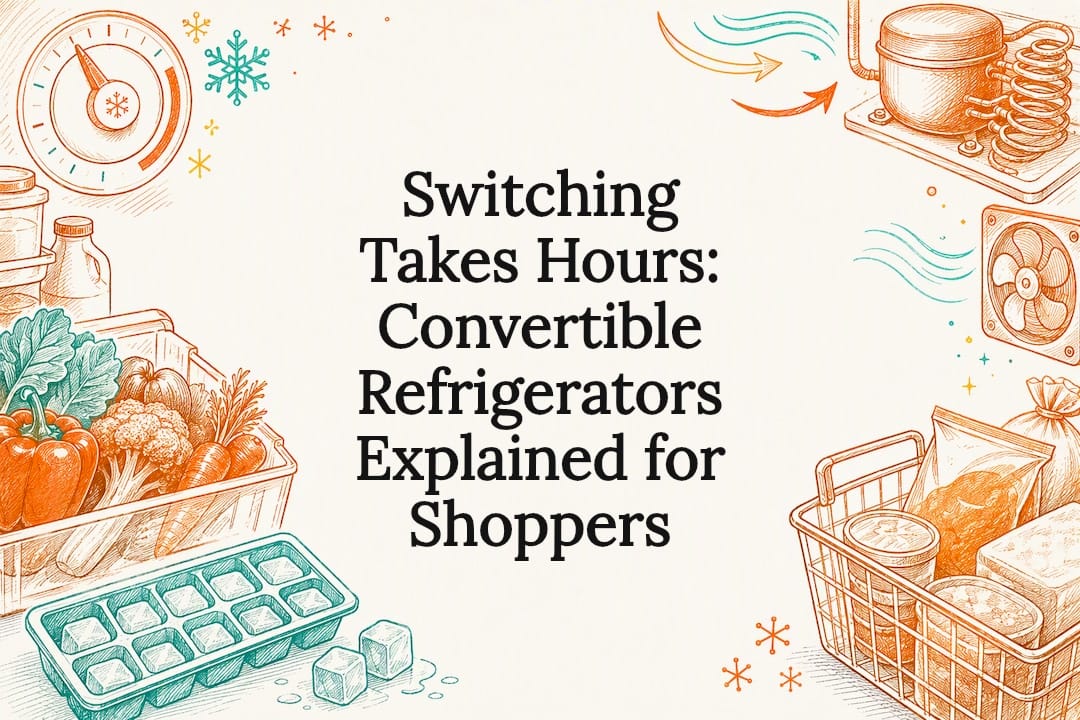
A convertible refrigerator is an appliance that can be switched to run as either a refrigerator or a freezer using its built-in temperature controls. Some models flip the entire unit between modes, while others keep one section fixed and let a single flexible zone shift between fridge and freezer temperatures. Typical refrigerator temperatures land around 35°F to 38°F, while freezer mode drops to 0°F or below.
TL;DR:
- Convertible refrigerators are most beneficial for seasonal or occasional storage, not for frequent mode switching, which can cause energy spikes.
- Allow several hours, often overnight, for temperature stabilization after switching modes and avoid immediately adding warm food to prevent delays.
- ENERGY STAR certification, not mode-switching capability, determines energy efficiency, and many older models use significantly more power regardless of their convertibility.
- Traditional refrigerators tend to be simpler, cheaper, and more predictable, making them better suited for users who do not need frequent conversion.
- The main benefits of convertibility are flexibility for bulk or seasonal storage, while drawbacks include higher initial cost and stabilization downtime.
Table of Contents
- How Convertible Mode Works
- What Are the Benefits and Drawbacks of a Convertible Fridge?
- How Do You Switch Modes and Use a Convertible Fridge Correctly?
- Does Energy Efficiency Change Between Fridge and Freezer Mode?
- Convertible vs. Traditional Refrigerator: What’s the Real Difference?
- Who Actually Benefits From a Convertible Refrigerator?
- Why Trust This Breakdown of Convertible Refrigerators?
- Is a Convertible Fridge Worth the Extra Money?
- Find the Right Refrigerator Without the Guesswork
- Where This Guide’s Facts Come From
- Sources
- FAQ
How Convertible Mode Works
The mechanism behind a convertible fridge is less mysterious than the name suggests. A digital control panel, usually mounted on the exterior or inside the lid, lets you pick a preset or dial in a target temperature. Behind that panel, the compressor changes how often it cycles and how forcefully it moves cold air, which actually pushes the interior from fridge range down into freezer territory.
Manufacturers design this system to hold stable temperatures across a much wider band than a fixed-purpose fridge or freezer ever has to manage. Whirlpool’s own support documentation describes convertible units as relying on this kind of electronic control adjustment to keep the compressor and airflow working together instead of fighting each other.
There are two distinct architectures worth knowing before you shop:
- Whole-unit conversion: The entire appliance switches modes at once. A convertible chest freezer, for example, can run cold enough for frozen storage or warm enough to hold produce and drinks like a standard fridge.
- Flexible-zone conversion: Only one drawer or compartment changes temperature, while the rest of the unit stays fixed. This is common in French-door refrigerators with a middle drawer that toggles between deli-drawer cold and freezer cold.
For reference points on what “cold enough” actually means, ENERGY STAR’s residential specification lays out the official temperature ranges and product classes that certified units are measured against. A refrigerator section should sit around 35°F to 38°F, and a freezer section needs to hold at or below 0°F to safely store frozen food long term.
What Are the Benefits and Drawbacks of a Convertible Fridge?
The appeal is obvious once you picture the calendar. Buy a side of beef in bulk during a sale, switch the unit to freezer mode, then flip it back to fridge mode two weeks later when you’re hosting a holiday dinner and need extra drink and side-dish space. That flexibility is the entire selling point.
Benefits:
- One appliance covers two jobs, which matters in a garage, basement, or small second kitchen where floor space is tight
- Seasonal storage becomes easier, especially for gardeners freezing a harvest or families stocking up before winter
- Fewer appliances to buy, plug in, and maintain over the life of your kitchen
Drawbacks:
- You lose access to the unit for several hours (sometimes overnight) every time you switch modes
- Convertible models often cost more up front than a simple single-purpose fridge or freezer
- Energy use varies by model. Convertibility itself says nothing about efficiency
Pro Tip: If you only plan to switch modes once or twice a year, the flexibility is worth it. If you’re switching monthly, the stabilization downtime will start to feel like a real cost, not a convenience.
How Do You Switch Modes and Use a Convertible Fridge Correctly?
Switching modes is simple mechanically, but the timing is where people get it wrong. Whirlpool’s product support guidance is direct on this point: after changing the setting, allow several hours for the internal temperature to stabilize before treating the unit as fully converted.
Here’s a practical sequence that avoids the two most common mistakes:
- Select the new mode on the control panel or preset dial, and note the time you switched.
- Leave the unit empty, or nearly empty, for several hours (many manufacturers recommend overnight) to let the compressor and airflow reach the new target range.
- Check the temperature with an independent thermometer rather than trusting the display alone.
- Load food gradually once the unit reads stable. Avoid dumping in a large batch of room-temperature groceries right after the switch, since that spike in heat load forces the compressor to work harder and can delay stabilization further.
- Recheck the temperature after 24 hours to confirm it’s holding steady.
Loading too soon is the mistake that causes the most frustration. Manufacturer guidance specifically warns against filling the unit immediately with warm items after a mode change, since the appliance hasn’t caught up yet and food safety depends on hitting the target range quickly, not slowly.
For upkeep, keep vents and coils clear of dust, and check door or lid gaskets periodically. A worn seal makes any convertible unit work harder in both modes, which shortens its life and raises your electric bill regardless of how good the control system is.
Does Energy Efficiency Change Between Fridge and Freezer Mode?
Convertibility and efficiency are two separate questions, and mixing them up is the most common shopping mistake. A convertible unit that lacks ENERGY STAR certification can use just as much electricity, or more, than a well-built single-purpose model. Certification is what actually verifies performance, not the presence of a mode switch.
The EPA recommends keeping refrigerator sections between 35°F and 38°F for both food safety and efficient operation. That same guidance notes that refrigerators older than 15 years typically cost about $95 more per year to run and use roughly 20% more energy than a modern, efficient replacement.
A few habits protect both your food and your utility bill:
- Keep a standalone thermometer inside the unit. Built-in displays can drift out of calibration over time.
- Check for the ENERGY STAR label before buying, regardless of how many modes or presets a model advertises.
- Avoid switching modes more often than necessary. Every switch forces a stabilization period that draws extra power.
Convertible vs. Traditional Refrigerator: What’s the Real Difference?
A traditional refrigerator or freezer is built to do one job at one temperature range, with simpler controls and, generally, a more predictable repair history since there’s less that can go wrong. A convertible model trades some of that simplicity for flexibility, usually at a higher price point and with a slightly more complex control system to learn.
| Factor | Convertible | Non-convertible |
|---|---|---|
| Flexibility | Fridge or freezer on demand | Fixed to one function |
| Control complexity | Digital panel, presets | Simple dial or basic digital |
| Typical price | Higher | Lower |
Before you decide, run through a short checklist: Do you actually need both functions, or just extra freezer space? Can you tolerate a several-hour wait every time you switch? Is the model you’re eyeing ENERGY STAR certified? If you answer “no” to the first question, a traditional single-purpose model is usually the smarter buy.
Who Actually Benefits From a Convertible Refrigerator?
Convertible units earn their keep for specific lifestyles, not everyone. Hosts who need overflow fridge space a few times a year, bulk shoppers stocking up at warehouse clubs, gardeners freezing seasonal harvests, and owners of a second kitchen or garage setup all get real value from the flexibility.

If you live alone, rarely entertain, or need a strict, predictable budget appliance, the extra cost of convertibility probably won’t pay off. Before buying, estimate how many cubic feet you actually need and how often, realistically, you’d switch modes in a year. If the honest answer is “once or twice,” a correctly sized traditional unit may serve you just as well for less money.
Why Trust This Breakdown of Convertible Refrigerators?
This site focuses on curated kitchen appliances, and refrigeration is one of the categories readers ask about most. The usage steps and temperature guidance here come from manufacturer product support pages and ENERGY STAR’s own specifications, not guesswork. For related mechanics, our guide to inverter compressor refrigerators breaks down how compressor technology affects efficiency across both fixed and convertible models.
Is a Convertible Fridge Worth the Extra Money?
Convertibility earns its price when your storage needs genuinely swing between seasons or occasions. It’s dead weight when your household runs the same load year-round. Before you get pulled in by a long feature list, check for ENERGY STAR certification and test how intuitive the controls actually feel. A convertible unit with confusing presets or no certification isn’t flexible. It’s just an expensive gamble on your electric bill.
— K. Connors
Find the Right Refrigerator Without the Guesswork
The refrigerators and mini fridges collection avoids the wall of nearly identical listings typical on big-box retail sites. Every pick is curated for real kitchen and storage needs, whether you want a straightforward single-purpose fridge or a convertible model built for seasonal flexibility.
Browse the category to compare capacity, control type, and certification status side by side before you commit to a model. If you’re weighing a convertible unit against a simple upright freezer or a compact secondary fridge for the garage, the refrigerators and mini fridges page is the place to start narrowing it down.
Where This Guide’s Facts Come From
- Whirlpool’s convertible chest freezer support pages: manufacturer steps for switching modes and stabilization.
- ENERGY STAR’s refrigerator specifications: official temperature ranges and certification criteria.
Sources
- Too Warm – Convertible Chest Freezer – Product Help | Whirlpool
- ENERGY STAR Final Version 5.0 Residential Refrigerators and Freezers Specification
FAQ
Are Convertible Refrigerators Good?
They’re good for specific situations: hosting, bulk buying, and seasonal storage needs. They’re not automatically “better” than a traditional fridge, since value depends entirely on how often you’d actually use the switch feature.
What’s the Key Difference Between a Standard Freezer and a Convertible Freezer?
A standard freezer only ever runs at freezer temperatures, at or below 0°F. A convertible freezer can shift up into refrigerator range, roughly 35°F to 38°F, using its control panel.
What Refrigerator Brand Should You Stay Away From?
There’s no single brand that deserves a blanket warning, and reliability varies by model line and year, not just brand name. Check ENERGY STAR certification and read model-specific reviews rather than ruling out an entire manufacturer.
What Are the Pros and Cons of a Convertible Freezer Refrigerator?
The main pros are flexibility and fewer appliances to own; the main cons are stabilization downtime after each switch and a typically higher purchase price. Energy efficiency depends on the specific model’s certification, not on whether it’s convertible.
How Long Does a Convertible Fridge Take to Stabilize After Switching Modes?
Manufacturer guidance recommends allowing several hours, often overnight, before treating the unit as fully switched. Avoid loading it with room-temperature food until an independent thermometer confirms the new temperature has held steady.





No comment