
Match the cycle to the soil, not the clock: normal handles everyday dinner plates, heavy tackles baked-on casserole dishes, quick works for lightly used glasses and cups, and auto/sensor is the smart default when a load is mixed. Skip the heated dry setting whenever you can to save energy, and expect run times anywhere from 30 minutes to over three hours, depending on what you pick.
TL;DR:
- Using the eco cycle can cut energy consumption by over 10%, but it may extend wash times beyond three hours.
- Skip heated dry whenever possible, as it accounts for a significant portion of a dishwasher’s energy use, and air-drying saves costs.
- Match the cycle to soil level: heavy cycles are necessary for baked-on grease, while quick cycles work for lightly soiled dishes.
- Sensor or auto modes rely on water turbidity readings and require proper loading for optimal performance, especially on mixed loads.
- Full loads are more efficient than half-empty ones, as they distribute water and energy use across more dishes.
Table of Contents
- Understanding Dishwasher Cycles: The Common Settings and What They Do
- What Actually Happens Inside a Wash Cycle
- Dishwasher Cycle Durations and What They Cost You in Energy
- The Science Behind Getting Dishes Clean: Sinner’s Circle
- Choosing the Right Cycle and Fixing Common Problems
- Why Trust This Breakdown of Dishwasher Cycles
- An Honest Take on Dishwasher Cycles
- Sources
- FAQ
Understanding Dishwasher Cycles: The Common Settings and What They Do
Every dishwasher brand names its cycles a little differently, but they all boil down to the same handful of programs. Understanding dishwasher cycles starts with knowing what each one actually changes: water temperature, cycle length, how hard the spray arms work, and how much detergent gets deployed. Here’s the practical breakdown of the types of dishwasher settings you’ll find on nearly any machine sold today.
- Normal: The everyday workhorse. Balanced temperature (usually around 120°F to 140°F), moderate mechanical action, and a run time built for typical dinner plates, glasses, and mugs. This is where most loads belong.
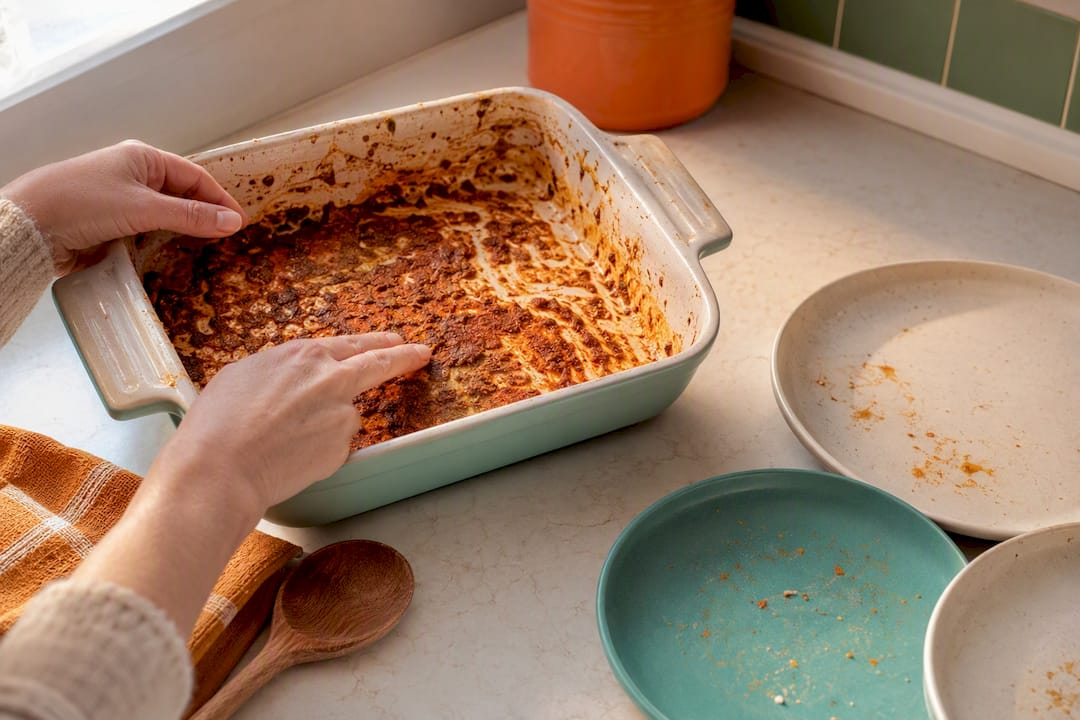
- Heavy or Pots & Pans: Runs hotter and repeats the main-wash loop more times to break down baked-on grease and dried casserole residue. Expect a noticeably longer cycle in exchange for more scrubbing power.
- Quick, Express, or 1-Hour: Shortens both the wash and rinse phases dramatically. It works, but only on lightly soiled dishes, and it leans harder on detergent chemistry to make up for less time. A study on short-cycle cleaning performance found that pairing a high-performance detergent with a 30 to 40 minute program can clean normally soiled dishes about as well as longer cycles, though manufacturers still warn it won’t match eco-level cleaning on tougher messes.
- Sensor or Auto: A turbidity sensor reads how dirty the wash water gets and adjusts time and temperature on the fly. It’s a genuinely useful set-and-forget option for mixed loads, though testing data on dishwasher programs notes it depends on accurate sensor readings and proper loading to work as intended.
- Eco: Lowers the wash temperature and stretches the time to compensate, which cuts declared energy use in standardized testing. The tradeoff is a cycle that can run three hours or longer.
- Sanitize or High-Temp Rinse: Pushes the final rinse to a specific high-temperature threshold, often required to meet NSF sanitation standards. Reserve this for cutting boards after raw meat, baby bottles, or when someone in the house is immune-compromised. It’s not necessary for routine dishes.
- Rinse-Only or Prewash: Just a water rinse with no detergent, meant to hold food residue at bay until you run a full cycle later. It doesn’t clean on its own.
- Delicate or Glass: Reduces water pressure and temperature to protect stemware and thin glass from thermal shock and chipping, at the cost of cleaning strength on anything greasy.
What Actually Happens Inside a Wash Cycle
A dishwasher cycle runs through three core stages: wash, rinse, and dry, with an optional prewash tacked on at the front for heavily soiled loads. According to Finish’s breakdown of how dishwashers work, the machine fills with water, heats it using an internal element, then circulates it through spray arms while a pump keeps pressure up and a filter catches food particles before the water drains and repeats.
That heating step is where run time gets decided. If your water heater delivers hot water straight to the machine, the dishwasher spends less energy and time bringing water up to temperature. If it’s fed cold water, the internal heating element does all the work, which stretches the cycle. Heavy cycles repeat the main-wash loop multiple times and often boost pump speed, both of which improve cleaning but add minutes. The detergent dispenser typically pops open partway through the main wash, timed so soap doesn’t get diluted too early.
Dishwasher Cycle Durations and What They Cost You in Energy
Run times vary more than most people expect. Testing across multiple dishwasher models shows quick cycles landing in the 30 to 60 minute range, normal cycles running roughly 90 to 150 minutes, heavy cycles stretching from 150 minutes to four hours, and eco cycles often exceeding three hours despite being the most efficient option on paper.
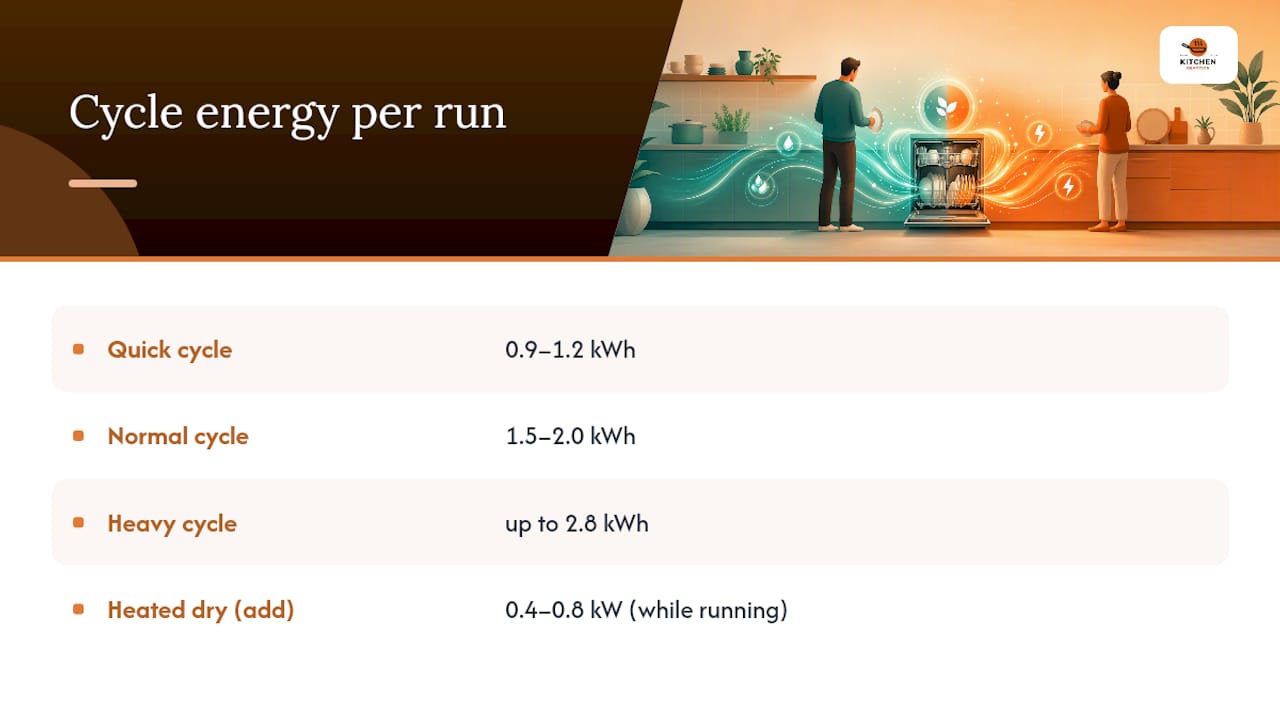
Energy use tracks closely with temperature, not just time. Per-cycle estimates from consumer energy data put quick washes around 0.9 to 1.2 kWh, normal cycles around 1.5 to 2.0 kWh, and heavy cycles up to 2.8 kWh, with heated dry adding another 0.4 to 0.8 kW while it runs. The heating element and the dry cycle are the two biggest power draws in any machine.
Pro Tip: Turning off heated dry can lower a dishwasher’s life-cycle greenhouse gas footprint by about 11%, and skipping pre-rinsing under the tap cuts emissions by roughly 3% more, according to a lifecycle analysis comparing manual and machine dishwashing.
The same study found the use phase, not manufacturing, drives most of a dishwasher’s environmental impact, which means how you run it matters more than which model you bought. Running full loads spreads that per-cycle energy and water cost across more dishes, so half-empty loads are the quiet efficiency killer nobody talks about.
The Science Behind Getting Dishes Clean: Sinner’s Circle
Cleaning performance in any dishwasher comes down to four interacting factors known as Sinner’s Circle: temperature, time, mechanical action, and chemistry. The Sinner’s Circle primer from Kärcher explains that when you reduce one factor, you have to increase another to get the same cleaning result. That’s exactly why a quick cycle trades time for stronger detergent, and why an eco cycle trades temperature for extra minutes.
Enzymes in dishwasher detergent are the chemistry lever, and they’re picky about heat. According to a primer on dishwasher detergent chemistry, enzymes work best at moderate temperatures early in the wash, then lose effectiveness as things get hotter later in the cycle. That timing matters more than people realize.
There’s a hygiene ceiling to how far chemistry alone can compensate. A 2025 study on dishwasher antimicrobial performance found that main-wash temperatures of at least 122°F to 140°F drive the biggest reductions in microbial load, and detergent quality has its largest impact specifically on short, low-heat cycles. In other words, a great detergent can rescue a quick wash’s cleaning power, but it can’t fully replace heat when actual sanitizing matters. For that, use rinse aid to cut surface tension and improve drying, and use salt-based water softening if your home has hard water, since mineral buildup interferes with all four factors at once.
Choosing the Right Cycle and Fixing Common Problems
Run through this checklist before you hit start:
- Match soil level to cycle: light and recently used dishes get quick, everyday dinner dishes get normal, baked-on messes get heavy.
- Run full loads only. Half-loads waste the same water and energy as full ones.
- Skip pre-rinsing under the tap unless food is caked on. Modern detergents and filtration handle food particles fine.
- Choose air-dry over heated dry when you’re not in a hurry.
When dishes come out still dirty, work through this short troubleshooting list before assuming the machine is broken. Check that spray arms spin freely and aren’t blocked by an oversized pot. Pull the filter and rinse it if it’s clogged with food debris. Run the hot water tap at your sink for a few seconds before starting the dishwasher, since feeding it warmer incoming water shortens internal heat-up time and improves results. Confirm the detergent dispenser is opening and that you’re using enough for your water hardness level, since hard water can leave both dishes and detergent underperforming. If drying is the problem rather than cleaning, a dedicated guide to dishwasher drying issues walks through fixes specific to that complaint.
Save sanitize and heavy cycles for actual reasons: raw meat cutting boards, baby gear, or someone in the household with a compromised immune system. Running them daily out of habit just burns extra energy for no real benefit.
Pro Tip: Auto and sensor modes are reliable for everyday mixed loads, but override them for anything with dried-on, baked, or burnt residue. The turbidity sensor reads water cloudiness, not how stuck-on your lasagna pan actually is.
Building a broader routine around your dishwasher, rather than treating it as an isolated chore, tends to save more time overall. A guide to building a household cleaning workflow covers how to fold appliance cycles into a schedule that doesn’t eat your whole evening. For the loading side of things specifically, Kitchendevotion’s own guide to building a better dishwashing setup covers rack organization that affects how well any cycle performs.
Why Trust This Breakdown of Dishwasher Cycles
This guide comes from K. Connors, a Kitchendevotion contributor who focuses on appliance maintenance and everyday troubleshooting for home cooks and homeowners.
The recommendations here draw on peer-reviewed lifecycle and hygiene research, industry testing protocols referenced by IEC and DOE standards, Energy Star guidance, and manufacturer documentation rather than marketing claims. Where lab findings on temperature, detergent chemistry, and energy use intersected with real manufacturer specs, that’s where the practical advice in this guide came from. Cycle names and exact temperature thresholds vary by brand and model, so check your owner’s manual for machine-specific settings, and see Kitchendevotion’s comparison of average dishwasher cycle times for a deeper look at run-time differences across models.
An Honest Take on Dishwasher Cycles
Most advice on this topic obsesses over picking the “best” cycle, as if one setting could win every time. It can’t. The research actually supports something less flashy: match the cycle to the soil level, and stop treating heated dry as mandatory.
That second point gets buried constantly. People agonize over eco versus normal while ignoring that heated dry alone can account for a big chunk of a dishwasher’s lifetime energy draw. Air-drying costs you nothing but a little patience, and the payoff compounds over years of use.
The other place conventional wisdom falls short is treating sanitize cycles as a hygiene upgrade for everyday dishes. It isn’t. The temperature threshold that makes sanitize effective is overkill for a cereal bowl and a genuine tool for a cutting board that touched raw chicken. Save it for when it matters, run normal or auto for everything else, and don’t pre-rinse dishes that don’t need it. That’s the whole strategy, and it’s simpler than most guides make it sound.
— K. Connors
Sources
- Life-cycle study on dishwashing (lab study + LCA)
- Topten report: dishwashers testing and program energy variability
- Finish: How a dishwasher works
Reading the original studies is worth it if you want the technical detail behind any of these numbers.
FAQ
What’s the Best Cycle to Use on a Dishwasher?
Normal is the right default for everyday dishes, heavy for baked-on messes, quick for lightly soiled items, and auto/sensor when you want the machine to decide for you.
Does a 1-Hour Dishwasher Cycle Use More Water?
Not typically. Quick or 1-hour cycles usually use less water and energy than normal or heavy cycles because they run shorter wash and rinse phases, though they rely more heavily on detergent to compensate.
What Is the Difference Between a 4-Cycle and 5-Cycle Dishwasher?
A 4-cycle machine typically offers normal, heavy, quick, and rinse-only options, while models with additional programs add settings like sanitize, eco, or delicate/glass, giving more control over temperature and soil-matching.
Which Dishwasher Cycle Is Most Efficient?
Eco is designed to use the least declared energy in standardized testing, though it takes longer to get there, sometimes three hours or more, by running at a lower temperature over an extended time.
Choosing the right cycle matters, but so does the machine underneath it. If you’re weighing a new purchase, Kitchendevotion’s kitchen appliance priority list for new homeowners walks through where a dishwasher should rank against other big-ticket kitchen purchases and what features actually pay off over time.





No comment