

Most dishwasher odors come from four sources: trapped food debris, a dirty filter, soap scum buildup, or a drainage problem. Removing visible debris, cleaning the filter, and running an empty hot cycle with a cup of distilled white vinegar or a manufacturer cleaner clears the smell in most cases. If it smells like sewage instead of rotten food, the fix may involve a plumber, not a sponge.
TL;DR:
- Regularly clean the dishwasher filter and spray arms to prevent food debris buildup that causes rotten egg or musty odors.
- Run a hot cycle with vinegar, citric acid, or enzyme cleaners monthly to remove organic residues and mineral deposits.
- Check for drainage issues, including clogged hoses or disposal connections, if a sewer-like smell persists despite cleaning.
- Wipe the door gasket frequently and leave the door cracked after cycles to reduce trapped moisture that encourages mold and mildew.
- Avoid using bleach on stainless interiors and never run cycles with loose filters to prevent damage and circulate debris that worsen odors.
Table of Contents
- Why Does My Dishwasher Smell? A Quick Diagnostic Check
- How to Deep Clean a Smelly Dishwasher, Step by Step
- Could the Smell Be Coming From the Drain or Disposal?
- What’s a Realistic Maintenance Schedule to Stop Odors?
- When Should You Call a Plumber or Technician?
- Notes From Kitchen Devotion’s Cleaning Desk
- Why Homeowners Keep Getting This Wrong
- Keep the Smell From Coming Back With the Right Tools
- Where to Read More on This Topic
- Sources
- FAQ
Why Does My Dishwasher Smell? A Quick Diagnostic Check
The type of smell tells you where to look. A rancid or rotten-egg odor almost always means organic debris is trapped somewhere inside, usually the filter or the sump at the bottom of the tub. A musty, moldy smell points to a wet gasket that never fully dries between cycles. A chemical smell can mean detergent residue baking onto hot plastic. A sewage smell is the outlier: it usually means the problem isn’t in the dishwasher at all, it’s in the drain line or garbage disposal connection.
Before you commit to a full deep clean, run through these five checks. Most take under 15 minutes combined.
- Open the dishwasher right after a cycle and check for food chunks stuck around the filter or spray armholes.
- Pull the filter and look at it under running water. If it’s coated in slime or gunk, that’s your smell.
- Check the bottom of the tub for standing water. Water that never drains is a red flag for a clog.
- Run the hottest rinse-only cycle you have with nothing but water. See if the smell fades or gets worse.
- Leave the door cracked open for an hour after the cycle ends to air out trapped moisture.
Pro Tip: Never run a full wash cycle with the filter removed or sitting loose. It seems harmless, but food particles that would normally get trapped end up circulating through the pump, and that can damage the motor over time.
One safety note before you grab cleaning supplies: don’t reach for bleach if your dishwasher has a stainless-steel interior. It can discolor or pit the metal unless your owner’s manual specifically says otherwise.
How to Deep Clean a Smelly Dishwasher, Step by Step
A quick wipe-down rarely solves a lingering odor. The smell usually lives in places you can’t see from the doorway: under the lower spray arm, behind the filter basket, tucked into the gasket folds. Here’s the order that actually works, based on how food and mineral deposits build up inside the machine.
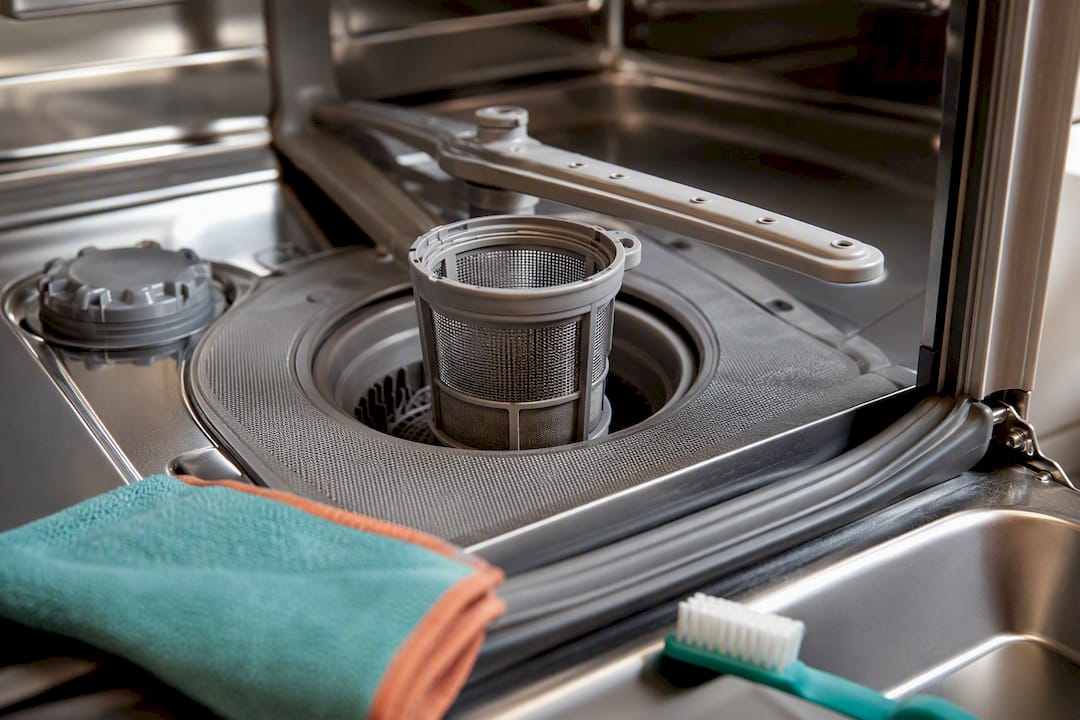
1. Remove and clean the filter first. Most dishwashers have a cylindrical filter that twists out near the bottom of the tub, sometimes paired with a flat mesh screen underneath it. Pull both pieces, rinse under hot water, and scrub with a soft brush to knock loose the film that regular cycles never fully clear. Reinstall it seated flush and locked, not just resting in place.
2. Clear the spray arms and sump area. Spin each spray arm by hand and check the small holes for clogs. A toothpick works to poke out stuck debris. Wipe down the sump, the recessed area at the bottom where the filter sits, since this is where heavier food particles settle and rot.
3. Wipe the door gasket. Run a damp cloth around the entire rubber seal, paying attention to the folds and corners where moisture pools. If you see black or pink mold, a mix of warm water and a mild cleaner usually lifts it. For gaskets with stubborn buildup, a soft-bristled brush designed for tight seals and edges gets into corners a cloth can’t reach.
4. Run an empty hot-cycle treatment. This is the step that finishes the job. Place one cup of distilled white vinegar in a bowl on the top rack and run a full hot cycle with nothing else inside. For tougher odors, 3 teaspoons of citric acid in the detergent dispenser works as an alternative, followed by a shorter cycle with a cup of baking soda sprinkled across the tub floor. Some readers prefer a store-bought dishwasher cleaner tablet instead, which works similarly but costs more per use.
5. Consider an enzyme-based cleaner for organic buildup. Enzyme formulas are designed to break down proteins and starches that vinegar alone can miss, which makes them a reasonable option if the smell keeps coming back after a standard vinegar cycle.
A few cautions matter here. Never mix vinegar with bleach; the combination produces fumes you don’t want in an enclosed kitchen. And skip bleach entirely on stainless interiors unless your manual explicitly clears it. Running the hottest available cycle your machine offers also improves sanitizing power and cuts down on the microbial regrowth that causes musty smells in the first place.
Could the Smell Be Coming From the Drain or Disposal?
Sometimes the dishwasher is spotless and the smell keeps coming back anyway. That’s usually a sign the problem lives downstream, in the drain line, garbage disposal, or air gap rather than inside the tub. A sewage-type odor is the strongest clue you’re dealing with plumbing, not appliance grime.
Work through these checks before assuming you need a technician:
- Run the garbage disposal for 30 seconds. Old food trapped in the disposal chamber often shares a drain line with the dishwasher and can send smell straight back up.
- Inspect the air gap on the counter, if your setup has one, for buildup or a clogged vent.
- Check the drain hose under the sink for kinks, sagging loops, or visible debris.
- Run a rinse cycle and watch the tub. If water isn’t draining fully within a minute or two after the cycle ends, you likely have a drainage clog rather than an odor problem you can scrub away.
If the smell persists after clearing the disposal and hose, and especially if water is pooling instead of draining, it’s time to call a plumber or appliance technician rather than keep guessing.
What’s a Realistic Maintenance Schedule to Stop Odors?
Odor prevention comes down to small habits repeated on a consistent cadence, not one heroic cleaning session every few months. Consumer Reports frames this as an ongoing maintenance job, and that framing holds up.
- Daily: Scrape food off plates before loading, and don’t let a full load sit unrun for more than a day or two in warm weather.
- Weekly: Wipe down the door and gasket, and glance at the tub floor for stray debris that didn’t wash away.
- Monthly: Pull and clean the filter, then run an empty hot cycle with vinegar or a manufacturer-approved cleaner.
- Quarterly to yearly: Inspect the drain hose for wear, and if odors or draining problems keep returning despite regular cleaning, book a professional service check.
Pro Tip: Leave the door cracked open an inch or two after each cycle finishes. Trapped steam that can’t escape is one of the most common, and most overlooked, causes of that musty smell that seems to come from nowhere. This habit also helps if you’ve noticed your dishwasher not drying dishes properly, since lingering moisture and lingering odor tend to travel together. For the filter step specifically, a monthly cleaning routine with a quick flow test afterward catches problems before they turn into smells.
When Should You Call a Plumber or Technician?
A few signs mean it’s time to stop troubleshooting and book an appointment. A sewage smell that survives a full clean, water pooling in the tub after every cycle, or the same odor returning within a week of a deep clean all point to something beyond routine maintenance.
- Persistent sewage smell after cleaning usually means a technician needs to check the drain line, disposal connection, or check valve.
- Standing water after a completed cycle often traces back to a clogged drain hose or a failing drain pump.
- Repeated failures after multiple attempts may mean the pump or a hose fitting needs replacement, which is a job better suited to a professional.
Before the appointment, write down your model number, take a few photos of the tub and filter area, and list which DIY steps you’ve already tried. That saves the technician time and usually saves you money on the visit.
Notes From Kitchen Devotion’s Cleaning Desk
A few things worth repeating because homeowners skip them constantly. Never run a cycle with the filter removed or sitting loose. It doesn’t just fail to clean, it can push debris into the pump and cause damage that costs far more than the ten minutes filter cleaning would have taken. Skip bleach on stainless interiors unless your manual says it’s safe. And run the hottest cycle your machine offers when you’re doing a deep clean, since higher heat does more of the sanitizing work for you.
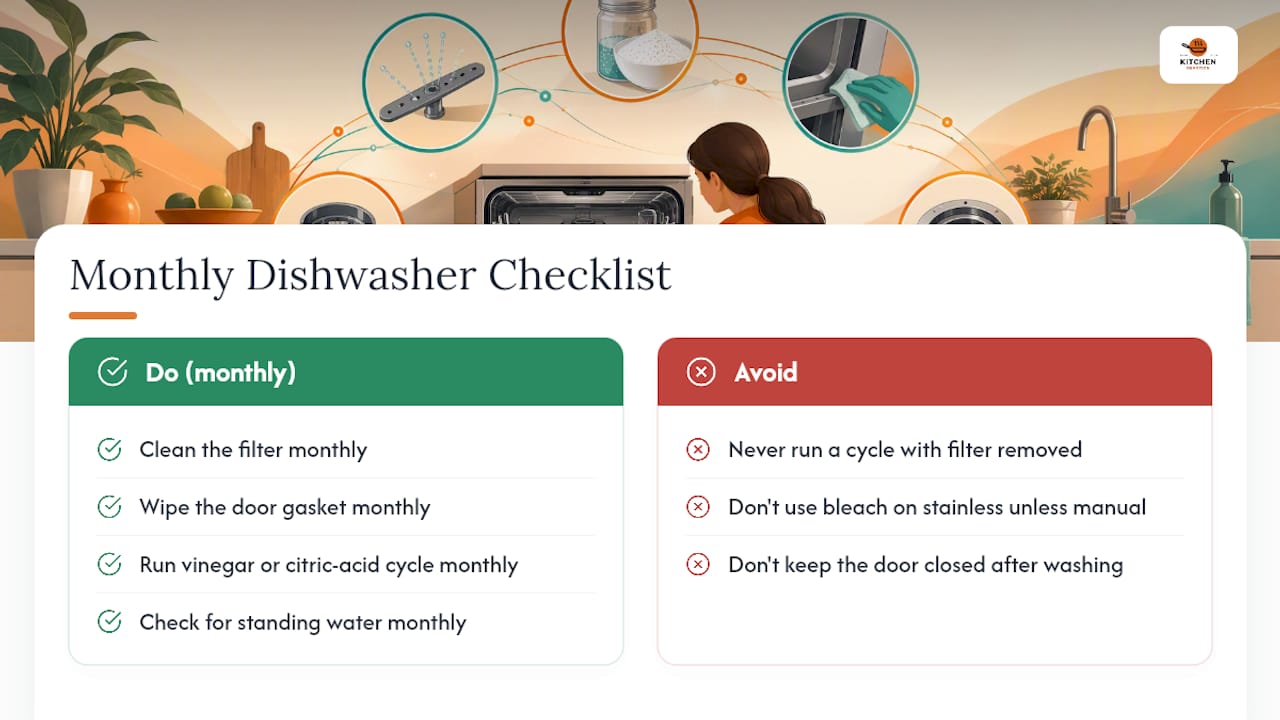
Print or save this five-item monthly checklist: clean the filter, wipe the gasket, run a vinegar or citric acid cycle, check for standing water, and crack the door after each wash to let moisture escape. For a deeper look at how trapped moisture and odor problems overlap, the drying troubleshooting guide covers the mechanical side of the same issue.
Why Homeowners Keep Getting This Wrong
Most advice on dishwasher smells treats it as a one-time emergency: something went wrong, so scrub everything and move on. That’s backwards. The research is consistent on this point, regular small maintenance beats occasional deep cleans, and yet most people only think about their filter after the smell is bad enough to notice across the kitchen.
The other place conventional advice falls short is treating every odor the same way. A rancid smell and a sewage smell call for completely different responses, one is a five-minute filter check, the other might mean a call to a plumber. Lumping them together wastes time and, in the sewage case, delays a fix that only gets worse the longer it sits.
If you take one thing from this guide, prioritize the filter and the monthly vinegar cycle before anything fancier. Citric acid, enzyme cleaners, and specialty tablets all have their place, but they’re solving problems that a consistent basic routine usually prevents in the first place. Consistency beats intensity here, every time.
— K. Connors
Keep the Smell From Coming Back With the Right Tools
A vinegar cycle handles most odors, but the tools that make monthly maintenance painless, a soft filter brush, citric acid packets, and a filter you can swap out once the old one wears down, are worth having on hand before the smell shows up again. There are cleaning-adjacent tools and appliance picks designed to hold up to the kind of monthly routine this guide recommends, which help avoid guessing which brush or replacement part actually fits your model.

If you’re stocking a kitchen from scratch or replacing an aging dishwasher altogether, the kitchen appliance priority list for new homeowners walks through what’s worth buying first, including which dishwasher features actually reduce maintenance headaches down the line. Browse the dishwasher recommendations page to compare models built with easier-to-clean filters and gaskets, and check the priority list today before your next appliance purchase.
Where to Read More on This Topic
For deeper OEM-specific troubleshooting, see Consumer Reports’ dishwasher odor guide, Popular Mechanics’ cleaning walkthrough, Forbes Home’s smell diagnosis breakdown, and Samsung’s official support page for model-specific guidance.
Sources
- How to Keep Your Dishwasher From Smelling – Consumer Reports
- How to Clean a Dishwasher: Expert Tips for Best Practices – Popular Mechanics
- Why Does My Dishwasher Smell? – Forbes Home
- Samsung Dishwasher stinks or has a musty smell
FAQ
How Do You Get Rid of a Bad Smell in the Dishwasher?
Remove and rinse the filter, clear visible food debris from the spray arms and sump, then run an empty hot cycle with a cup of distilled white vinegar or a manufacturer-approved cleaner.
How Do I Get Rid of a Sewer Smell in My Dishwasher?
A sewage smell usually means the issue is in the drain hose, garbage disposal, or air gap rather than the dishwasher itself, so check those connections before assuming the appliance needs cleaning.
Why Does My Dishwasher Stink Even Though the Filter Is Clean?
If the filter is clean but the smell remains, check the door gasket for mold, inspect the sump for hidden debris, and rule out a plumbing issue like a clogged drain hose or disposal.
How Do You Stop a Dishwasher From Smelling in the Future?
Clean the filter monthly, wipe the gasket weekly, run a vinegar or citric acid cycle regularly, and leave the door cracked open after each wash so trapped moisture can escape.
Why Does My Dishwasher Smell Like Rotten Eggs?
A rotten-egg or rancid smell almost always signals trapped organic debris in the filter or sump, and it typically clears up after a thorough filter cleaning and a hot vinegar cycle.





No comment