
A modern ENERGY STAR refrigerator typically costs a few dollars to about ten dollars a month, or roughly several dozen to a bit over a hundred dollars a year, to run at current national-average electricity rates. An older unit from the 1990s or early 2000s often runs notably more per month. Unit age and annual kWh usage, found on the EnergyGuide label, drive that gap more than any other factor. Start by checking that label or measuring your fridge with a smart plug.
TL;DR:
- An old side-by-side refrigerator can consume nearly double the energy of a top-freezer model, largely due to design features like door seals and additional features such as ice makers.
- State electricity rates can significantly impact costs, with some states charging nearly three times the national average, potentially doubling your yearly energy bill.
- Unused secondary refrigerators in warm spaces like garages can cost more to run than a new, energy-efficient unit, especially if they cycle frequently or are only partly stocked.
- Proper maintenance, such as cleaning condenser coils and replacing worn gaskets, can cut annual energy use by hundreds of kilowatt-hours and delay the need for costly replacements.
Table of Contents
- What Is the Typical Refrigerator Running Cost by Type and Age?
- How Do You Calculate Your Refrigerator’s Running Cost?
- What Actually Drives Refrigerator Energy Usage Up or Down?
- When Does Replacing Your Fridge Actually Pay Off?
- How Do You Measure Your Fridge’s Actual Energy Use?
- Where Can You Compare Real Numbers Before You Buy or Repair?
- Should You Fix It, Measure It, or Replace It?
- Compare ENERGY STAR Models Before You Buy
- Sources
- FAQ
What Is the Typical Refrigerator Running Cost by Type and Age?
Refrigerator running cost depends heavily on configuration and vintage, and the spread between categories is bigger than most people expect. A compact dorm fridge sips power. A 20-year-old side-by-side with a broken gasket can quietly cost more to run each year than the appliance is worth on the used market.
Certified-model data compiled by ENERGY STAR shows top-freezer models carry a median annual usage around 362 kWh, while side-by-side models median closer to 644 kWh. That’s nearly double the electricity for a similar amount of stored food, mostly because side-by-side doors expose more cold air to the room every time you open them, and because ice makers and through-the-door dispensers add a constant background load.
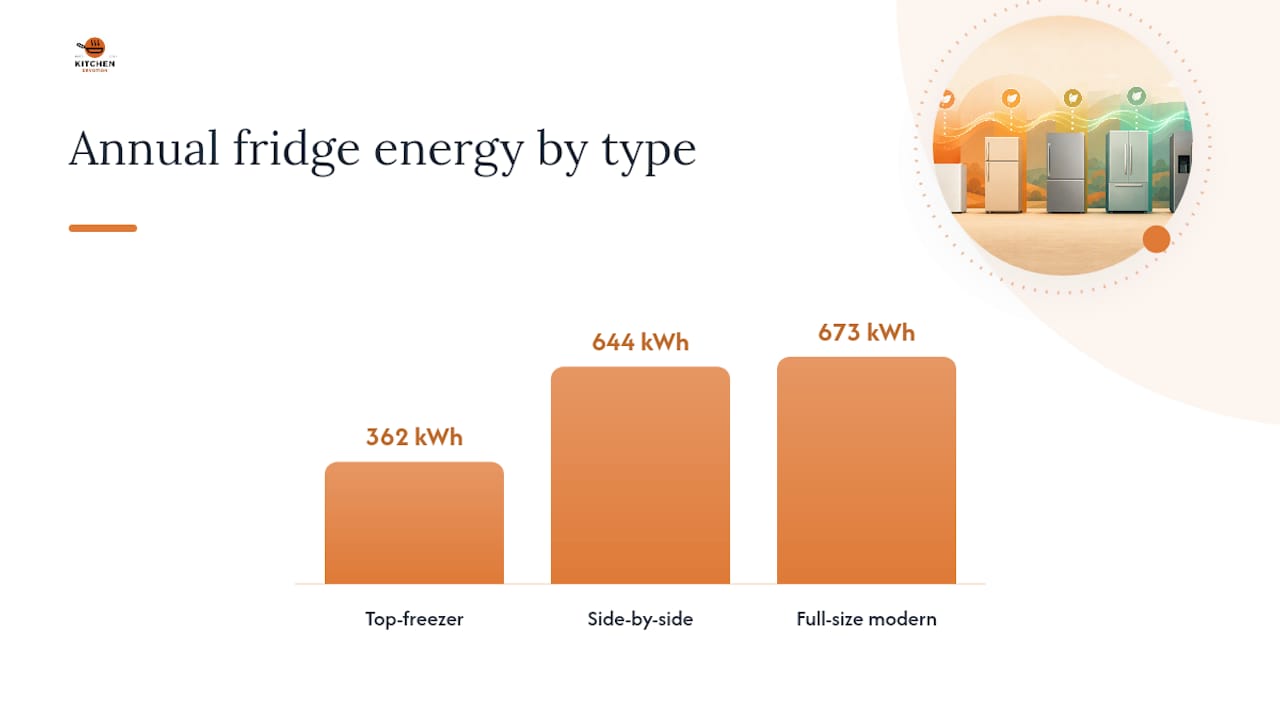
Typical annual kWh for refrigerator types vary, with mini/compact fridges using on the order of a few hundred kWh and older units from the 1990s–2000s consuming substantially more. Monthly and annual costs at a typical national rate near $0.17/kWh follow accordingly, ranging from low single-digit to low triple-digit dollar figures.
A few things push those numbers around in real households:
- Your state’s electricity rate matters as much as your fridge model. The EIA’s residential rate data shows some states charge nearly triple the national average per kilowatt-hour, which can shift a $75 annual estimate to well over $150.
- An automatic ice maker or through-the-door water and ice dispenser adds a steady draw on top of the base compressor cycle.
- A second fridge in the garage or basement almost always costs more than its label suggests, because it’s fighting a warmer, less stable ambient temperature.
- Consumer calculators that blend EnergyGuide kWh with live utility rates, like the one at Fridge, put a typical full-size modern fridge around $111 a year using a 673 kWh baseline, which lines up closely with the ranges above.
How Do You Calculate Your Refrigerator’s Running Cost?
The math is simple once you have two numbers: your fridge’s annual kWh and your electricity rate in dollars per kWh.
- Find the annual kWh figure on your fridge’s yellow EnergyGuide label, or look up the model number on the manufacturer’s site. ENERGY STAR treats this figure as the most reliable starting point because it comes from standardized lab testing, not a nameplate guess.
- Multiply annual kWh by your local electricity rate (in $/kWh) to get your annual running cost.
- Divide that annual cost by 12 to get your average monthly cost.
- If you can’t find the EnergyGuide number, estimate using average wattage and a realistic duty cycle instead of assuming the fridge runs 24 hours a day. Compressors cycle on and off, so multiplying wattage by 24 hours overstates usage significantly.
Statistic Callout: At the national-average residential rate the EIA tracks, a 450 kWh/year ENERGY STAR top-freezer costs about $77 a year to run ($6.40/month). A 1,200 kWh/year older side-by-side, at that same rate, costs about $204 a year ($17/month), nearly triple the electricity spend for a similar-sized box.
Both examples use the same rate. The entire cost gap comes down to the appliance’s age and design, not your habits.
What Actually Drives Refrigerator Energy Usage Up or Down?
Age is usually the single biggest lever. Replacing a fridge that’s 15 years or older with a certified ENERGY STAR model can cut annual electricity use by hundreds of kilowatt-hours, since ENERGY STAR’s own benchmarking shows how far compressor and insulation technology has moved in two decades.
Configuration matters almost as much. Top-freezer units post the lowest median kWh of any full-size category. French door and side-by-side models trade that efficiency for capacity and features, and pay for it in kilowatt-hours.
A few other factors that quietly inflate the bill:
- Automatic ice makers and door-mounted dispensers add a measurable, constant draw beyond the base compressor cycle.
- Placing a fridge in a garage, sunny kitchen corner, or next to a stove or radiator forces the compressor to work harder against a warmer ambient temperature. Improving your home’s thermal envelope around that space can help stabilize the room the fridge sits in.
- Dirty condenser coils and worn door gaskets make the compressor run longer to hold temperature, and both are cheap, five-minute fixes.
- How often you open the door matters far less than people assume. It’s a real but secondary factor next to age, coil dust, and gasket seal.
Pro Tip: If you’ve got a spare fridge running in the garage “just in case,” unplug it. An old secondary unit sitting mostly empty can cost more per year than buying a small cooler for the handful of times you actually need extra space.
When Does Replacing Your Fridge Actually Pay Off?
Swapping a 1990s refrigerator (often 1,400+ kWh/year) for a modern ENERGY STAR unit averaging 500 kWh/year saves roughly $150 a year at national-average rates, which often pays back the price difference within three to five years depending on the model you choose. Replacing a 2000s-era unit, typically 900 to 1,100 kWh/year, for a comparable ENERGY STAR model saves closer to $70 to $100 a year, stretching payback to five or more years unless you catch a good sale.
Before you buy, run through this checklist:
- Check the EnergyGuide annual kWh figure on the yellow tag, not just the sticker price.
- Confirm it carries the ENERGY STAR label, and use the Flip Your Fridge calculator to compare your old unit’s likely draw against certified replacements.
- Buy the size you’ll actually use. Kitchendevotion’s capacity guide can help you avoid paying to cool space you don’t need, since a larger box with more empty air space runs less efficiently per cubic foot stored.
- Skip add-on features you won’t use regularly. Every dispenser and display adds a small standby load that runs 24/7 whether you use it or not.
- Check your utility’s website or ENERGY STAR’s rebate finder before buying. Many utilities still offer rebates or recycling credits for retiring an old fridge.
Statistic Callout: DOE and PNNL field research found automatic ice makers alone added between roughly 43 and 61 kWh per year depending on the season, which is enough on its own to shift a borderline replacement decision.
How Do You Measure Your Fridge’s Actual Energy Use?
Numbers on a label describe a lab test, not your kitchen. Measuring gives you the real figure.
- Start with the EnergyGuide label or manufacturer spec sheet for a baseline estimate.
- Plug the fridge into a smart plug with energy monitoring and let it run for 48 to 72 hours to capture both peak and off-peak cycling. Real-world field data shows consumption runs higher in summer than in spring, so a short summer-only reading can overstate your annual number.
- For a compressor-specific reading, use a clamp meter on the appliance’s circuit to isolate its draw from other kitchen loads.
- If you want whole-appliance tracking over time, ask your utility about submetering options, useful if you’re chasing down a suspiciously high bill.
- Once you have kWh/day from the smart plug, multiply by 30 and by your rate to estimate the monthly bill impact.
Ranked by effort versus payoff, the fixes that move the needle fastest are: unplugging an unused second fridge, cleaning condenser coils, replacing a worn gasket, disabling an unused ice maker, and relocating the unit away from heat sources. Kitchendevotion’s efficiency guide walks through each step. If the compressor runs constantly even after these fixes, or the fridge struggles to hold temperature, a short troubleshooting check can tell you whether it’s a simple repair or time to call a technician.
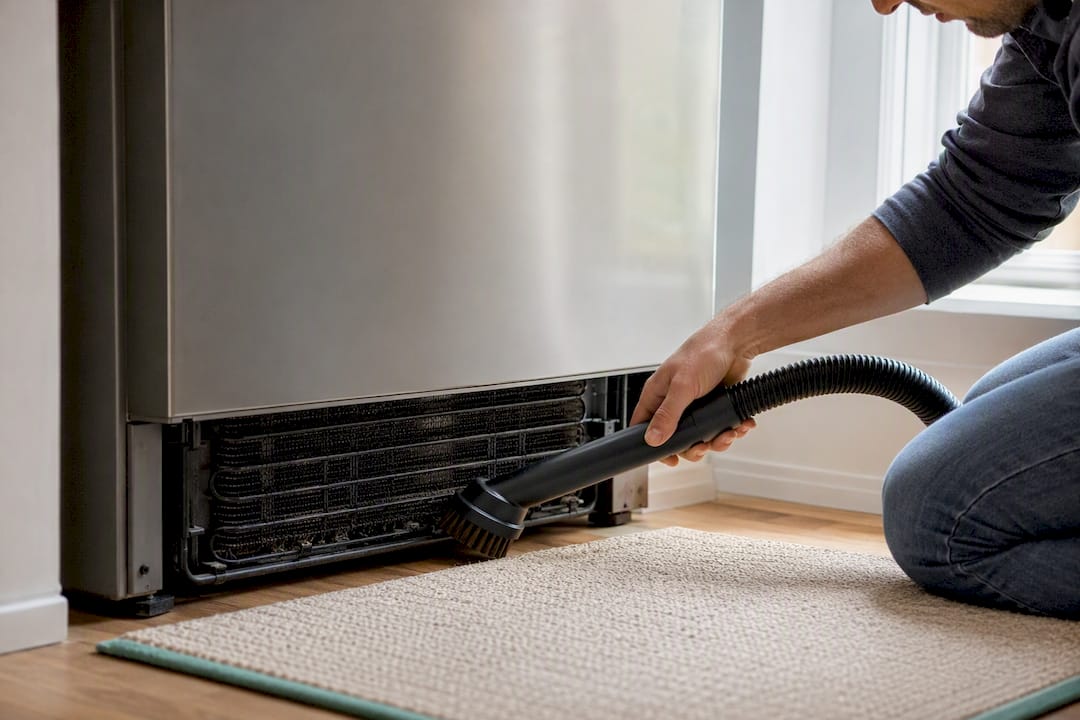
Pro Tip: Clean condenser coils twice a year with a vacuum brush attachment. It takes about ten minutes and is consistently one of the highest-return maintenance jobs in the entire kitchen.
Where Can You Compare Real Numbers Before You Buy or Repair?
Kitchendevotion’s guide on how much energy a refrigerator uses breaks down typical kWh ranges in more depth if you want to dig past the averages here. The maintenance guide covers coil cleaning, gasket checks, and thermostat settings step by step. When you’re ready to compare actual models, the refrigerators and mini fridges collection lists EnergyGuide kWh figures side by side, so you can weigh capacity against running cost before committing to a purchase.
Should You Fix It, Measure It, or Replace It?
Measuring usage and testing a few low-cost fixes almost always beats guessing, and it should come before any replacement decision. The real number to weigh isn’t the sticker price. It’s purchase cost plus years of electricity, measured against what a modern ENERGY STAR model would actually save you.
— K. Connors
Compare ENERGY STAR Models Before You Buy
If your fridge is pushing 15 years old or you’ve confirmed through measurement that it’s running well above the ranges in this guide, replacement math starts to favor action over patience. Kitchendevotion’s refrigerators and mini fridges collection is built for exactly this comparison: curated ENERGY STAR picks with EnergyGuide kWh listed right on the product page, so you’re comparing real annual usage numbers instead of guessing from a sticker price alone.

Whether you need a compact unit for a small kitchen or a full-size French door replacement, browse the collection, check the annual kWh on a few models side by side, and pick the one that pencils out against your current electricity rate. It’s a faster path to a decision than scrolling a dozen retailer sites separately.
Sources
- Real-world energy comparison for refrigeration products (DOE / PNNL)
- Residential Energy Consumption Survey (RECS) — EIA
- Fridge
FAQ
How Much Does It Cost to Run a Refrigerator for 30 Days?
A modern ENERGY STAR refrigerator typically costs about several dollars to a bit over ten dollars per month at national-average electricity rates. Older units from the 1990s or early 2000s often cost notably more per month, according to ENERGY STAR benchmarking data.
How Much Does It Cost to Run a Fridge for an Hour?
Running cost per hour is tiny on its own, generally a fraction of a cent to a couple of cents depending on the model and your electricity rate, but it adds up because the compressor cycles all day, every day. The more useful number is the monthly or annual estimate, which you get by dividing the EnergyGuide annual kWh figure by 12.
What Is the Most Expensive Appliance to Run in a House?
Refrigerators aren’t usually the single most expensive appliance to run, since they use less energy than heating, cooling, or a clothes dryer, but they’re one of the few appliances that run 24 hours a day, every day of the year. That constant cycle is why even a modest efficiency gap between models adds up to real dollars annually.
Does a Running Refrigerator Use a Lot of Electricity?
A refrigerator uses less electricity than most people assume for something that never turns off, typically 300 to 700 kWh a year for a modern model. Older units and side-by-side configurations can use double that, which is why checking the EnergyGuide label matters more than guessing from the appliance’s age or size alone.





No comment