

Wash reusable sandwich bags after every use with warm, soapy water, or run them on the top rack if the label indicates dishwasher-safe. Let them air-dry completely with the seal propped open before storing, since trapped moisture is what breeds mold. For odors or stains, a vinegar soak or baking soda paste can handle most problems, and a dilute bleach or hydrogen peroxide solution is the fix when mold actually shows up.
TL;DR:
- Regular hand-washing with warm water and mild soap is recommended, especially for delicate seals or stubborn residues, to prevent damage.
- Use vinegar soaks or baking soda pastes for deep deodorizing or stain removal, but do not expect stains like turmeric or tomato-based sauces to fully disappear.
- Prevent mold by rinsing bags immediately after use and drying them thoroughly with the seal open, avoiding storing damp or sealed bags.
- Only dishwasher-safe bags should be placed on the top rack with a gentle cycle, and avoid high-heat or sanitize settings to prevent warping.
- Replace bags promptly if seals crack, tears develop, or mold or odor persists despite proper cleaning and drying.
Table of Contents
- Everyday Reusable Sandwich Bag Washing: Hand-Wash vs. Dishwasher
- How Do You Deep Clean and Deodorize a Sandwich Bag?
- How Do You Get Rid of Mold in a Reusable Bag?
- What’s the Best Way to Dry and Store Reusable Bags?
- Silicone, PEVA, and Fabric: Does the Material Change the Rules?
- When Should You Replace a Reusable Sandwich Bag?
- Practical Tips for Getting the Most Out of Your Bags
- What Most Care Guides Get Wrong About Reusable Bags
- Appliances That Make Bag Care Easier
- Sources
- FAQ
Everyday Reusable Sandwich Bag Washing: Hand-Wash vs. Dishwasher
Most days, cleaning a reusable bag takes under two minutes. The method just depends on the bag and what was inside it.
Hand-washing works for almost every material and is the better call for anything with a delicate seal or stubborn residue:
- Rinse immediately after use, before food dries onto the surface.
- Wash with warm water and a mild dish soap, working the interior with your fingers.
- Use a bottle brush or soft sponge to reach into corners and along the seal track, where crumbs and grease tend to hide.
- Rinse thoroughly, then flip the bag right side out (don’t invert it) and set it to dry.
Manufacturers including Stasher specifically warn against turning silicone bags inside out, since flipping can weaken the bonded seams that hold the bag together. A bottle brush gets into those same corners without the stress.
Dishwasher-safe bags get an easier ride, but only under the right conditions. Confirm the label actually says dishwasher-safe first, then load the bag on the top rack with the opening facing down or propped with a clip so water drains out rather than pooling inside. Stick to a gentle or eco cycle. Skip the sanitize or high-heat setting entirely. Top-rack placement paired with a gentle cycle reduces warping compared to bottom-rack heat, and hand-washing still wins when a bag has heavy staining or a seal that needs careful attention.
How Do You Deep Clean and Deodorize a Sandwich Bag?
Regular washing handles daily grime, but garlic, curry, tuna, and similar foods leave odors that soap alone won’t touch. Two low-cost recipes cover almost every stubborn case.
Vinegar soak for odors:
- Mix equal parts warm water and distilled white vinegar in a bowl or sink.
- Submerge the bag fully, or fill it and let it sit, for several hours or overnight.
- Testers at America’s Test Kitchen found this 50/50 vinegar soak consistently effective at removing persistent food smells, even after odor lingered through a normal wash.
Baking soda paste for stains and oily residue:
- Combine baking soda with a splash of water until it forms a thick paste.
- Scrub it into the stained area with a sponge or soft brush.
- Let it sit anywhere from 30 minutes to overnight, depending on how set the stain is.
Rinse thoroughly after either treatment, then run the bag through a normal wash. If a fragranced soap seems to be masking rather than removing an odor, switch to an unscented formula and see if that solves it.
Pro Tip: Turmeric and tomato-based sauces are among the more stubborn stains. A tomato-sauce stain that has already gone through one vinegar soak and one baking soda scrub is very unlikely to fully disappear — that’s about function, not a cleaning failure.
Don’t be surprised if a stain lightens but doesn’t vanish completely, even after repeat treatments. If the bag is otherwise clean and odor-free, that faint discoloration is cosmetic, not a hygiene problem.
How Do You Get Rid of Mold in a Reusable Bag?
Mold shows up almost exclusively because a bag went into storage while still damp, or sat sealed with food residue inside. Rinsing immediately after use and drying fully before storing prevents nearly every case.
When mold does appear, treat it with one of these two solutions, never both together; use either a bleach solution (warm water plus liquid chlorine bleach) or a hydrogen peroxide solution (warm water plus hydrogen peroxide) in appropriate amounts.
Let the mixture sit inside the bag for about 15 minutes, then wash thoroughly with soap and warm water, rinsing multiple times to clear any chemical residue. Work in a ventilated space and wear gloves, especially with the bleach version.
Pro Tip: Never mix bleach and hydrogen peroxide in the same bag. Combined, they can produce fumes that are genuinely dangerous to breathe.
If mold keeps coming back after treatment, or you spot a tear or gap along the seal, retire the bag. A compromised seal lets moisture in no matter how carefully you dry it.
What’s the Best Way to Dry and Store Reusable Bags?
Drying is crucial because trapped moisture, rather than food residue itself, tends to cause mold in reusable bags.
- Turn the bag inside out only if the manufacturer allows it; otherwise dry it right side out with the seal propped fully open.
- Prop the opening on a bottle, upside-down cup, or a dedicated drying rack so air actually moves through the inside.
- Never stack or seal bags while they’re still damp, even if they feel “mostly dry.”
- Store in a cool, dry cabinet or drawer, away from oven heat or a dishwasher’s bottom rack, which can warp materials not rated for that temperature.
A rack built for this job saves a lot of trial and error with balancing bags on cups and bottles. A guide on choosing a drying mat that doesn’t stay damp walks through what to look for if you’re tired of improvising.
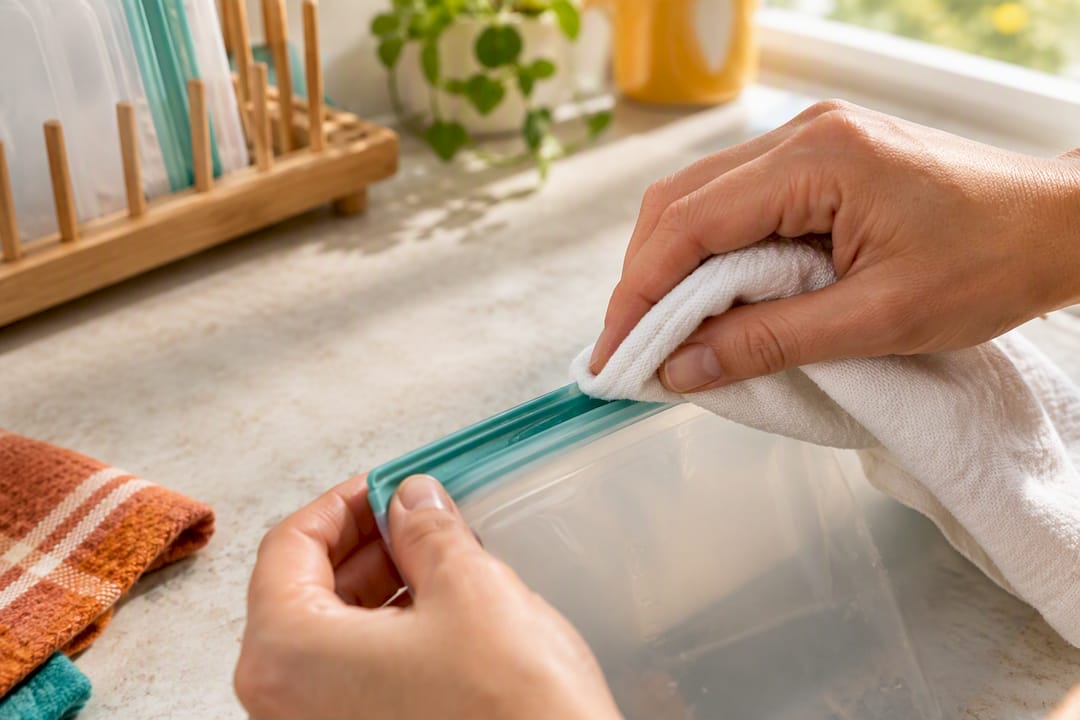
Pro Tip: Wipe the seal track with a dry cloth before storing, even after air-drying. That groove holds moisture longer than the flat surfaces around it.
Silicone, PEVA, and Fabric: Does the Material Change the Rules?
Care instructions shift depending on what the bag is made of, and skipping this step is how good bags get ruined early.
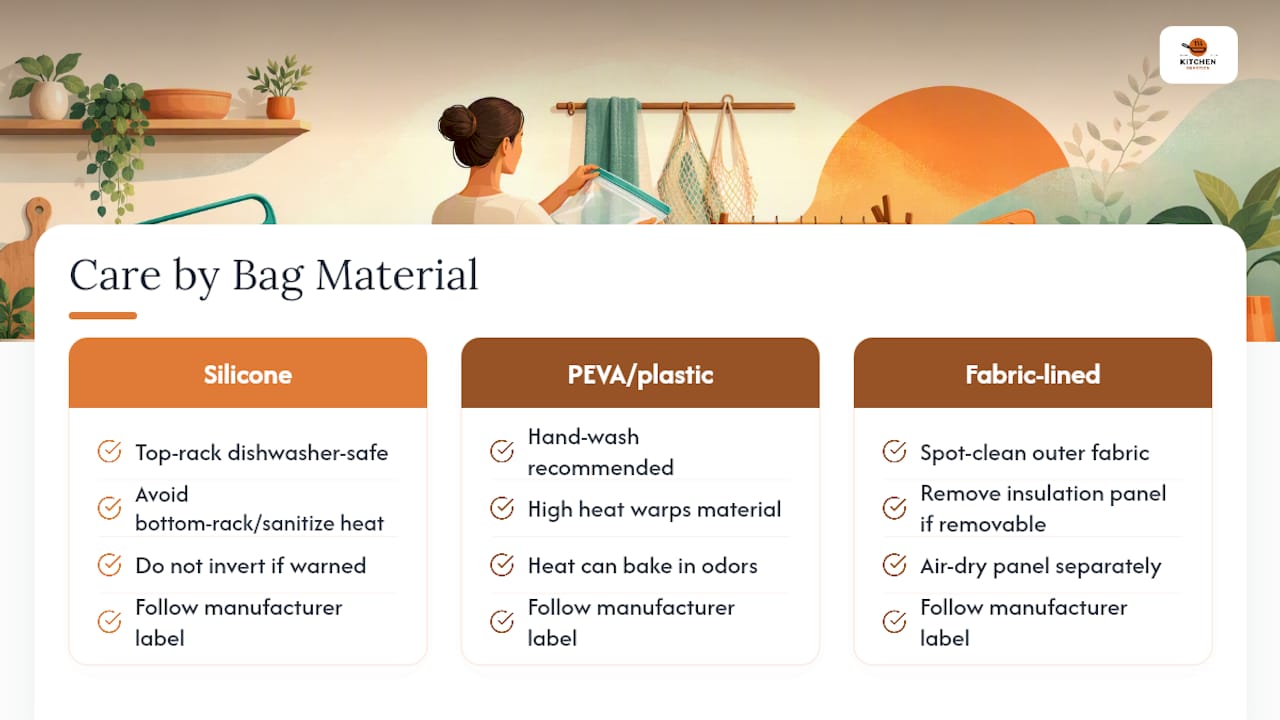
Silicone bags are usually top-rack dishwasher-safe, but bottom-rack heat or a sanitize cycle can still warp them over time. Avoid inverting them if the brand’s care page warns against it.
PEVA and other thin plastics hold up better with hand-washing. High heat can warp these materials or bake odors permanently into the surface, which no vinegar soak will reverse.
Fabric-lined or insulated bags need a different approach entirely: spot-clean the outer fabric, and if the insulation panel is removable, take it out and air-dry it separately from the liner.
Whatever the material, the manufacturer’s own label overrides any general rule here. Care pages for brands like Stasher spell out dishwasher and oven guidance specific to that product, and that instruction always wins over a generic tip.
When Should You Replace a Reusable Sandwich Bag?
Retire a bag once the seal cracks, tears, or stops closing tightly. The same goes for mold or odor that survives a bleach or peroxide treatment, and for material that’s gone soft, sticky, or visibly warped.
A quick monthly check works well for anyone using bags daily: look for discoloration or thinning, smell for anything sour or musty, and flex the seal to feel for cracks. Bags that fail can often be repurposed for non-food storage, like organizing small hardware or craft supplies, before they head to a specialty recycling drop-off rather than the trash.
Practical Tips for Getting the Most Out of Your Bags
A simple daily rhythm keeps reusable bags hygienic without much thought: rinse right after use, wash with warm soapy water or the top rack, prop the seal open to dry, then store once it’s fully dry inside and out.
If cleaning residue on the dishwasher itself is a concern, A piece on how often to clean a dishwasher filter is worth a look because a greasy filter can transfer grime right back onto bags you just washed. The same care principles carry over to silicone utensils if you’re building out a broader eco-friendly kitchen routine.
What Most Care Guides Get Wrong About Reusable Bags
Most advice on this topic treats reusable bags like they’re indestructible if you just wash them enough. They’re not. The seal is the weak point on every single one of these bags, and almost every care mistake, from turning a bag inside out to running it on a sanitize cycle, ends up stressing that one seam until it fails early.
The bigger issue is that people chase stain removal harder than they chase actual hygiene. A tomato-stained bag that’s been rinsed, washed, and dried properly is safer to use than a spotless-looking bag that went into a drawer half damp. Appearance and hygiene are not the same thing, and testing from outlets like America’s Test Kitchen backs that up: stains fade, they don’t always disappear, and that’s fine.
If you take one thing from this, prioritize drying over deodorizing. Odor problems are annoying but fixable with a vinegar soak. Mold problems from poor drying can force you to throw out a bag you paid real money for. Get the drying setup right first, and the rest of this routine gets a lot easier to stick with.
— K. Connors
Appliances That Make Bag Care Easier
Good hand-washing habits go a long way, but the right appliances take some of the guesswork out of daily care. A dishwasher with a reliable, gentle top rack cycle is genuinely useful for bags labeled dishwasher-safe, since it keeps water temperature and pressure consistent in a way hand-washing can’t always match. Kitchendevotion’s dishwasher category covers models built with that kind of gentler cycle in mind, which matters if you’re running bags through several times a week.

A dedicated drying rack solves the other half of the problem: getting full airflow to the inside of a bag without balancing it precariously on a water bottle. Kitchendevotion’s kitchen guides point toward accessories that pair well with a bag-heavy routine, and its home page is a good starting point for browsing appliances and tools that fit an eco-conscious kitchen. Whatever you pick, check the bag’s own label against the appliance’s cycle settings before combining the two.
Sources
For deeper reading beyond this guide, America’s Test Kitchen tested deodorizing methods directly, The Spruce covers the mold-treatment ratio in detail, and Stasher’s own care page offers manufacturer-specific washing and storage rules.
- What’s the Best Way to Clean (and Deodorize) a Reusable Food Storage Bag?
- How to Wash and Dry Reusable Food Storage Bags
- The ultimate guide to cleaning reusable silicone food storage bags and stretch lids
- How To Remove Smells From Silicone Bags And Plastic Lids
FAQ
How Do I Keep Mold From Growing Inside Reusable Sandwich Bags?
Rinse the bag right after use and dry it completely with the seal propped open before storing it. Trapped moisture is the main cause of mold, so never seal or stack a bag that still feels even slightly damp inside.
What’s the Best Way to Clean a Reusable Sandwich Bag?
Hand-wash with warm water and mild soap, using a bottle brush to reach corners and the seal track, or run it on the top dishwasher rack if the label allows it. For lingering odors, a 50/50 vinegar and warm water soak overnight works well.
Are Reusable Produce Bags Hygienic?
Yes, as long as they’re washed and fully dried between uses, the same way sandwich and food storage bags should be. The hygiene risk comes from skipping drying time or storing bags damp, not from reuse itself.
Can Reusable Sandwich Bags Go in the Dishwasher?
Only if the manufacturer’s label says the bag is dishwasher-safe. When it does, place it on the top rack on a gentle cycle with the opening facing down, since top-rack placement and lower heat reduce warping compared to bottom-rack or sanitize cycles.
How Do I Remove Mold From a Silicone Bag Safely?
Mix 1 cup warm water with either 1 tablespoon liquid chlorine bleach or 1 tablespoon hydrogen peroxide, never both, and let it sit for 15 minutes before washing thoroughly. Ventilate the space, wear gloves, and rinse the bag several times afterward to clear any residue.





No comment