Buy a saucepan first. It handles boiling pasta, simmering rice, steaming vegetables, and reducing a quick pan sauce, which covers what most home cooks need on a nightly basis. A saucier is the specialist tool you add later, once you’re whisking custards, risotto, or delicate sauces often enough to justify the extra pan.
TL;DR:
- A 2 to 3 quart saucepan is the best starting point for versatile cooking tasks like boiling, reheating, and steaming, especially for small households.
- A saucier is most useful after frequent sauce or risotto making, but it reduces liquids faster due to its wider surface area, requiring close attention.
- Saucepans generally come with lids and a variety of sizes, while sauciers often lack tight-fitting lids and are limited to smaller volumes suitable for home cooking.
- Use a saucepan for tasks requiring lid-based cooking like steaming and simmering, while a saucier excels at sauces, custards, and dishes requiring constant whisking.
- Confirm saucier lid fit and compatibility with your cooktop before buying, as these practical details often differ between brands.
Table of Contents
- Saucepan vs Saucier: How Shape Changes What Each Pan Can Do
- How Saucepans and Sauciers Perform Side by Side
- Which Pan to Buy First, and What Size Makes Sense
- What to Cook in Each Pan: Real Kitchen Examples
- Lid Fit, Steamer Baskets, and Other Practical Snags
- Why Kitchen Devotion Recommends Starting With a Saucepan
- A Cook’s Honest Take on Owning Both
- Ready to Build Out Your Cookware Collection?
- Sources
- FAQ
Saucepan vs Saucier: How Shape Changes What Each Pan Can Do
The difference comes down to geometry. A saucepan has a flat bottom and straight, vertical walls that meet the base at a sharp 90 degree angle. A saucier has a rounded, bowl-like base with walls that curve outward, more like a wide mixing bowl set on a burner.
That shape difference isn’t cosmetic. Straight walls give a saucepan more usable capacity for its footprint and hold heat steady across the whole surface, which is exactly what you want for boiling pasta water or simmering a pot of beans. The sharp corners, though, are where a whisk or spoon can’t quite reach, so anything sticky can hide there and scorch.
A saucier’s curve solves that problem by design. There’s no corner for a whisk to miss, which is why chefs reach for one when they’re making a sauce that needs constant, even attention.
A few practical points worth knowing before you shop:
- Saucepans almost always ship with a tight-fitting lid; sauciers frequently don’t.
- Saucepans are made in a wide range of sizes to suit different kitchen needs.
- Sauciers generally come in sizes suitable for home use, usually not exceeding large volumes.
- Both are commonly built from stainless-clad, copper, or nonstick materials, so material choice doesn’t force you into one shape or the other.
How Saucepans and Sauciers Perform Side by Side
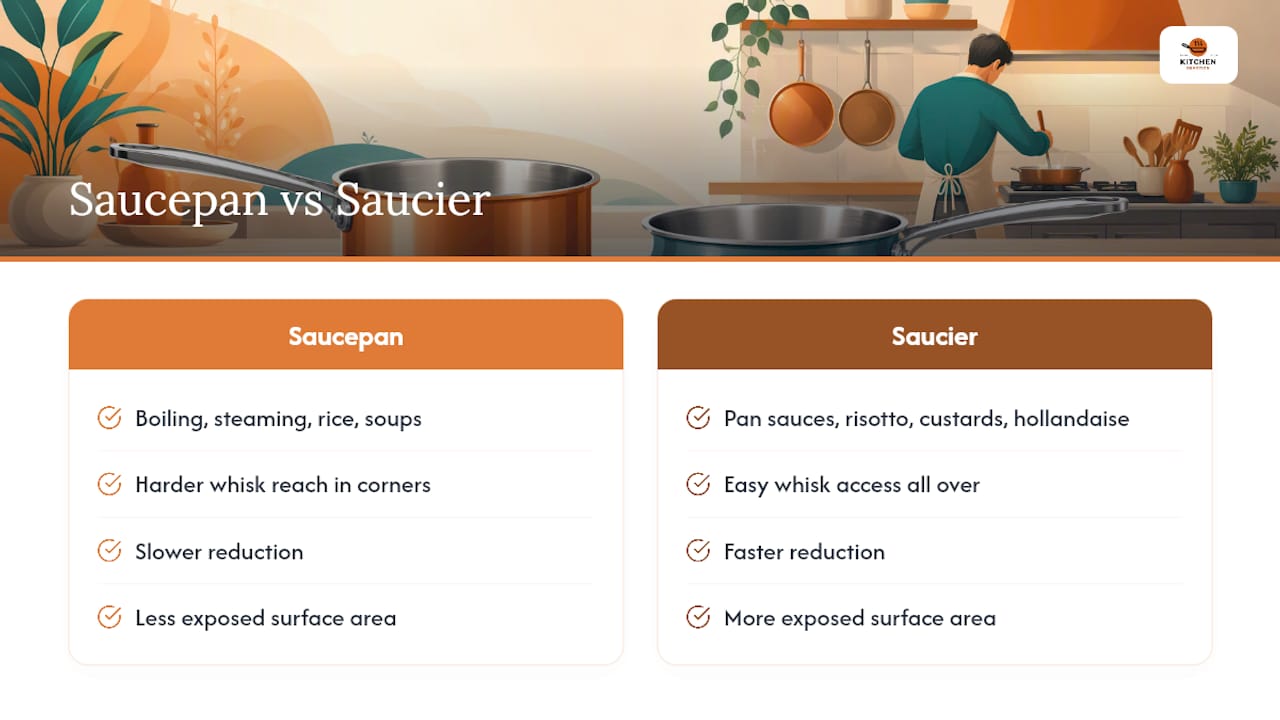
Each pan earns its keep in different situations. A saucepan is your go-to for boiling water, steaming vegetables, cooking rice, and making soups and stews where you want liquid contained and a lid that seals. A saucier takes over for pan sauces, hollandaise, risotto, custards, and caramel, anywhere a whisk needs to reach every inch of the surface without hunting for a hidden hot spot.
Reduction speed is where the shapes really split. A saucier’s wider mouth and shallower walls expose more surface area to the air, so liquid evaporates faster than in a saucepan holding the same volume. That’s useful when you’re trying to thicken a sauce in five minutes instead of fifteen, but it also means you need to watch the pan more closely, since over-reduction happens quickly.
Cleanup tends to favor the saucepan too. Universal steamer baskets and pasta inserts are built for straight sides, so they drop into a saucepan cleanly. They can wobble or refuse to seat properly in a saucier’s curved base.
Pro Tip: If you’re reducing a sauce in a saucier for the first time, cut your usual saucepan cooking time by a third and check it early. The extra surface area catches people off guard.
Which Pan to Buy First, and What Size Makes Sense
Start with a 2 to 3 quart saucepan. It’s the right size for boiling pasta for two to four people, reheating soup, or steaming a side of broccoli, and it’s the piece you’ll reach for most nights of the week. Add a saucier once you notice yourself making pan sauces, risotto, or custard more than once or twice a month.
- Buy a 2 to 3 quart stainless-clad saucepan first. It’s versatile enough for boiling, simmering, and basic sauce work, and stainless clad gives you even heat without the upkeep copper demands.
- Add a 2 to 3 quart saucier once sauce work becomes routine, while considering storage options like selecting the right pantry door to optimize your kitchen space. That size handles most risotto and pan sauce batches without taking up excessive cabinet space.
- Choose copper or tri-ply construction if precise heat control matters to you, especially for candy making or delicate emulsions like hollandaise.
- Pick nonstick if you cook a lot of sticky reductions like caramel or fruit compotes, where scorched sugar on stainless steel is a genuine headache to scrub off.
- Check lid and steamer-insert fit before buying, since not every saucier includes a lid that seals well. A basic cookware set often solves this by pairing pieces that share hardware.
What to Cook in Each Pan: Real Kitchen Examples
Matching the pan to the task saves you frustration at the stove. Here’s where each one earns its spot:
- Pan sauce after searing chicken or steak: Deglaze in the saucier if you own one. The curved walls let you whisk in butter or cream without a corner where the fond hides unstirred.
- Risotto: Use a saucier. Constant stirring is non-negotiable for risotto, and the rounded base means your spoon touches every part of the rice as it releases starch.
- Béchamel or custard: A saucier again. Both demand a whisk working continuously to prevent lumps or scrambled eggs, and the curve keeps heat from concentrating in a corner you can’t reach.
- Boiling grains, rice, or steaming vegetables: Stick with the saucepan. A tight lid traps steam and holds temperature, which a lidless saucier can’t match.
- Simmering soup or reheating leftovers: The saucepan wins again, mostly because its taller, narrower shape means less liquid evaporates while it simmers on low.
Lid Fit, Steamer Baskets, and Other Practical Snags
A few compatibility issues catch first-time saucier buyers off guard. Most sauciers ship without a snug lid, since the rounded base makes a universal fit harder to engineer. You can often borrow a saucepan lid that’s close in diameter, or just accept uncovered reducing, which is how most sauces are finished anyway.
Universal steamer baskets can also sit unevenly in a saucier’s curve. An adjustable steamer insert or a flat steaming rack solves that without buying a new basket.
- Confirm induction compatibility if that’s your cooktop; not every saucier has a magnetic base.
- Check that the handle stays cool enough for stovetop use if you’re moving the pan often, since oven-safe handles vary by brand.
Why Kitchen Devotion Recommends Starting With a Saucepan
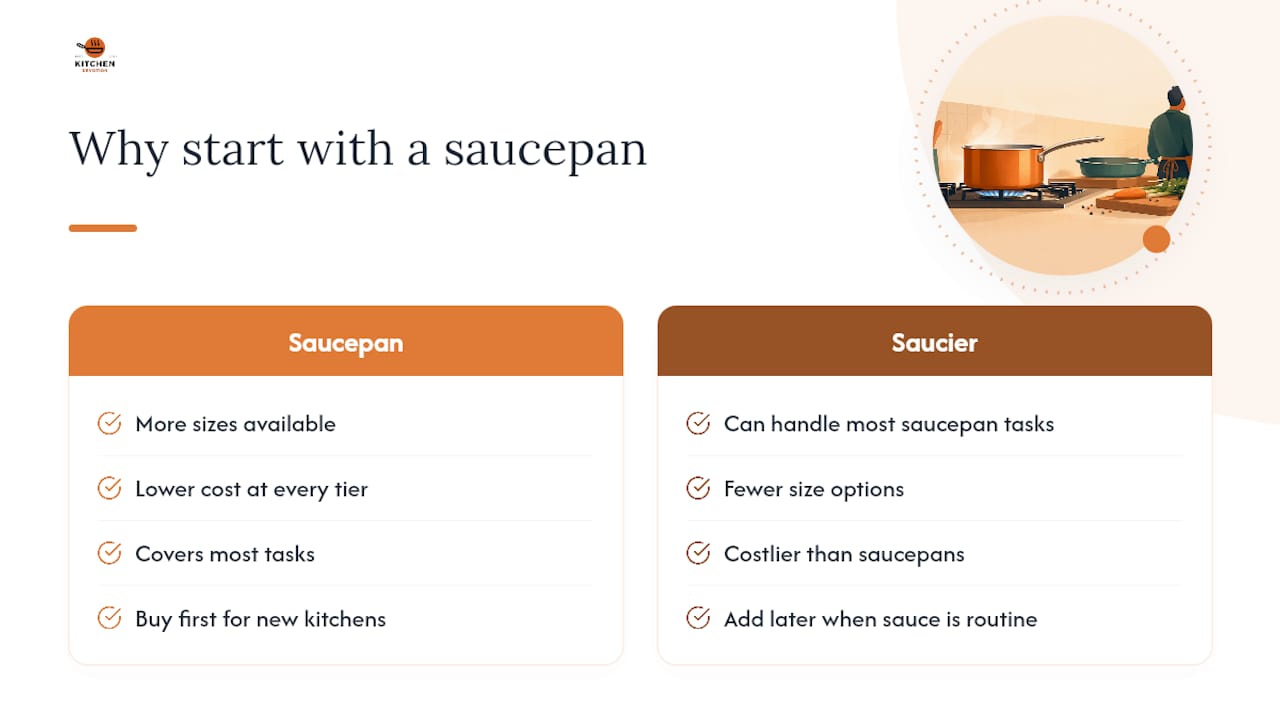
The buy-first logic here isn’t a guess. Sauciers can technically handle most saucepan tasks, but saucepans come in far more sizes and cost less at every tier, which is exactly why they’re the more practical starting point for a kitchen still building out its cookware. Kitchen Devotion curates cookware sets specifically around that logic, pairing a workhorse saucepan with pieces that cover the gaps a single pan leaves.
The short version: buy the saucepan first, add the saucier when sauce work becomes routine, and check lid or steamer fit before either purchase. For deeper shopping guidance, Kitchen Devotion’s cookware materials guide breaks down which metals suit which cooking styles.
A Cook’s Honest Take on Owning Both
My saucepan lives on the stove permanently. The saucier stays in a cabinet until a Sunday sauce or risotto pulls it out, maybe twice a month. That’s the real test for any cookware purchase: buy for the meals you cook weekly, store the specialists, and don’t let a shiny pan talk you into more counter clutter than your cooking actually demands.
— K. Connors
Ready to Build Out Your Cookware Collection?
Once you’ve settled on a saucepan as your everyday workhorse, the next question is what fills in around it, and that’s exactly where a curated set beats piecing things together one impulse buy at a time. Kitchen Devotion builds its cookware sets around that same buy-first logic: a solid saucepan paired with the skillet, stockpot, and saucier you’ll actually reach for, in materials that match how you cook rather than what looked good in a store display.
If you’re setting up a kitchen from scratch or replacing pans one at a time, start with Kitchen Devotion’s guide to choosing the right cookware materials to figure out whether stainless clad, copper, or nonstick fits your cooking habits, then browse the cookware sets page to see complete collections built around that same saucepan first, saucier second approach. It’s a faster path to a kitchen that actually works for how you cook, not a guess.
Sources
- Saucepan vs Saucier: 6 Differences and Why You Don’t Need Both – Prudent Reviews
- Saucepan vs Saucier: Which One Do You Actually Need? – TheDudeCooks
- Saucepan definition – Cambridge Dictionary
FAQ
Can I Use a Saucier as a Saucepan?
Yes, for most tasks. A saucier can boil, simmer, and reduce liquids just like a saucepan, though you’ll lose the tight lid seal that makes covered steaming or rice cooking easier in a true saucepan.
Should I Get a Saucier or a Sauté Pan?
They serve different jobs. A saucier is built for whisked sauces and reductions with a rounded base, while a sauté pan has a flat bottom and straight sides meant for searing and pan-frying with more direct food-to-surface contact.
Do Americans Say Saucepan?
Yes, “saucepan” is the standard American English term for the straight-sided pot used for boiling, simmering, and general sauce work, and it’s the more commonly stocked shape in American kitchens.
What Is the Purpose of a Saucier?
A saucier’s curved walls let a whisk reach every part of the pan without hitting a corner, which is why it’s the preferred choice for risotto, custards, hollandaise, and other sauces that need constant, even stirring.



No comment