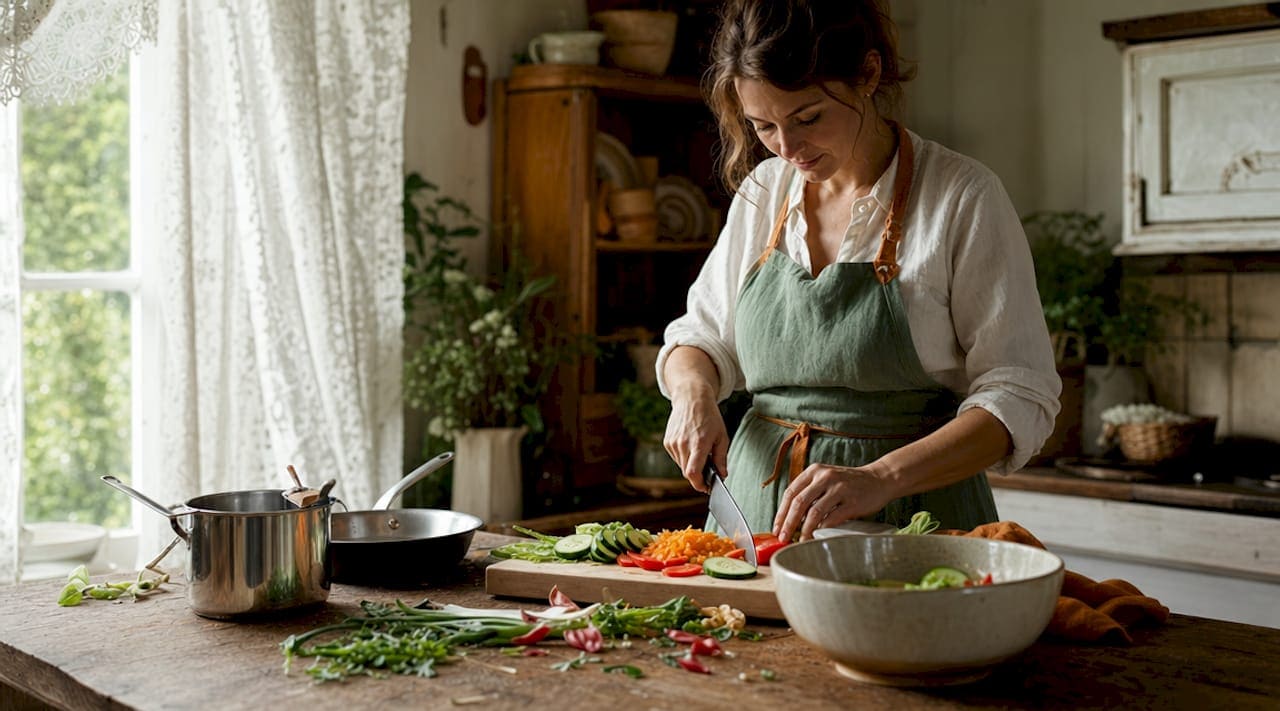
A basic cookware set is defined as a curated collection of pots and pans covering the four core cooking methods every home kitchen depends on: boiling, simmering, frying, and sautéing. The role of a basic cookware set is not decorative. It is functional. A stockpot, saucepan, sauté pan, and frying pan form the foundation of nearly every recipe you will cook at home, from weeknight pasta to Sunday braises. Understanding which pieces do what, and why each one earns its cabinet space, is the fastest way for any beginner to cook with confidence and stop wasting money on gear that never gets used.
What are the essential pieces in a basic cookware set?
The four core pieces in any functional cookware set are the frying pan, saucepan, sauté pan, and stockpot. Together, they cover boiling, simmering, frying, and sautéing, which means they handle the vast majority of recipes you will encounter. That is not an overstatement. Most home cooks go weeks without needing anything outside this group.
Here is what each piece actually does:
- Frying pan (skillet): The workhorse of daily cooking. Use it for searing proteins, scrambling eggs, toasting spices, and making pan sauces. A nonstick skillet is the go-to for delicate foods like eggs and fish because it releases food without tearing and cleans up in seconds. Sizes range from 8-inch for single servings to 12-inch for family meals.
- Saucepan: Built for liquid-based tasks. Heating soup, making oatmeal, cooking grains, and reducing sauces all happen here. A 2-quart and a 4-quart saucepan cover most household needs without overlap.
- Sauté pan: Deeper than a frying pan with straight sides, which means it holds more food and liquid. Use it for one-pan meals, braised chicken thighs, or anything that starts on the stovetop and finishes in the oven.
- Stockpot: The largest piece in the set. Boiling pasta, making stock, cooking chili for a crowd, and blanching vegetables all require volume. An 8-quart stockpot handles most family-sized tasks without spilling over.
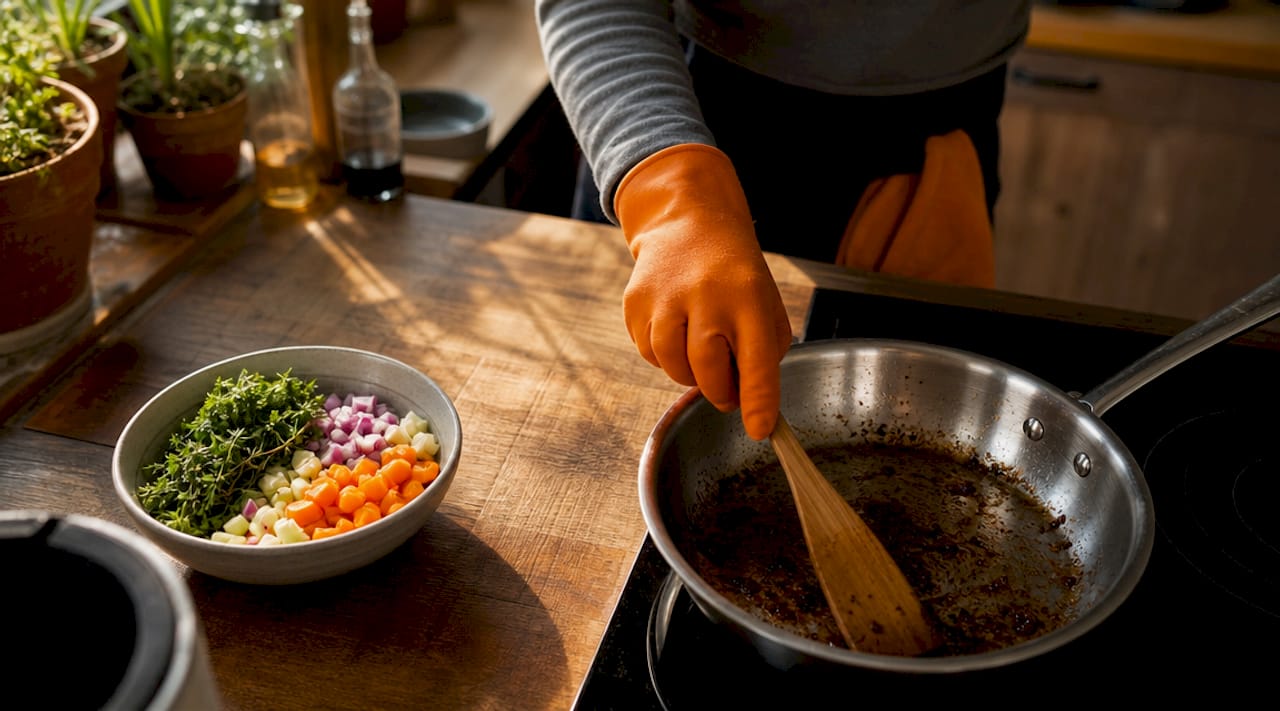
Material matters as much as shape. Stainless steel pans build fond (the browned bits that become sauce) and last decades with basic care. Nonstick pans reduce fat use and simplify cleanup but require gentler handling. Many home cooks benefit from owning both: a stainless steel sauté pan or skillet for high-heat searing and a nonstick frying pan for eggs and delicate fish.
Pro Tip: Buy a 12-inch nonstick frying pan as your first piece. It handles more tasks than any other single item in the kitchen and costs far less than a full set.
How to choose cookware based on cooking style, space, and budget
Choosing the right cookware is a three-variable problem: what you cook, where you store it, and what you can spend. Getting any one of these wrong leads to a cabinet full of pans you never touch.
-
Match pieces to your actual cooking habits. If you cook pasta three times a week, a stockpot is non-negotiable. If you rarely roast, skip the roasting pan for now. Consumer Reports advises buying only the pans you will regularly use. That advice sounds obvious, but most beginners ignore it and end up with six pans they rotate through two.
-
Size up, not down. Beginners consistently buy pans that are too small. Recipes typically serve 4 to 6 people, which means a 10-inch pan forces you to cook in batches while food cools on the counter. A 12-inch skillet and a 4-quart saucepan cover far more ground than their smaller counterparts.
-
Account for storage before you buy. Buying sets with many extra pieces results in unused items occupying cabinet space you cannot afford to lose. Measure your shelves. Stack-friendly designs and nesting lids make a real difference in small kitchens. Check out Kitchendevotion’s guide on storing cookware safely before committing to a set.
-
Set a realistic budget and stick to it. Price range in cookware is enormous. The GreenPan Stanley Tucci collection runs roughly $850, while Figment’s set costs around $180 and still earns strong ratings. For beginners, a mid-range set from a reputable brand outperforms an expensive set used incorrectly every time. Kitchendevotion’s budget kitchen essentials guide breaks down where to spend and where to save.
-
Choose materials based on your stove type and cooking preferences. Induction cooktops require magnetic-base cookware, which rules out aluminum and some nonstick options. Gas and electric stoves are more forgiving. Learning how to choose cookware materials before you buy prevents expensive mistakes.
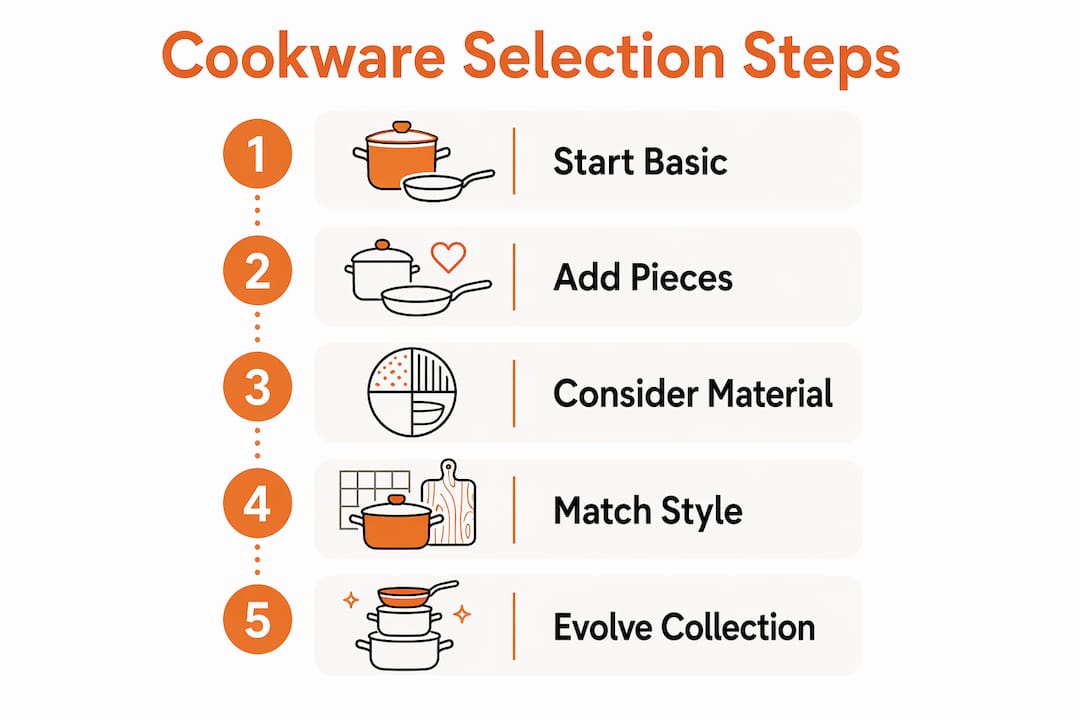
Pro Tip: Start with a basic set of three to four pieces and add individual items as your cooking evolves. This approach costs less upfront and produces a more personalized, functional kitchen than buying a 12-piece set all at once.
Common mistakes beginners make when buying or using cookware
Most cookware regrets come from the same handful of errors. Recognizing them before you shop saves money and cabinet space.
- Buying too many small pans. Multiple 8-inch pans create redundancy without adding capability. A few larger, versatile pans handle average family cooking far more effectively than a collection of small ones. Bigger pans also give food room to brown rather than steam.
- Ignoring lid quality. A lid that fits poorly lets steam escape, which changes cooking times and textures. Glass lids let you monitor food without lifting them. Tight-fitting lids are especially critical for simmering and braising.
- Overlooking versatility. The best pans in a basic set move from stovetop to oven without complaint. Oven-safe handles and lids expand what each piece can do, effectively doubling your cooking options without adding more gear.
- Choosing sets over individual pieces without thinking it through. Cookware sets offer convenience and a matching aesthetic, but they often include pieces you will never use. Buying individual pieces gives you exactly what you need, though it costs more per item. The practical middle ground is to start with a basic set and fill gaps with individual pieces over time.
- Neglecting maintenance. Nonstick coatings degrade when exposed to metal utensils or high heat. Stainless steel develops stains and discoloration without occasional deep cleaning. Both materials last far longer with simple, consistent care.
What additional cookware pieces complement a basic set?
Once you have the core four pieces working well, a handful of additions can expand your cooking range significantly. None of these are urgent, but each one unlocks a cooking method the basic set cannot handle as well.
| Piece | Best use | Why it adds value |
|---|---|---|
| Dutch oven | Braising, slow cooking, soups | Retains heat evenly for low-and-slow dishes; moves from stovetop to oven |
| Cast iron skillet | High-heat searing, cornbread, frittatas | Builds a natural nonstick surface over time; lasts generations |
| Sheet pan | Roasting vegetables, baking, cooling | Versatile for oven tasks the stovetop cannot replicate |
| Wok | Stir-frying, high-heat vegetable dishes | Curved shape distributes heat fast; ideal for Asian-style cooking |
Dutch ovens excel at low-and-slow cooking, and sheet pans handle roasting, baking, and cooling tasks that no stovetop pan can replicate. The Anvyx Titanium Kaizen Pro Pan is one example of a premium nonstick option worth considering when you are ready to upgrade a specific piece rather than replace the whole set.
The key principle here is gradual collection building. Add pieces as your cooking habits demand them, not because a list says you should own them. A home cook who makes stir-fry twice a week needs a wok. One who never roasts vegetables does not need a sheet pan yet.
Key takeaways
A basic cookware set built around a frying pan, saucepan, sauté pan, and stockpot covers the full range of everyday cooking methods and gives any beginner a functional, clutter-free kitchen foundation.
| Point | Details |
|---|---|
| Core four pieces | A frying pan, saucepan, sauté pan, and stockpot cover boiling, simmering, frying, and sautéing. |
| Size up consistently | Choose 12-inch skillets and 4-quart saucepans to avoid cooking in batches for family meals. |
| Budget does not equal quality loss | Mid-range sets like Figment’s $180 collection perform comparably to premium options for beginners. |
| Storage comes first | Measure cabinet space before buying; unused pans in crowded cabinets reduce kitchen efficiency. |
| Build gradually | Start with a basic set, then add a Dutch oven, cast iron skillet, or wok as cooking habits grow. |
Why I stopped chasing the perfect set and started cooking instead
The most common mistake I see home cooks make is treating cookware as a project to complete rather than a tool to use. People spend weeks researching 12-piece sets, comparing finishes and handle angles, and then cook the same three meals they always cooked. The cookware did not change the cooking. The cooking changed the cooking.
My honest experience is that two or three well-chosen pans outperform a full cabinet of mediocre ones every single time. I cooked on a single 12-inch stainless steel skillet and a 4-quart saucepan for over a year before adding anything else. Those two pieces handled 90% of what I made. When I finally added a Dutch oven, it was because I started making braises, not because a list told me to own one.
The advice I give anyone starting out: build a beginner-friendly cooking setup around what you actually cook today, not what you imagine cooking someday. A pan you use every day is worth ten times more than a pan that sits in the back of the cabinet looking expensive. Prioritize function, size up on everything, and let your cooking habits tell you what to buy next.
— K
Build your ideal kitchen with Kitchendevotion
Kitchendevotion exists for exactly this kind of decision. Whether you are putting together your first kitchen or rethinking a setup that has gotten cluttered and complicated, the guides and product collections on Kitchendevotion cut through the noise.
The budget kitchen essentials guide on Kitchendevotion walks you through which pieces to prioritize at every price point, with honest assessments of where quality matters and where it does not. You will also find detailed breakdowns of cookware materials, storage solutions for small kitchens, and curated product picks that balance performance with everyday practicality. Kitchendevotion is built for home cooks who want real answers, not marketing copy.
FAQ
What is the role of a basic cookware set?
A basic cookware set provides the essential tools to execute the four core cooking methods: boiling, simmering, frying, and sautéing. A frying pan, saucepan, sauté pan, and stockpot together cover the majority of everyday recipes any home cook will prepare.
What are the must-have cookware items for beginners?
The four must-have pieces are a 12-inch nonstick frying pan, a 2-quart saucepan, a 3-quart sauté pan, and an 8-quart stockpot. Consumer Reports recommends buying only the pans you will regularly use rather than filling cabinets with pieces that go unused.
Is it better to buy a cookware set or individual pieces?
Starting with a basic set and supplementing with individual pieces over time is the most practical approach. Sets offer convenience and consistent design, while individual pieces allow customization. The risk with sets is paying for pieces that duplicate function or never get used.
How do I choose the right cookware material?
Stainless steel works best for high-heat searing and long-term durability. Nonstick coatings suit delicate foods like eggs and fish. Your stove type also matters: induction cooktops require magnetic-base cookware, which rules out standard aluminum pans.
How many pots and pans does a beginner actually need?
Three to four pieces cover the needs of most beginners. A 12-inch skillet, a 4-quart saucepan, a sauté pan, and a stockpot handle the full range of everyday cooking without creating storage problems or unnecessary expense.



No comment