
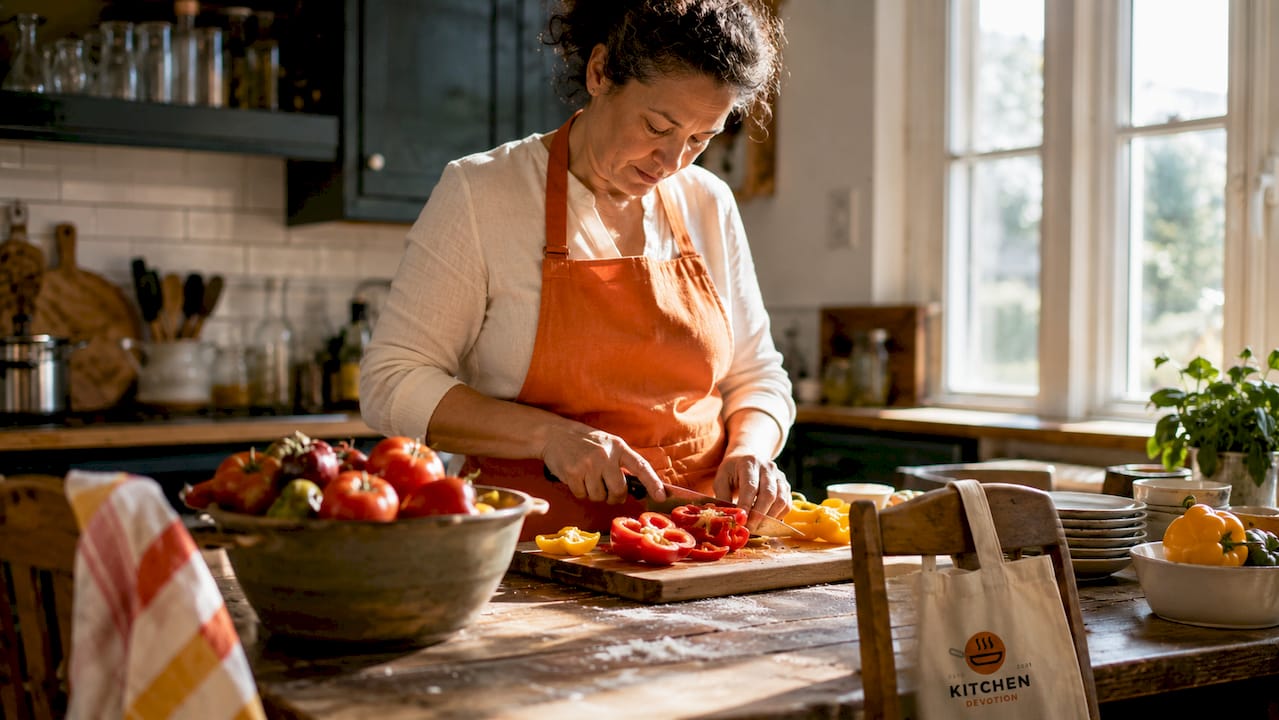
A kitchen apron is a protective garment worn over the front of the body to shield clothing and skin from stains, spills, heat, and contaminants during food preparation. The word “apron” traces back to the Old French word naperon, meaning a small cloth, and the garment has evolved from a simple piece of fabric into a specialized kitchen tool designed for real cooking demands. Today, aprons come in dozens of styles, materials, and configurations built for everything from light meal prep to heavy weekend cooking sessions. Knowing what a kitchen apron is and how to pick the right one saves your clothes, protects your skin, and changes how you feel the moment you step into the kitchen.
What is a kitchen apron and what types are available?
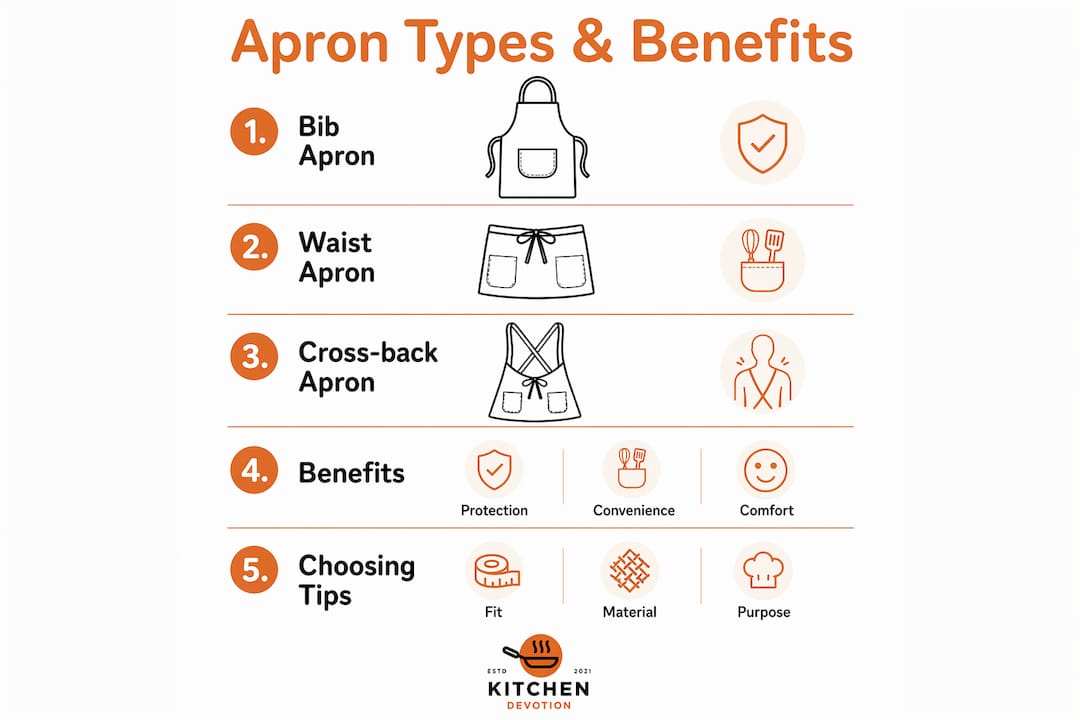
A kitchen apron is defined by three core design features: a body panel that covers the front torso or waist, a neck loop or cross-back strap that holds it in place, and waist ties that secure the fit. Beyond that shared structure, apron styles divide into three main categories, each built for a different level of protection and mobility.
Bib apron
The bib apron is the most common style for home cooks. It covers the chest down to the knee, giving you the widest protection against splashes, grease, and food debris. The neck loop holds the top panel in place while waist ties wrap around the back and tie at the front. This style works best for messy cooking tasks like frying, baking, or working with sauces.
Waist apron
The waist apron starts at the waist and covers the lower body only. It sacrifices chest protection in exchange for greater freedom of movement. Home cooks who prefer this style often wear it for lighter tasks like chopping, plating, or serving. It is also the easiest style to put on and remove quickly.
Cross-back apron
The cross-back apron replaces the neck loop with straps that cross over the shoulders and attach at the sides or back. Cross-back designs distribute the apron’s weight across the shoulders instead of concentrating it on the neck. Professional cooks favor this style for long cooking sessions because it reduces neck and upper back fatigue. If you cook for more than an hour at a stretch, the cross-back style is worth considering.
Pro Tip: If you experience neck soreness after cooking, switch to a cross-back apron. The weight shift from your neck to your shoulders makes a noticeable difference within the first session.
Apron types at a glance
| Apron type | Coverage area | Best use | Key advantage |
|---|---|---|---|
| Bib apron | Chest to knee | Frying, baking, sauces | Maximum protection |
| Waist apron | Waist to knee | Light prep, plating | Maximum mobility |
| Cross-back apron | Chest to knee | Long cooking sessions | Reduced neck strain |
| Cobbler apron | Full wrap, sides covered | Messy tasks, kids | Wraparound coverage |
The cobbler apron is a less common but practical option. It wraps around the sides of the body and fastens at the back, giving protection from the sides as well as the front. It is a strong choice for children learning to cook or for tasks that involve a lot of splashing.
What are the primary benefits of wearing a kitchen apron?
Wearing a kitchen apron protects clothes, maintains hygiene, and builds cooking confidence. These three benefits work together to make cooking less stressful and more focused. Home cooks who wear aprons consistently report fewer ruined garments, cleaner work sessions, and a stronger sense of control in the kitchen.
Physical protection
The most direct benefit is physical. An apron blocks cooking oil, tomato sauce, flour dust, and raw meat juices from reaching your clothing and skin. This matters most during high-heat tasks like deep frying, where hot oil can spit unpredictably. A thick cotton or denim apron absorbs the impact before it reaches you.
Aprons also reduce cross-contamination. When you handle raw chicken and then wipe your hands on your clothing, bacteria transfer to fabric that stays close to your body for the rest of the day. An apron gives you a dedicated surface to wipe your hands on, which you can remove and wash immediately after cooking.
- Blocks grease splatter during frying and sautéing
- Absorbs spills from sauces, marinades, and raw proteins
- Provides a clean surface for quick hand wipes during prep
- Reduces the risk of transferring bacteria from raw ingredients to other surfaces
Functional storage
Most bib and cross-back aprons include pockets, and deep, double-stitched pockets make a real difference in kitchen workflow. A well-placed pocket holds a thermometer, a small spatula, a timer, or a folded towel. Utility loops on some aprons let you hang a dish towel or a peeler within arm’s reach. This keeps your counter less cluttered and your tools where you need them.
The “chef mode” effect
Putting on an apron does something subtle but real to your mindset. Culinary experts describe apron-wearing as a ritual that triggers focused cooking mode, similar to how putting on workout clothes signals your brain to exercise. The act of tying an apron tells your brain that cooking is starting. Distractions drop. Attention sharpens. Home cooks who use this ritual consistently tend to cook with more discipline and fewer mistakes.
“Wearing an apron is a signal to yourself and everyone around you that you are serious about what you are doing in the kitchen. It changes your posture, your focus, and your results.”
This psychological shift is one of the most underrated benefits of kitchen aprons. You do not need a professional kitchen to feel it. You just need to make putting on your apron a consistent habit before every cooking session.
How to choose the right kitchen apron for your cooking style
Choosing the right apron comes down to three factors: the fabric, the fit, and the features. Getting all three right means you will actually wear the apron instead of leaving it on a hook.
1. Choose the right fabric
Fabric is the most important decision. Heavier fabrics like treated canvas, denim, and dense cotton offer better stain resistance and heat protection than lightweight materials. Experts recommend prioritizing fabric density and construction quality over appearance when selecting a kitchen apron.
Here is how the main materials compare:
- Cotton: Breathable, easy to wash, and comfortable for everyday cooking. Standard cotton works well for most home cooks.
- Denim: Heavier than cotton and more resistant to stains. Good for messy cooking sessions and frequent use.
- Canvas: Dense and durable. Often treated for water resistance. Best for high-heat or high-mess cooking.
- Waterproof synthetics: Repel liquids on contact. Easy to wipe clean. Less breathable than natural fibers.
- Leather: Extremely durable and heat resistant. Used for grilling and open-flame cooking. Harder to clean and less flexible.
For most home cooks, a mid-weight cotton or denim apron covers the majority of cooking tasks. If you grill outdoors frequently, a canvas or leather option adds meaningful protection.
2. Prioritize fit and comfort
An apron that fits poorly will not get worn. The neck loop on a standard bib apron should sit flat against the back of your neck without pulling forward. If you feel tension in your neck after 20 minutes, the apron is either too heavy or the neck loop is too short. Adjustable straps solve this problem by letting you set the exact length for your body.
Cross-back aprons remove neck strain entirely by routing the straps across the shoulders. This design suits taller cooks and anyone who cooks for extended periods. Waist ties should be long enough to wrap around the back and tie at the front, which keeps the apron from shifting while you move.
3. Evaluate the features
Pockets matter more than most people expect. A single shallow pocket loses tools constantly. Look for at least two pockets with a depth of 5 inches or more, and check that the stitching at the pocket corners is reinforced. Utility loops are a bonus for cooks who like to keep a towel or tongs within reach.
For home cooks who follow kitchen safety practices, an apron with a chest panel that extends above the sternum adds meaningful protection when working with boiling liquids or hot oil.
Pro Tip: Before buying, hold the apron up and check the weight. A heavier apron usually signals denser fabric and better construction. If it feels flimsy in your hands, it will feel flimsy in the kitchen.
How to wear and care for your kitchen apron
Wearing an apron correctly and maintaining it well extends its life and keeps it effective. Proper adjustment and regular cleaning are the two habits that matter most.
Wearing it correctly
Put the neck loop over your head first, then adjust the length so the top of the apron sits just below your collarbone. Wrap the waist ties around your back and tie them at the front in a bow you can release with one pull. The apron should lie flat against your body without bunching. If the bottom hem drags on the floor, the neck loop is too long.
For cross-back aprons, cross the straps behind your back and attach them to the side rings or loops. The straps should feel snug but not tight across your shoulder blades.
Caring for your apron
- Wash cotton and denim aprons after every two to three uses, or immediately after contact with raw meat or fish.
- Check the care label before washing. Most cotton aprons are machine washable on a warm cycle.
- Treat stains immediately with dish soap or a stain remover before they set. Grease stains respond well to dish soap applied directly to the fabric.
- Hang aprons to dry rather than using a dryer. High heat shrinks cotton and weakens stitching over time.
- Store aprons flat or on a dedicated hook. Folding them tightly at the same crease repeatedly weakens the fabric at that point.
Organizing your apron pockets
Use your apron pockets consistently. Keep the same tools in the same pockets every session. A thermometer in the left pocket and a folded towel in the right pocket, for example, becomes automatic after a few uses. This habit reduces the time you spend searching for tools and keeps your kitchen workflow moving without interruption.
Key Takeaways
A kitchen apron is the single most practical protective garment a home cook can own, combining physical protection, tool storage, and mental focus into one piece of equipment.
| Point | Details |
|---|---|
| Definition and purpose | A kitchen apron protects clothing and skin from spills, stains, heat, and contamination during cooking. |
| Best apron type for long sessions | Cross-back aprons distribute weight across the shoulders and reduce neck fatigue during extended cooking. |
| Fabric choice matters most | Dense cotton, denim, and treated canvas offer better protection than lightweight or decorative fabrics. |
| Pockets improve workflow | Deep, double-stitched pockets with reinforced corners keep tools accessible and counters less cluttered. |
| Apron as a mental trigger | Putting on an apron consistently before cooking builds focus and reduces errors during food preparation. |
Why I think most home cooks underestimate their apron
I have cooked in home kitchens for years, and the single most overlooked piece of kitchen gear is always the apron. Home cooks spend hundreds of dollars on cookware and gadgets, then grab a thin decorative apron from a drawer and wonder why it feels useless after one session.
The apron I reach for most is a mid-weight denim cross-back. I switched to it after years of neck soreness from standard bib aprons, and the difference was immediate. The weight sits on my shoulders instead of pulling at my neck, and I can cook for two hours without thinking about it. That comfort change alone made me cook more often.
What I have noticed over time is that the “chef mode” effect is real, not just a theory. The moment I tie on my apron, my phone goes face-down on the counter and I stop half-doing things. The ritual works. It is the same reason professional cooks wear uniforms. The gear signals a shift in mental state.
My honest advice: stop treating your apron as an afterthought. Buy one that fits your body, uses a fabric dense enough to actually block a grease splash, and has pockets deep enough to hold real tools. Check out the kitchen tools checklist at Kitchendevotion if you want a practical starting point for building out your full cooking setup. An apron that works is one you will actually wear every time you cook.
— K. Connors
Kitchen essentials that work alongside your apron
A good apron is one part of a well-equipped kitchen. The cooks who get the most out of their aprons are also the ones who have the right tools within reach when they need them.

Kitchendevotion curates kitchen gear built for real home cooking, not just display. From time-saving kitchen appliances that reduce the time you spend over a hot stove to quality cookware that pairs with protective gear like aprons, the site is built around what actually makes cooking easier. You will also find a full cookware sets section with options that match different cooking styles and budgets. If you are building out your kitchen setup, Kitchendevotion is a practical place to start.
FAQ
What is a kitchen apron used for?
A kitchen apron protects your clothing and skin from spills, grease, heat, and food contamination during cooking. It also provides pockets for tool storage and acts as a mental trigger for focused cooking.
What are the main types of kitchen aprons?
The three main types are bib aprons for full torso coverage, waist aprons for lower body coverage and maximum mobility, and cross-back aprons that shift weight from the neck to the shoulders for extended wear comfort.
What material is best for a kitchen apron?
Dense cotton, denim, and treated canvas are the best materials for kitchen aprons. They offer better stain resistance and heat protection than lightweight fabrics, and they hold up well through repeated washing.
How do you wear a kitchen apron correctly?
Place the neck loop over your head and adjust it so the apron top sits just below your collarbone. Wrap the waist ties around your back and tie them at the front so the apron lies flat without bunching or dragging.
How often should you wash a kitchen apron?
Wash a cotton or denim apron every two to three uses, or immediately after contact with raw meat, fish, or heavy grease. Treat stains with dish soap before washing and hang the apron to dry to preserve the fabric and stitching.





No comment