
Solar-powered kitchen gadgets are devices that convert sunlight into usable heat or electricity to cook, warm, or power food preparation tasks. They operate through two distinct mechanisms: thermal solar cooking, which uses reflection, absorption, and insulation to generate heat directly from sunlight, and photovoltaic (PV) conversion, which turns sunlight into electricity to run heating elements or appliances. Understanding how solar-powered kitchen gadgets work helps eco-conscious cooks and technology enthusiasts choose the right tool for their needs. Systems like the IndianOil Surya Nutan have demonstrated that solar cooking is no longer limited to camping trips. It is a viable, cost-effective option for everyday kitchens.
How do solar-powered kitchen gadgets convert sunlight into cooking energy?
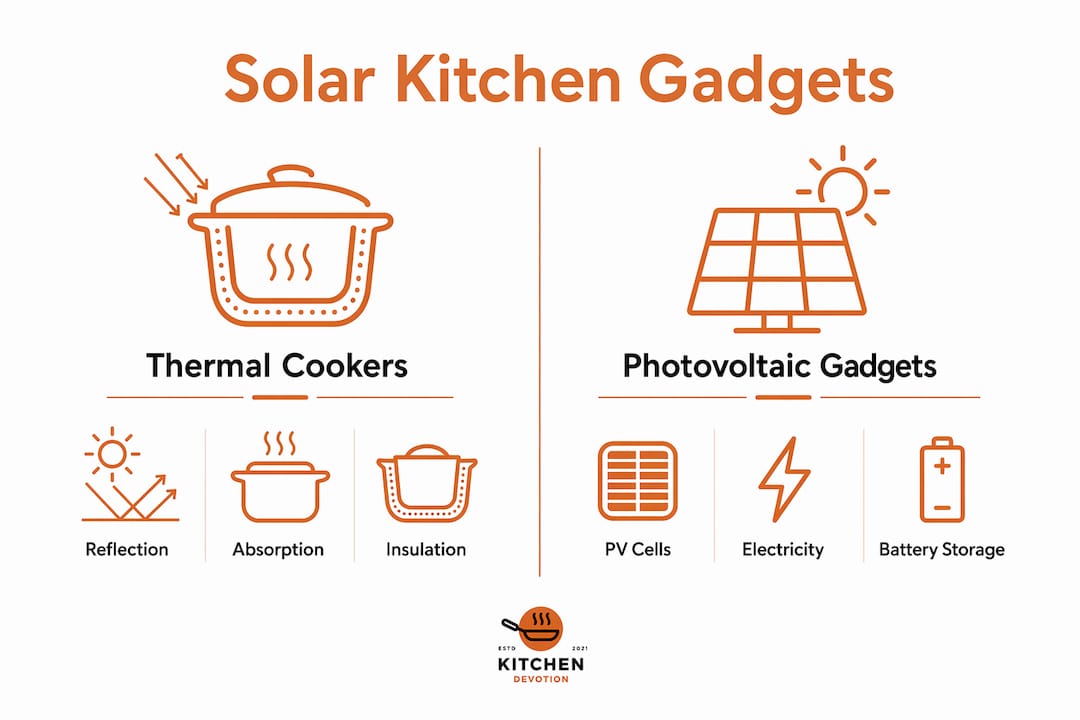
Solar kitchen devices use one of two physical pathways to turn sunlight into something your food can actually feel. The first is thermal conversion, where the device captures and holds heat from the sun. The second is photovoltaic conversion, where solar cells generate electricity that powers a heating element or appliance.
Thermal solar cookers rely on three physical principles: reflection, absorption, and insulation. Reflection uses mirrors or polished surfaces to concentrate sunlight onto a small cooking area. Absorption uses dark-colored cookware or surfaces to convert that focused light into heat. Insulation traps the heat inside the cooking chamber, much like a greenhouse traps warmth under glass.
Photovoltaic solar kitchen gadgets work differently. PV cells in the panel absorb photons from sunlight and release electrons, generating direct current (DC) electricity. That current flows through a charge controller, which regulates voltage and protects the battery, then into a lithium or AGM battery for storage. The stored electricity then powers a heating element, a blender, or any other kitchen appliance connected to the system.
The distinction between these two pathways matters for practical use. Thermal cookers need no batteries and no electronics. They work as long as the sun shines. PV-based systems are more flexible but require panels, storage, and proper wiring. Knowing which type you are using sets realistic expectations from day one.
How do thermal solar cookers convert sunlight into cooking heat?
Thermal solar cookers are the original solar power cooking tools, and their physics are straightforward. Sunlight enters the cooking chamber, gets absorbed by dark surfaces, and the insulated walls prevent that heat from escaping. The result is a slow, steady cooking environment that works surprisingly well for a wide range of meals.
The three principles in action
- Reflection: Curved mirrors or flat reflective panels redirect sunlight onto the pot or cooking chamber. Parabolic cookers use a dish shape to focus rays onto a single focal point, concentrating energy intensely.
- Absorption: Dark pots absorb more solar radiation than light-colored ones. Black matte surfaces convert nearly all incoming light to heat, which is why solar cooking guides consistently recommend dark cookware.
- Insulation: Glass lids or transparent plastic covers create a greenhouse effect inside box cookers. Heat builds up and cannot escape, even when a cloud briefly passes.
Box cookers reach up to 150°C (300°F), while parabolic cookers achieve up to 260°C (500°F) with efficiencies over 90%. That temperature range covers everything from slow-cooked stews to grilled fish.
| Cooker type | Max temperature | Best use | Portability |
|---|---|---|---|
| Box cooker | 150°C (300°F) | Baking, slow cooking, steaming | Moderate |
| Panel cooker | 120°C (250°F) | Boiling, reheating | High |
| Parabolic cooker | 260°C (500°F) | Frying, grilling, boiling fast | Low |
| Vacuum tube cooker | 200°C (390°F) | Boiling, slow cooking | Moderate |
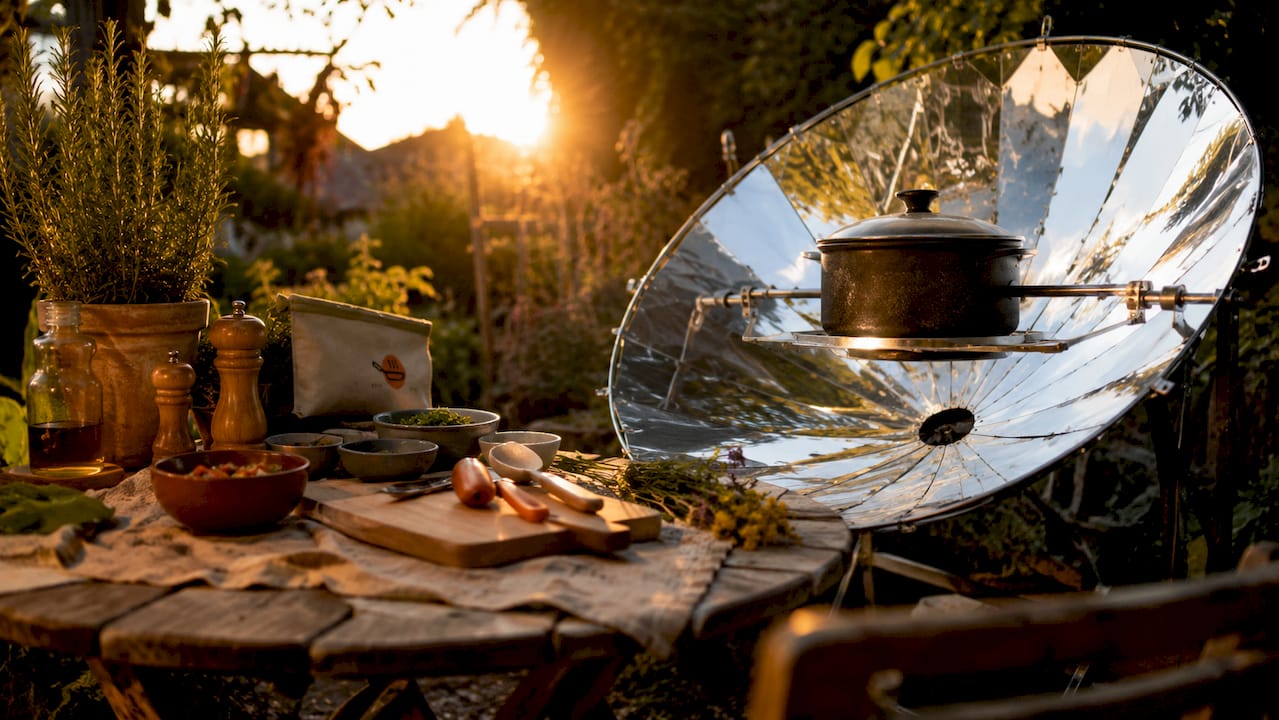
Box cookers are the most forgiving option for beginners. They hold heat well during brief cloud cover, requiring repositioning every 30–60 minutes to maintain cooking temperature. That repositioning step surprises many first-time users, but it becomes second nature quickly.
Parabolic cookers deliver the most power. They reach temperatures up to 500°F, making them suitable for frying or grilling. The tradeoff is that they require careful handling. The focal point gets hot enough to cause burns if you are not paying attention.
Pro Tip: Use a dark, thin-walled pot with a tight-fitting lid in any thermal solar cooker. Thin walls heat faster, and a tight lid prevents steam from escaping, cutting your cooking time noticeably.
How do photovoltaic solar kitchen gadgets generate and use electricity?
Photovoltaic solar kitchen gadgets represent the second generation of solar energy in kitchens. Instead of cooking with heat directly from the sun, they generate electricity and use it to power familiar appliances. The process starts at the solar panel and ends at your blender, kettle, or electric cooktop.
Modern portable solar panels achieve 20–23% conversion efficiency, meaning roughly one-fifth of the sunlight hitting the panel becomes usable electricity. That figure has improved significantly over the past decade. It is now high enough to power small kitchen appliances in a reasonable amount of time.
How the electricity flows from panel to pot
- PV cells absorb photons and release electrons, creating DC electricity.
- Charge controllers regulate the voltage coming from the panel, preventing overcharging and protecting the battery.
- Lithium or AGM batteries store the electricity so you can cook even when clouds roll in or after sunset.
- Inverters (in some systems) convert DC power to AC power, making the system compatible with standard kitchen appliances.
- Heating elements or appliances receive the regulated power and perform the actual cooking task.
The limitation of small PV gadgets is real and worth understanding. Solar-powered phone chargers act mainly as trickle chargers, extending battery life slightly rather than fully charging a device from zero. The same logic applies to small solar kitchen accessories. A compact solar panel on a portable gadget cannot replace a full charging session. It supplements power during daylight hours.
Larger PV systems paired with adequate battery storage are a different story. A rooftop panel array connected to a lithium battery bank can power an induction cooktop for multiple meals per day. The surface area of the panel and the capacity of the battery determine what is possible.
Pro Tip: Face your solar panels south (in the Northern Hemisphere) and keep them free of shade from trees or roof overhangs. A 10% shading loss on one cell can reduce the output of the entire panel string by far more than 10%.
What are the main types of solar kitchen gadgets and their best uses?
Solar power cooking tools span a wide range, from a simple reflective panel you fold out at a campsite to a wall-mounted indoor cooktop connected to your roof. Knowing which category fits your lifestyle saves money and frustration.
Thermal solar cookers
Box cookers are the entry point for most people. They look like insulated boxes with a glass or plastic lid and reflective flaps. You place a dark pot inside, angle the reflectors toward the sun, and walk away. They excel at rice, beans, soups, and bread. They are forgiving, affordable, and require no electricity.
Panel cookers are lighter and fold flat for transport. They use a series of flat reflective panels arranged around a pot. Hikers and campers favor them for their portability. Cooking temperatures are lower than parabolic models, but they handle boiling and reheating reliably.
Parabolic cookers are the power tools of solar cooking. Their curved dish focuses sunlight onto a single point directly under the pot. They cook fast and hot, but they demand more attention and more frequent sun-tracking adjustments.
Vacuum tube cookers use glass tubes with a vacuum layer for insulation, similar to a thermos. They retain heat exceptionally well and work in lower light conditions than other thermal types.
Photovoltaic-powered kitchen gadgets
- Portable solar ovens with electric heating elements, charged by an attached or separate PV panel
- Solar-charged battery packs that power small appliances like blenders, kettles, and rice cookers
- Hybrid indoor cooktops connected to rooftop PV arrays and battery storage systems
- Solar-powered refrigerators and water purifiers designed for off-grid households
Outdoor versus indoor use
Outdoor solar cooking tools prioritize portability and direct sun exposure. Indoor PV-based systems prioritize storage capacity and grid independence. The IndianOil Surya Nutan system sits firmly in the indoor category. It connects rooftop panels to a thermal battery, allowing cooking inside a standard kitchen regardless of whether the sun is currently shining.
For eco-conscious cooks who want to reduce their gas or electric bill without changing how they cook, a compact solar kitchen appliance paired with a battery pack is the most practical starting point.
What are the benefits and challenges of using solar-powered kitchen gadgets?
The benefits of solar kitchen appliances are real, but so are the limitations. Treating solar cooking as a complete replacement for conventional cooking on day one sets you up for disappointment. Treating it as a powerful supplement gets you results immediately.
Key benefits
- Zero fuel cost during operation. Once you own the device, sunlight is free. Thermal cookers have no ongoing energy cost at all.
- Lower carbon footprint. Solar cooking produces no combustion emissions. For households that cook multiple times daily, the cumulative reduction in gas or electricity use is meaningful.
- Off-grid capability. Thermal cookers and battery-backed PV systems work without any grid connection. This makes them valuable for camping, emergencies, and rural households.
- Food safety. Solar cookers rarely burn food. The gentle, even heat of a box cooker is actually ideal for dishes that need long, low-temperature cooking.
- Payback periods. The IndianOil Surya Nutan system, priced between $140 and $270, offers payback periods of 1–2 years for typical families. That is a strong return on investment for a kitchen appliance.
Honest challenges
- Weather dependency. Thermal cookers stop working under heavy cloud cover. PV systems slow down significantly. You need a backup plan for overcast days.
- Cooking speed. Box cookers are slow. A dish that takes 30 minutes on a gas stove may take 90 minutes in a box cooker. Parabolic cookers close the gap but still require sun tracking.
- Initial cost. Quality parabolic cookers and PV kitchen systems cost more upfront than a basic gas burner. The savings accumulate over time, not immediately.
- Sun tracking. Successful solar cooking requires adjusting the cooker to the sun angle regularly. Skipping this step drops efficiency noticeably.
Pro Tip: Start with a box cooker for slow recipes like lentils, oatmeal, or rice. These dishes tolerate the slower pace of solar cooking perfectly, and you will build confidence before moving to faster, more demanding techniques.
Choosing the right cookware materials also matters more than most guides admit. Dark, thin-walled pots with tight lids outperform light-colored or thick-walled alternatives in every type of thermal solar cooker.
How are hybrid solar kitchen systems changing what is possible?
The biggest barrier to solar cooking adoption has always been reliability. Thermal cookers stop working when clouds appear. Early PV systems lacked enough storage to cook a full meal. Hybrid systems solve both problems by combining solar energy collection with thermal or electrical battery storage.
The IndianOil Surya Nutan system is the clearest example of this shift. Here is how it works:
- Rooftop PV panels collect solar energy throughout the day, even during partial cloud cover.
- A thermal battery stores that energy as heat, not electricity, which is more efficient for cooking applications.
- The indoor cooktop draws from the thermal battery on demand, functioning like a standard electric stove.
- The system works after sunset and during cloudy periods, using stored energy from earlier in the day.
- Insulation materials like ceramic fiber and glass wool minimize heat loss inside the storage unit, extending the usable cooking window.
This design removes the two biggest objections to solar cooking: it works indoors, and it works when the sun is not shining. The transition from outdoor-only solar cookers to stationary indoor hybrid systems addresses reliability concerns and encourages broader household adoption. That shift is what makes hybrid systems genuinely significant, not just technically interesting.
The future direction of solar kitchen technology points toward integrated ecosystems. Researchers and designers envision systems where a single battery or voltage standard powers cooking, refrigeration, and water purification in one connected setup. That kind of integration reduces maintenance complexity and makes solar energy practical for full-time household use, not just supplemental cooking.
For technology enthusiasts interested in the broader picture of smart kitchen technology, hybrid solar systems represent the most significant shift in residential cooking infrastructure in decades.
Key takeaways
Solar-powered kitchen gadgets work through either thermal principles or photovoltaic conversion, and choosing the right mechanism determines how reliably and conveniently you can cook with sunlight.
| Point | Details |
|---|---|
| Two core mechanisms | Thermal cookers use reflection, absorption, and insulation; PV systems convert sunlight to electricity. |
| Temperature range matters | Box cookers reach 150°C; parabolic cookers reach 260°C, covering most cooking tasks. |
| PV efficiency is real but limited | Modern panels achieve 20–23% conversion efficiency, enough for appliances with adequate battery storage. |
| Hybrid systems solve reliability | Indoor systems like Surya Nutan store solar energy thermally, enabling cooking after sunset or on cloudy days. |
| Cookware choice affects results | Dark, thin-walled pots with tight lids significantly improve performance in any thermal solar cooker. |
Solar cooking: what I have learned from watching the hype and the reality
By K. Connors
Most articles about solar kitchen gadgets oversell the ease and undersell the patience required. I have watched eco-conscious cooks buy a parabolic cooker, use it twice, and store it in the garage because nobody told them they would need to reposition it every 20 minutes on a sunny afternoon. That is not a flaw in the technology. It is a mismatch between expectation and reality.
The thermal box cooker is genuinely underrated. It is slow, yes. But it is also nearly impossible to ruin a meal in one. You set it up, walk away, and come back to perfectly cooked rice or beans. For anyone who has ever scorched a pot of lentils on a gas stove, that is not a downside. It is a feature.
Where I think the real future lies is in hybrid systems. The IndianOil Surya Nutan model proved something important: when you remove the “you must be outside and the sun must be shining” constraint, adoption accelerates. People do not want a different cooking experience. They want the same cooking experience with a lower energy bill. Hybrid systems deliver exactly that.
My practical advice for anyone starting out: do not buy the most powerful solar cooker you can find. Buy the most forgiving one. Master sun tracking, learn which recipes suit slow solar heat, and build from there. The technology rewards patience and punishes impatience. That is not a criticism. It is just the nature of cooking with a star 93 million miles away.
The cooks who get the most from solar kitchen gadgets are the ones who treat them as a primary tool for certain dishes and a supplement for others, not a wholesale replacement for everything in their kitchen. That mindset shift makes all the difference.
— K. Connors
Kitchendevotion’s picks for a more sustainable kitchen
Sustainable cooking does not require replacing your entire kitchen at once. The most effective approach pairs solar cooking tools with efficient, well-chosen appliances that do the heavy lifting on cloudy days or after dark.
Kitchendevotion curates kitchen appliances that balance performance with practicality, including energy-efficient options that complement a solar-powered cooking setup. Whether you are looking for cookware that maximizes heat absorption or appliances that use less energy when the sun is not cooperating, the time-saving kitchen appliances collection covers the full range. For cooks working with limited counter space, the compact appliance guide highlights tools that fit a solar-friendly, low-footprint kitchen without sacrificing capability.
FAQ
How do solar-powered kitchen gadgets work?
Solar kitchen gadgets work through two methods: thermal cookers use reflection, absorption, and insulation to convert sunlight directly into cooking heat, while photovoltaic systems use solar cells to generate electricity that powers heating elements or appliances.
What temperature can a solar cooker reach?
Box cookers reach up to 150°C (300°F), while parabolic solar cookers achieve up to 260°C (500°F), making them suitable for frying and grilling in addition to slow cooking and boiling.
Can solar kitchen gadgets work on cloudy days?
Thermal solar cookers require direct sunlight and lose efficiency under heavy cloud cover. Hybrid PV systems with battery storage, like the IndianOil Surya Nutan, can continue cooking using stored energy even when the sun is not shining.
What is the best cookware to use with a solar cooker?
Dark-colored, thin-walled pots with tight-fitting lids perform best in thermal solar cookers. Dark surfaces absorb more solar radiation, and tight lids trap steam and heat inside the cooking chamber.
Are solar kitchen gadgets worth the upfront cost?
Hybrid systems like the Surya Nutan, priced between $140 and $270, offer payback periods of 1–2 years for typical families, making them a strong long-term investment for households that cook daily.





No comment