
Budget meals are affordable, nutritious dishes built around versatile staples like beans, eggs, whole grains, and frozen produce that deliver real nourishment without straining your wallet. The USDA Food and Nutrition Service confirms that healthy eating costs as little as $3.00 per meal when you focus on nutrient-dense ingredients. That number proves you do not need a large grocery budget to eat well. The key is knowing which ingredients to buy, how to shop, and how to cook them efficiently.
1. What are the best ingredients for budget meals?
The foundation of any low-cost meal plan is a short list of ingredients that do multiple jobs. Eggs, dried beans, brown rice, oats, canned tomatoes, and frozen vegetables all share three traits: they are cheap per serving, they store well, and they work in dozens of recipes. Core low-cost staples like these guard against price spikes and keep your weekly spend predictable.
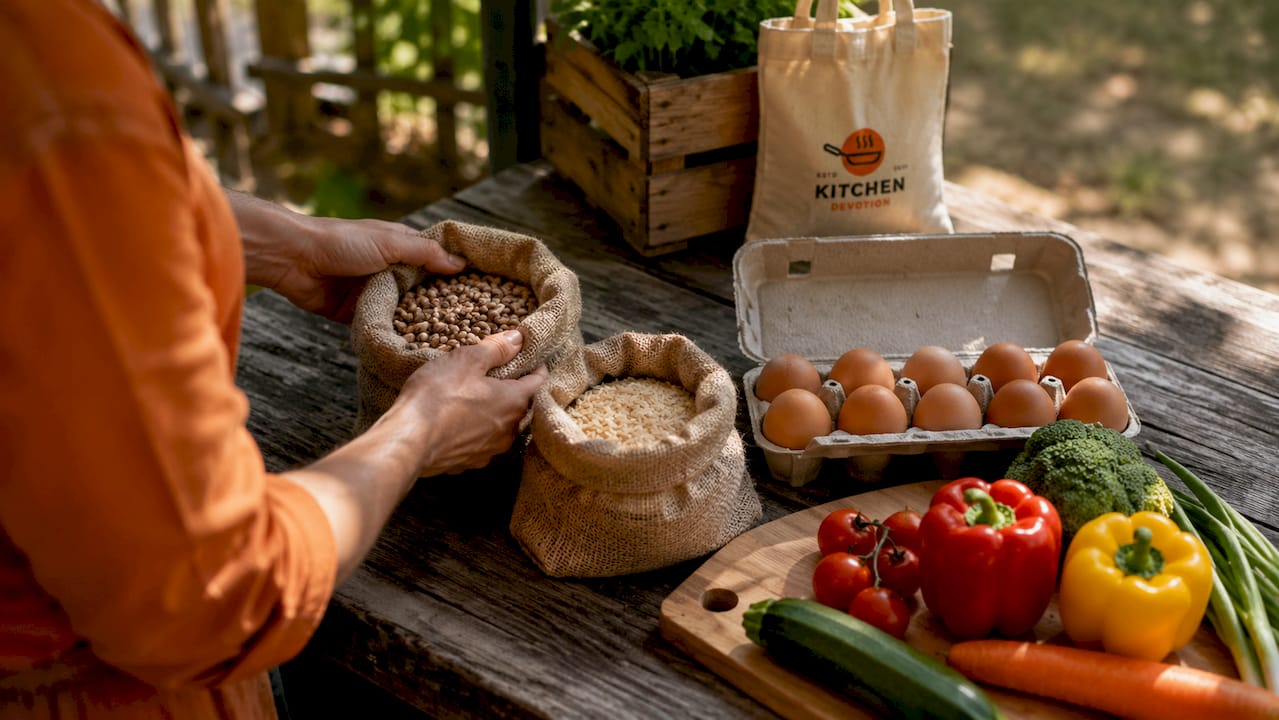
Frozen and canned produce deserve more credit than they usually get. Frozen and canned fruits and vegetables are nutritionally equivalent to fresh because they are picked at peak ripeness and preserved immediately. Buying a bag of frozen spinach or a can of diced tomatoes costs a fraction of the fresh equivalent and lasts far longer in your kitchen.
Protein is where budgets often break down. Chicken thighs cost significantly less per pound than chicken breasts and stay moist during longer cooking times. Dried lentils and canned chickpeas deliver comparable protein at a lower cost per gram than most meats. Eggs remain one of the most affordable complete proteins available anywhere.
Here is a quick reference for the most cost-effective staples:
| Ingredient | Avg. cost per serving | Primary benefit |
|---|---|---|
| Dried lentils | Under $0.25 | High protein, high fiber |
| Eggs (large, dozen) | Under $0.30 each | Complete protein, versatile |
| Brown rice (bulk) | Under $0.20 | Long shelf life, filling |
| Frozen spinach | Under $0.40 | Iron, vitamins, no waste |
| Canned chickpeas | Under $0.35 | Protein, fiber, ready to use |
Pro Tip: Buy ingredients that appear in at least three different meals on your weekly plan. A bag of dried black beans can become taco filling on Monday, soup on Wednesday, and a rice bowl on Friday.
2. How to plan and shop for budget meals effectively
Meal planning is the single most effective way to cut your grocery bill. Families who shop with a written list and a weekly plan spend less per trip and waste less food. The Dietary Guidelines for Americans support flexible, attainable nutrition that fits real life rather than rigid rules. That flexibility is what makes a meal plan sustainable.
Follow these steps to build a shopping system that protects your budget every week:
- Check your pantry first. Write down what you already have before building your list. This prevents duplicate purchases and reminds you of ingredients that need to be used.
- Plan meals around weekly sales. Pull up your store’s weekly flyer before writing your list. Build two or three meals around whatever protein or produce is discounted that week.
- Compare unit prices, not package prices. A larger package is not always cheaper per ounce. Checking the unit price on the shelf tag is the only reliable way to compare value across sizes and brands.
- Look at every shelf level. Store-brand and generic products often sit on the bottom or top shelves. Eye-level products carry a pricing premium built into the retail display strategy.
- Choose store brands for staples. Families can save up to 20% on their grocery bill by switching to store brands and using weekly sales. The quality difference on staples like canned beans, rice, and oats is negligible.
- Build your cart in order. Start with protein, then fiber-rich grains, then produce. This approach, recommended by nutrition experts, prevents impulse buys and keeps filling, affordable foods at the center of your cart.
- Batch cook and freeze. Cooking a large pot of soup or a double batch of rice on Sunday means you have ready meals for the week. Batch cooking reduces waste, prevents last-minute takeout, and lowers your overall grocery spend.
- Track what you spend. Tracking expenses reveals hidden costs like daily coffee runs or impulse snack buys that quietly drain your food budget. Even a simple notes app works for this.
Pro Tip: Visit more than one store when your schedule allows. Visiting multiple supermarkets based on weekly flyers can save up to 40% overall on your grocery bill.
3. What are easy and nutritious cheap dinner ideas to try?
The best affordable recipes share a common structure: a starchy base, a protein source, and a vegetable. That formula applies across cuisines and cooking styles, which means you can rotate through dozens of meals without ever feeling like you are eating the same thing twice.
Rice and bean bowls are the most reliable cheap dinner idea in any kitchen. Cook a pot of brown rice, warm a can of black beans with cumin and garlic, and top with whatever vegetables you have on hand. Add a fried egg on top for extra protein. Total cost per serving runs well under $1.50.
Vegetable soup with lentils is a one-pot meal that feeds a family of four for under $5.00 total. Sauté onion, carrot, and celery in a pot, add dried lentils, canned tomatoes, broth, and your choice of spices. Simmer for 25 minutes. It reheats perfectly for lunch the next day, making it one of the most efficient budget-friendly lunch options available.
Egg fried rice uses leftover rice and whatever vegetables are in your fridge or freezer. Scramble two eggs in a hot pan, add cold rice and frozen peas, and season with soy sauce. This quick budget meal takes under 10 minutes and costs less than $1.00 per serving.
Chicken thigh stir-fry works well for families with picky eaters because you can customize the vegetables. Brown chicken thighs in a pan, slice them, and toss with frozen broccoli, soy sauce, garlic, and ginger. Serve over rice. The whole meal costs under $2.00 per person.
Pasta with white beans and greens is a satisfying low-cost dinner option that comes together in 20 minutes. Cook pasta, drain it, and toss with canned white beans, frozen spinach, olive oil, and garlic. Parmesan is optional but adds depth. This dish works equally well as a budget-friendly lunch the next day.
Oatmeal with toppings is not just for breakfast. A bowl of oats topped with a sliced banana, peanut butter, and a drizzle of honey costs under $0.75 and provides sustained energy. Families with young children find this meal easy to customize for different tastes.
Casseroles are the original easy meal prep solution. A simple tuna noodle casserole uses canned tuna, egg noodles, frozen peas, and a basic cream sauce made from flour, butter, and milk. It feeds six people and costs roughly $8.00 total.
Homemade vegetable curry uses canned chickpeas, canned tomatoes, frozen peas, and a handful of spices. Serve it over rice. The flavor is complex, the cost is minimal, and it scales easily for larger families.
4. How to use kitchen tools to save time and money
The right kitchen tools cut your cooking time and reduce food waste. A slow cooker, for example, lets you drop dried beans and vegetables in the morning and come home to a finished meal. That convenience removes the temptation to order takeout after a long day. Kitchendevotion’s guide to batch cooking appliances covers the specific tools that work best for this approach.
Multi-purpose appliances deliver the best value for budget-conscious cooks. An air fryer cooks chicken, roasts vegetables, and reheats leftovers without heating up your oven. A pressure cooker turns dried beans into a finished dish in under 30 minutes, eliminating the need to buy more expensive canned versions. These tools pay for themselves quickly when you use them consistently.
Here are the tools that make the biggest difference for affordable home cooking:
- Large stockpot: Soups, stews, and pasta all require one. A quality stockpot lasts decades.
- Sheet pan: Roasting vegetables and proteins together on one pan saves time and reduces cleanup.
- Slow cooker or pressure cooker: Both excel at turning cheap cuts of meat and dried legumes into tender, flavorful meals.
- Air fryer: Cooks faster than a conventional oven and uses less energy. Kitchendevotion’s time-saving appliance list includes top-rated options across price points.
- Sharp chef’s knife: A single quality knife handles 90% of prep work. Dull knives slow you down and increase the risk of injury.
- Measuring cups and a kitchen scale: Accurate portioning reduces waste and helps you stick to recipe quantities.
Beginners benefit most from starting with a small, focused set of tools. Kitchendevotion’s guide to kitchen prep tools for beginners identifies the exact pieces worth buying first, so you do not spend money on equipment you will never use.
5. What common mistakes to avoid when cooking on a tight budget
The biggest budget mistake is confusing convenience with value. Processed snack packs cost more per calorie than whole foods, contain added sugars and sodium, and leave you hungry faster. Replacing a bag of chips with a handful of nuts or a piece of fruit costs less and keeps you full longer.
Watch out for these common pitfalls:
- Ignoring unit prices. A “family size” package is not always cheaper per ounce. Always check the unit price on the shelf tag before assuming bigger is better.
- Buying too many perishables. Fresh produce that sits in your fridge and rots is money wasted. Buy only what you will use within three to four days, and rely on frozen for everything else.
- Relying on processed convenience foods. Pre-seasoned rice packets, frozen dinners, and boxed meal kits cost two to four times more per serving than cooking the same dish from scratch.
- Skipping the store brand. Generic and store-brand products for staples like canned tomatoes, dried pasta, and oats are functionally identical to name brands at a lower price.
- Buying single-use snacks and sugary drinks. A case of soda or a box of individually wrapped snack cakes adds $10–$20 to your weekly bill with no nutritional return.
- Shopping without a list. Unplanned shopping leads to impulse purchases. A written list keeps you focused and prevents buying duplicates of items you already have at home.
Pro Tip: Shifting your budget away from processed foods toward bulk staples improves both nutrition and cost efficiency. Even swapping one processed meal per week for a homemade equivalent adds up to meaningful savings over a month.
Key Takeaways
The most effective approach to budget meals combines smart ingredient choices, weekly planning, and batch cooking to deliver nutritious food at roughly $3.00 per meal.
| Point | Details |
|---|---|
| Start with versatile staples | Eggs, beans, rice, oats, and frozen vegetables form the lowest-cost, highest-nutrition foundation. |
| Plan before you shop | A written list built around weekly sales prevents impulse buys and reduces waste. |
| Always check unit prices | Package size is misleading. The unit price on the shelf tag is the only reliable cost comparison. |
| Batch cook to save time | Cooking once and eating multiple times cuts takeout temptation and lowers your weekly grocery spend. |
| Avoid processed convenience foods | Whole ingredients cost less per serving and provide more nutrition than packaged convenience options. |
What I have learned from years of cooking on a budget
The advice that changed how I think about affordable cooking did not come from a recipe book. It came from realizing that most people fail at budget cooking not because they lack recipes, but because they treat it as a punishment rather than a skill.
Rigid meal plans are the first thing to go. The families I have seen succeed long-term are the ones who build a flexible system around a core set of staples and then adapt based on what is on sale, what is in the fridge, and what sounds good that week. The Dietary Guidelines for Americans actually support this approach, emphasizing flexible eating of real food that reflects personal and cultural preferences. That is not a loophole. That is the point.
The second thing I would push back on is the idea that budget cooking is time-consuming. A pot of lentil soup takes 10 minutes of active work. Egg fried rice takes less time than waiting for a delivery app to confirm your order. The time barrier is mostly psychological, and it dissolves the moment you have a stocked pantry and a basic routine.
Start with one change per week. Swap one takeout meal for a homemade rice bowl. Buy dried beans instead of canned for one recipe. Cook a double batch of whatever you are already making. None of these steps feel dramatic, but they compound quickly. After a month, you will have a system. After three months, it will feel automatic.
The goal is not to eat cheap food. The goal is to eat well for less. Those are very different things, and the distinction matters for both your health and your motivation.
— K. Connors
How Kitchendevotion helps you cook smarter for less
Equipping your kitchen thoughtfully is one of the fastest ways to make budget cooking easier and more consistent. The right tools reduce prep time, cut food waste, and make batch cooking practical even on busy weeknights.

Kitchendevotion’s kitchen appliance priority list helps you identify exactly which tools to buy first, so you spend money on equipment that earns its place. For cooks who want to spend less time in the kitchen without sacrificing quality, the guide to multi-purpose kitchen appliances covers the appliances that do the most work per dollar. Whether you are setting up a first kitchen or upgrading what you already have, Kitchendevotion’s curated guides and kitchen tools under $50 make it easy to build a capable, efficient kitchen without overspending.
FAQ
What counts as a budget meal?
A budget meal is any dish that costs roughly $3.00 or less per serving while delivering adequate nutrition. The USDA Food and Nutrition Service confirms this is achievable by focusing on staples like beans, eggs, whole grains, and frozen produce.
Are frozen vegetables as nutritious as fresh?
Yes. Frozen vegetables are picked at peak ripeness and preserved immediately, making them nutritionally equivalent to fresh. USDA MyPlate recommends including fresh, frozen, or canned produce interchangeably to fill half your plate.
How much can a family of four spend on groceries per week?
USDA Food and Nutrition Service simulations show a family of four can be fed for about $250 per week with careful meal planning. Focusing on versatile staples and weekly sales keeps costs at the lower end of that range.
What is the fastest way to reduce my grocery bill?
Switch to store brands for staples, check unit prices instead of package prices, and build your shopping list around weekly sales. Families who apply these three habits consistently can save up to 20% on their grocery bill.
How do I stop wasting food when cooking on a budget?
Batch cook on one day per week and freeze portions you will not eat within two days. Keeping a pantry inventory prevents buying duplicates, and relying on frozen produce eliminates the spoilage that makes fresh produce expensive in practice.





No comment