
Kitchen storage containers are defined as sealed vessels designed to preserve food freshness, prevent spoilage, and support organized meal preparation. Understanding why kitchen storage containers matter goes beyond tidiness. The average household wastes $1,500 in food annually, and the right containers directly cut that number. Airtight seals, oxygen barriers, and material choices like glass or BPA-free plastic each play a measurable role in how long your food stays safe and usable. This guide covers what actually works, why it works, and how to build a storage system that saves you money and time.
Why kitchen storage containers matter more than you think
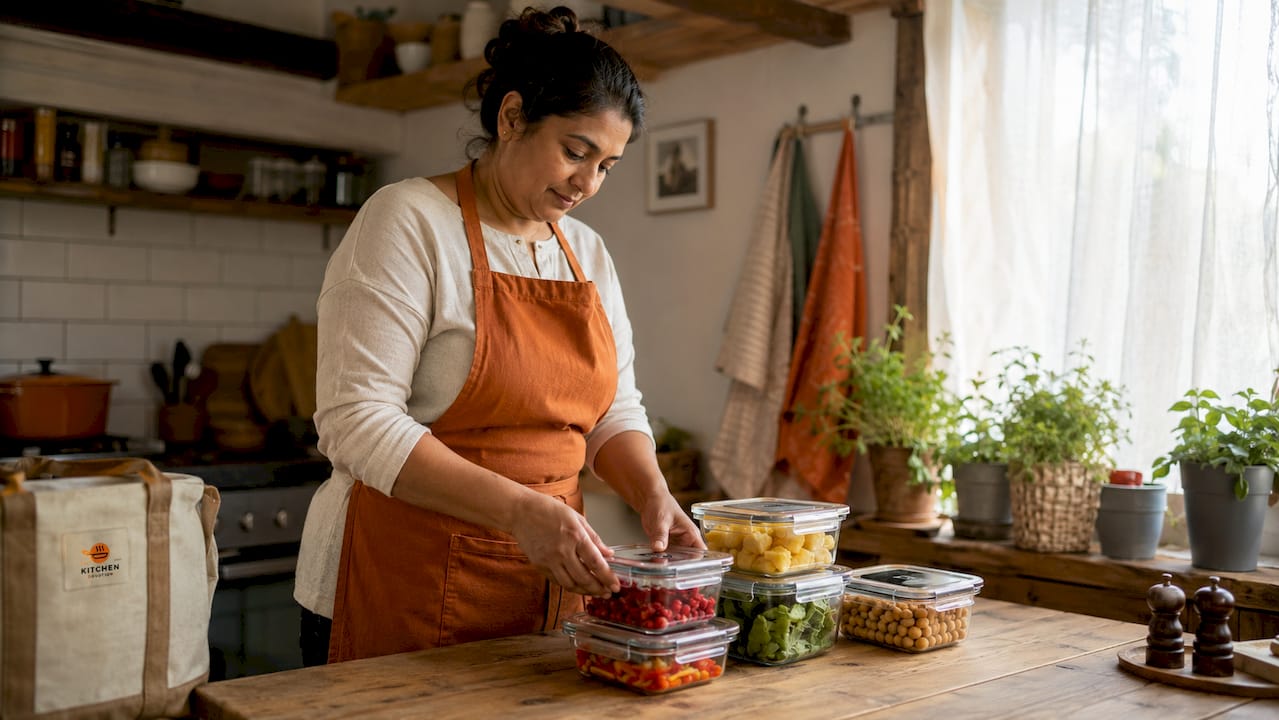
The core function of a food storage container is to slow spoilage by limiting exposure to oxygen, moisture, and contaminants. That sounds simple, but the material you choose changes everything. Glass creates a hermetic seal that prevents gas exchange entirely. Plastic, by contrast, is porous at a microscopic level, which means oxygen still moves through the walls and accelerates spoilage even when the lid is closed tight.
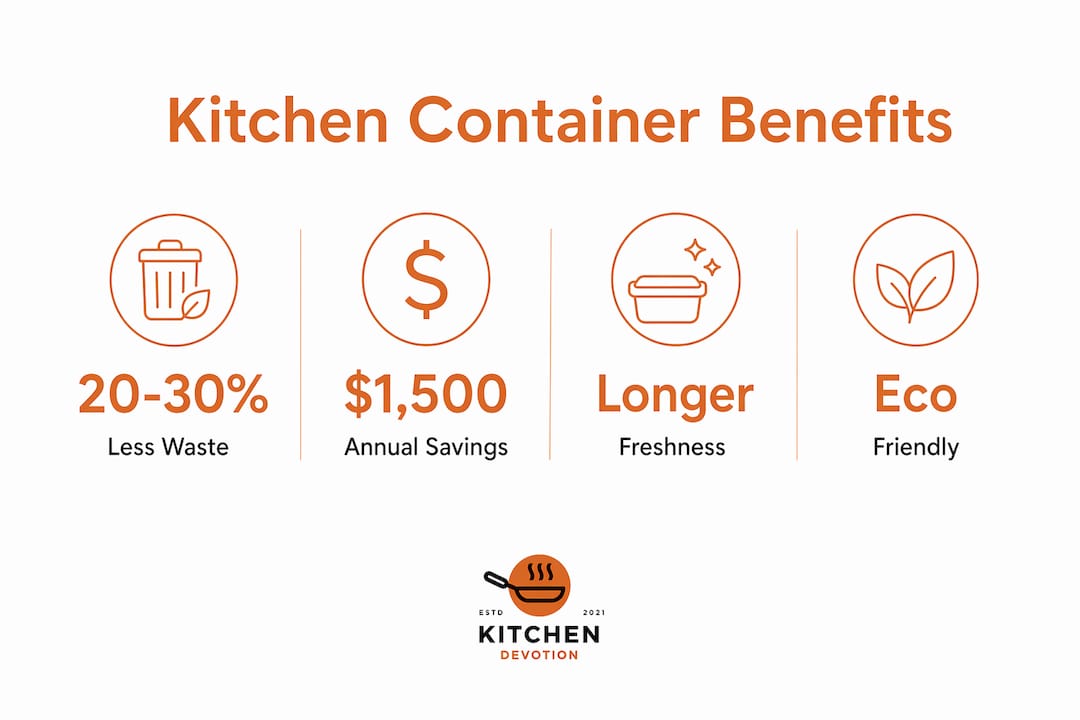
This material difference has real consequences. High-quality glass containers with airtight seals can prevent 20–30% more food waste compared to standard plastic options. They also reduce freezer burn by a significant margin after three months of storage. For home cooks who batch cook on Sundays or prep ingredients ahead of time, that difference shows up directly in the quality of Tuesday night’s dinner.
Glass vs. plastic: what the science says
Glass is chemically inert. It does not absorb odors, stains, or flavors from food, which matters when you store tomato sauce, curries, or citrus-based dishes. Plastic absorbs these compounds over time, which degrades both the container and the food stored in it next. Glass also withstands 10,000+ dishwasher cycles without structural degradation, while most plastics begin to warp or cloud after 200–500 cycles.
Stainless steel sits between the two. It does not leach chemicals, handles temperature extremes well, and resists dents better than glass. The tradeoff is that you cannot see the contents without opening it, which creates a small but real friction point during meal prep and pantry checks.
Lifecycle cost: upfront price vs. long-term value
Cheap plastic containers crack, warp, and stain, which forces frequent replacements. That replacement cycle costs more over two or three years than buying quality glass or BPA-free containers once. Lifecycle cost analysis consistently shows that durable containers reduce total spending while also maintaining better food safety standards. The upfront price of quality containers is the investment. The savings come from fewer replacements and less wasted food.
Pro Tip: Match your container material to storage duration. Use glass for anything stored longer than three days or in the freezer. Use BPA-free plastic for short-term dry goods like crackers or nuts.
How do containers support meal prep and kitchen organization?
Clear, labeled containers create accountability in the kitchen. When you can see exactly what you have and how much is left, you stop buying duplicates and stop forgetting about food until it spoils. That visibility frees mental energy that would otherwise go toward pantry guessing games. Kitchen organization is less about aesthetics and more about building a system that tells you the truth at a glance.
Workflow matters just as much as visibility. Storage design planned around your actual cooking process places items where you use them most. Containers for prepped vegetables belong near the cutting board, not across the kitchen. Dry goods used daily belong at eye level, not on a high shelf. When your storage system matches your cooking sequence, prep time drops and cleanup becomes faster.
Here are the core organizational benefits that well-chosen containers deliver:
- Visibility: Clear containers let you assess inventory in seconds without pulling everything out.
- Labeling: Date labels on containers prevent the “when did I make this?” problem that leads to unnecessary waste.
- Stackability: Uniform container shapes maximize vertical space, which matters especially in small kitchens.
- Reduced duplication: When you can see you already have two cups of cooked rice, you stop making more.
- Faster cleanup: Containers with wide openings and dishwasher-safe materials cut post-cooking friction significantly.
Reliable lids and consistent container quality are what keep people using their organization system long-term. When a lid does not seal properly or a container leaks in the fridge, home cooks abandon the system entirely. That abandonment increases food waste and complicates meal prep. Quality is not a luxury here. It is what makes the habit stick.
Pro Tip: Use a single brand or container line for your most-used sizes. Uniform shapes stack better, lids are interchangeable, and the visual consistency makes your pantry easier to scan.
For more ideas on organizing your pantry around your cooking habits, Kitchendevotion has a dedicated guide worth reading alongside this one.
What are the environmental and economic benefits of reusable containers?
Reusable food containers reduce plastic waste at a scale that matters. Plastic packaging contributes about 40% of US municipal solid waste. Every time you replace a disposable bag or single-use container with a reusable one, you remove a unit from that waste stream. The manufacturing demand for single-use items also drops when reusable containers become the default in your kitchen.
The carbon math is equally clear. Every pound of food waste prevented saves approximately 3.8 pounds of CO2 equivalent emissions. That figure accounts for the energy used to grow, transport, and refrigerate food that ultimately gets thrown away. Better containers mean less wasted food, which means a measurably lower carbon footprint from your kitchen alone.
The economic case reinforces the environmental one:
- Reusable glass or stainless steel containers eliminate the recurring cost of plastic wrap, zip-lock bags, and disposable containers.
- Durable containers hold their performance for years, unlike cheap plastics that degrade within months of regular use.
- Reducing food waste by even 10% on a $1,500 annual food waste figure saves $150 per year per household.
- BPA-free glass and food-grade stainless steel carry no chemical leaching risk, which avoids potential health costs down the line.
Choosing eco-friendly materials does not require a complete kitchen overhaul. Start with the containers you use most often, such as those for leftovers and prepped ingredients, and replace them with glass or BPA-free alternatives as your current ones wear out. That gradual approach keeps costs manageable while building a more sustainable kitchen over time.
For practical ideas on cutting waste beyond containers, Kitchendevotion’s guide on reducing kitchen waste covers complementary habits worth adding to your routine.
How to choose and maintain kitchen storage containers
The right container depends on what you are storing and for how long. Dry goods like flour, rice, and pasta need airtight seals to stay fresh and pest-free. Leftovers and prepped proteins need containers that seal tightly and go from fridge to microwave or oven without transferring food to another dish. Liquids like soups and sauces need leak-proof lids that hold under pressure when the container tips.
Follow these steps when selecting containers for your kitchen:
- Identify your primary use case. Dry goods storage, leftover management, and freezer prep each call for different container types and materials.
- Check lid quality before buying. Press the lid firmly and check for a consistent seal around the entire edge. A lid that seals unevenly will fail in the fridge or freezer.
- Prioritize stackability. Containers that nest or stack uniformly save shelf and drawer space, which is especially valuable in smaller kitchens.
- Verify dishwasher and microwave compatibility. Containers that require handwashing or cannot go in the microwave add friction to your routine and often get used less.
- Choose sizes that match your cooking volume. A single home cook needs different sizes than a family of five. Oversized containers for small portions allow air space that accelerates spoilage.
Maintenance extends container life significantly. Wash glass containers with non-abrasive sponges to avoid scratching the surface, which can harbor bacteria over time. Store lids separately or inverted on top of containers rather than sealed shut, which prevents odor buildup between uses. Replace any container with a cracked lid, warped base, or compromised seal immediately. A container that no longer seals properly is not a storage solution. It is a spoilage accelerator.
Pro Tip: Run a container audit twice a year. Pull everything out, discard anything with damaged lids or cracked walls, and reorganize by size. This takes 20 minutes and prevents the slow accumulation of unusable containers that clutter your cabinets.
For guidance on kitchen storage for busy homes, Kitchendevotion covers container selection alongside broader organization strategies.
Key Takeaways
The single most effective way to reduce food waste and improve kitchen efficiency is to invest in airtight, durable containers matched to your specific storage needs.
| Point | Details |
|---|---|
| Material determines preservation | Glass creates a hermetic seal and outperforms plastic on freshness, durability, and safety. |
| Visibility reduces waste | Clear, labeled containers prevent duplicate purchases and stop food from being forgotten. |
| Reusable containers save money | Replacing cheap plastics with durable glass or stainless steel lowers long-term costs and food waste. |
| Lid quality drives habit | Containers with unreliable lids get abandoned, which increases waste and disrupts meal prep routines. |
| Lifecycle cost beats sticker price | Premium containers cost more upfront but require fewer replacements and preserve food more effectively. |
What I’ve learned from years of watching kitchens succeed and fail
The most organized kitchens I have seen share one trait: the home cooks in them made deliberate decisions about containers instead of accumulating whatever was on sale. They chose a consistent system, stuck with it, and their kitchens functioned better as a result. The least organized kitchens had the opposite problem. Mismatched containers, missing lids, and a mix of materials that made nothing stackable or findable.
What surprises most home cooks is how much decision fatigue bad storage creates. When you open the fridge and cannot tell what is in a container or when it was made, you make a judgment call every single time. Multiply that by every meal, every week, and the mental load adds up. A clear, labeled system removes those micro-decisions entirely. You see what you have, you use it, and you move on.
The environmental argument for quality containers also lands differently once you calculate it personally. Preventing even a modest amount of food waste per week compounds into real emissions savings over a year. That is not abstract. It is a measurable outcome from a simple habit change.
My honest recommendation is to stop treating containers as an afterthought. They are infrastructure. The same way a good knife makes prep faster and a reliable pan makes cooking more consistent, a well-chosen container system makes your entire kitchen work better. Start with your most-used sizes, buy quality once, and build from there. The friction you eliminate will show up in every meal you cook.
— K. Connors
Kitchendevotion’s picks for a well-organized kitchen
Getting your storage system right is the foundation, but the tools you cook with matter just as much. Kitchendevotion has curated collections that pair well with an organized kitchen setup, from time-saving kitchen appliances that complement efficient meal prep to guides on building a complete cooking routine.
If you batch cook regularly, the batch cooking appliances guide at Kitchendevotion covers tools that work alongside a solid container system to make weekly prep faster and less repetitive. Every product in the Kitchendevotion catalog is selected for durability, usability, and real kitchen performance, not just looks.
FAQ
Why do airtight containers preserve food longer?
Airtight containers block oxygen and moisture from reaching food, which are the two primary drivers of spoilage. Glass containers with hermetic seals perform best because the material itself does not allow gas exchange through its walls.
What is the best material for kitchen storage containers?
Glass is the best material for most storage needs because it is chemically inert, does not absorb odors or stains, and maintains an airtight seal through thousands of uses. BPA-free plastic works well for dry goods and short-term storage where weight and breakage are concerns.
How do containers help with meal prep?
Clear, labeled containers let you see exactly what is prepped and ready, which cuts decision time during cooking and prevents duplicate prep work. Consistent container sizes also make stacking and fridge organization faster and more reliable.
Can reusable containers actually reduce my grocery bill?
Reusable containers reduce food waste, and the average household wastes $1,500 in food annually. Preventing even 10% of that waste through better storage saves $150 per year, which offsets the cost of quality containers quickly.
How often should I replace my kitchen storage containers?
Replace any container that shows cracks, warping, staining that does not wash out, or a lid that no longer seals consistently. Cheap plastics typically degrade after 200–500 dishwasher cycles, while quality glass containers last through 10,000+ cycles without performance loss.



No comment