The fastest way to halve cooking time with appliances is to match the right technology to the right task. Pressure cookers, induction stoves, and air fryers each use fundamentally different heat transfer methods, and choosing the wrong one for a recipe wastes both time and energy. This guide breaks down which appliances deliver the biggest speed gains, how to adapt your recipes so they actually work faster, and where most home cooks go wrong when they assume any modern appliance will automatically cut their time in half.
Which appliances are most effective for halving cooking time
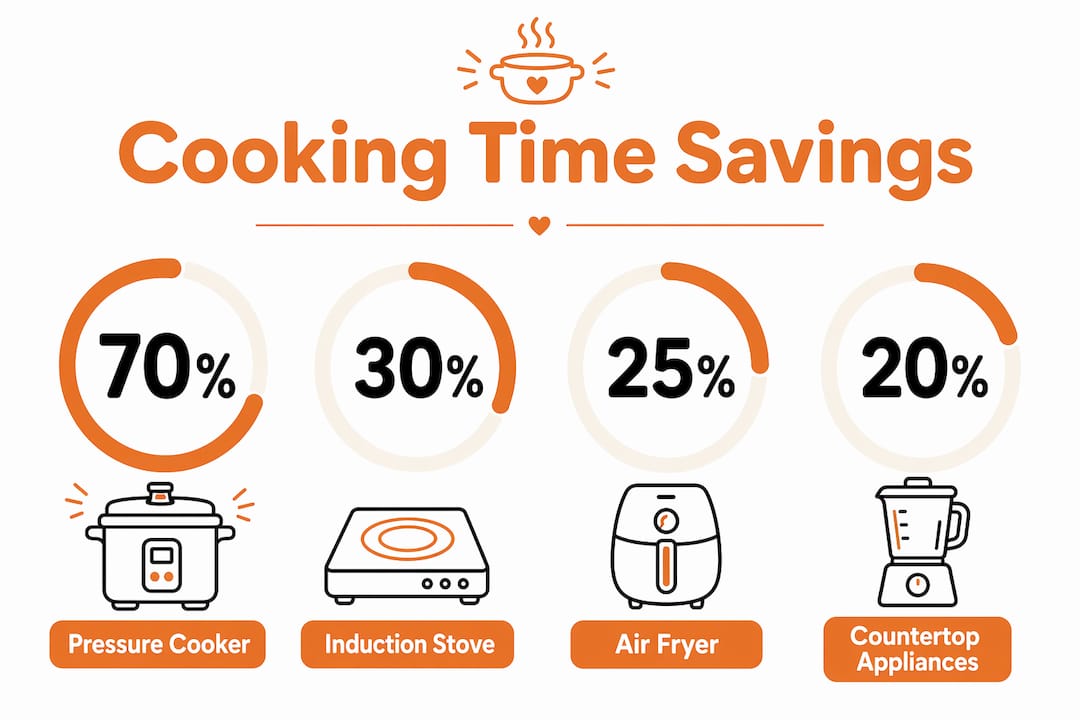
The four appliances that consistently reduce cooking time the most are pressure cookers, induction stoves, air fryers, and high-speed ovens. Each one works through a distinct mechanism, so their speed advantages apply to different types of meals.
Pressure cookers raise water’s boiling point to around 250°F at 15 PSI, which accelerates cooking reactions so dramatically that braises requiring 8 hours on a stovetop finish in about 2 hours. That is not a marginal improvement. It is a structural change in how cooking chemistry works under pressure.
Induction stoves heat cookware directly through electromagnetic energy rather than heating air or a burner surface first. This means induction boils water in just over 5 minutes, compared to 8 minutes for gas and 9.5 minutes for electric. For pasta nights, blanching vegetables, or stir-fries, that gap compounds across every step of the meal.
Air fryers circulate hot air at high speed around food, forming a crust and cooking the interior simultaneously. Air fryers reduce energy use by up to 50% compared to conventional ovens, and they reach cooking temperature in under 3 minutes versus the 10 to 15 minutes a full oven needs to preheat. Sharp’s high-speed oven technology takes this further. Sharp’s Golden Heater can cook a whole chicken in 30 minutes, a task that typically takes 90 minutes in a conventional oven.
| Appliance | Key mechanism | Best use case | Time-saving potential |
|---|---|---|---|
| Pressure cooker | Raises boiling point to 250°F | Braises, stews, beans, grains | Up to 75% reduction |
| Induction stove | Direct electromagnetic heating | Boiling, sautéing, stir-fries | 30 to 45% faster than electric |
| Air fryer | Rapid hot air circulation | Roasting, crisping, reheating | 25 to 40% faster than oven |
| High-speed oven | Combined heat technologies | Whole proteins, casseroles | Up to 65% reduction |
Pro Tip: If you cook proteins and grains most nights, a pressure cooker delivers the single largest time reduction per dollar spent. If you cook vegetables and smaller portions, an air fryer wins on speed and convenience.
How to adapt your recipes to actually cook faster
Switching to a faster appliance does not automatically halve your total meal time. The recipe itself needs to be adjusted, and most home cooks skip this step.
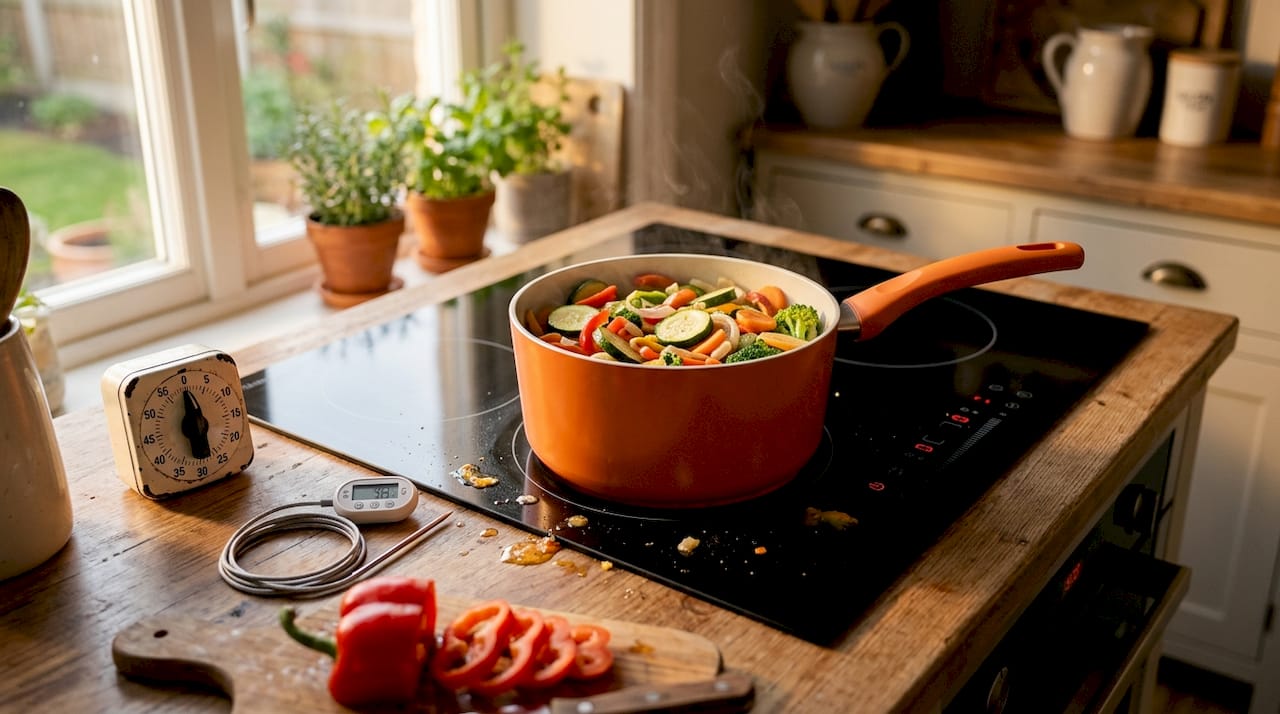
The most reliable starting point is to begin at 50% cook time and check progress from there. Time reductions are not linear. A roast that takes 60 minutes in a conventional oven does not take exactly 30 minutes in an air fryer. Heat transfer rates, moisture levels, and food density all affect the actual time needed.
Follow these steps when converting a recipe to a faster appliance:
- Reduce the portion size first. Smaller portions cook faster in every appliance. A half-batch of soup in an Instant Pot reaches pressure faster and cooks in less time than a full pot.
- Choose the right vessel size. Smaller pans retain moisture and speed heat transfer. A recipe scaled to half should use a pan roughly half the surface area, not the same large pan with less food in it.
- Set your timer at 50% of the original time. Check doneness at that point using a food thermometer rather than visual cues alone. Internal temperature is the most reliable indicator.
- Account for appliance-specific delays. Pressure cookers require 10 to 15 minutes to pressurize before actual cooking begins. That time counts toward your total, even though the recipe does not mention it.
- Adjust liquid ratios. Pressure cookers and steam-based appliances trap moisture. Reduce liquid by 25 to 30% compared to stovetop versions of the same recipe to avoid a watery result.
Pro Tip: Use a Thermapen or similar instant-read thermometer instead of relying on color or texture. Fast appliances can brown the outside of food before the inside reaches a safe temperature, which is the most common mistake when speeding up the cooking process.
How induction cooking accelerates your meal prep
Induction cooking’s speed advantage comes from one fact: it heats the pan, not the air around it. Over 85% of energy converts directly into cooking heat, compared to roughly 40% for gas burners. The rest of the energy from gas escapes into your kitchen as ambient heat, which is why gas kitchens run hotter and why induction feels noticeably cooler to work in.
For busy households, the practical impact shows up in everyday tasks:
- Pasta water: Boils in just over 5 minutes on induction versus 9.5 minutes on electric. Over a week of nightly cooking, that difference adds up to nearly an hour saved.
- Stir-fries: Induction reaches and holds high heat instantly, which means proteins sear rather than steam. The result is faster cooking and better texture.
- Blanching vegetables: The rapid temperature recovery after adding cold vegetables keeps the water boiling continuously, cutting blanching time by 20 to 30%.
ENERGY STAR-certified induction appliances deliver about 18% better energy efficiency than standard models, which means more energy goes into cooking and less is wasted. For induction to work, your cookware must be magnetic. Cast iron, stainless steel, and most carbon steel pans are compatible. Aluminum and copper are not, unless they have a magnetic base layer.
| Task | Gas time | Electric time | Induction time |
|---|---|---|---|
| Boil 1 quart of water | 8 min | 9.5 min | 5.1 min |
| Preheat pan for searing | 3 to 4 min | 4 to 5 min | Under 90 seconds |
| Reduce a sauce by half | 12 min | 14 min | 8 to 9 min |
How pressure cookers slash time for long recipes
Pressure cooking is the most dramatic time-reduction method available to home cooks, but it works best on specific categories of food. The physics of pressure cooking center on one principle: when water boils at 250°F instead of 212°F, the chemical reactions that break down collagen, soften beans, and tenderize tough cuts happen much faster. Collagen breakdown, which normally takes hours of gentle simmering, accelerates significantly under pressure.
Practical examples make this concrete. Beef short ribs braised on the stovetop take 3 to 4 hours. In an Instant Pot, they finish in 45 to 55 minutes. Dried chickpeas that require overnight soaking and 90 minutes of simmering cook in 40 minutes from dry in a pressure cooker.
Pressure cooking is not a universal speed tool. It excels at long-reaction cooking tasks like braises, stews, and legumes. For quick tasks like sautéing or crisping, it offers no advantage and should not be used.
Tips to get the most speed from your pressure cooker:
- Start with warm or hot liquids. Cold liquid extends pressurization time. Starting with liquid that is already warm can cut pressurization from 15 minutes down to 8 to 10 minutes.
- Do not overfill. Fill no more than two-thirds full for most foods and half full for liquids that expand. Overfilling slows pressurization and risks uneven cooking.
- Use the Instant Pot’s sauté function first. Browning aromatics before sealing adds flavor and brings the pot contents to a higher starting temperature, reducing total cook time.
- Account for natural versus quick release. Natural pressure release adds 10 to 20 minutes to total time but is required for large cuts of meat to avoid toughening. Factor this into your schedule.
Adjusting for pressurization latency by starting with warm liquids and a properly sized load is the single most effective way to approach actual time halving with a pressure cooker.
Air fryers and countertop appliances for smaller portions
Air fryers, toaster ovens, and steamers are the right tools when you are cooking for one to four people and do not want to heat a full oven for a small meal. The energy and time savings are most pronounced at this scale.
Here is how to use each appliance effectively for faster small-batch cooking:
- Air fryer for proteins and vegetables: Convert oven recipes by reducing temperature by 25°F and cutting cook time by 20 to 25%. A chicken breast that takes 25 minutes at 400°F in an oven takes 18 to 20 minutes at 375°F in an air fryer.
- Toaster oven for baking and reheating: A toaster oven preheats in 3 to 5 minutes versus 12 to 15 for a full oven. For muffins, small casseroles, or reheating leftovers, it is the faster and more energy-efficient choice.
- Steamer for vegetables and fish: Steaming broccoli takes 4 to 5 minutes versus 15 to 20 minutes for oven roasting. Nutrients are better preserved, and there is no preheating required.
- Hybrid steam air fryer for versatility: Xiaomi’s smart steam air fryer combines 10 cooking modes with precise temperature controls, allowing users to steam vegetables and then crisp them in the same appliance without transferring food between devices.
The energy cost argument for countertop appliances is straightforward. Running a full oven for 20 minutes to cook two chicken thighs costs significantly more than running an air fryer for the same task. Over a month of daily cooking, that difference is measurable on your utility bill.
Key takeaways
The fastest way to reduce cooking time is to match the appliance to the task: pressure cookers for long braises, induction stoves for water-based tasks, and air fryers for small-batch roasting.
| Point | Details |
|---|---|
| Pressure cookers lead on long recipes | Braises drop from 8 hours to 2 hours by raising the boiling point to 250°F. |
| Induction is fastest for boiling | Induction boils water in 5 minutes versus 9.5 minutes for electric stoves. |
| Air fryers save time and energy | Air fryers cut energy use by up to 50% and eliminate long oven preheat times. |
| Recipe adaptation is required | Start at 50% of original cook time and use a thermometer to confirm doneness. |
| Pressurization time counts | Add 10 to 15 minutes for Instant Pot pressurization when planning total meal time. |
What I have learned from cooking faster every night
The honest truth about fast cooking appliances is that most people buy them and then use them exactly like their old equipment. They put the same recipes in, expect the same results, and get frustrated when timing is off. The appliance is not the problem. The workflow is.
What actually works is treating each appliance as a specialist. My Instant Pot handles every braise, every bean dish, and every stock I make. My induction burner handles everything that needs rapid heat response. My air fryer handles anything that needs to be crispy in under 20 minutes. None of them do everything well, and I stopped expecting them to.
The other thing most articles do not say clearly enough: the pressurization window on a pressure cooker is real time you need to plan for. If you are making a weeknight dinner and the recipe says 25 minutes, your actual total is closer to 40 minutes once you account for pressurization and release. That is still faster than the stovetop version, but it changes how you sequence the rest of the meal.
Batch cooking on weekends using a pressure cooker and an induction stove together is the highest-leverage habit I have found for busy households. Cook grains and proteins in bulk on Sunday, then use the air fryer or toaster oven to reheat and crisp portions throughout the week. The speed gains compound across every meal, not just the one you are making right now.
— K
Find the right appliances at Kitchendevotion
Kitchendevotion curates appliances specifically for home cooks who want real speed gains without sacrificing meal quality. Whether you are looking for an air fryer that handles weeknight dinners in under 20 minutes or an induction cooktop that cuts your boil times nearly in half, the site’s product guides and reviews help you choose based on your actual cooking habits. Every recommendation on Kitchendevotion is selected with kitchen appliance efficiency in mind, covering everything from Instant Pot alternatives to hybrid steam air fryers. If you are ready to speed up your cooking process with appliances that match your household size and meal style, this is the right place to start.
FAQ
What appliance cuts cooking time the most?
Pressure cookers deliver the largest single time reduction, cutting braises and stews from several hours down to under 2 hours by raising the boiling point to 250°F. For everyday tasks like boiling water, induction stoves are the fastest option available.
Can you really halve cooking time with appliances?
Yes, but the reduction depends on the recipe type. Pressure cookers can cut long-cook recipes by 60 to 75%. Air fryers reduce oven cooking time by 20 to 40%. Induction stoves cut boiling time nearly in half compared to electric stoves.
How do I convert oven recipes for an air fryer?
Reduce the oven temperature by 25°F and cut the cook time by 20 to 25%. Start checking doneness at the halfway point using a food thermometer, since air fryers cook unevenly compared to convection ovens and results vary by food density.
Does cooking for fewer people actually save time?
Smaller portions cook faster, but not in a straight proportion. Start at 50% of the original cook time and check progress carefully. Using a smaller pan also speeds heat transfer and prevents the food from drying out.
Is induction cooking worth it for speed alone?
Induction is worth it for any household that boils water, makes sauces, or stir-fries regularly. The 5-minute boil time versus 9.5 minutes for electric adds up to significant time savings across a week of cooking, and the energy efficiency reduces utility costs at the same time.




No comment