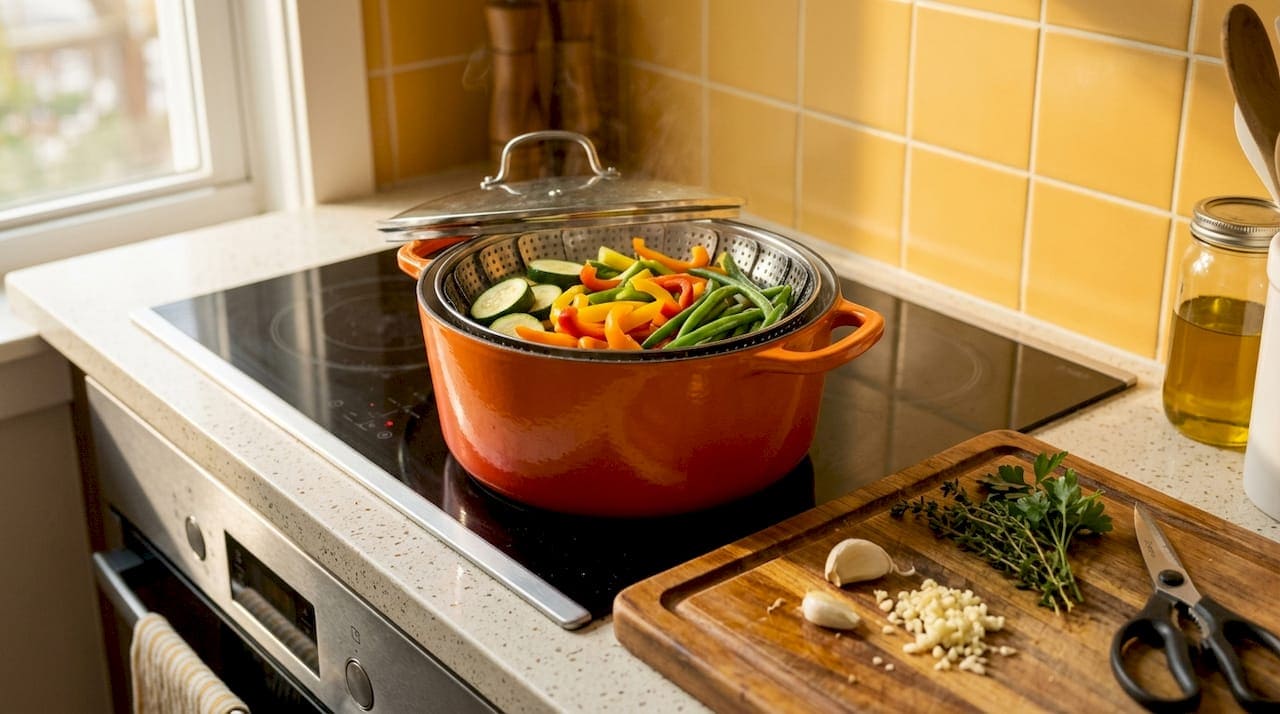
A steamer basket is a perforated kitchen accessory that holds food above boiling water, allowing steam to cook it evenly without submerging it in liquid. Made from bamboo, stainless steel, or silicone, steamer baskets are one of the most practical tools a home cook can own. They preserve nutrients, lock in natural flavors, and require almost no added fat. Whether you are cooking broccoli, dumplings, fish fillets, or tamales, understanding what a steamer basket is and how to use it correctly changes the quality of your results from the very first meal.
What is a steamer basket and how does it work?
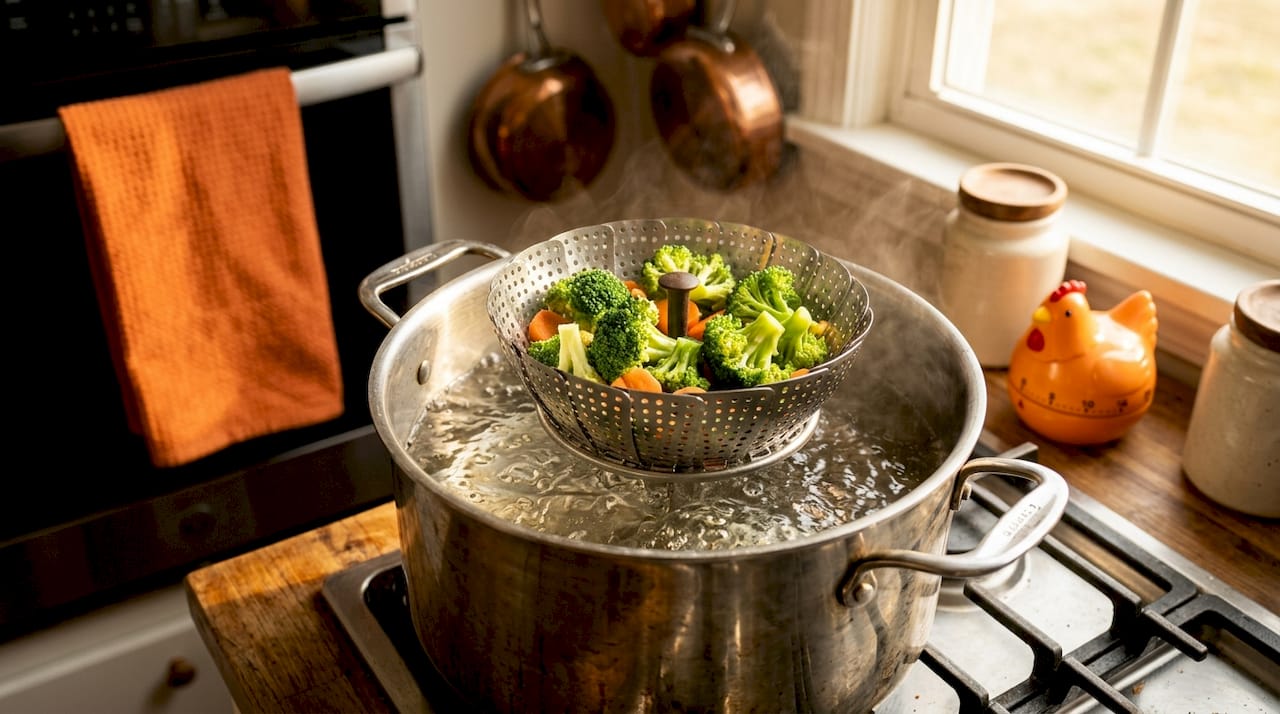
A steamer basket works by suspending food above simmering water inside a covered pot or wok, so rising steam circulates around the food and cooks it gently and evenly. The perforations in the basket are the key design feature. They allow steam to pass through freely while keeping food lifted and dry on its surface. This is fundamentally different from boiling, where food sits in water and loses water-soluble vitamins and minerals directly into the liquid.
The setup is simple. You fill a pot with one to two inches of water, place the basket inside so the water level sits below the basket floor, add your food, cover the pot, and bring the water to a simmer. The steam does the rest. Most home cooks are surprised by how little equipment this requires. A standard pot, a basket, and a lid are all you need to get started.
What are the types of steamer baskets?
Three primary types of steamer baskets are available to home cooks in 2026: bamboo, stainless steel, and silicone. Each material behaves differently in the kitchen, and choosing the right one depends on what you cook most often.
Bamboo steamers
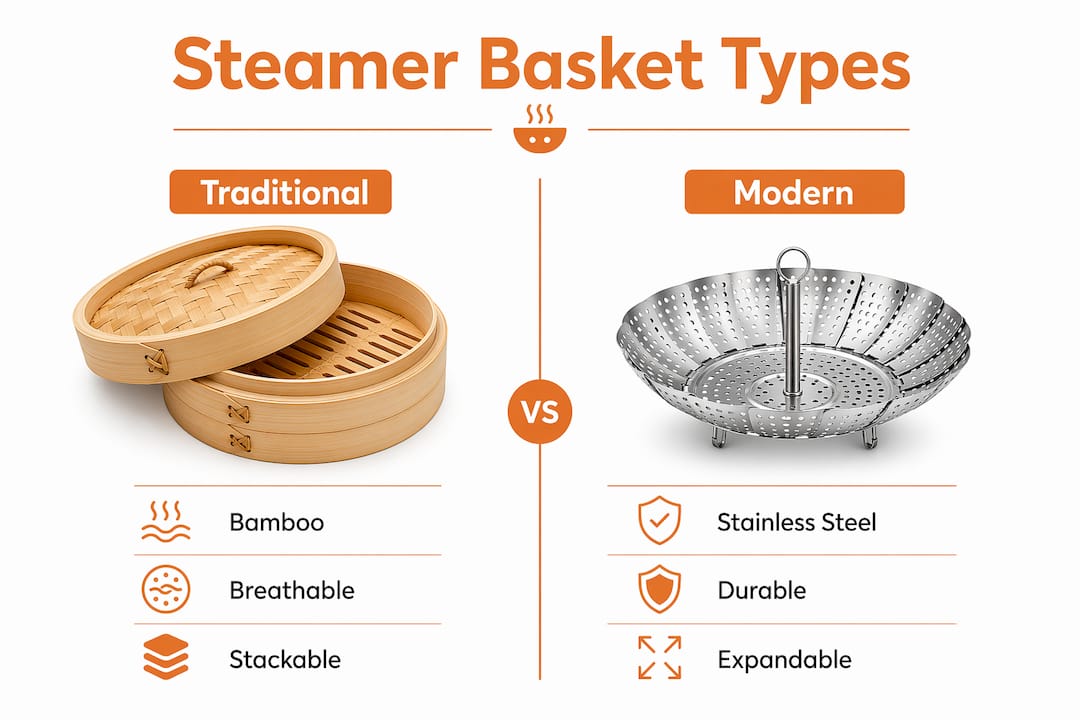
Bamboo steamers are stackable, breathable trays traditionally used in Chinese and Southeast Asian cooking. The natural bamboo fibers absorb excess moisture rather than letting condensation drip back onto food. This makes bamboo the preferred choice for dough-based foods like dumplings, bao buns, and sticky rice. You can stack multiple tiers over a single pot and cook several dishes simultaneously, which is a genuine time saver. Standard bamboo steamers are sold in 8-inch and 10-inch diameters to fit most woks and pots.
Stainless steel steamer inserts
A classic stainless steel basket is ideal for steaming vegetables, eggs, and tamales because its perforated design enables excellent steam circulation. Most stainless steel models are expandable, fitting pots between 5.5 and 9.2 inches in diameter, which makes them flexible for different cookware. They are dishwasher-safe, rust-resistant, and built to last years without degrading. The trade-off is that metal conducts heat and can cause condensation to drip back onto delicate foods if the lid is not tilted slightly when lifting.
Silicone steamer baskets
Silicone baskets are foldable, microwave-safe, and easy to store in small kitchens. They work well for quick weeknight steaming of vegetables, fish, or grains. Because silicone is non-porous, it does not absorb odors or stains over time. The flexibility of the material also makes it easy to remove food without scratching non-stick cookware.
| Material | Durability | Best uses | Maintenance | Size compatibility |
|---|---|---|---|---|
| Bamboo | Moderate | Dumplings, buns, sticky rice | Hand wash, air dry | 8 or 10 inches |
| Stainless steel | High | Vegetables, eggs, tamales | Dishwasher-safe | Expandable, 5.5 to 9.2 inches |
| Silicone | High | Vegetables, fish, grains | Dishwasher-safe | Varies by brand |
Pro Tip: Bamboo steamers should never be soaked in water. Rinse them quickly and let them air dry completely to prevent mold and warping.
How to use a steamer basket effectively
Using a steamer basket well comes down to three things: water management, food placement, and timing. Most mistakes happen when cooks overcrowd the basket or ignore how condensation affects the food.
Follow this step-by-step process for consistent results:
- Fill your pot with one to two inches of water. The water should sit below the basket floor with at least half an inch of clearance.
- Bring the water to a rolling simmer over medium heat before adding food.
- Line the basket with perforated parchment paper or a cabbage leaf if you are steaming dumplings or fish. Liners prevent sticking and stop excess moisture from pooling under delicate foods.
- Arrange food in a single layer with space between each piece. Overcrowding causes uneven cooking and sogginess, so resist the urge to pack the basket full.
- When cooking multiple foods, layer by density: denser items like root vegetables go on the bottom tier, and delicate items like leafy greens or fish go on top.
- Cover the pot tightly and start your timer only after the steam is visibly rising.
- Remove each layer as it finishes rather than waiting for everything to be done at once.
Pro Tip: When lifting the lid of a bamboo or stainless steel steamer, tilt it away from you and let condensation run off the lid before setting it down. This keeps water from dripping back onto your food and making it soggy.
Material choice affects cooking quality in a way most cooks underestimate. Bamboo absorbs moisture from the steam environment, which is exactly why it produces drier, fluffier dumplings compared to metal. Stainless steel and silicone are more practical for high-moisture vegetables where a little extra condensation does not hurt the final texture.
Steamer basket benefits: why steaming beats boiling
Steaming preserves nutrients and vitamins better than boiling or frying, retaining color and natural flavor while requiring no added fat. When you boil broccoli, water-soluble vitamins like vitamin C and folate leach directly into the cooking water, which most people discard. Steaming keeps those nutrients inside the food where they belong. The difference is visible: steamed broccoli stays bright green and firm, while boiled broccoli turns dull and soft within minutes.
Here is a summary of the core steamer basket benefits:
- Nutrient retention: Steam cooking keeps water-soluble vitamins intact because food never contacts the cooking liquid.
- Natural flavor: Vegetables and proteins taste cleaner and more distinct because their natural juices stay inside the food.
- No added fat: Steaming requires zero oil, making it one of the lowest-calorie cooking methods available.
- Texture control: Gentle heat prevents the outside of food from overcooking before the center is done.
- Easy cleanup: Steaming produces less mess compared to frying or boiling, and most baskets rinse clean in seconds.
- Energy efficiency: A single pot of simmering water uses less energy than a full boil or a preheated oven.
Steaming is not just a healthy cooking method. It is a precision technique that gives you more control over texture and flavor than almost any other method in a home kitchen.
How to choose the best steamer basket for your kitchen
The best steamer basket for your kitchen depends on four factors: pot compatibility, the foods you cook most, storage space, and budget. Getting this decision right means you will actually use the basket rather than leaving it in a drawer.
Pot compatibility is the first check. Expandable stainless steel baskets commonly fit pots between 5.5 and 9.2 inches, which covers most standard home cookware. Bamboo steamers are sized to fit specific wok or pot diameters, so measure your pot before buying. Silicone baskets vary by brand, so check the product dimensions carefully.
Food type should drive your material choice. If you cook dumplings, bao, or any dough-based food regularly, a bamboo steamer is worth the investment. For everyday vegetables, eggs, and proteins, a stainless steel insert handles the job with less maintenance. If you want something that works in the microwave for quick meals, silicone is the right call.
Storage matters more than most buyers admit. Bamboo steamers stack neatly but take up cabinet space. Stainless steel baskets collapse flat. Silicone baskets fold down to almost nothing. If your kitchen storage is limited, stainless steel or silicone wins on practicality.
| Selection factor | What to look for |
|---|---|
| Pot compatibility | Match basket diameter to your pot; check expandable range |
| Food type | Bamboo for dough, steel for vegetables, silicone for microwave use |
| Storage | Silicone and steel collapse flat; bamboo stacks but takes more space |
| Maintenance | Steel and silicone are dishwasher-safe; bamboo requires hand washing |
| Budget | Stainless steel inserts are the most affordable entry point |
Pro Tip: If you are buying your first steamer basket, start with an expandable stainless steel insert. It fits most pots you already own, handles the widest range of foods, and costs less than $15 at most kitchen retailers.
Key takeaways
A steamer basket is the most nutrient-preserving cooking tool a home cook can add to their kitchen, and material choice determines whether it works brilliantly or frustratingly.
| Point | Details |
|---|---|
| Definition and function | A steamer basket holds food above boiling water so steam cooks it evenly without submerging it. |
| Material matters | Bamboo suits dough-based foods; stainless steel and silicone work best for vegetables and proteins. |
| Moisture management | Use parchment or cabbage leaf liners and avoid overcrowding to prevent sogginess. |
| Health advantage | Steaming retains more vitamins and natural flavor than boiling or frying. |
| Buying decision | Match basket size to your pot diameter and choose material based on what you cook most. |
Why I think steaming is the most underrated skill in home cooking
Most home cooks treat steaming as a backup method, something you do when you are trying to eat lighter or when you have run out of ideas. That framing sells it short. After years of cooking and testing kitchen tools, I have found that steaming is actually one of the most technically demanding methods to do well, and one of the most rewarding when you get it right.
The biggest mistake I see is treating all steamer baskets as interchangeable. A bamboo steamer and a stainless steel insert are not the same tool doing the same job. When I switched to bamboo for dumplings, the texture difference was immediate. The bamboo absorbed ambient moisture in a way that metal simply cannot replicate, and the result was a noticeably drier, more delicate wrapper.
My other strong opinion: do not limit steaming to vegetables. Steamed fish with ginger and scallions, steamed eggs custard, and even steamed puddings are dishes where the method is not just acceptable but genuinely superior to any alternative. The gentle, even heat of steam is kinder to proteins than a hot pan, and the results speak for themselves. If you own a steamer basket and you are only using it for broccoli, you are leaving most of its value on the table.
— K
Upgrade your kitchen with tools that actually work
If this guide has you ready to start steaming, the next step is finding a basket that fits your kitchen and your cooking style without guessing.

Kitchendevotion curates kitchen tools selected for real home cooks, not just professional chefs. The site features steamer baskets alongside premium cookware, eco-friendly utensils, and other healthy cooking accessories, all chosen for quality and everyday usability. Whether you are looking for your first stainless steel insert or a traditional bamboo set, Kitchendevotion makes it easy to find the right tool without wading through hundreds of generic options. Browse the full collection and find the steamer basket that fits your pots, your meals, and your kitchen.
FAQ
What is a steamer basket used for?
A steamer basket holds food above boiling water inside a covered pot, allowing steam to cook it evenly. It is used for vegetables, dumplings, fish, eggs, tamales, and grains.
What foods cook best in a steamer basket?
Vegetables, dumplings, bao buns, fish fillets, eggs, and tamales all produce excellent results in a steamer basket. Dough-based foods like dumplings cook best in bamboo, while vegetables and proteins work well in stainless steel or silicone.
How much water do you put in a pot for a steamer basket?
Fill the pot with one to two inches of water, keeping the water level below the basket floor with at least half an inch of clearance. Check the water level during long steaming sessions and add more as needed.
Is steaming healthier than boiling?
Yes. Steaming preserves more nutrients than boiling because food never contacts the cooking liquid, so water-soluble vitamins like vitamin C stay inside the food rather than leaching out.
What size steamer basket fits most pots?
Expandable stainless steel baskets fit pots between 5.5 and 9.2 inches, covering most standard home cookware. Bamboo steamers are sold in fixed 8-inch and 10-inch diameters, so measure your pot before purchasing.



No comment