
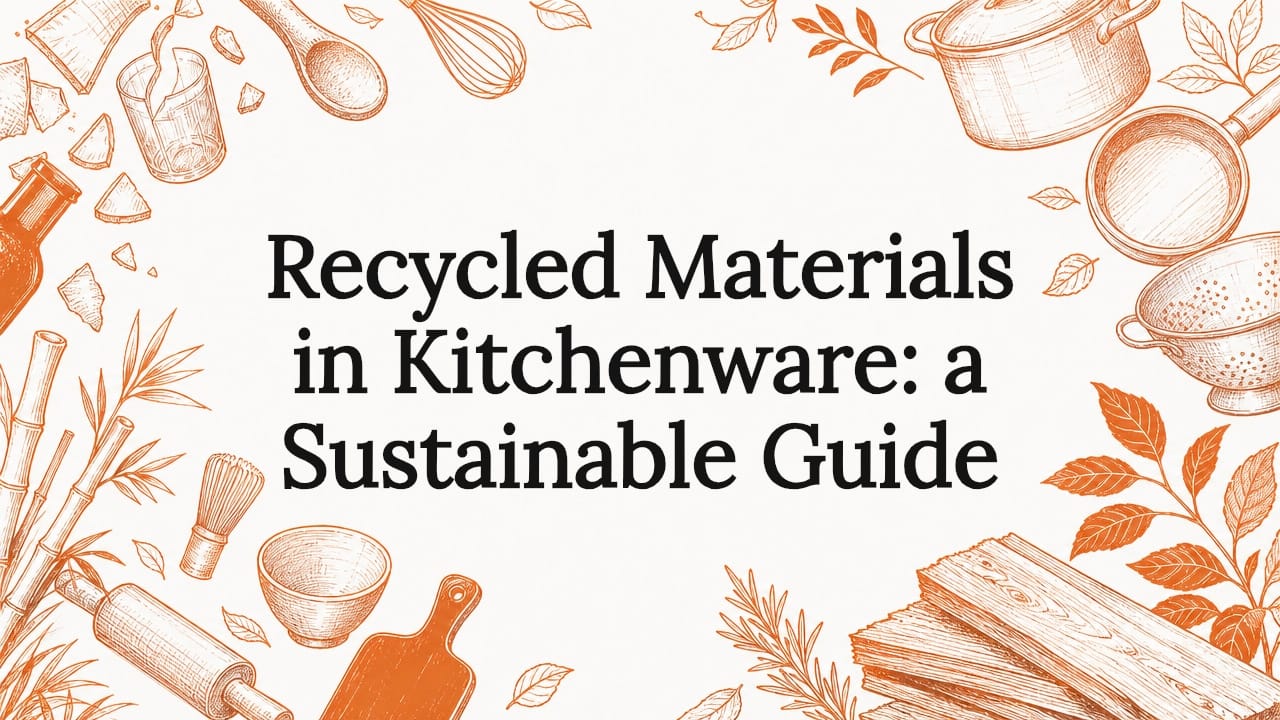
Recycled materials kitchenware is defined as cookware, utensils, countertops, and accessories manufactured using post-consumer or post-industrial recovered content, including glass, metals, plastics, and bamboo. The role of recycled materials in kitchenware extends well beyond environmental symbolism. These materials actively reduce landfill waste, lower embodied carbon in production, and deliver durable, functional products for everyday cooking. As eco-conscious home cooks look to make purchasing decisions that align with sustainable living, understanding which materials perform best, where trade-offs exist, and what innovations are reshaping the market becomes genuinely useful knowledge rather than background noise.
What recycled materials are used in kitchenware?
Recycled kitchenware draws from four primary material categories, each with distinct performance characteristics that affect how you use and maintain them.
Recycled glass is one of the most established sustainable kitchenware materials. Recycled glass countertops can contain up to 90% post-consumer glass, cost 50 to 75% less than natural stone, and last 25 years or more with routine soap-and-water maintenance. That combination of affordability and longevity makes recycled glass one of the most cost-effective eco-friendly choices for kitchen surfaces. Professional installation and proper edge sealing are required to prevent chipping over time.
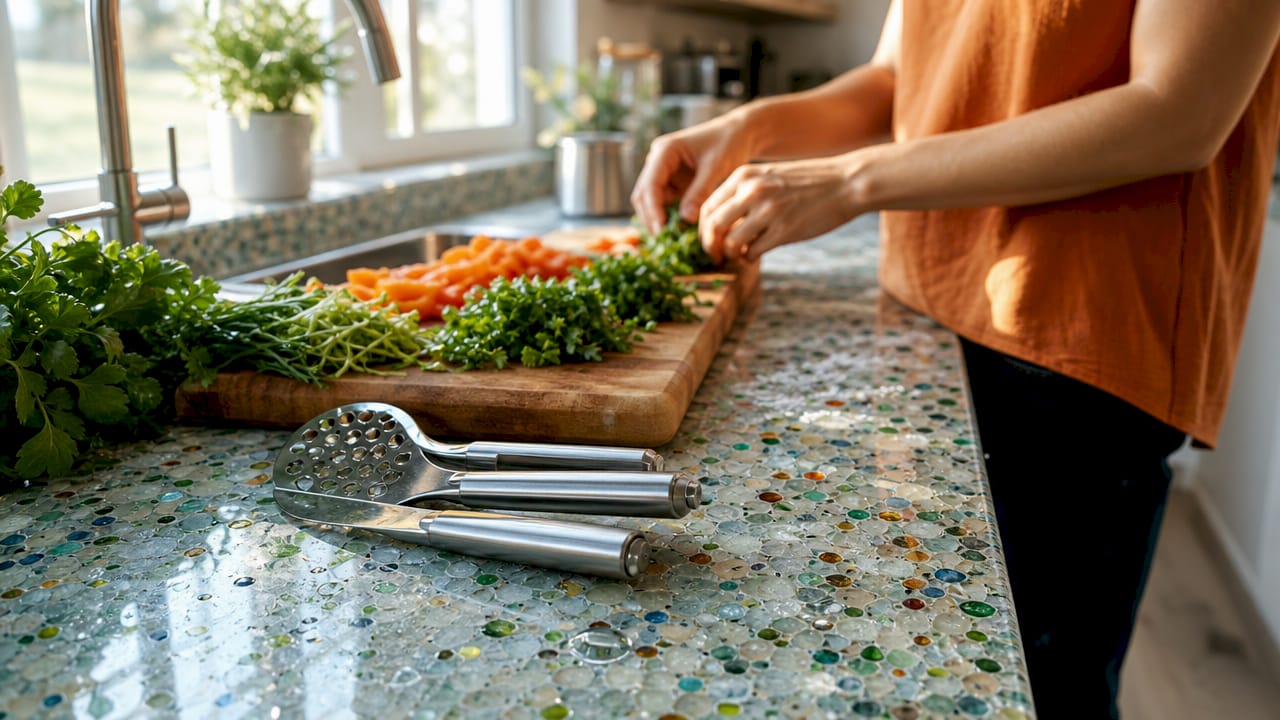
Recycled metals, particularly stainless steel sourced from recovered scrap, are the backbone of sustainable cookware. Recycled stainless steel offers the same heat distribution, corrosion resistance, and longevity as virgin-sourced steel while supporting circular economy practices across the cookware and bakeware supply chain. Stainless steel is also one of the most infinitely recyclable materials on earth, meaning its value does not degrade through repeated processing cycles.
Recycled plastics present a more complicated picture. Mechanical recycling of plastics degrades polymer chains, so manufacturers add stabilizers to maintain durability in kitchenware applications. More critically, food-contact recycled plastics face regulation challenges due to odor, contamination, and chemical migration concerns, limiting their use mostly to non-food-contact components like storage lids, drawer organizers, and exterior housing on appliances.
Bamboo occupies a unique position. Technically a rapidly renewable grass rather than a recycled material, bamboo is widely grouped with sustainable kitchenware materials because of its low-impact harvesting cycle and natural durability. Bamboo cutting boards and utensils, including the Epicurean Kitchen Series Cutting Board available through wholesale kitchenware suppliers, offer a hard, knife-friendly surface that resists moisture better than standard wood.
- Recycled glass: best for countertops and decorative accessories; requires professional installation
- Recycled stainless steel: ideal for pots, pans, and bakeware; fully dishwasher safe
- Recycled plastics: suitable for non-food-contact items only; check for food-grade certification
- Bamboo: excellent for cutting boards and utensils; needs regular oiling to prevent cracking
- Recycled quartz: up to 50% recycled content with stain resistance comparable to traditional quartz surfaces
Pro Tip: When buying recycled plastic kitchenware, look for items labeled “food-grade recycled resin” and check whether the product carries NSF International or FDA compliance markings. Without those certifications, recycled plastic items should stay out of direct food contact.
How does recycled kitchenware reduce environmental impact?
The environmental case for recycled kitchenware rests on lifecycle analysis, not just the recycled label on the packaging. Embodied carbon, the carbon emitted during material extraction, processing, and manufacturing, is significantly lower for recycled inputs than for virgin materials.
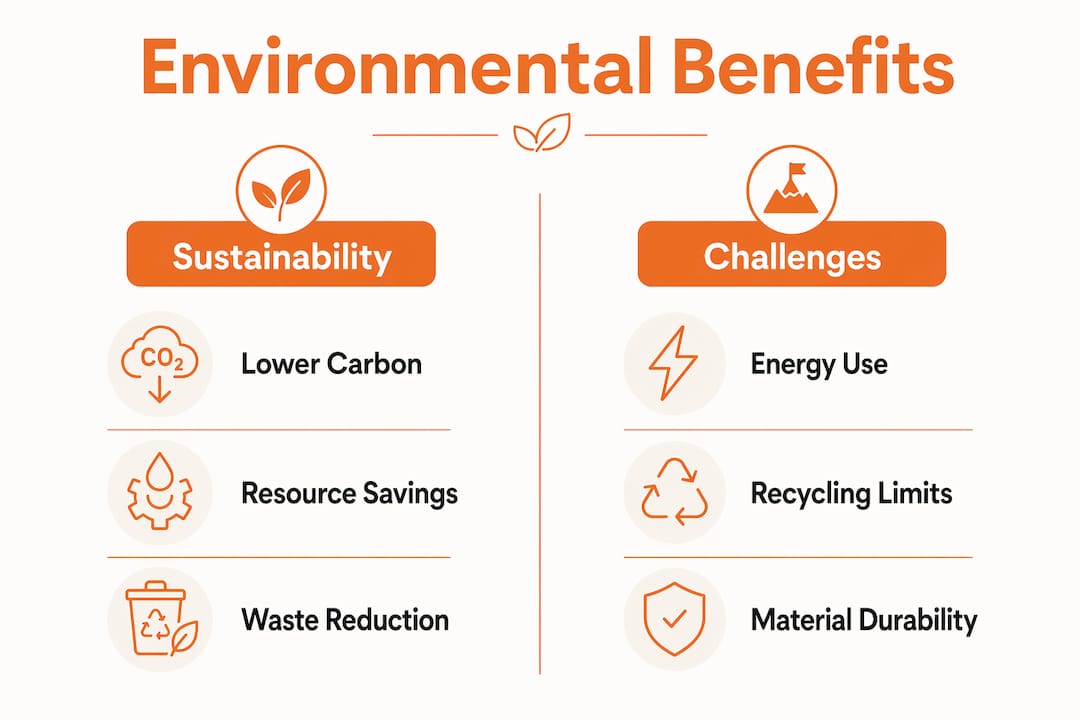
Reclaimed wood kitchen worktops demonstrate this most dramatically. They can achieve a net-zero or negative carbon footprint because using reclaimed timber avoids both fresh harvesting and the methane emissions that would result from that wood decomposing in a landfill. No other kitchen surface material achieves that carbon profile. Recycled glass countertops carry an embodied carbon footprint of roughly 8 to 12 kg CO₂e per square meter, which is substantially lower than granite or engineered stone alternatives.
The table below compares key environmental metrics across the most common recycled kitchenware surface materials.
| Material | Recycled content | Embodied carbon | Typical lifespan | Maintenance |
|---|---|---|---|---|
| Recycled glass | Up to 90% | 8–12 kg CO₂e/m² | 15–25+ years | Soap and water |
| Reclaimed wood | 100% reclaimed | Net-zero or negative | 20–30 years | Oil every 6–12 months |
| Recycled quartz | Up to 50% | Moderate reduction vs. virgin | 20+ years | Low maintenance |
| Recycled stainless steel | Variable | Lower than virgin steel | Decades | Dishwasher safe |
Longevity is the multiplier that makes recycled kitchenware genuinely sustainable rather than just symbolically green. A recycled glass countertop that lasts 25 years displaces two or three replacement cycles of cheaper, shorter-lived materials. That compounding effect on waste diversion and resource conservation is where the real environmental benefit accumulates. Learning how to reduce kitchen waste through durable material choices is one of the most direct ways to lower your household’s environmental footprint.
The trade-offs are real and worth naming. Recycling processes themselves consume energy. Mechanical recycling of plastics, for example, requires heat and chemical stabilization. The net environmental benefit only holds when the recycled product replaces a virgin-material alternative and is itself recycled or composted at end of life. A recycled plastic item that ends up in landfill after two years delivers far less benefit than a virgin stainless steel pan used for 30 years.
What are the practical trade-offs of using recycled kitchenware?
Sustainable kitchenware is more than marketing. It requires balancing aesthetics, functionality, and material trade-offs to genuinely meet eco-conscious consumer needs. Understanding those trade-offs before you buy prevents disappointment and reduces the chance of premature replacement, which is itself a waste problem.
Heat resistance is the most common friction point. Recycled plastic surfaces and bamboo items cannot handle direct heat contact. Placing a hot pan directly on a recycled plastic benchtop or bamboo cutting board will cause warping or surface damage. Using trivets and heat pads becomes a non-negotiable habit rather than an optional precaution. Recycled glass countertops and stainless steel cookware, by contrast, handle heat well and require no special protection from normal cooking temperatures.
Maintenance routines differ significantly across materials:
- Recycled glass surfaces: Wipe with soap and water daily; avoid abrasive scrubbers that scratch the resin binder
- Bamboo boards and utensils: Apply food-safe mineral oil or beeswax every four to six weeks; never submerge in water or run through a dishwasher
- Reclaimed wood worktops: Oil every 6 to 12 months and maintain consistent humidity to prevent cracking and warping
- Recycled stainless steel cookware: Dishwasher safe in most cases; use non-abrasive cleaners to preserve the surface finish
Durability profiles also vary. Recycled stainless steel cookware, when properly maintained, lasts decades and is among the most durable options in any kitchen. Bamboo items have a shorter functional lifespan of three to seven years depending on care. Recycled glass countertops sit in the middle, with a 15 to 25 year lifespan that depends heavily on professional installation quality and edge sealing.
Pro Tip: Choose multi-functional, modular recycled kitchenware wherever possible. Modular kitchenware sets can reduce kitchen waste by up to 40% over five years through durability and repairability, because fewer individual items need replacing when one component fails.
Regulatory complexity around recycled plastics deserves specific attention. Food-contact applications face scrutiny from the FDA and European Food Safety Authority due to contamination and chemical migration risks. This is not a reason to avoid recycled plastic kitchenware entirely. It is a reason to read labels carefully and restrict recycled plastic items to non-food-contact roles like storage containers for dry goods, drawer dividers, and appliance housings.
What innovations are shaping recycled kitchenware in 2026?
The recycled kitchenware market in 2026 is moving beyond single-use recycled content toward full circular design strategies. Several developments are worth tracking if you want to stay ahead of the curve as an eco-conscious buyer.
-
Take-back programs: Manufacturers including those in the cookware and small appliance categories are launching programs where consumers return products at end of life for manufacturer-managed recycling. True circularity requires take-back programs that guarantee products are recycled rather than landfilled, rather than relying solely on one-time recycled content at the point of manufacture.
-
Bio-based composites: New materials combining recycled agricultural fibers, such as rice husks and sugarcane bagasse, with bio-based resins are entering the kitchenware market as alternatives to petroleum-based plastics. These composites offer improved heat resistance compared to standard recycled plastics and are compostable at end of life in industrial facilities.
-
Advanced recycling methods: Chemical recycling, which breaks plastics down to monomer level rather than just reshaping them mechanically, is beginning to produce food-grade recycled plastic suitable for direct food contact. This addresses the contamination and migration concerns that currently limit recycled plastics in kitchenware.
-
Modular and repairable designs: Kitchenware brands are designing products with replaceable components, so a worn handle or cracked lid can be swapped without discarding the entire item. This extends product lifespan and reduces the total material throughput of a kitchen over time.
-
Certification and transparency: Eco-friendly kitchenware brands are increasingly publishing full lifecycle assessments and pursuing third-party certifications such as Cradle to Cradle, B Corp, and FSC for wood-based products. These certifications give buyers a reliable signal beyond marketing language. When a brand cannot or will not provide lifecycle data, that absence is itself informative.
Keeping an eye on these trends helps you make purchases that will still feel like the right choice five years from now, not just at the checkout.
Key takeaways
Recycled kitchenware delivers genuine environmental and practical value when you match the right material to the right application and commit to proper maintenance.
| Point | Details |
|---|---|
| Material matching matters | Use recycled stainless steel for cookware, recycled glass for surfaces, bamboo for boards and utensils. |
| Longevity multiplies impact | A 25-year recycled glass countertop displaces multiple replacement cycles, compounding waste diversion. |
| Recycled plastics need scrutiny | Restrict recycled plastic items to non-food-contact roles unless certified food-grade by NSF or FDA. |
| Maintenance is non-negotiable | Bamboo needs oiling every 4 to 6 weeks; reclaimed wood needs oiling every 6 to 12 months. |
| Circularity beats recycled content alone | Prioritize brands with take-back programs and published lifecycle data over those with recycled labels only. |
Why I think most people underestimate recycled kitchenware
Most buyers treat recycled kitchenware as a compromise. They expect it to be slightly worse than conventional products but worth it for the environmental benefit. That framing is wrong, and it leads to poor purchasing decisions.
Recycled stainless steel cookware is not a compromise. It performs identically to virgin-sourced steel and will outlast most non-stick alternatives by a decade or more. Recycled glass countertops are genuinely beautiful, often more visually interesting than uniform stone slabs, and they cost less. The perception gap between “recycled” and “premium” is a marketing artifact, not a material reality.
Where I do think buyers need to be more careful is with bamboo and recycled plastics. Bamboo requires real maintenance commitment. If you are not willing to oil a cutting board regularly, bamboo will crack and harbor bacteria faster than a well-maintained hardwood board. That is not a failure of the material. It is a mismatch between the product and the user’s habits.
The most underrated consideration is end-of-life planning. Buying a recycled product and then sending it to landfill after two years of use is not sustainable purchasing. It is just delayed waste. I always recommend pairing your purchase decision with a plan for what happens when the item wears out. Can it be composted, returned to the manufacturer, or recycled through a municipal program? If the answer is no, that should factor into whether you buy it at all. Checking your kitchen waste management setup before you shop is a practical first step most people skip entirely.
— K
Sustainable kitchen tools and cookware at Kitchendevotion
Kitchendevotion curates cookware, appliances, and kitchen accessories with durability and functionality at the center of every selection. If you are building a kitchen around recycled and sustainable materials, the right appliances and cookware sets make the difference between a kitchen that works and one that just looks good on paper.
Kitchendevotion’s cookware sets include durable stainless steel options built for long-term use, complementing any recycled surface or eco-friendly kitchen setup. For cooks who want to reduce energy use alongside material footprint, the time-saving appliances list highlights efficient tools that cut cooking time without cutting corners on quality. Sustainable living in the kitchen starts with the right equipment, and Kitchendevotion makes finding it straightforward.
FAQ
What materials are most common in recycled kitchenware?
Recycled glass, stainless steel, reclaimed wood, and bamboo are the most widely used sustainable kitchenware materials. Recycled plastics appear in non-food-contact components like storage lids and appliance housings.
Is recycled stainless steel cookware safe for cooking?
Yes. Recycled stainless steel performs identically to virgin-sourced steel and carries no food safety concerns. It is dishwasher safe, heat resistant, and one of the most durable options in any kitchen.
Can recycled plastic be used in food-contact kitchenware?
Standard recycled plastics face regulatory restrictions for direct food contact due to contamination and chemical migration risks. Advanced chemical recycling methods are beginning to produce food-grade recycled resin, but buyers should verify NSF or FDA certification before using any recycled plastic item with food.
How do I maintain bamboo kitchenware?
Apply food-safe mineral oil or beeswax to bamboo boards and utensils every four to six weeks. Never submerge bamboo in water or run it through a dishwasher, as prolonged moisture causes cracking and warping.
How do I choose sustainable kitchenware that is genuinely eco-friendly?
Look for third-party certifications such as Cradle to Cradle, FSC, or B Corp, and prioritize brands that publish lifecycle assessments and offer take-back programs. A recycled label without supporting data is a marketing claim, not a sustainability guarantee.





No comment