
Rice cooker recipes are a complete meal strategy, not just a method for cooking plain white rice. A single appliance handles chicken, ground beef, salmon, vegetables, and even desserts with minimal cleanup and no stovetop babysitting. The USDA sets clear internal temperature targets for proteins cooked in any appliance, including rice cookers: 165°F for chicken, 160°F for ground beef, and 145°F for pork and fish. This guide covers how your rice cooker works, which tools and ingredients you need, step-by-step recipes for popular one-pot meals, and how to fix the most common cooking mistakes.
What are the best rice cooker recipes to start with?
The best starting point for easy rice cooker meals is a simple chicken and jasmine rice dish. It teaches you the core technique: layering protein on top of rice so steam does the cooking. Once you master that, ground beef bowls, lemon herb salmon, and vegetarian lentil dishes follow the same logic. The rice cooker handles the heat; you handle the seasoning.
How a rice cooker actually works
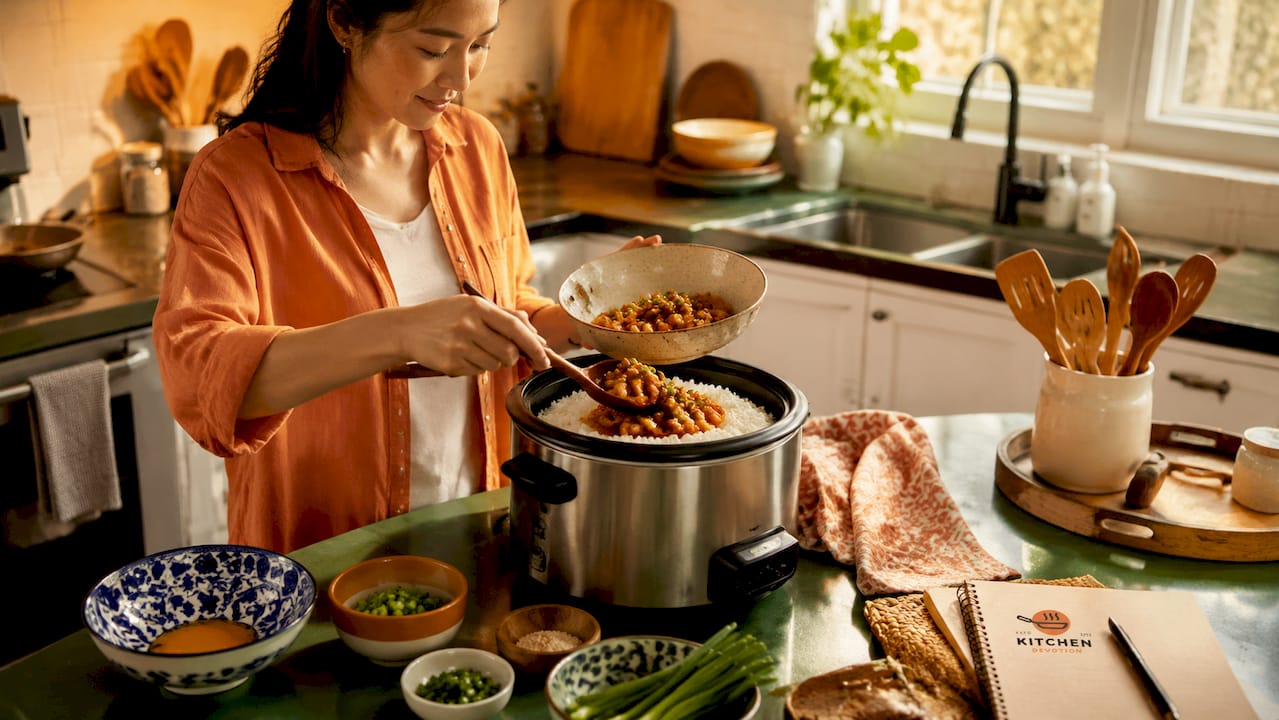
A rice cooker heats water to boiling and then switches to “keep warm” mode once the water evaporates. That transition point is controlled by a temperature sensor that detects when the pot bottom rises above 212°F, signaling that liquid is gone. This cycle is what makes the appliance reliable for non-rice cooking too. Steady, enclosed steam is the real cooking force.
Three types of rice cookers exist on the market today. Basic models use a simple on/off thermostat. Fuzzy logic models use microchip-controlled sensors to adjust heat mid-cycle. Induction heating models generate heat directly in the pot wall for more even temperatures. For most rice cooker meal ideas, a basic or fuzzy logic model works well.
Tools and ingredients you need
Essential tools:
- Rice cooker (3-cup to 10-cup capacity)
- Instant-read thermometer (non-negotiable for protein safety)
- Silicone or wooden spatula (metal scratches nonstick coatings)
- Measuring cups for liquid ratios
- Shallow airtight containers for storing leftovers
Core ingredients for healthy rice cooker dishes:
- Rice varieties: jasmine, basmati, long-grain white, brown rice
- Proteins: boneless chicken thighs or breasts, ground beef (80/20), salmon fillets, pork tenderloin
- Vegetables: broccoli florets, frozen peas, diced carrots, spinach, bell peppers
- Liquids: chicken broth, vegetable broth, coconut milk, water
- Seasonings: garlic, ginger, soy sauce, cumin, paprika, honey, lemon juice
| Ingredient Type | Best Options | Notes |
|---|---|---|
| White rice | Jasmine, basmati | 1:1.5 rice-to-water ratio |
| Brown rice | Long-grain, short-grain | 1:2 rice-to-water ratio |
| Protein | Chicken thighs, salmon, ground beef | Cut to 1-inch pieces or smaller |
| Broth | Chicken, vegetable | Replaces water for more flavor |
| Aromatics | Garlic, ginger, onion | Add directly to liquid layer |
Pro Tip: Swap plain water for chicken or vegetable broth in any recipe. The rice absorbs the broth during cooking, which adds a layer of flavor you cannot get from seasoning alone.
How do you safely cook proteins in a rice cooker?
Safe protein cooking in a rice cooker depends on two things: internal temperature and proper prep. Visual cues alone do not confirm doneness. Chicken can look white and still be undercooked at the center. An instant-read thermometer is the only reliable check.
Temperature targets for each protein
The USDA minimum safe internal temperatures apply regardless of cooking method:
- Chicken: 165°F, no rest time required
- Ground beef: 160°F, no rest time required
- Pork: 145°F with a 3-minute rest
- Fish (including salmon): 145°F, flesh should flake easily
The rice cooker’s “keep warm” setting holds food at roughly 140°F. That temperature is not sufficient to cook raw meat to safe levels. Never use “keep warm” as a cooking mode for proteins.
Prep rules that prevent problems
Thaw meat completely before placing it in the rice cooker. Partially frozen protein releases excess water as it thaws during cooking, which throws off your liquid-to-rice ratio and creates uneven heat distribution. Never use the delayed start feature with raw meat. Bacteria multiply rapidly at room temperature, and a delayed start leaves raw protein sitting in a warm environment before cooking begins.
Cut chicken into uniform pieces of 1 inch or smaller. Larger cuts risk undercooked centers because the rice cooker’s steam cannot penetrate thick protein during a standard cook cycle. Uniform size means every piece reaches the target temperature at the same time.
Avoid lifting the lid during cooking. Repeated lid lifting drops the internal temperature below safe thresholds and extends cook time significantly. Set it, and leave it.
Marinating for maximum flavor
Marinating diced chicken in soy sauce, garlic, ginger, and honey for 30 minutes before cooking adds deep flavor that plain seasoning cannot match. The marinade also helps the protein stay moist during the steam cycle. For ground beef, a splash of Worcestershire sauce and garlic powder mixed in before cooking works well. Fish benefits from lemon juice, olive oil, and fresh dill applied 15 minutes before cooking.
Pro Tip: Reduce the water in your recipe by 2 tablespoons when using a wet marinade. Marinated proteins release moisture during cooking, and that extra liquid goes directly into your rice.
How to cook quick and healthy rice cooker meals step by step
Three recipes cover the full range of what your rice cooker can do: a honey garlic chicken dish, a ground beef bowl, and a lemon herb salmon with rice pilaf. Each follows the same core method with small adjustments for the protein type.
Recipe 1: Honey garlic chicken with jasmine rice
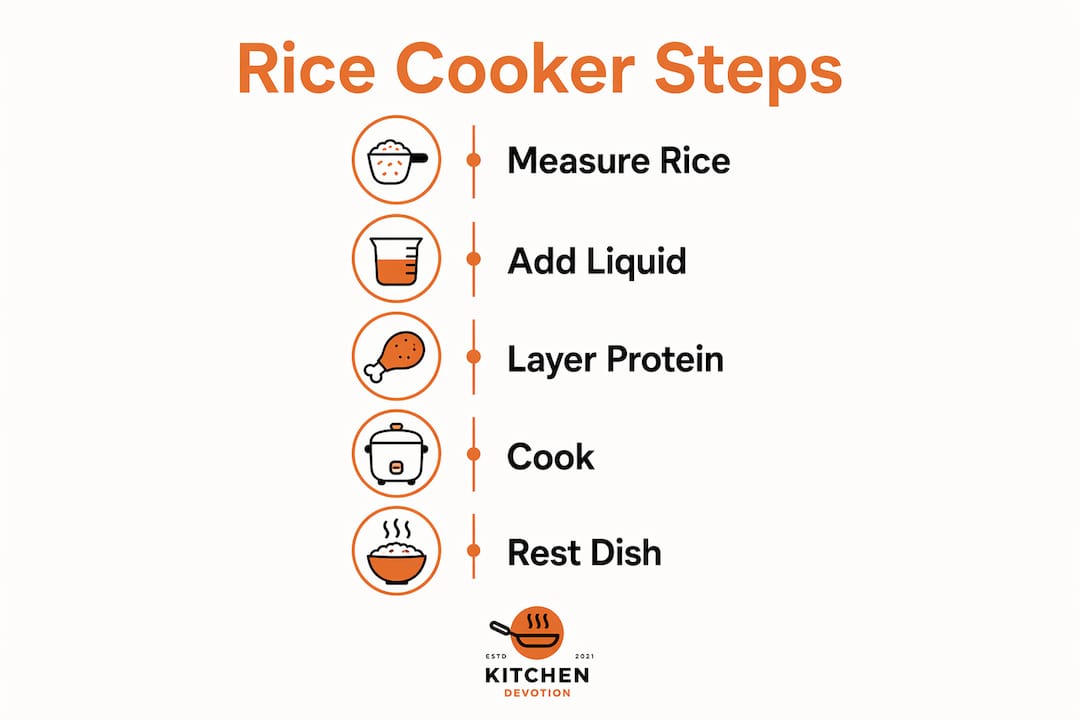
- Rinse 1 cup of jasmine rice under cold water until the water runs clear.
- Add rice and 1.5 cups of chicken broth to the rice cooker pot.
- Stir in 2 minced garlic cloves and 1 teaspoon of ginger directly into the broth.
- Layer chicken pieces on top of the rice without stirring. The rice cooker’s heating element sits at the bottom, so placing protein on top ensures steam cooking rather than scorching.
- Drizzle 2 tablespoons of honey and 1 tablespoon of soy sauce over the chicken.
- Close the lid and start the cook cycle. Do not lift the lid.
- When the cycle ends, check the chicken with an instant-read thermometer. It must read 165°F.
- Add frozen peas or broccoli florets on top, close the lid, and let the residual heat steam the vegetables for 5 minutes.
- Fluff the rice with a fork and serve immediately.
Recipe 2: Ground beef bowl with brown rice
Ground beef requires stirring during cooking to distribute heat evenly and prevent sticking. This makes it slightly more hands-on than chicken, but still simple.
- Rinse 1 cup of brown rice and add it to the pot with 2 cups of beef broth.
- Start the cook cycle for brown rice. Brown rice needs a head start before adding protein because it takes longer to cook than white rice.
- After 20 minutes, open the lid and add 8 ounces of seasoned ground beef broken into small pieces.
- Stir the beef into the rice, close the lid, and let the cycle finish.
- Open the lid and stir again halfway through the remaining cook time. Add 2 tablespoons of water if the mixture looks dry.
- Verify the beef reaches 160°F with your thermometer before serving.
- Top with diced tomatoes, shredded cheese, and a squeeze of lime.
Recipe 3: Lemon herb salmon with rice pilaf
- Rinse 1 cup of long-grain white rice and add it to the pot with 1.5 cups of vegetable broth.
- Add 1 teaspoon of dried thyme and 1 teaspoon of dried parsley to the broth.
- Place a salmon fillet (6–8 ounces) on top of the rice. Season with lemon zest, salt, and black pepper.
- Close the lid and run the standard cook cycle.
- Check the salmon at 145°F. The flesh should flake easily with a fork.
- Add a small amount of water during cooking if the rice looks dry before the cycle ends. This keeps the steam active and prevents scorching.
- Squeeze fresh lemon juice over the salmon before serving.
| Recipe | Rice Type | Liquid Ratio | Protein Temp Target | Cook Time (approx.) |
|---|---|---|---|---|
| Honey garlic chicken | Jasmine | 1:1.5 | 165°F | 25–30 min |
| Ground beef bowl | Brown | 1:2 | 160°F | 45–50 min |
| Lemon herb salmon | Long-grain white | 1:1.5 | 145°F | 25–30 min |
Pro Tip: After the cook cycle ends, let the rice cooker sit on “keep warm” for 10 minutes with the lid closed before serving. This resting period lets moisture redistribute evenly through the rice, which eliminates dry spots and gummy clumps.
What goes wrong with rice cooker recipes and how do you fix it?
Most problems with rice cooker cooking come down to two variables: liquid ratio and protein size. Get those right, and the appliance does the rest correctly.
Common issues and their fixes
Mushy rice: Too much liquid is the cause. Reduce the water or broth by 2 tablespoons on your next attempt. Also check whether your marinade or vegetables released extra moisture during cooking.
Dry or tough protein: The protein pieces were too large, or the cook cycle ended before the steam fully penetrated the meat. Cut pieces smaller next time and run a second short cook cycle if needed.
Undercooked meat: The thermometer reading was below the safe target. Close the lid and restart the cook cycle for 5–10 minutes, then check the temperature again. Never serve protein that has not reached its minimum safe temperature.
Gummy or sticky rice: Rinsing rice before cooking removes surface starch. Skipping this step is the most common cause of sticky texture. Rinse until the water runs clear every time.
Uneven cooking: Ingredients were not layered correctly. Rice and liquid go in first, aromatics go into the liquid, and protein sits on top. Layering protein on top of rice lets steam circulate freely around each piece.
Storage and reheating
Refrigerate cooked dishes within 2 hours of finishing the cook cycle. Use shallow containers so the food cools quickly and evenly. Consume leftovers within 3–4 days. When reheating, add a tablespoon of water or broth to the container before microwaving to restore moisture to the rice.
Pro Tip: Portion leftovers into individual servings before refrigerating. Single-serving containers cool faster than one large batch, which keeps the food in the safe temperature zone more quickly.
Key Takeaways
Mastering rice cooker recipes requires correct liquid ratios, proper protein layering, and a thermometer to verify safe internal temperatures every time.
| Point | Details |
|---|---|
| Layer protein on top | Place meat above the rice so steam cooks it evenly without scorching. |
| Use a thermometer | Check chicken at 165°F, ground beef at 160°F, and fish or pork at 145°F. |
| Match liquid to rice type | Use a 1:1.5 ratio for white rice and a 1:2 ratio for brown rice. |
| Rinse rice before cooking | Removing surface starch prevents gummy, sticky texture in every recipe. |
| Store leftovers quickly | Refrigerate within 2 hours in shallow containers and eat within 3–4 days. |
Why I think most cooks underestimate their rice cooker
Most home cooks use their rice cooker for plain rice and nothing else. That is a significant waste of a capable appliance. After years of cooking with one, I can say the rice cooker is the most forgiving one-pot tool in the kitchen. It does not burn food the way a stovetop does. It does not dry out proteins the way an oven can. The enclosed steam environment is genuinely gentle.
The one area where I see cooks go wrong is skipping the thermometer. People trust visual cues for doneness, and that habit is fine on a stovetop where you can cut into a piece and check. Inside a rice cooker, you cannot see what is happening. The thermometer is not optional. I keep mine clipped to the side of the rice cooker so I never forget to use it.
My other strong opinion: brown rice is better than white rice for most savory recipes. It holds up to the steam cycle without going mushy, and it adds a nutty flavor that complements chicken and beef well. The longer cook time is a small trade-off for noticeably better texture and nutrition.
Experimentation is where the real payoff lives. Once you understand the layering method and the liquid ratios, you can adapt almost any simple stew or braise to the rice cooker format. Coconut milk instead of broth, Thai basil instead of parsley, lime instead of lemon. The appliance does not care. It just steams whatever you put in it. That flexibility is what makes rice cooker cooking genuinely worth mastering.
— K. Connors
The right kitchen gear makes every recipe easier
Good recipes need good tools. A rice cooker handles the cooking, but the rest of your kitchen setup determines how fast and enjoyable the process is.

Kitchendevotion curates kitchen appliances and cookware for home cooks who want quality without complexity. The kitchen appliance priority list is a practical starting point for anyone building or upgrading their kitchen setup, with clear guidance on which tools deliver the most value. For cooks who want to go further, the multi-purpose appliance guide covers how to choose versatile tools that complement your rice cooker and reduce the total number of appliances you need. Quality gear pays off in every meal you make.
FAQ
What can I cook in a rice cooker besides rice?
A rice cooker handles chicken, ground beef, salmon, pork, soups, steamed vegetables, and even simple desserts like rice pudding. The appliance excels at any dish that benefits from steady, moist heat.
How do I know when meat is done in a rice cooker?
Use an instant-read thermometer. Chicken must reach 165°F, ground beef 160°F, and pork or fish 145°F. Visual cues alone do not confirm safe doneness inside a rice cooker.
Can I make vegetarian rice cooker recipes?
Vegetarian dishes work very well in a rice cooker. Lentils, chickpeas, tofu, and mixed vegetables all cook effectively using the same layering method as protein-based recipes.
Why is my rice mushy after cooking?
Mushy rice results from too much liquid. Reduce your water or broth by 2 tablespoons and rinse the rice thoroughly before cooking to remove excess surface starch.
How long do rice cooker leftovers last?
Refrigerate leftovers within 2 hours of cooking and consume them within 3–4 days. Store in shallow airtight containers to speed cooling and maintain food safety.





No comment