
Seasonal recipes are meals built around whatever produce is freshest and most abundant right now at your local market. This guide gives you a season-by-season produce cheat-sheet, 12 ready-to-use recipe ideas (with times, skill levels, and appliance picks), shopping and storage advice, simple preserving projects, and a Sunday planning method to pull it all together. Everything here is US-focused and draws on USDA SNAP-Ed guidance and Kitchendevotion appliance resources.
What you’ll find here:
- A season-by-season produce reference for the continental US
- 12 recipe ideas (3 per season) with appliance suggestions
- Shopping, storage, and preserving strategies
- A simple weekly meal-planning method
- Appliance and cookware picks that multiply your options
Table of Contents
- Why cooking with the seasons actually matters
- Your season-by-season produce cheat-sheet for the US
- 12 seasonal recipe ideas you can cook right now
- How to shop smart and store seasonal produce
- Simple preserving projects to stretch seasonal flavors
- Which appliances make seasonal cooking easier
- How to build a seasonal week of meals in under 20 minutes
- Key Takeaways
- Why appliance choice is the real seasonal cooking unlock
- Kitchendevotion’s picks for seasonal cooking
- Useful sources
- FAQ
Why cooking with the seasons actually matters
The flavor case is the easiest one to make. Produce allowed to ripen naturally in the ground retains more vitamins and flavor compounds than fruit or vegetables harvested early and shipped across the country. Nutrition experts consistently point to nutrient loss during prolonged cold storage and long-distance transport as a real drawback of out-of-season produce. A tomato picked ripe in August simply tastes different from one shipped from 2,000 miles away in February.
The cost argument is just as solid. When a local crop peaks, supply rises and prices drop. Seasonal foods also require less energy for storage and transport, which lowers a household’s indirect carbon footprint. Buying a flat of strawberries in June costs a fraction of what you’d pay in December.
One thing worth knowing: you don’t have to eat only fresh produce to eat seasonally. The USDA SNAP-Ed Seasonal Produce Guide explicitly includes frozen, canned, and dried options. Freezing at peak maturity can sometimes preserve higher nutrient levels than fresh produce that’s been sitting in cold storage for weeks.
Pro Tip: When a crop floods your farmers’ market and prices drop noticeably, that’s your signal to buy in bulk and preserve. A late-summer tomato glut, for example, is the single best time to batch a tomato sauce for the freezer.
Your season-by-season produce cheat-sheet for the US
The table below maps each season to its most commonly available produce across the continental US. Think of it as a quick-reference card for market visits or weekly meal planning.
| Season | Key Vegetables | Key Fruits |
|---|---|---|
| Spring | Asparagus, peas, spinach, radishes, arugula, leeks, artichokes | Strawberries, rhubarb, apricots |
| Summer | Tomatoes, zucchini, corn, peppers, green beans, eggplant, cucumbers | Peaches, blueberries, watermelon, cherries |
| Fall | Winter squash, sweet potatoes, Brussels sprouts, kale, cauliflower, beets | Apples, pears, cranberries, grapes |
| Winter | Carrots, parsnips, turnips, cabbage, celery root, sunchokes | Citrus (oranges, grapefruit, clementines), pomegranates |
Regional caveat: Market timing shifts significantly by latitude. Asparagus arrives in March in the South and not until May in the upper Midwest. Coastal California and Florida run weeks ahead of northern inland states. The most reliable signal isn’t a national calendar — it’s what shows up consistently at your local farmers’ market or in your CSA box.
12 seasonal recipe ideas you can cook right now
Flexible meal templates — sheet-pan dinners, grain bowls, soups, frittatas — are the most practical route to seasonal cooking because they accept almost any vegetable without requiring you to learn a new recipe each time. The 12 ideas below use that logic.
Spring
1. Asparagus and pea frittata
Sauté leeks and peas, pour over beaten eggs, finish under the broiler. 30 minutes / beginner / oven-safe skillet. Make it vegan by using a chickpea-flour batter instead of eggs.
2. Spring greens grain bowl with lemon tahini
Roast radishes and asparagus, pile onto farro or quinoa, drizzle with tahini dressing. 25 minutes / beginner / sheet pan. Gluten-free with certified GF grains.
3. Strawberry rhubarb crisp (weekend project)
Toss sliced strawberries and rhubarb with sugar and cornstarch, top with oat crumble, bake until bubbling. 1 hour / beginner / baking tools. Use maple syrup for a lower-sugar version.
Summer
4. Air-fryer zucchini fritters
Grate zucchini, squeeze dry, mix with egg and flour, form patties, air-fry at 375°F for 12 minutes. 20 minutes / beginner / air fryer. Swap flour for almond flour to go gluten-free.
5. Corn and tomato sheet-pan chicken
Toss bone-in thighs with cherry tomatoes, corn cut from the cob, and olive oil. Roast at 425°F for 35 minutes. 40 minutes / beginner / sheet pan. Leave out the chicken and add white beans for a vegetarian version.
6. Batch tomato sauce (weekend project)
Halve 10 pounds of ripe tomatoes, roast with garlic and basil, blend, then freeze or water-bath can. 2.5 hours / intermediate / blender + Dutch oven. Low-sodium: skip added salt and season at serving.
Fall
7. Roasted butternut squash soup
Roast halved squash at 400°F, scoop flesh, blend with sautéed onion and vegetable broth. 50 minutes / beginner / immersion blender. Naturally vegan and gluten-free.
8. Air-fryer Brussels sprouts with balsamic
Halve sprouts, toss with oil and salt, air-fry at 380°F for 14 minutes, finish with balsamic glaze. 20 minutes / beginner / air fryer. These are a solid side for fall recipes or holiday meal prep.
9. Apple and sweet potato Dutch oven braise (weekend project)
Brown pork shoulder, add diced sweet potato, sliced apples, cider, and thyme. Braise covered at 325°F for 2.5 hours. 3 hours / intermediate / Dutch oven. Use chickpeas instead of pork for a vegetarian version.
Winter
10. White bean and kale soup
Sauté garlic and onion, add canned white beans, chopped kale, and broth. Simmer 20 minutes. 30 minutes / beginner / Dutch oven. Naturally gluten-free; use low-sodium broth to cut salt.
11. Roasted root vegetable medley
Toss carrots, parsnips, and turnips with olive oil and rosemary, roast at 425°F for 30 minutes. 35 minutes / beginner / sheet pan. Works as a side or the base of a winter grain bowl.
12. Citrus-glazed salmon with fennel (weekend project)
Marinate salmon in orange juice and honey, sear in a cast-iron skillet, finish in the oven with sliced fennel. 40 minutes / intermediate / cast-iron skillet. Low-sodium: reduce the glaze without added salt.
How to shop smart and store seasonal produce
When a crop is at peak supply, you’ll see it everywhere at the market and the price reflects it. Farmers’ market guides map monthly peaks — asparagus in spring, sweet corn and tomatoes in summer, apples and winter squash in fall, storage crops in winter. Price and abundance together are your best ripeness signal.
For selection: berries should smell sweet and show no white shoulders; tomatoes should give slightly under thumb pressure; greens should be crisp with no yellowing; winter squash should feel heavy and have a dry, corky stem.
Storage basics: tomatoes and stone fruit ripen best on the counter; greens and herbs last longer wrapped loosely in a damp paper towel in the fridge; root vegetables and winter squash prefer a cool, dark spot and can hold for weeks. Frozen and canned produce harvested at peak is genuinely as nutritious as fresh, per USDA SNAP-Ed guidance — keep both in rotation.
Simple preserving projects to stretch seasonal flavors
Preserving during a glut is the most cost-effective pantry move a home cook can make. Late summer is the prime window for bulk preservation. Here are three projects that fit a weekend afternoon.
-
Freezer blanching (berries, green beans, corn): Blanch vegetables 2–3 minutes in boiling water, shock in ice water, pat dry, spread on a sheet pan to freeze solid, then transfer to bags. Berries skip the blanching step entirely.
-
Refrigerator quick pickles (cucumbers, radishes, green beans): Combine equal parts white vinegar and water with a tablespoon of salt and sugar, pour hot over sliced vegetables in a jar, cool, and refrigerate. Ready in 24 hours, good for 2–3 weeks.
-
Batch tomato sauce (freeze or water-bath can): Roast, blend, and simmer as in Recipe 6 above. For shelf-stable jars, use a tested water-bath canning procedure and add bottled lemon juice to each jar for safe acidity. Freezing is simpler and requires no special equipment.
Safety note: Freezing and refrigerator pickling are low-risk for home cooks; water-bath canning requires following a tested recipe to prevent spoilage. The USDA’s complete guide to home canning is the standard reference.
These preserved staples plug directly into weeknight meals: the tomato sauce goes into pasta or shakshuka; quick pickles brighten grain bowls; frozen corn or green beans drop straight into soups.
Which appliances make seasonal cooking easier
The right tools don’t just save time — they expand what you can cook. Here’s what earns its place across all four seasons:
- Air fryer: Crisps vegetables in 15–20 minutes with minimal oil. Ideal for Brussels sprouts, zucchini fritters, and root vegetable sides. See Kitchendevotion’s guide on air fryer techniques for getting the best results.
- Dutch oven: The workhorse for braises, soups, and batch tomato sauce. Enameled cast iron works on any cooktop and goes straight to the table.
- Immersion blender: Turns roasted squash or cooked tomatoes into silky soup or sauce without transferring hot liquid to a countertop blender.
- Sheet pans (heavy-gauge): The simplest tool for high-heat roasting. Two rimmed half-sheet pans handle most weeknight dinners.
- Food processor: Speeds up grating, slicing, and chopping for batch projects like slaws, pickles, and frittata fillings.
- Chef’s knife: Every produce-heavy recipe starts here. A reliable chef’s knife cuts prep time more than any gadget.
Pro Tip: Before buying a new appliance, check whether it handles at least three seasonal tasks. An air fryer that roasts vegetables, reheats leftovers, and crisps proteins earns its counter space far faster than a single-use gadget. Kitchendevotion’s multi-purpose appliance guide walks through exactly what to look for.
The best seasonal cooks flip the usual approach: let the vegetable drive the meal and choose the appliance that handles it fastest. A cohesive tool collection built around a few multi-use pieces beats a drawer full of single-purpose gadgets every time.
How to build a seasonal week of meals in under 20 minutes
The pantry-first, two-swap method works like this: start with what you already have, then make two ingredient swaps based on what’s in season. You don’t need new recipes — you need flexible templates.
- Sunday inventory (5 minutes): Check your fridge, freezer, and pantry. Note proteins, grains, and any preserved items.
- Pick two proteins for the week: One quick-cook (eggs, fish, canned beans) and one slow-cook (a braise or roast for the weekend).
- Choose three vegetable templates: Sheet-pan roast, soup or braise, and a raw or lightly cooked salad or grain bowl.
- Schedule one batch session: 30–60 minutes on Sunday to prep a grain, roast a tray of vegetables, or start a quick pickle.
- Assign meals to nights: Fastest templates (grain bowl, frittata) go on the busiest nights; the braise or weekend project lands on Saturday.
Example fall week: A farmers’ market haul of butternut squash, apples, kale, and sweet potatoes becomes: Monday — roasted squash soup (immersion blender, 50 minutes); Tuesday — kale and white bean grain bowl (sheet pan, 25 minutes); Wednesday — leftover soup with crusty bread; Thursday — air-fryer Brussels sprouts over farro; Saturday — apple and sweet potato Dutch oven braise.
Key Takeaways
Eating seasonally improves flavor, lowers grocery costs during peak supply, and reduces the environmental impact of your meals — and it works just as well with frozen or canned produce as with fresh.
| Point | Details |
|---|---|
| Shop by abundance | Price drops and market volume signal peak season — that’s when to buy in bulk. |
| Use flexible templates | Sheet-pan dinners, grain bowls, and soups accept any seasonal vegetable without a new recipe. |
| Preserve during gluts | Freeze, quick-pickle, or batch-cook sauce when prices are lowest to extend seasonal flavor year-round. |
| Choose multi-use appliances | An air fryer, Dutch oven, and immersion blender cover most seasonal cooking tasks across all four seasons. |
| Kitchendevotion resources | Kitchendevotion’s curated appliance guides help you pick the right tools for seasonal cooking at any budget. |
Why appliance choice is the real seasonal cooking unlock
Most seasonal cooking advice stops at “buy local and eat fresh.” That’s fine as far as it goes, but it misses the practical barrier most home cooks actually face: time. A butternut squash sitting on your counter doesn’t become dinner by itself. The cooks who stick with seasonal eating long-term aren’t the ones with the most discipline — they’re the ones with the right tools within arm’s reach.
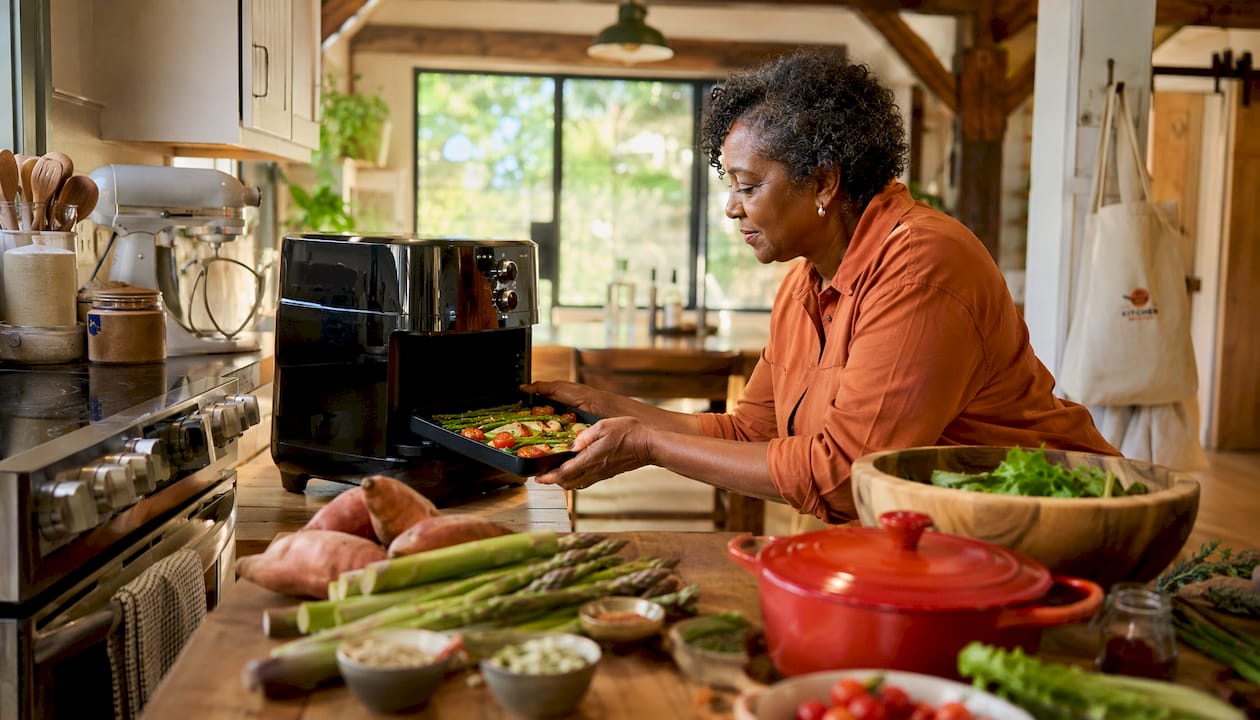
An air fryer cuts a roasted-vegetable side from 40 minutes to 18. An immersion blender means you’ll actually make that squash soup instead of skipping it because cleanup sounds like too much work. These aren’t luxuries; they’re the difference between a seasonal habit that lasts and one that fades by November.
The other thing most guides understate: preserved staples are the backbone of year-round seasonal cooking. A freezer stocked with August tomato sauce and blanched corn lets you cook seasonally in January without pretending that January produce is exciting. Treat preservation as part of the cooking habit, not a separate project.
Kitchendevotion’s picks for seasonal cooking
Seasonal cooking gets easier when your appliances are chosen with it in mind — not just one recipe, but the full range of roasting, blending, braising, and batch-cooking that shifts with the calendar.

Kitchendevotion curates appliances and cookware specifically for home cooks who want speed and flexibility without buying a cabinet full of single-use gadgets. The kitchen appliance priority list is the best starting point if you’re building or upgrading your kitchen setup, and the time-saving appliances guide highlights the air fryers and multi-cookers that handle the most seasonal recipes fastest. Links go to retail partners including Amazon; Kitchendevotion may earn a commission on qualifying purchases at no extra cost to you.
Useful sources
- USDA SNAP-Ed Seasonal Produce Guide — The primary US government reference for seasonal produce, including guidance on frozen, canned, and dried options as valid seasonal choices.
- Seasonal Food Guide (seasonalfoodguide.org) — State-by-state seasonality data for 170+ produce items; useful as a quick lookup tool when planning market trips.
- PMC: Local Seasonal Foods and Sustainable Consumption — Peer-reviewed systematic review of the environmental, health, and economic evidence for seasonal eating.
- Cambridge Core: Seasonality and Dietary Requirements — Academic paper examining health and sustainability trade-offs of local vs. global seasonal eating.
- Almanac.com: Eating Seasonally — Practical US-focused guide to regional timing differences and how to read local market signals.
- 2026 Sustainability Food Trends (Wine Drop Cookery) — Industry perspective on how sustainability is shaping home cooking trends, including seasonal sourcing.
FAQ
What are seasonal recipes?
Seasonal recipes are meals built around produce that’s currently at peak freshness and availability in your region. They typically taste better, cost less, and have a lower environmental footprint than meals built on out-of-season ingredients.
Can frozen or canned produce count as seasonal?
Yes. The USDA SNAP-Ed Seasonal Produce Guide confirms that frozen, canned, and dried produce harvested at peak maturity is a valid part of seasonal eating and can retain strong nutrient levels.
How do I know what’s in season near me?
Watch what’s abundant and cheapest at your local farmers’ market or CSA — that’s the most reliable signal. Regional timing varies widely; southern and coastal states run several weeks ahead of northern inland areas.
Which appliances help most with seasonal cooking?
An air fryer, Dutch oven, immersion blender, and a heavy sheet pan cover the majority of seasonal recipes across all four seasons. Kitchendevotion’s appliance priority list helps you decide which to buy first.
How do I start cooking seasonally without overhauling my routine?
Swap two ingredients in a recipe you already make for whatever is in season right now, then add one batch-preserving session per month during peak gluts. That two-swap habit builds a seasonal routine without requiring new recipes every week.





No comment