

Before you grab your keys, run through this quick checklist: audit your fridge, freezer, and pantry (60 seconds per zone); plan 2–5 dinners for the week and build in at least one leftover night; write your list organized by store layout; and stock repeatable staples over one-off ingredients. That sequence alone cuts duplicate purchases, trims your bill, and gets you out of the store faster. The sections below unpack each step with templates you can actually use.
- Audit pantry, fridge, and freezer before leaving
- Plan 2–3 or 4–5 dinners (leave room for leftovers)
- Organize your list by store zone
- Prioritize versatile staples over variety
Pro Tip: Set a 60-second timer per storage zone during your audit. You’ll catch duplicates and near-empty items without turning a quick scan into a 20-minute project.
Table of Contents
- How to audit your pantry, fridge, and freezer in under 10 minutes
- A meal-planning cadence that actually reduces waste
- How to build a shopping list organized by meal and store layout
- When to buy imperfect produce, when frozen is better, and how to find markdowns
- Practical ways to save money and cut food waste
- Which appliances actually speed up meal prep?
- Sample menus and shopping lists for 2–3 day and 4–5 day cadences
- Strategies for getting through the store faster
- Key Takeaways
- The part most grocery guides get wrong
- Kitchendevotion makes the appliance decision easier
- FAQ
How to audit your pantry, fridge, and freezer in under 10 minutes
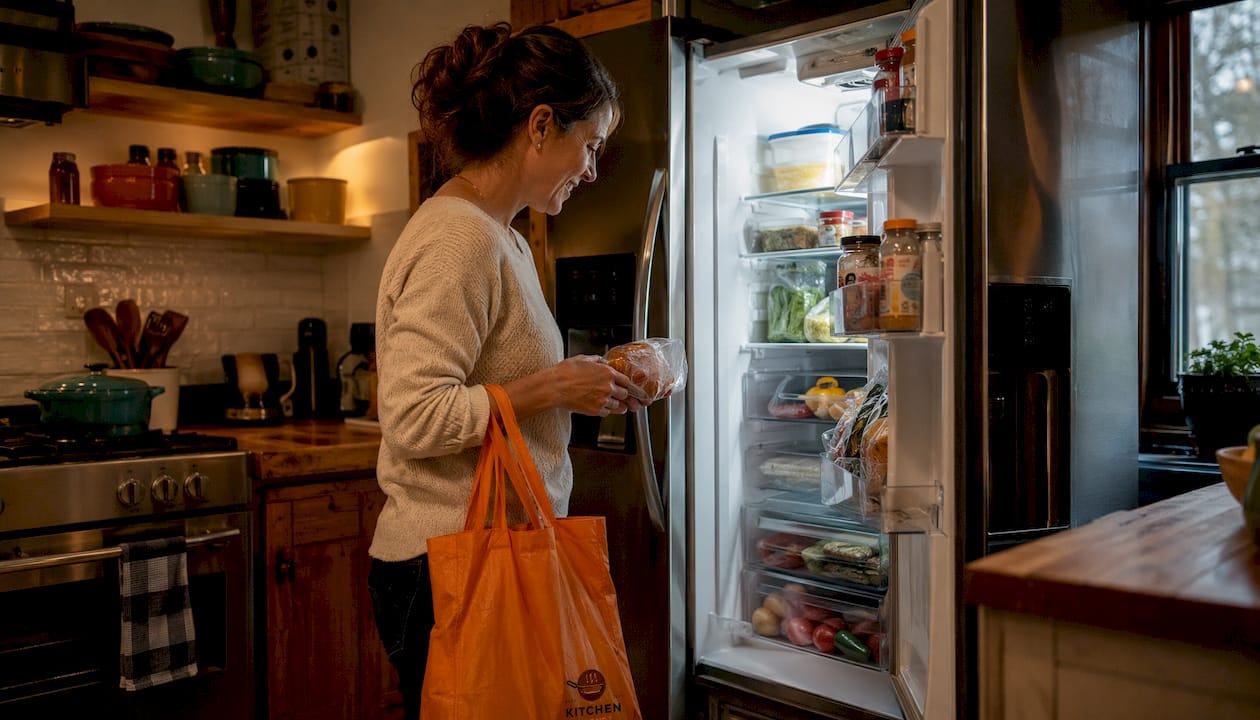
Starting every grocery run at home with a quick audit is the single most consistent advice registered dietitians give for avoiding duplicates and hidden spending. It takes less time than you think when you work by zone.
- Fridge (60–90 seconds): Check proteins (eggs, meat, tofu), dairy, and any produce. Note what’s low, what’s about to turn, and what can anchor a meal this week.
- Freezer (60 seconds): Scan for proteins, frozen vegetables, and any batch-cooked items. Frozen spinach or peas you already own are not on the list.
- Pantry (90–120 seconds): Run through grains, canned goods, oils, and condiments. Mark each category as enough / low / empty.
- Convert to list items: Only “low” and “empty” categories go on your shopping list. “Enough” stays home.
- Spot usable produce: A slightly soft bell pepper or a bruised apple isn’t trash. Flag it for a stir-fry or a smoothie so you don’t buy a duplicate.
For a deeper system, Kitchendevotion’s guide on pantry organization walks through shelf-by-shelf storage fixes that make future audits even faster.
Pro Tip: Keep a dry-erase marker on your fridge. Write the date on leftovers and opened packages so the audit takes seconds instead of sniff-tests.
A meal-planning cadence that actually reduces waste
The Harvard T.H. Chan School of Public Health recommends starting with 2–3 day menus rather than trying to plan a full week. Shorter plans mean fewer ingredients, less spoilage, and less decision fatigue at the store.
If your household is ready for more structure, planning 4–5 dinners per week and intentionally leaving two nights open for leftovers or takeout is the next step. That approach reduces pressure to cook every night while still cutting waste.
- 2–3 day plan: Ideal for solo cooks or couples. Fewer ingredients, fresher produce, easier to adapt mid-week.
- 4–5 dinner plan: Better for families. Batch-cook one protein and one grain; repurpose across multiple meals.
- Themed nights: Meatless Monday, Stir-Fry Friday, Soup Sunday. Themes keep ingredient lists short while meals stay interesting.
How to build a shopping list organized by meal and store layout
Turn your meal plan into a list, then sort that list by how your store is laid out. Most stores follow the same rough path: produce → deli and proteins → dairy → center aisles → frozen. Shopping in that order keeps you moving forward instead of backtracking for forgotten items.
Building the list:
- For each planned meal, write down only the core ingredients you don’t already have (cross-checked against your audit).
- Group items by store zone, not by recipe. “Chicken thighs” and “salmon” go under proteins, not under two separate dinners.
- Add a short “staples check” at the bottom: olive oil, salt, canned tomatoes, dried pasta. These are the items that quietly run out.
In-store navigation:
- Fill half your cart with produce first, then proteins, then dairy and staples.
- Check unit pricing on every shelf tag, not just the sticker price. A larger package is not always cheaper per ounce.
- Look at top and bottom shelves. Brands pay for eye-level placement; the better value is often one shelf up or down.
- Scan for markdowns near the deli and produce sections before you finalize quantities.
When to buy imperfect produce, when frozen is better, and how to find markdowns
Cheaper “imperfect” produce is nutritionally comparable to picture-perfect items. A bruised peach or a knobby carrot cooks the same way, and the markdown can be significant.
Fresh vs. frozen checklist:
- Buy fresh when the item is in season, you’ll use it within 3–4 days, and texture matters (salads, crudités).
- Buy frozen when the item is out of season, you need it to last, or it’s going into a cooked dish (soups, stir-fries, smoothies).
Markdown hunting:
- Check the “manager’s special” rack near produce and the deli. These items are typically one or two days from their sell-by date — fine for cooking that night or freezing immediately.
- Slightly bruised tomatoes become pasta sauce. Overripe bananas go straight to the freezer for smoothies.
Statistic callout: USDA/ERS data shows food-at-home prices rose modestly in 2025 compared to 2024, with eggs and beef seeing some of the highest increases. Frozen vegetables and imperfect produce are two of the most reliable buffers against category-level spikes.
Pro Tip: Frozen produce is picked and frozen at peak ripeness. For cooked applications, it often beats out-of-season fresh on both nutrition and price.
Practical ways to save money and cut food waste
Buying for repetition, not variety, is the most underrated grocery budget tip. A short list of core ingredients you rotate across multiple meals keeps spending predictable and waste low.
Before and during shopping:
- Compare unit prices, not package prices. A 32-oz can of tomatoes at $2.49 beats a 15-oz can at $1.39 every time.
- Bulk-buy only what you eat weekly. Bulk staples you eat regularly (oats, dried lentils, rice) save money. Bulk items you “might try” become waste.
- Skip loyalty-program trips that require a separate store visit. The gas and time usually erase the coupon savings.
After shopping:
- Wash, chop, and portion fresh produce within 24 hours of getting home. Prepped produce gets used; whole, uncut produce gets forgotten.
- Label everything going into the freezer with the date and contents.
- Use airtight, freezer-safe containers to extend the life of batch-cooked proteins and grains.
Statistic callout: The USDA/ERS notes that retail and processing costs drive most of what you pay at checkout — not farm prices. That’s why unit-pricing discipline and repeatable staples matter more than chasing weekly sale flyers.
Which appliances actually speed up meal prep?
The right tools make the grocery-to-table gap shorter. Prioritize multi-purpose appliances first.
- Multi-cooker (Instant Pot-style): Steams, pressure-cooks, slow-cooks, and sautés in one pot. Batch-cook a week’s worth of beans or grains in under an hour. Ideal for families and batch-cookers.
- Air fryer: Roasts vegetables and reheats leftovers in 8–12 minutes without preheating an oven. Check Kitchendevotion’s air fryer picks for popular U.S. models.
- High-quality chef’s knife: A sharp 8-inch chef’s knife cuts prep time for every meal. Dull knives slow you down and are less safe.
- Airtight storage containers: Freezer-safe containers make the 24-hour post-shop routine stick. Clear containers mean you can see what’s inside without opening every lid.
For help choosing between appliances, Kitchendevotion’s guide on multi-purpose appliances walks through exactly what to prioritize.
Pro Tip: Start with one appliance that replaces multiple tasks. A multi-cooker that pressure-cooks, slow-cooks, and steams eliminates the need for three separate gadgets and frees up counter space.
Sample menus and shopping lists for 2–3 day and 4–5 day cadences
2–3 day sample menu:
- Day 1: Sheet-pan chicken thighs + roasted broccoli + brown rice
- Day 2: Chicken rice bowls (leftovers) + fresh greens
- Day 3: Lentil soup + crusty bread
4–5 dinner sample menu:
- Monday: Stir-fry with tofu, frozen peas, and rice (Meatless Monday)
- Tuesday: Baked salmon + roasted sweet potato
- Wednesday: Leftover salmon grain bowls
- Thursday: Ground turkey tacos
- Friday: Pasta with canned tomatoes and white beans
| Meal | Core ingredients | Pantry items to check |
|---|---|---|
| Sheet-pan chicken | Chicken thighs, broccoli | Olive oil, garlic powder, salt |
| Lentil soup | Red lentils, carrots, onion | Canned tomatoes, cumin, broth |
| Tofu stir-fry | Firm tofu, frozen peas | Soy sauce, sesame oil, rice |
| Turkey tacos | Ground turkey, tortillas | Cumin, chili powder, canned beans |
| White bean pasta | Canned white beans, pasta | Canned tomatoes, olive oil, garlic |
24-hour prep timeline:
- Immediately: Wash and chop all produce; portion proteins into meal-size bags.
- 48–72 hours: Reheat batch-cooked grains; repurpose leftover proteins into grain bowls or wraps.
- Freezer rule: Any protein or cooked grain you won’t use in 3 days goes into a labeled freezer bag tonight.
Vegetarian swap: replace chicken or turkey in any meal above with canned chickpeas or firm tofu — the pantry staples stay the same.
Strategies for getting through the store faster
The perimeter-first approach is the most consistent time-saver nutritionists recommend: produce, then proteins and dairy, then center aisles, then frozen. You build a balanced cart and avoid the impulse-buy zones in the middle.
A few habits that compound over time: shop at off-peak hours (weekday mornings or late evenings), use a single organized list rather than scrolling through a notes app mid-aisle, and skip aisles your list doesn’t touch. If your store has a pickup option, consider it for weeks when the list is short and predictable. The goal isn’t to rush — it’s to move with intention so you’re not making decisions on the fly.
Bring reusable bags and a small cooler bag for proteins and dairy. It keeps cold items safe and means you can go straight home without worrying about food safety on a longer drive.
Key Takeaways
Smart grocery shopping comes down to one habit: audit before you leave, plan a short menu, and shop with a list organized by store layout.
| Point | Details |
|---|---|
| Audit first | Check fridge, freezer, and pantry in 60–90 seconds per zone before writing your list. |
| Plan 2–5 dinners | Start with 2–3 days or plan 4–5 dinners and leave nights open for leftovers to cut waste. |
| Shop the perimeter first | Produce → proteins → dairy → center aisles → frozen reduces impulse buys and saves time. |
| Buy for repetition | Core repeatable staples keep your budget predictable and your waste low. |
| Kitchendevotion appliance picks | One multi-purpose appliance (multi-cooker or air fryer) cuts weeknight prep time significantly. |
The part most grocery guides get wrong
The conventional advice is to plan a full week of meals. In practice, that creates a different problem: you buy 14 unique ingredients for 7 dinners, use each one once, and throw away half of them by Thursday.
The better frame is to buy for transformation, not variety. A batch of chicken thighs becomes a sheet-pan dinner on Monday, a grain bowl on Tuesday, and a soup base on Wednesday. The ingredient list barely changes; the meals feel completely different. That’s the actual skill, and most shopping guides skip it entirely.
There’s also a real tension between lowest-possible cost and convenience that nobody talks about honestly. On a planned week, buying dried beans and cooking them from scratch makes sense. On a chaotic week, a can of chickpeas at twice the price is still the right call — because it gets used instead of sitting on the counter until it goes bad. Knowing which week you’re in before you shop is worth more than any coupon strategy.
Try one tactic from this article for two weeks before adding another. The pantry audit alone tends to pay for itself in the first trip.
Kitchendevotion makes the appliance decision easier
Choosing one appliance that genuinely cuts your weeknight prep time is worth more than a drawer full of gadgets you rotate once a month. Kitchendevotion curates a focused list of time-saving kitchen appliances built specifically for home cooks who want less effort and less waste, not more gear.
Whether you’re weighing an air fryer for faster reheating or a multi-cooker for batch-cooking grains and proteins, Kitchendevotion’s picks are chosen for real-kitchen usefulness, not spec-sheet impressiveness. If you’re starting from scratch, the kitchen appliance priority list is the fastest way to figure out what to buy first. Browse the curated picks and find the one tool that replaces three.
FAQ
What should I do before every grocery trip?
Audit your fridge, freezer, and pantry in under 10 minutes, then build your list from what’s actually low or empty. Registered dietitians consistently identify this home audit as the most effective way to avoid duplicate purchases and reduce hidden spending.
How many dinners should I plan per week?
Start with 2–3 dinners if you’re new to meal planning, or plan 4–5 dinners and leave two nights open for leftovers. The Harvard T.H. Chan School of Public Health recommends shorter menus to reduce decision fatigue and waste.
Is frozen produce as nutritious as fresh?
Yes, for most cooked applications. Frozen vegetables are picked and frozen at peak ripeness, making them a nutritious and often cheaper option when produce is out of season or when you need it to last longer than a few days.
How do I actually save money at the grocery store?
Check unit prices (price per ounce, not per package), look at top and bottom shelves for better value, and buy repeatable staples in bulk only when you eat them weekly. Imperfect produce markdowns are another reliable way to cut costs without sacrificing nutrition.
Which kitchen appliance saves the most time for home cooks?
A multi-cooker (Instant Pot-style) is the highest-leverage starting point because it replaces multiple appliances and handles batch-cooking proteins and grains in one session. Kitchendevotion’s curated appliance guides can help you choose the right model for your household size and cooking habits.




No comment