
A 30-inch overall sink footprint fits most kitchens and handles everything from washing pots to soaking sheet pans, which is why it’s the default choice for standard 33 to 36-inch base cabinets. Go wider and you gain capacity but lose counter space; go deeper and you gain wash volume but sacrifice under-sink storage and comfort for shorter cooks. Check the recommended dimensions and measuring steps below before you order anything.
TL;DR:
- Sinks wider than 30 inches provide more capacity but reduce counter space and may require larger cabinets and more support, especially in oversized models.
- Depth should match your height and tasks, with 8 to 10 inches ideal for daily use, while deeper bowls can cause back strain and limit under-sink storage.
- Always measure cabinet width and countertop clearance at the narrowest points, and check manufacturer templates before ordering to avoid fitting issues.
- Single bowls require at least 30 inches of cabinet width, double bowls need a minimum of 33 inches, and layout impacts flow and task efficiency in the kitchen.
- Material choices like stainless steel, cast iron, or composite influence size and support needs, with thicker gauges supporting larger undermount sinks without flexing or noise.
Table of Contents
- Sink Size Guide: Standard Widths and What Each One Suits
- How Deep Should a Kitchen Sink Be for Your Height and Tasks?
- How to Measure for a New Sink: Cut-Outs, Cabinets, and Clearance
- Single, Double, 1.5-Bowl, or Farmhouse: Matching Layout to Cabinet Width
- Sink Materials and How They Shape Your Size Options
- Plumbing, Disposals, and Under-Sink Clearance Checks
- Quick-Reference Sizing Table and Pre-Purchase Checklist
- Kitchen Devotion Resources for Matching a Sink to Your Space
- How Sink Size Changes the Way You Actually Cook
- Does a Bigger Sink Mean Bigger Water Bills?
- Author’s Practical Take: Ergonomics vs Capacity
- Ready to Shop by Size, Depth, and Mounting Style
- Sources
- FAQ
Sink Size Guide: Standard Widths and What Each One Suits
Sink manufacturers build to a fairly predictable set of widths, and knowing what each one is actually good for saves you from buying based on looks alone. According to industry sizing charts, common overall widths run 22, 25, 27, 30, 33, and 36 inches, with workstation models pushing past 36 inches for larger kitchens.
Here’s how those standard kitchen sink sizes break down in practice:
- 22 inches: Very compact. Works in tight galley kitchens, secondary prep areas, or laundry/utility spots where floor space is scarce.
- 25 inches: Small kitchens that still need a real single bowl rather than a cramped one.
- 27 inches: A comfortable step up for small to medium kitchens wanting a bit more elbow room.
- 30 inches: The standard, most versatile size. Fits comfortably into most 33 to 36-inch cabinets and handles single or double-bowl configurations.
- 33 inches: Popular for double-bowl or low-divide setups where you want two distinct work zones.
- 36 inches: Considered a luxury or workstation size, common in larger kitchens with generous cabinet runs.
- 39 inches and up: Oversized workstation sinks built for kitchens that double as entertaining hubs.
One distinction trips up a lot of buyers: the overall size printed on a spec sheet isn’t the same as the cut-out size, which is typically an inch or two smaller on each dimension to leave room for the sink’s lip to rest on the countertop. Lipless or undermount models measure differently again, since the cut-out has to match the bowl’s outer edge almost exactly rather than leaving overlap. Before you fall in love with any sink, check the manufacturer’s listed “minimum cabinet width.” That number, not the sink’s overall width, is what actually determines whether it will drop into your existing cabinet run.
How Deep Should a Kitchen Sink Be for Your Height and Tasks?
Bowl depth matters more than most people expect, and it’s the dimension buyers get wrong most often. Most kitchen sinks run 6 to 12 inches deep, with 8 to 10 inches being the most common range chosen by homeowners who want real capacity without a step stool.
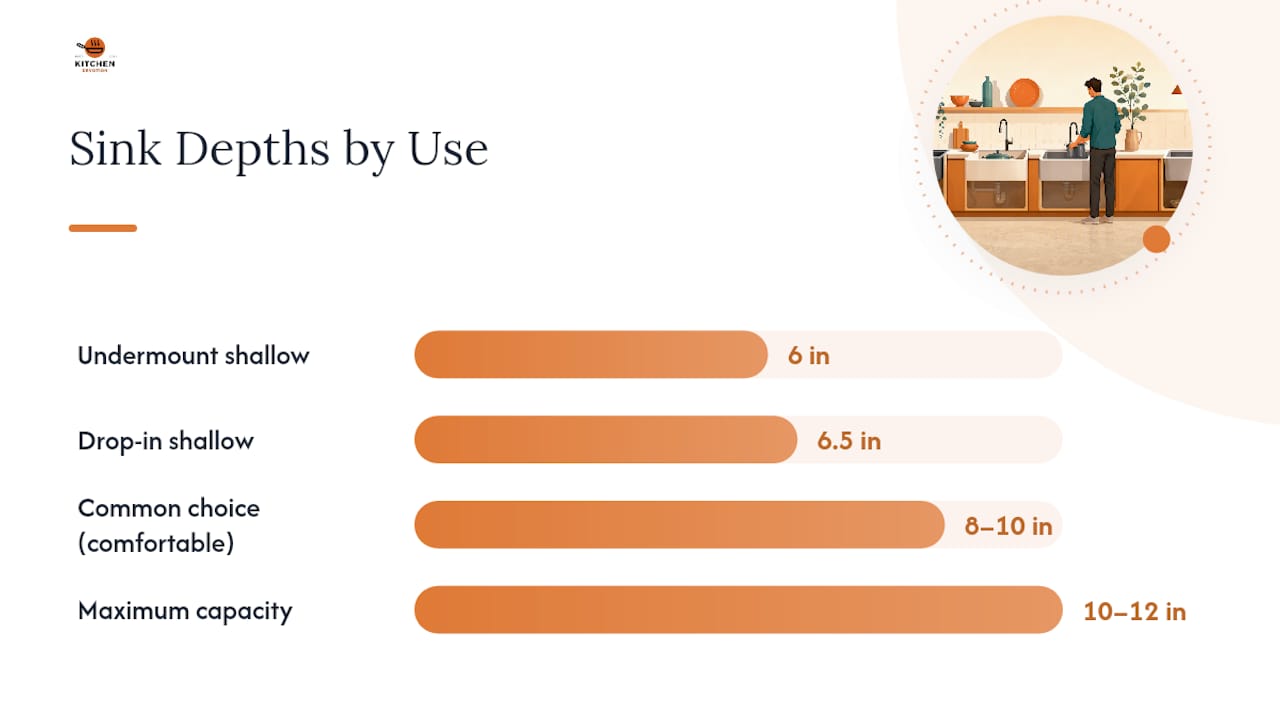
Elkay’s buying guide, built around what it calls the “6 S’s of sink selection,” treats depth as one of the most consequential decisions in the whole process. Its depth breakdown lists 6 inches for undermount and 6.5 inches for drop-in as common shallow maximums for accessibility-focused installs, while 8 to 10 inches covers general daily use and heavy pot washing.
Depth by use case:
- Under 8 inches: Better for shorter cooks or ADA-style accessible kitchens where reach matters more than raw volume.
- 9 to 10 inches: Ideal if you regularly hand-wash stockpots, sheet pans, or oversized mixing bowls.
- 10 to 12 inches: Maximum capacity, but only worth it if back strain isn’t a concern and under-sink storage isn’t tight.
Countertop thickness adds to your effective depth with an undermount install. An 8-inch bowl under a 1.25-inch countertop edge gets you close to a 9.25-inch working depth in practice, according to sizing guides from Angi. Deeper sinks also eat into the cabinet space below, sometimes crowding out pull-out trash bins or leaving less room for plumbing, and Houzz design writers note that a too-deep bowl can cause real back strain for shorter users over years of daily use.
Pro Tip: If a showroom has display sinks mounted at standard counter height, lean over one and mimic washing a pot before you buy. Thirty seconds there tells you more than any spec sheet.

How to Measure for a New Sink: Cut-Outs, Cabinets, and Clearance
Getting the measurements right before you order is the single step that prevents the most expensive mistakes. Work through this order every time:
- Measure internal cabinet width at its narrowest point, not just the outer cabinet face. Studs, shelf lips, or plumbing lines can shrink usable width by an inch or more.
- Measure countertop depth front to back, since this caps how deep (front to back) your sink bowl can run without crowding the backsplash or front edge.
- Measure your existing cut-out if you’re replacing a sink, either lip to lip or by pulling the old sink and measuring the hole directly.
- Check vertical clearance inside the cabinet from the underside of the countertop to the top of any shelf, disposal, or stored items, since deep bowls need more room to clear.
Manufacturer spec sheets list three separate numbers that get conflated constantly: overall size (the sink’s full outer dimensions), cut-out size (the hole you actually cut into the countertop), and minimum cabinet width (the smallest cabinet that will physically house it). Confusing this is the most common reason a sink shows up and doesn’t fit. Guides recommend measuring cabinet width at its narrowest point and using the manufacturer’s cut-out template rather than eyeballing it, especially before ordering.
If you have stone, quartz, or any solid-surface countertop, or you’re increasing your sink’s footprint beyond the current cut-out, bring in a professional installer to template the cut before cutting anything. Solid surfaces don’t forgive a measurement error the way laminate does.
Single, Double, 1.5-Bowl, or Farmhouse: Matching Layout to Cabinet Width
Layout decides how you work in the kitchen just as much as size does, and each configuration has its own practical minimums. A single bowl is the most flexible choice for washing oversized cookware, and roomy single-bowl models generally want at least 30 inches of overall width to avoid feeling cramped.
- Single bowl: Best for anyone who hand-washes large pots, sheet pans, or roasting trays regularly; needs at least 30 inches to feel spacious rather than tight.
- Double bowl: Splits tasks (rinse on one side, wash on the other) but needs at least 33 inches to keep both bowls genuinely usable rather than shrunk down to fit.
- 1.5 bowl: A compromise that gives you a full-size main bowl plus a smaller secondary basin for draining or prep, typically needing similar width to a full double.
- Farmhouse/apron-front: Requires custom cabinet modifications since the front panel is exposed; check clearance before assuming your existing cabinet will accommodate one.
- Workstation sinks: Built with integrated ledges for cutting boards, colanders, and drying racks, but they demand generous width, often 33 inches or more, and deep cabinet clearance to match.
If your kitchen is tight but you still want double-bowl functionality, consider a dedicated prep sink on an island instead of forcing an oversized double bowl into a cabinet that wasn’t built for it; see our tips on a chic kitchen island makeover for ideas on maximizing island space.
Sink Materials and How They Shape Your Size Options
Material choice isn’t just about looks. It directly affects which sizes and mounting styles are structurally realistic. Stainless steel gauge matters here: 16 to 18-gauge steel is generally preferred for large undermount installs because thinner gauges can flex, warp, or resonate noisily under a big single bowl.
- Stainless steel (16 to 18 gauge): Strong enough to support large undermount cut-outs without sagging or excessive vibration noise.
- Cast iron and fireclay: Heavy and rigid, which supports big single-bowl designs well, but the added weight requires solid cabinet support.
- Composite granite: Durable and quiet, though very large footprints in composite can run heavier than steel equivalents of the same size.
Switching from a drop-in to an undermount sink almost always means dealing with the countertop, not just the sink. This Old House warns that undermount sinks need a properly finished stone or composite edge, and laminate or wood counters typically can’t support an undermount conversion without full replacement. For more on how material choices ripple into installation decisions, Kitchen Devotion’s guide on choosing sink material walks through the trade-offs in more depth. Oversized sinks in any material also need adequate cabinet-level support since a wide, heavy bowl resting on unsupported countertop overhang is a real structural risk.
Plumbing, Disposals, and Under-Sink Clearance Checks
Deeper bowls change your plumbing more than most buyers expect. A sink deeper than roughly 9 inches lowers the drain outlet, which can force you to relocate the wall drain or adjust the trap height entirely, something worth confirming with an installer before you commit to a deep bowl.
- Garbage disposals: Need real vertical clearance below the sink; a deep bowl combined with a disposal unit can leave almost no room for anything else.
- Pull-out bins and trash systems: Often require a minimum cabinet depth that a deep sink can crowd out entirely.
- Faucet reach and hole alignment: Confirm your faucet’s spout reach covers both ends of a wider or double-bowl sink, and check that faucet hole spacing matches your chosen sink’s deck layout.
- Backsplash clearance: A deeper front-to-back sink can push the faucet closer to the backsplash than expected, cramping tall pot fills.
Quick-Reference Sizing Table and Pre-Purchase Checklist
Matching cabinet width to sink width is the fastest way to shortlist options without wading through every product page. This maps common base cabinet widths to the sink sizes that typically fit:
| Cabinet Width | Recommended Sink Width/Configuration |
|---|---|
| 24 in | Compact 22 to 25-in single bowl |
| 30 in | 27 to 30-in single bowl |
| 33 in | 30 to 33-in double bowl or low-divide |
| 36 in | 33 to 36-in workstation or double bowl |
| 39 inches and up | Oversized or workstation configurations |
Before you order, run through this checklist:
- Internal cabinet width at the narrowest point
- Vertical clearance inside the cabinet
- Countertop material (laminate, stone, quartz, wood)
- Existing cut-out size, if replacing
- Faucet hole positions and spacing
- Disposal and bin clearance needs
- Manufacturer cut-out template, requested in advance
Kitchen Devotion Resources for Matching a Sink to Your Space
If depth is still the piece you’re unsure about, Kitchen Devotion’s sink depth guide breaks down how bowl depth interacts with your height and daily tasks in more detail than a spec sheet ever will. For readers ready to browse actual products against the sizes covered here, the kitchen sinks category lets you filter by footprint and mounting style rather than scrolling through everything on the market.
This guide draws on manufacturer buying guides, installer notes, and design-focused sizing research rather than a single source, since sink fit depends on cabinet reality more than any one brand’s recommendation.
How Sink Size Changes the Way You Actually Cook
A sink that’s too small turns every big cooking session into a bottleneck. Sheet pans lean against the faucet, stockpots won’t submerge, and you end up stacking dishes on the counter because the bowl is full before you’re done rinsing. That’s the practical cost of undersizing: it’s not aesthetic, it’s workflow friction you’ll feel every single day.
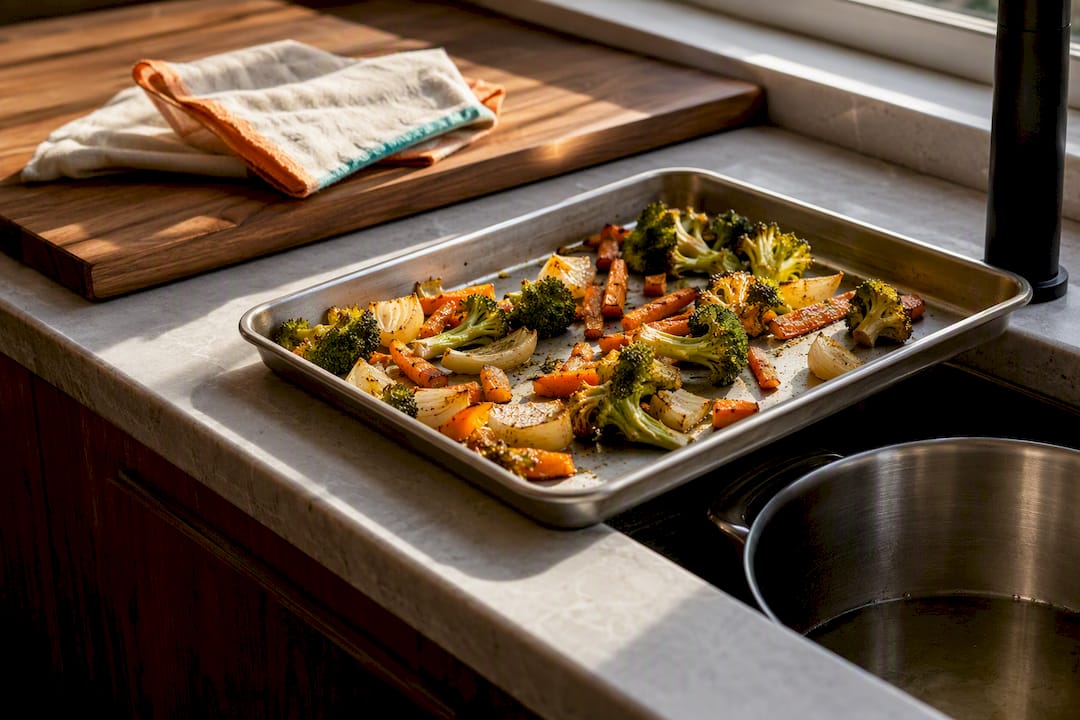
Oversizing carries its own hidden cost. A 36-inch workstation sink eats counter space you might need for a cutting board, a stand mixer, or simple staging room during meal prep. If your kitchen already runs short on counter space, a sink that’s too generous can make the whole room feel more cramped rather than less, even though the bowl itself is more capable.
The sweet spot is matching sink capacity to how you actually cook, not to how the kitchen looks in photos. A household that bakes often and needs to soak large trays benefits from a deeper, wider single bowl. A household that mostly hand-washes a few dishes at a time between dishwasher loads does better with a smaller footprint that frees up counter space for everything else. Workflow, not showroom appeal, should drive the decision.
Does a Bigger Sink Mean Bigger Water Bills?
A larger sink doesn’t automatically mean higher water use, but it does change your habits around it. A wider, deeper bowl invites you to fill it more fully for soaking dishes rather than running the faucet in short bursts, which can mean more water per session even though you’re running the tap less often overall.
Smaller sinks tend to push a different pattern: quick rinses, less standing water, and more frequent but shorter faucet use. Neither approach is definitively better on total water use, since it depends more on your habits (soaking versus rinsing, filling the bowl versus running the tap continuously) than on the bowl’s dimensions alone.
Where sink size does matter concretely is dishwasher-adjacent behavior. Households with smaller sinks and a dishwasher often skip hand-washing almost entirely, letting the appliance handle water efficiency. Households with large single-bowl sinks and heavy hand-washing habits, especially around big cookware that won’t fit a dishwasher, will generally see higher sink-related water use regardless of the bowl’s exact depth. If reducing water use matters to your household, pairing a sensible sink size with a low-flow faucet aerator will do more than picking a smaller bowl ever will.
Author’s Practical Take: Ergonomics vs Capacity
If your daily tasks are quick rinses and loading a dishwasher, favor ergonomics and go shallower. If you regularly hand-wash stockpots or sheet pans, favor depth even if it costs some under-sink storage. Test both in a showroom at real countertop height before you decide. A sink you can’t comfortably reach into every day isn’t a good trade for extra capacity.
— K. Connors
Ready to Shop by Size, Depth, and Mounting Style
The website curates sinks so you can filter by the exact dimensions this guide covers, rather than clicking through dozens of listings that bury the cut-out size three tabs deep. That’s the real advantage here: you already know your cabinet width and preferred depth range, so you can shop by those numbers directly instead of guessing from a product photo.
Browse the Kitchen Devotion sinks landing page to see options sorted by footprint and depth, and check individual product pages for downloadable cut-out templates where manufacturers provide them. If you’re planning a fuller kitchen overhaul alongside a new sink, the kitchen appliance priority list for new homeowners is worth a look before you finalize your countertop budget.
Sources
- Kitchen Sink Buying Guide
- How to choose the right depth for your kitchen sink
- Kitchen Sink Sizes: A Complete Guide to Common Dimensions
- How to install a sink
FAQ
What Are Standard Sizes for Kitchen Sinks?
Standard overall widths run 22, 25, 27, 30, 33, and 36 inches, with 30 inches being the most common all-purpose choice for typical base cabinets.
Is a 24-Inch Sink Big Enough?
A 24-inch sink is workable for small kitchens or secondary prep sinks, but it’s tight for washing large pots or sheet pans; most households prefer at least 27 to 30 inches for a primary sink.
Are All Sinks 22 Inches Wide?
No. While 22 inches is a common compact size, sinks range widely from 22 up to 36 inches or more, with 30 inches serving as the standard, versatile middle ground.
What Is the Difference Between a 30-Inch and 36-Inch Sink?
A 30-inch sink fits most standard cabinets and works well for single or double-bowl setups, while a 36-inch sink is generally considered a luxury or workstation size that needs a wider cabinet and gives up more counter space in exchange for extra capacity.





No comment