
Air fryer liners are safe when they match your appliance’s heat range, let air circulate freely, and never touch the heating element. Parchment, food-grade silicone, and aluminum foil all pass that test when used correctly. The trouble starts when a liner is the wrong material for the temperature, sized wrong for the basket, or left loose during an empty preheat. Get those three things right and a liner is just a convenience. Get one wrong and it becomes a fire risk.
TL;DR:
- Using the correct material rated for your air fryer’s temperature range is essential to prevent fire risks, especially avoiding unweighted liners during preheat.
- Perforated silicone liners are best for frequent use and greasy foods, while perforated parchment is suitable for occasional, quick batches like fries.
- Proper fit and ventilation are crucial; liners must match your basket’s size and leave gaps for air circulation to maintain crispiness.
- Never run the oven empty with a loose paper liner or place liners directly in contact with the heating element to avoid fires.
- Always check that liners have explicit food-contact safe wording, a clear maximum temperature limit, and are shaped for your specific appliance.
Table of Contents
- Which Air Fryer Liner Should You Use for Everyday Cooking?
- What Are the Heat Limits for Parchment, Silicone, and Foil?
- Why Do Perforations and Fit Change How Your Food Cooks?
- What Are the Non-Negotiable Safety Rules for Liners?
- What Should You Check Before Buying an Air Fryer Liner?
- How Do You Clean and Maintain a Reusable Liner Safely?
- When Should You Skip Liners Entirely?
- The Kitchen Devotion Take on Liner Safety
- Are Air Fryer Liners a Fire Hazard?
- Why the “Just Use a Liner” Advice Misses the Point
- Let Kitchen Devotion Help You Cook With Confidence
- Sources
- FAQ
Which Air Fryer Liner Should You Use for Everyday Cooking?
The right liner depends on what’s going in the basket, not just what’s on sale. A quick batch of fries needs different protection than a sticky batch of wings.
- Perforated parchment works best for quick, crispy jobs: fries, tater tots, breaded chicken tenders. It’s cheap, disposable, and the holes let hot air move the way it’s supposed to.
- Perforated or raised-rib food-grade silicone earns its keep with messy, repeated cooking: marinated meats, cheese-topped dishes, anything that drips. The weight and grip keep it in place better than paper, and you wash it instead of tossing it.
- Aluminum foil should stay in a narrow lane: foil packets for fish or vegetables, or dishes where you’re not cooking anything acidic. Foil reacts with tomatoes, citrus, and vinegar-based marinades, so keep it away from those, and always vent it and weigh it down with food.
None of these choices is universally “best.” Silicone that’s built for repeat use is a smart buy if you air fry several times a week, since a reusable silicone liner holds up better than paper over dozens of cycles. If you’re an occasional fryer who wants zero cleanup, perforated parchment is the simpler answer.
What Are the Heat Limits for Parchment, Silicone, and Foil?
Every liner material has a ceiling, and going past it is where “safe” turns into “risky.” Parchment paper used in air fryers is generally rated up to about the typical cooking temperatures most air fryers use, which usually stay within safe limits for parchment. Push past that ceiling repeatedly and parchment can scorch, discolor, or release smoke.
Food-grade silicone has more headroom. Quality silicone liners are typically rated between 450°F and 500°F, which is why silicone tends to be the safer pick if you’re running your air fryer at its top settings for things like whole chickens or thick cuts of meat.
Foil behaves differently than either. It doesn’t have a meaningful heat ceiling inside an air fryer’s normal range, but it reacts chemically with acidic foods, and it can concentrate heat in a way that scorches food touching it directly.
One detail that trips people up: parchment isn’t rated for a bare, empty preheat. A parchment liner sitting alone in a hot basket with no food weighing it down is exactly the scenario Reynolds Brands warns against, and it’s the single most common way a liner ends up scorched or airborne.
If you’re shopping for liners, here’s the non-negotiable checklist before you buy:
- Look for explicit food-contact-safe wording on the packaging, not vague marketing language.
- Confirm a stated maximum temperature in degrees Fahrenheit, not a general “heat-resistant” claim.
- Skip anything labeled “premium silicone” with no temperature number attached. Vague marketing language is a red flag, and it usually means the manufacturer hasn’t tested the product to a real standard.
Consumer Reports has flagged this exact gap: buyers should stick to clearly labeled, food-contact-rated liners and steer clear of craft-grade silicone that was never designed for a kitchen appliance, let alone one running at 400°F.
Why Do Perforations and Fit Change How Your Food Cooks?
An air fryer isn’t an oven with a fan bolted on. It works by circulating hot air around food from every angle, and anything that blocks that circulation changes the entire cooking process. A solid, unperforated mat sitting flat in the basket traps moisture underneath the food instead of letting it escape. The result is soggier texture, longer cook times, and food that steams more than it fries.
Perforated designs solve this by letting air move through the liner the same way it moves through the mesh basket underneath. Hands-on testing backs this up: solid-bottom liners consistently reduced crisping and trapped grease, while perforated versions preserved the crisp exterior that’s the entire point of air frying. The mechanism is simple. Convection cooking depends on airflow, and a solid mat converts that airflow into something closer to steaming, which is the opposite of what you bought the appliance to do.
Fit matters just as much as perforation. A few rules to follow:
- Measure your basket’s diameter and shape before ordering liners. A liner that’s too big can curl up against the side vents and choke off airflow entirely.
- Leave a visible gap between the liner’s edge and the basket wall so air can still circulate around the sides, not just through the holes.
- Don’t stack a liner in every tray of a multi-basket fryer if it means blocking the vents between levels.
Pro Tip: If your air fryer has a drawer with a removable crisper plate, put the liner on top of the plate, not underneath it. Liners placed below the food-contact surface block the very airflow gaps the plate was designed to create.
What Are the Non-Negotiable Safety Rules for Liners?
Most liner accidents trace back to one of a handful of preventable mistakes. Follow these rules and the risk drops close to zero:
- Never run an empty preheat with a loose paper liner. Add your food to the liner before you start the appliance, every time. A bare parchment sheet with nothing weighing it down is light enough for the fan to lift.
- Keep every liner away from the heating element. That means checking the fit before you close the basket and never overloading it so food or liner edges creep upward toward the coil.
- Don’t overcrowd the basket. Piling food past the liner’s edges pushes it toward the sides and increases the chance it drifts toward the element as it cooks.
- Retire any liner that cracks, discolors, warps, or smells after washing. Those are signs the material has already started breaking down.
- If you see smoke, stop the appliance immediately, unplug it, and let it cool before opening the basket. Don’t pour water on a hot air fryer.
The fire risk here is real but narrow. Fire risk shows up specifically when a liner contacts the heating element or gets pushed past its rated temperature, and lightweight paper that isn’t weighed down during preheat is the most common trigger. Weighing the liner with food, or choosing a heavier reusable silicone liner in the first place, removes most of that risk before it starts.
What Should You Check Before Buying an Air Fryer Liner?
Shopping for liners online means relying on a product photo and a description, so the wording matters more than usual. Run every listing through this checklist:
- Food-contact wording. The listing should say the material is rated for direct food contact, not just “kitchen safe” or “heat resistant.”
- An exact temperature rating in °F. If the number isn’t stated anywhere, assume the product hasn’t been tested to a real standard.
- Perforations or raised channels. Solid liners with no ventilation description are a warning sign for anyone who wants crisp results.
- A shape that matches your basket. Measure your basket’s diameter or dimensions before you buy, since round, square, and oval baskets aren’t interchangeable.
- True food-grade silicone language. Not all silicone is equal. Look for explicit “100% food-grade” claims and the absence of filler materials that degrade under repeated heat cycles.
Skip anything relying on vague adjectives instead of numbers. A listing that says “premium quality” but never states a temperature limit is asking you to trust marketing copy over a spec sheet.
How Do You Clean and Maintain a Reusable Liner Safely?
A reusable silicone liner only stays safe as long as it stays clean and intact. Grease buildup isn’t just unpleasant, it’s a smoking hazard the next time you run the fryer hot.
- Wash the liner after every single use, following whatever dishwasher or hand-wash guidance came with the product.
- Inspect it each time for cracks, a sticky residue that won’t rinse off, or a lingering odor even after washing.
- If you spot any of those signs, retire the liner. Cracking, stickiness, warping, or a persistent smell all signal degradation that can affect both safety and how your food tastes.
- For stubborn grease, soak the liner in warm water with a degreasing dish soap rather than scrubbing it with anything abrasive that could scratch the surface.
Pro Tip: Keep a second liner in rotation. Washing and fully drying silicone takes longer than most people expect, and a liner that goes back in the basket still damp traps steam under your food on the next cook.
For basket buildup that liners alone won’t fix, Kitchendevotion’s guide on cleaning an air fryer basket walks through the deeper degreasing steps. If you’re dealing with genuinely burnt-on residue anywhere in your cookware rotation, proven methods for cleaning burnt pans apply the same soak-and-lift logic.
When Should You Skip Liners Entirely?
Liners aren’t right for every appliance or every recipe, and a few red flags should send you back to cooking directly in the basket.
- Toaster-oven style air-fryer combos often have different airflow patterns and heating element placement than basket-style fryers. Don’t use a liner in one unless the manual specifically allows it.
- Ultra-high-temp or long-cook recipes that run near or above a liner’s stated limit aren’t worth the gamble. If your recipe calls for 450°F for 40 minutes and your parchment liner tops out at 428°F, cook without it.
- Any product with no temperature rating, no food-contact claim, or a persistent odor after washing belongs in the trash, not your basket.
When in doubt, cooking directly on the basket or crisper plate is always the fallback. It’s what the appliance was designed for before liners existed.
The Kitchen Devotion Take on Liner Safety
Editorial positions on liners emphasize that the material matters less than the habit. Perforated silicone is often recommended for frequent air frying because its weight and shape resist common mistakes like getting sucked toward the element and blocking airflow. Perforated parchment is often preferred for quick, occasional batches where disposability outweighs durability.
Every appliance is a little different, which is why checking the manual before adding any accessory matters more than any general liner advice. Kitchendevotion’s air fryer buying resources cover model-specific quirks worth knowing before your next purchase, and the basket-cleaning guide referenced above pairs directly with the maintenance advice here.
Are Air Fryer Liners a Fire Hazard?
Liners themselves aren’t inherently dangerous. The fire risk comes from specific, avoidable conditions: a liner touching the heating element, a lightweight paper liner left unweighted during preheat, or a material pushed well past its rated temperature.
Picture the two most common ways it happens. First, someone preheats the fryer with a bare parchment sheet sitting in the basket, no food on top. The fan pulls air through the basket to build convection, and that same airflow can lift the unweighted edge of the paper toward the coil. Second, someone uses foil to line a basket for a high-heat sear, and a corner curls up and makes contact with the element during cooking.
Both scenarios share the same root cause: a lightweight or improperly placed liner with nothing holding it down. The fix is straightforward and doesn’t require giving up liners altogether. Add food to the liner before you turn the appliance on, keep the liner sized so it can’t ride up the basket walls, and never leave a paper liner unweighted during any preheat cycle. Perforated designs help too, since they lie flatter under the pull of the fan than a solid sheet does.
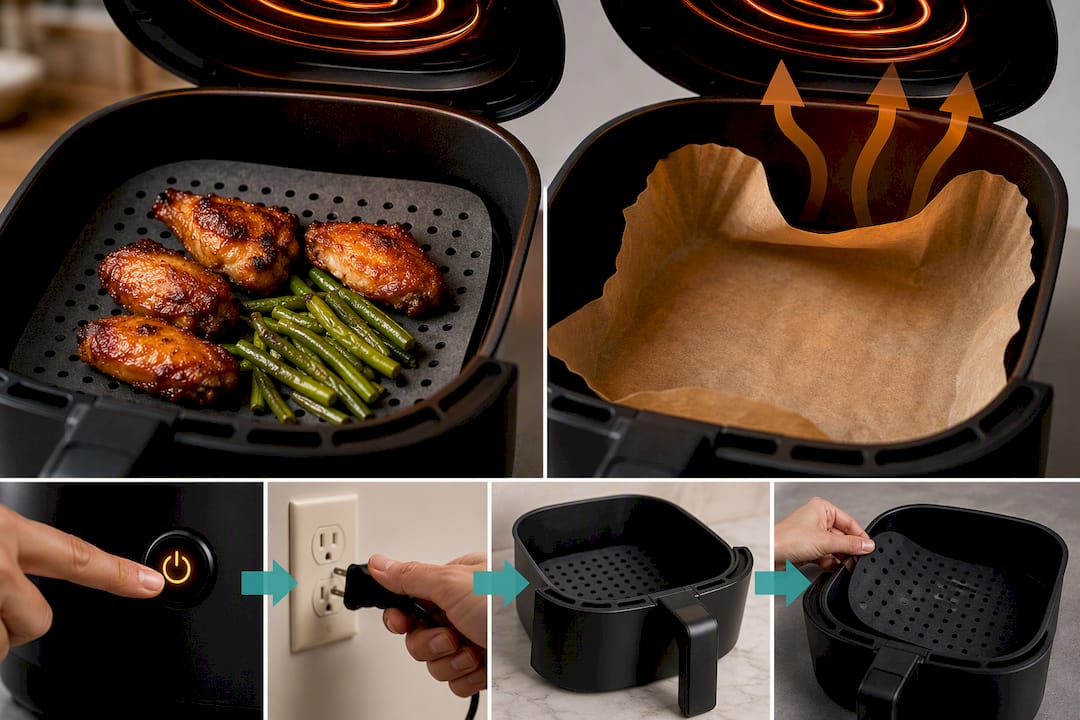
If you ever smell burning or see smoke, the response is the same regardless of what caused it. Turn off and unplug the appliance, let it cool fully, and inspect the liner and basket before running it again. For related basket habits that reduce risk overall, the guide on common air fryer cooking mistakes covers overcrowding issues that compound the same airflow problems.
Why the “Just Use a Liner” Advice Misses the Point
Most liner advice online treats the choice as a binary: liner or no liner. That framing misses what actually determines safety, which is whether the person using the liner understands its limits.
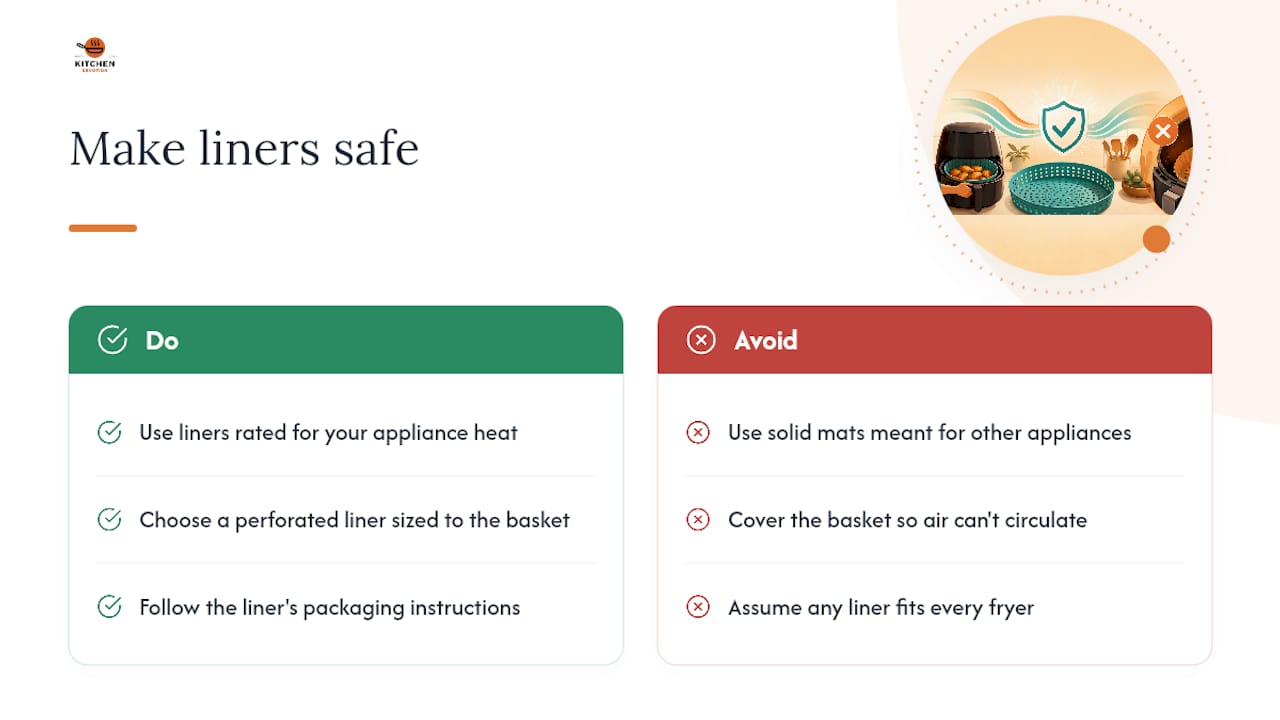
I’ve watched someone ruin a batch of wings by lining the basket with a solid silicone mat meant for a completely different appliance, then wonder why everything came out steamed instead of crisp. The liner wasn’t unsafe. It was the wrong shape for the job, and it turned a convection oven into a covered dish for twenty minutes. Swapping to a perforated liner sized to the actual basket fixed the problem in one try.
The safest liner isn’t the one with the fanciest marketing. It’s the one rated for your appliance’s heat range, shaped to fit your basket, and used the way its own packaging tells you to use it. Get those three things right, and liners stop being a risk you manage and start being a tool that works.
— K. Connors
Let Kitchen Devotion Help You Cook With Confidence
Picking the right liner is one small piece of a bigger question: does your air fryer, and the gear around it, actually fit how you cook? Kitchendevotion built its air fryer resources to answer exactly that, comparing baskets, capacities, and features so you’re not guessing which model plays nicely with perforated liners versus solid trays.

If you’re setting up a kitchen from scratch or replacing appliances that never quite fit your routine, the Kitchen Appliance Priority List for New Homeowners breaks down what to buy first and why an air fryer usually earns its spot near the top. Start there, match it against the liner guidance above, and you’ll spend less time troubleshooting soggy fries and more time actually eating them.
Sources
- Tasting Table — air fryer liner guidance
- T3 — You’re using your air fryer liners wrong
- Reynolds Brands — How to use air fryer liners
FAQ
Are Air Fryer Liners Safe for Your Health?
Yes, when they’re made of true food-grade silicone, unbleached parchment, or plain aluminum foil and used within their rated temperature. The health risk comes from unlabeled materials with no stated food-contact rating, not from liners as a category.
Should You Use Liners in Your Air Fryer?
Liners are optional, not required, but they help with cleanup and grease control if you choose one that fits your basket and preserves airflow. Check your appliance manual first, since some models specifically advise against them.
Is It Better to Use Parchment Paper or Air Fryer Liners?
Parchment works well for quick, low-mess batches like fries or breaded proteins, while a purpose-cut silicone liner handles greasy or marinated foods better over repeated use. Both count as air fryer liners; the choice comes down to how often you cook and how messy the food is.
What Is the Safest Air Fryer Liner to Use?
The safest option is a perforated, food-grade silicone liner sized to your exact basket, since its weight and ventilation reduce the two biggest risks: getting pulled toward the heating element and blocking airflow. Perforated parchment is a close second for occasional, quick-cook use.



No comment