Cooking for beginners is defined as mastering a small set of foundational techniques and tools that unlock the vast majority of home-cooked meals. You do not need culinary school or a fully stocked kitchen to eat well at home. Three core methods, sautéing, roasting, and simmering, cover over 80% of common weeknight meals. Add heat control and layered seasoning to that foundation, and you have everything needed to cook with real confidence. The goal is not perfection. The goal is progress, one meal at a time.
What are the core cooking techniques beginners should master?
Sautéing, roasting, and simmering are the three techniques that cover most beginner recipes. Learning all three gives you a framework for nearly every meal you will cook in your first year.
Sautéing
Sautéing means cooking food quickly in a hot pan with a small amount of fat. It works for vegetables, chicken breasts, shrimp, and eggs. The key is high heat and constant movement. If the pan is not hot before the food goes in, you get steaming instead of browning, and the flavor suffers.
Roasting
Roasting uses dry oven heat, typically between 375°F and 450°F, to cook food evenly from all sides. It is the most forgiving method for beginners because the oven does most of the work. Roasted vegetables, chicken thighs, and sheet-pan dinners all rely on this technique. The visual cue is simple: look for golden edges and a slight char on the surface.
Simmering
Simmering means keeping liquid just below a boil, around 185°F to 205°F. You use it for soups, sauces, grains, and braises. A full boil breaks down proteins and makes sauces cloudy. A steady simmer keeps everything tender and flavorful.
| Technique | Common uses | Heat level | Visual cue |
|---|---|---|---|
| Sautéing | Vegetables, proteins, eggs | High | Golden color, slight char |
| Roasting | Chicken, root vegetables, fish | Medium to high | Caramelized edges |
| Simmering | Soups, sauces, grains | Low to medium | Gentle bubbles at surface |
| Boiling | Pasta, potatoes, blanching | High | Rolling, vigorous bubbles |
Seasoning is not a single step at the end. Layered salting throughout cooking vastly improves flavor compared to a pinch added at the table. Salt your vegetables before they go in the pan. Season your protein before it hits the heat. Taste as you go and adjust. This one habit separates flat, bland food from meals that actually taste like something.
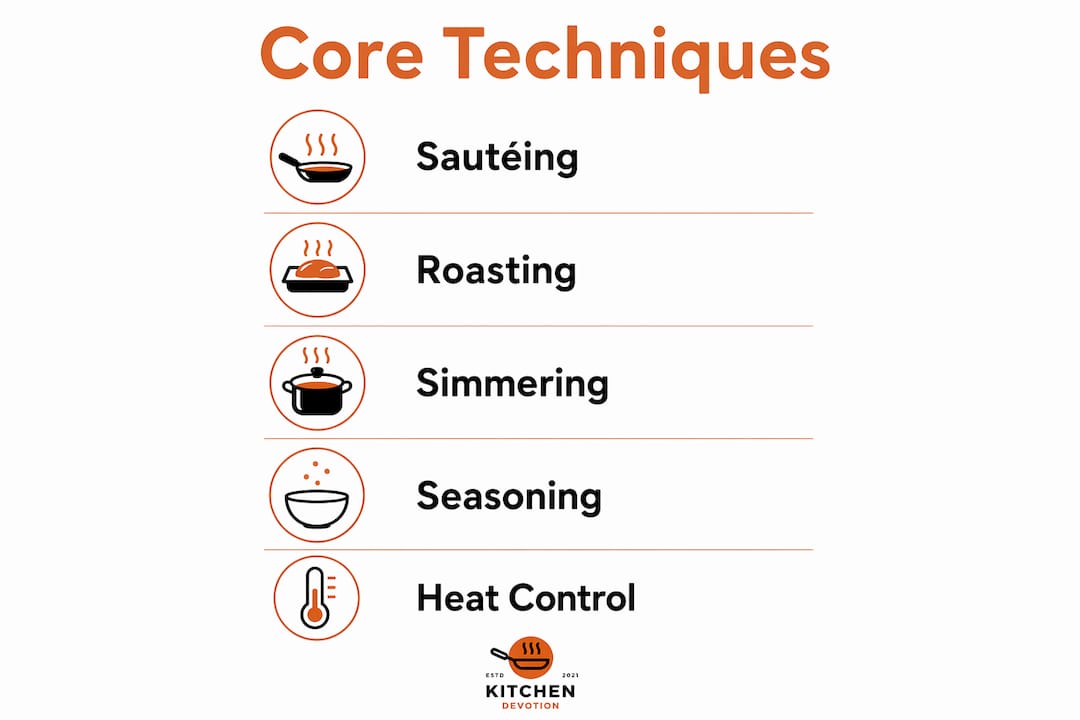
Heat control is equally critical. Most beginners cook everything on high heat and wonder why food burns on the outside while staying raw inside. Medium heat is your default for most stovetop cooking. High heat is reserved for searing and boiling water. Low heat is for sauces and anything that needs time to develop flavor.
Pro Tip: Preheat your pan for 60 to 90 seconds before adding oil. A properly heated pan prevents sticking and gives you better browning on proteins and vegetables.
Which kitchen tools and setup do beginners really need?
Four tools cover 99% of beginner recipes: a sharp 8-inch chef’s knife, a stable cutting board, a heavy skillet, and a 3-quart saucepan. That list is short on purpose. Buying a 20-piece knife block or a full pot set before you know what you actually cook is a waste of money and counter space.
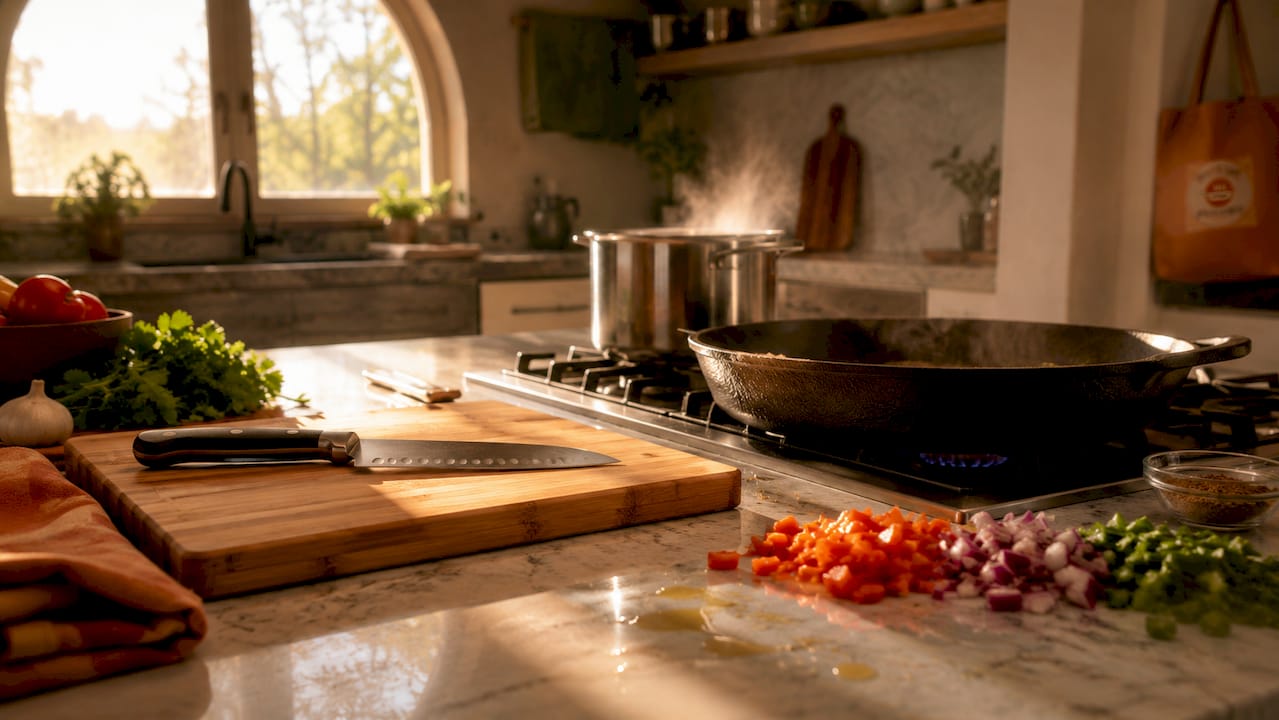
Quality beats quantity every time. A sharp chef’s knife outperforms a full set of dull blades. A heavy skillet, cast iron or stainless steel, distributes heat evenly and lasts decades. A cheap nonstick pan warps after six months and loses its coating. Spend more on fewer, better items and you will cook better food with less frustration. Check out Kitchendevotion’s guide on choosing cookware materials to understand which surfaces work best for different cooking methods.
Mise en place: the habit that changes everything
Mise en place is a French culinary term that simply means “everything in its place.” You prep all your ingredients before you turn on any heat. Chop the onion. Measure the spices. Open the can of tomatoes. Prepping before heating pans significantly reduces stress and cooking errors for beginners. When the pan is hot and the garlic is already minced, you are in control. When you are still chopping while something burns, you are not.
Your beginner kitchen essentials list:
- 8-inch chef’s knife (the single most important tool you own)
- Large cutting board (wood or plastic, at least 12 by 18 inches)
- 10 or 12-inch heavy skillet (cast iron or stainless steel)
- 3-quart saucepan with lid (for soups, sauces, and grains)
- Sheet pan (for roasting vegetables and proteins)
- Instant-read thermometer (removes all guesswork on doneness)
- Wooden spoon and silicone spatula (for stirring and flipping)
- Mixing bowls in two sizes (for prep and combining ingredients)
These beginner prep tools cover every technique in this guide. You do not need a stand mixer, a mandoline, or a specialty pan until you have cooked the basics for at least three months.
Pro Tip: Set up a small prep station before every cook session. Place your cutting board, knife, and mise en place bowls in the same spot each time. Consistency in your workspace builds speed and reduces mental load.
Kitchen organization matters more than most beginners realize. Keep your most-used tools within arm’s reach of the stove. Store spices near the cooking surface, not across the kitchen. A well-organized workspace makes cooking feel natural rather than chaotic.
How can beginners build cooking confidence with recipes and practice?
Repeating 2 to 3 simple recipes that share core ingredients builds muscle memory and confidence faster than trying something new every night. This is the single most underrated piece of advice for new cooks. Variety feels exciting, but repetition is what actually teaches you to cook.
Pick recipes that overlap in technique and ingredients. Scrambled eggs and a vegetable frittata both teach you heat control and timing. A simple tomato soup and a pasta sauce both teach you simmering and seasoning. Roasted chicken thighs and roasted vegetables use the same oven temperature and the same visual cues. When you cook the same dish three or four times, you stop following the recipe word for word and start understanding what you are doing.
The best starter recipes for new cooks share three qualities: they use few ingredients, they rely on one or two techniques, and they are forgiving when you make a mistake. Scrambled eggs, roasted vegetables with olive oil and salt, and a simple broth-based soup are the three most recommended beginner recipes for exactly these reasons.
Here is a practical sequence to start building your skills:
- Read the full recipe before touching anything. Understand every step before you begin. Surprises mid-cook cause mistakes.
- Complete your mise en place. Chop, measure, and organize every ingredient before turning on the heat.
- Preheat your pan or oven. Never add food to a cold surface unless the recipe specifically says to.
- Cook the recipe exactly as written the first time. Resist the urge to substitute or improvise until you understand the original.
- Taste at every stage. Note what the dish needs: more salt, more acid, more time on the heat.
- Write one note after cooking. Record what worked and what you would change. This turns repetition into deliberate practice.
Cooking the same dish multiple times is not boring. Each repetition teaches you something the last one did not. The second time you make scrambled eggs, you notice how quickly they overcook. The third time, you pull them off the heat 10 seconds earlier and they are perfect. That is how timing becomes instinct.
Reading a recipe fully before starting is one of the most overlooked beginner cooking tips. Recipes often include steps that require advance prep, like marinating protein overnight or bringing butter to room temperature. Discovering these details mid-cook derails the entire meal.
What common mistakes should beginners avoid to improve results?
Underseasoning is the most common reason home-cooked food tastes flat. Salt should be layered throughout cooking, not just sprinkled on at the end. Salt your pasta water until it tastes like mild seawater. Season your protein before it cooks, not after. Add a pinch to your vegetables as they hit the pan. This approach builds flavor at every stage rather than trying to fix a bland dish at the table.
Salting protein at least an hour before cooking deepens flavor and improves browning compared to last-minute seasoning. The salt has time to penetrate the surface and draw out moisture, which then gets reabsorbed. The result is more flavorful meat with a better crust.
Common beginner mistakes and their fixes:
- Overcrowding the pan. Too much food in one pan drops the temperature and causes steaming instead of browning. Cook in batches if needed.
- Skipping pan preheating. A cold pan causes sticking and uneven cooking. Always preheat before adding oil or food.
- Cooking everything on high heat. High heat burns the outside before the inside cooks through. Use medium heat as your default.
- Not using a thermometer. An instant-read thermometer removes all guesswork. Chicken is safe at 165°F, pork at 145°F, and ground beef at 160°F, per FoodSafety.gov guidelines.
- Ignoring acid. A squeeze of lemon juice or a splash of vinegar at the end of cooking brightens every dish. Acid finishing is the simplest flavor upgrade most beginners never use.
- Not tasting as you cook. The only way to know if a dish needs more salt, acid, or heat is to taste it repeatedly throughout the process.
Overcrowding the pan deserves special attention because it is so counterintuitive. You want to cook everything at once to save time. But packing a skillet with chicken pieces or mushrooms drops the pan temperature immediately. The food releases steam and turns gray instead of browning. The fix is simple: cook in two batches, or use a larger pan.
Key Takeaways
Cooking for beginners comes down to three techniques, four tools, and the discipline to repeat simple recipes until the skills become automatic.
| Point | Details |
|---|---|
| Master three techniques | Sautéing, roasting, and simmering cover the majority of beginner recipes. |
| Use four core tools | A sharp chef’s knife, cutting board, heavy skillet, and saucepan handle almost everything. |
| Practice mise en place | Prepping all ingredients before heating pans reduces errors and stress significantly. |
| Layer your seasoning | Salt throughout cooking, not just at the end, for food that actually tastes vibrant. |
| Repeat simple recipes | Cooking the same dish multiple times builds muscle memory faster than constant variety. |
What I’ve learned from cooking badly for years
I spent my first two years in the kitchen chasing new recipes every single week. I thought variety was the point. It was not. I was just avoiding the discomfort of realizing I had not actually learned anything. The night I made the same roasted chicken thighs three weeks in a row was the night I finally understood heat control.
The tools matter less than people think, and the techniques matter more. I cooked on a $15 skillet for a year before upgrading. The food was fine. What changed my cooking was not better equipment. It was understanding why food sticks, why it burns, and why it tastes bland. Those answers all live in technique, not gear.
Seasoning was my biggest blind spot. I thought I was salting my food. I was not. I was adding a pinch at the end and wondering why restaurant food tasted so much better. The moment I started salting my pasta water aggressively, seasoning my chicken an hour before cooking, and finishing dishes with a squeeze of lemon, everything changed. It felt like a cheat code that had been sitting in plain sight.
Failure is not a sign you are bad at cooking. It is the actual mechanism of learning. Every burned pan, every oversalted soup, and every rubbery chicken breast taught me something a recipe never could. The cooks who improve fastest are the ones who stay curious about what went wrong, not the ones who follow instructions perfectly and never deviate.
My honest advice: pick three recipes, cook them until they bore you, then pick three more. That cycle, repeated over six months, will make you a genuinely capable home cook. No cooking classes for beginners required, though they certainly help if you enjoy structured learning.
— K. Connors
Your next step with Kitchendevotion
Building a solid beginner kitchen does not require a big budget or a complicated shopping list. Kitchendevotion curates cookware sets and kitchen appliances specifically chosen for home cooks who want quality without the clutter.

The kitchen appliance priority list at Kitchendevotion is built for exactly this situation: new cooks who want to set up efficiently and start cooking well from day one. From nonstick cookware sets to air fryers that make weeknight meals faster and healthier, every product is selected to support the techniques covered here. Quality tools do not replace skill, but they make the learning process significantly less frustrating.
FAQ
What are the three most important cooking techniques for beginners?
Sautéing, roasting, and simmering are the three core techniques that cover the majority of beginner recipes. Mastering these three methods gives new cooks a framework for nearly every weeknight meal.
How many kitchen tools does a beginner actually need?
Four tools handle 99% of beginner recipes: a sharp 8-inch chef’s knife, a cutting board, a heavy skillet, and a 3-quart saucepan. Quality matters more than quantity when building your first kitchen setup.
Why does my home-cooked food taste bland?
Underseasoning is the most common cause of bland home cooking. Salt should be added throughout the cooking process, not just at the end, and a finishing squeeze of lemon juice or splash of vinegar brightens flavor immediately.
What is mise en place and why does it matter?
Mise en place means prepping all ingredients before turning on any heat. This practice reduces cooking errors and stress, making the entire cooking process feel controlled rather than chaotic.
How do I know when meat is fully cooked?
An instant-read thermometer gives you an accurate reading every time. Safe internal temperatures per FoodSafety.gov are 165°F for chicken, 145°F for pork, and 160°F for ground beef.



No comment