
Effective cooking tips are practical techniques and habits that help home cooks prepare meals efficiently, safely, and deliciously. The best kitchen skills combine foundational culinary knowledge, such as mastering salt, acid, fat, and heat, with smart preparation habits and USDA-backed food safety standards. Whether you are building confidence from scratch or refining your meal prep routine, the right approach makes every session in the kitchen faster, safer, and more rewarding.
1. How can mastering foundational cooking skills boost your results?
The four elements every skilled cook controls are salt, acid, fat, and heat. Mastering these four elements builds the ability to improvise and troubleshoot dishes without relying on a recipe. That shift from recipe-follower to intuitive cook is the single biggest leap you can make.
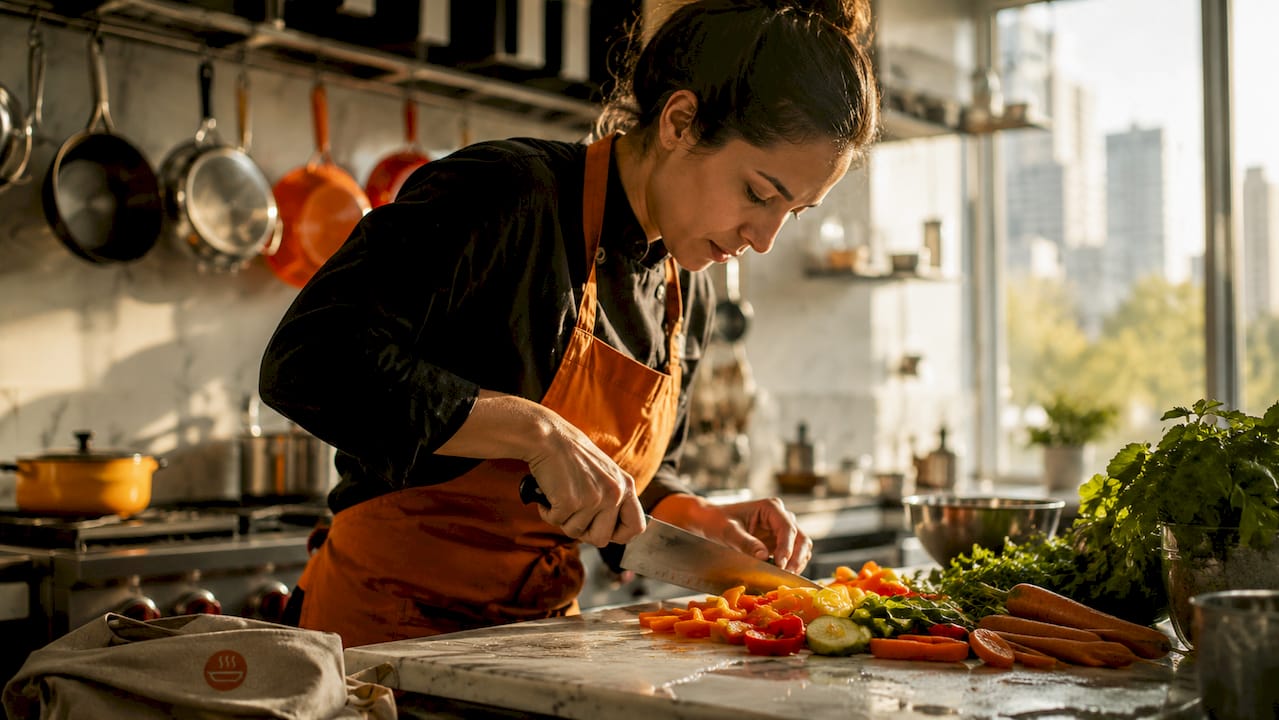
Knife skills come next. A sharp knife is faster, safer, and less tiring than a dull one. Knife skills combined with proper edge maintenance convert tedious slicing into precise, efficient cuts that make every prep session more enjoyable. Honing your blade before each use takes 30 seconds and extends the time between sharpenings by months.
Understanding the science behind techniques separates confident cooks from guessers. The Maillard reaction, for example, is the browning process that creates deep flavor when you sear meat or toast bread. Knowing why searing works helps you control the outcome instead of hoping for it.
Pro Tip: Start with cold preparations like salads before tackling high-heat cooking. Cold cooking lets you taste and adjust seasoning at an unhurried pace, which builds your instincts for salt, acid, and fat before you add the pressure of a hot pan.
- Practice seasoning with salt in layers, not just at the end.
- Use acid (lemon juice, vinegar) to brighten a dish that tastes flat.
- Control fat to carry flavor and improve texture.
- Manage heat by learning when to use high, medium, and low settings.
- Cook eggs in multiple styles to practice heat control across a single ingredient.
2. What are the best strategies for stress-free meal preparation?
Mise en place is the most important habit for kitchen efficiency. The French culinary term means “everything in its place,” and it describes the practice of prepping and organizing all ingredients before cooking begins. Mise en place transforms cooking from a reactive scramble into a calm, organized workflow. You stop losing track of steps, burning garlic while searching for the next ingredient, or forgetting to add something entirely.
Batch cooking is the second major strategy. Cook large portions of grains, proteins, and roasted vegetables on one day, then mix and match them across the week. Consistent meal prepping saves home cooks 5–7 hours weekly and reduces food spending by 30–40%. That is a meaningful return on a few hours of organized effort.
Pro Tip: Select 3–4 recipes that share common ingredients each week. This approach cuts waste, reduces shopping time, and means you are never buying a full bunch of cilantro just for one tablespoon.
Smart grocery shopping is part of the prep strategy, not separate from it. Organizing your shopping list by store section and avoiding shopping hungry can reduce unplanned purchases by 30%. Group items by produce, dairy, and protein, and check your pantry before you leave the house.
Here is a quick comparison of the three main meal prep approaches:
| Approach | Best for | Time investment |
|---|---|---|
| Batch cooking | Busy weekdays, families | 2–3 hours once a week |
| Component prep | Flexible eaters, variety seekers | 1–2 hours, mix and match |
| Frozen meal prep | Long-term planning, travel weeks | 3–4 hours, stores for weeks |
Cleaning as you cook prevents the post-meal pile-up that makes people dread the kitchen. Integrating cleanup into natural cooking pauses reduces stress and keeps your workspace clear for the next step. Rinse a bowl while something simmers. Wipe the cutting board between tasks. These small habits add up fast.
For a deeper look at organizing your prep space, the guide on building a meal prep station covers layout, tool placement, and batch cooking flow in detail.
3. What essential food safety tips should every home cook follow?
Food safety is not optional. The USDA defines the “Danger Zone” as the temperature range between 40°F and 140°F, where bacteria multiply fastest. Perishable foods must not stay in this range for more than 2 hours, or 1 hour when the ambient temperature exceeds 90°F. This rule applies to everything from a pot of soup on the stove to a platter of sliced chicken at a cookout.
Safe internal cooking temperatures are non-negotiable. The USDA sets clear minimums:
- Poultry: 165°F
- Ground meat: 160°F
- Beef, pork, lamb, and fish: 145°F with a 3-minute rest
A digital instant-read thermometer is the only reliable way to verify these temperatures. Color alone is not a safe indicator. Pink pork can be fully cooked; gray chicken can still be undercooked in the center.
Cross-contamination is one of the most common causes of foodborne illness at home. Use separate cutting boards for raw proteins and produce. Wash hands for at least 20 seconds after handling raw meat. Never place cooked food on a surface that held raw meat without washing it first.
Safe thawing matters as much as safe cooking. Thaw meat in the refrigerator, under cold running water, or in the microwave if you plan to cook it immediately. Never thaw on the counter at room temperature. Leftovers should be refrigerated within 2 hours and reheated to 165°F before eating.
The USDA Meat and Poultry Hotline has answered over 2 million calls since 1985. Specialists are available weekdays from 10:00 AM to 6:00 PM ET at 1-888-674-6854 for questions on everything from roasting times to handling additives. For a broader overview of safe kitchen habits, Kitchendevotion’s guide on kitchen safety practices covers the full picture.
4. Which kitchen tools most effectively support your cooking skills?
A sharp chef’s knife is the single most impactful tool upgrade you can make. A high-quality chef’s knife with proper maintenance turns precise cutting from a tedious task into an efficient, enjoyable motion. You do not need a full knife block. One excellent 8-inch chef’s knife, a paring knife, and a serrated bread knife cover nearly every task in a home kitchen.
Beyond the knife, these tools deliver the most value per dollar:
- Cutting board: A large wooden or plastic board gives you room to work. Size matters more than material for most home cooks.
- Bench scraper: Transfers chopped ingredients directly into the pan and keeps your board clean between tasks.
- Kitchen scale: Weighing ingredients, especially in baking, produces consistent results that volume measurements cannot match.
- Silicone spatulas: Heat-resistant, flexible, and useful for everything from folding batter to scraping a pan clean.
- Y-peeler: Faster and more comfortable than a straight peeler for most home cooks.
- Instant-read thermometer: The only reliable tool for verifying safe internal temperatures.
Pro Tip: Hone your chef’s knife with a honing steel before every cooking session. Honing realigns the blade edge without removing metal, keeping the knife sharp between professional sharpenings. A well-honed knife is safer than a dull one because it requires less force.
Budget-friendly picks exist for every tool on this list. You do not need to spend heavily to cook well. The Kitchendevotion guide on kitchen prep tools for beginners breaks down which tools are worth spending more on and which budget options perform just as well.
Maintenance extends tool life significantly. Wash knives by hand, not in the dishwasher. Store them on a magnetic strip or in a knife block, not loose in a drawer. Dry wooden cutting boards immediately after washing to prevent warping and cracking.
5. How can you adapt cooking techniques for diverse cuisines?
The four elements of salt, acid, fat, and heat apply across every cuisine on the planet. Japanese cooking uses soy sauce for salt and umami, rice vinegar for acid, and sesame oil for fat. Mexican cooking uses lime for acid, chili for heat, and lard or avocado oil for fat. The framework is universal. The ingredients change.
Experimenting with different cooking methods builds range and confidence. Each method produces a distinct result:
- Braising: Low, slow, moist heat breaks down tough cuts into tender, flavorful meals.
- Stir-frying: High heat and constant motion cook proteins and vegetables fast while preserving texture.
- Roasting: Dry oven heat concentrates flavors and creates caramelized surfaces on vegetables and meats.
- Steaming: Gentle heat preserves nutrients and produces clean, delicate flavors in fish and vegetables.
- Poaching: Simmering liquid cooks proteins gently, keeping them moist and tender.
Understanding why a technique works lets you apply it to new ingredients without a recipe. Braising works because collagen in tough cuts dissolves into gelatin over time. Once you know that, you can braise any tough cut, not just the ones listed in a cookbook.
New appliances can expand your technique range without requiring new skills from scratch. An air fryer, for example, applies the same dry-heat principle as roasting but circulates hot air for faster results and crispier textures. Kitchendevotion’s resource on air fryer crispy techniques shows how to apply this method across proteins, vegetables, and snacks.
When adding a new tool or technique, practice it with one familiar ingredient first. Cook chicken thighs in a new pan, or braise a cut you know well. Isolating the variable helps you learn the technique without the confusion of an unfamiliar ingredient at the same time.
Key Takeaways
The most effective cooking approach combines foundational technique, mise en place preparation, USDA-backed food safety habits, and the right tools to produce consistent, confident results every time.
| Point | Details |
|---|---|
| Master the four elements | Salt, acid, fat, and heat are the foundation of every cuisine and every good dish. |
| Use mise en place | Prep all ingredients before cooking to replace reactive chaos with calm, organized workflow. |
| Follow USDA temperature rules | Keep food out of the 40°F–140°F Danger Zone and use a thermometer to verify doneness. |
| Invest in a sharp chef’s knife | One quality knife with regular honing outperforms a full block of mediocre blades. |
| Batch cook strategically | Choosing 3–4 recipes with shared ingredients saves hours and cuts food spending significantly. |
What I’ve learned from years of cooking without shortcuts
The most common mistake home cooks make is chasing recipes instead of building skills. A recipe tells you what to do. Technique tells you why it works. Once you understand why searing creates flavor, why acid brightens a flat dish, and why resting meat matters, you stop needing a recipe for every meal.
I spent years cooking from cookbooks before I realized the books were doing my thinking for me. The shift happened when I started practicing knife skills deliberately, not just chopping to get through a recipe. Fifteen minutes of focused practice on a single cut, like a julienne or a brunoise, built more confidence than a hundred recipes ever did.
The tools matter, but not in the way most people think. You do not need more tools. You need fewer, better tools that you actually maintain. A honed chef’s knife and a clean cutting board will take you further than a drawer full of gadgets you never reach for.
Patience is the real skill. Cooking well is not about speed. It is about attention. The cooks who improve fastest are the ones who slow down, taste constantly, and pay attention to what the food is telling them. The pan sound, the color change, the smell shift. These are the signals that recipes cannot teach you.
Start with the basics. Practice them until they feel natural. Then add complexity. That sequence works every time.
— K. Connors
Tools and appliances worth having in your kitchen
Kitchendevotion curates kitchen appliances and tools specifically for home cooks who want to cook better without wasting money on things they will never use.

The kitchen appliance priority list is a practical starting point for anyone setting up or upgrading a kitchen. For cooks with limited time, the time-saving appliances guide identifies which tools deliver the biggest return on prep time. Kitchendevotion also covers cookware sets suited to different cooking styles and budgets, so you can match your tools to how you actually cook.
FAQ
What are the most important cooking tips for beginners?
Focus on mastering salt, acid, fat, and heat before tackling complex recipes. Knife skills and mise en place preparation are the two habits that produce the fastest improvement in kitchen confidence and efficiency.
What temperature is the USDA Danger Zone for food safety?
The USDA Danger Zone runs from 40°F to 140°F. Perishable foods must not stay in this range for more than 2 hours, or 1 hour when the ambient temperature is above 90°F.
How much time does meal prepping actually save?
Consistent meal prepping saves home cooks 5–7 hours weekly and can reduce food spending by 30–40%. Selecting recipes with shared ingredients maximizes those savings further.
What is the single best kitchen tool upgrade for home cooks?
A high-quality chef’s knife with regular honing is the most impactful upgrade. One well-maintained knife outperforms a full set of dull, neglected blades in both safety and efficiency.
How do I apply cooking techniques to cuisines I have never tried?
Use the salt, acid, fat, and heat framework as your guide. Every cuisine balances these four elements differently. Start with one unfamiliar ingredient or method at a time, using a familiar protein or vegetable, so you can isolate and learn the new technique without confusion.





No comment