
Kitchen aesthetics is defined as the deliberate combination of visual design, sensory experience, and spatial organization that shapes how a kitchen looks, feels, and functions. The role of kitchen aesthetics extends far beyond surface appeal. Research shows that 40% of individuals report improved mental health when their kitchen supports their personal style and needs. That number tells you something important: your kitchen’s design is not a luxury consideration. It is a daily health decision. In 2026, designers and home improvement experts increasingly treat kitchen spaces as psychological environments, not just cooking stations.
How does the role of kitchen aesthetics affect your mental health?
A well-designed kitchen directly improves mental wellbeing, cooking motivation, and daily energy levels. The kitchen is the most visually complex room in the home. That complexity means your brain is constantly processing visual information every time you step inside. When that information is chaotic or incoherent, your mind pays a hidden tax in the form of stress and fatigue.
Visual clutter is one of the biggest culprits. A counter covered with appliances, mail, and mismatched containers forces your brain to filter out noise before you even pick up a knife. That filtering costs mental energy you could spend on cooking creatively or simply enjoying the process. Organized, visually coherent kitchens remove that friction entirely.
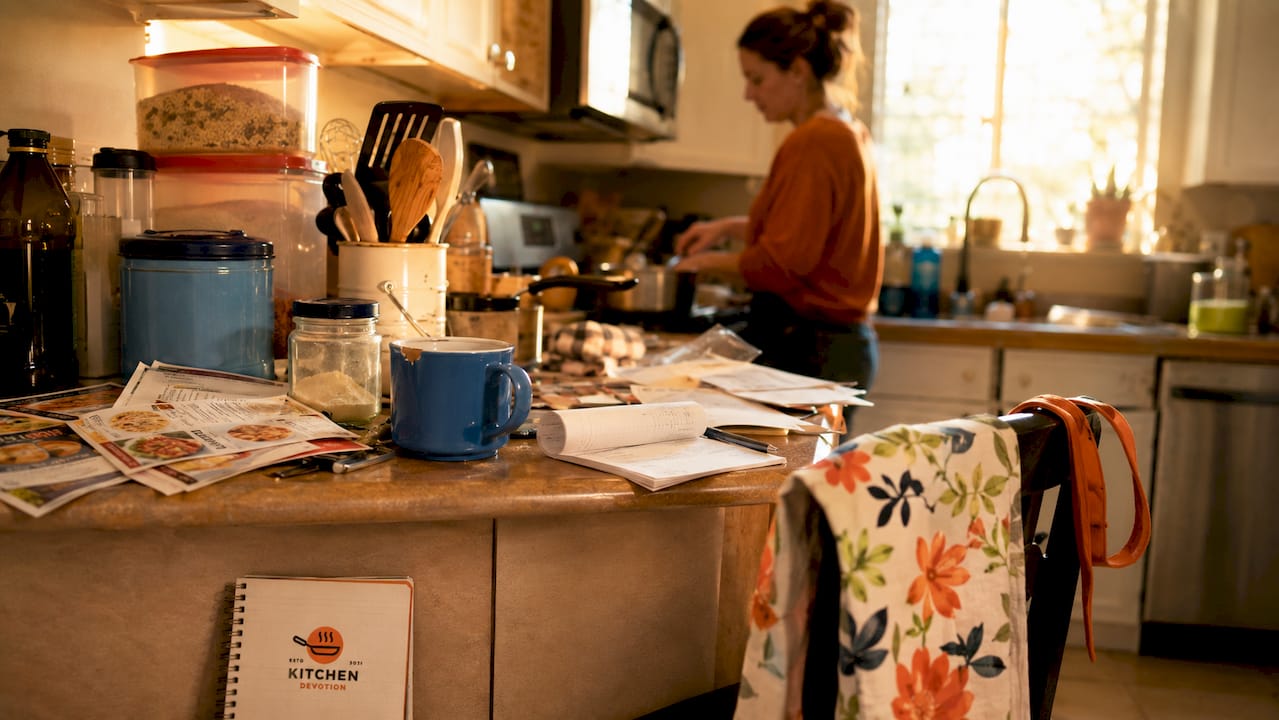
Lighting and color palettes carry equal weight. Warm, layered lighting signals comfort and relaxation to the brain, while harsh overhead fluorescents trigger alertness and tension. Color choices work the same way. Soft greens and warm whites promote calm, while high-contrast color combinations increase visual stimulation. Neither is wrong, but each produces a measurable psychological effect.
Sensory design goes even deeper than color and light. High-quality aesthetic environments enhance hedonic pleasure, causing food to be perceived as tastier and the cooking experience as more enjoyable. That means a thoughtfully designed kitchen does not just look good. It makes your meals taste better.
Here are the key design factors that directly affect your mood and motivation in the kitchen:
- Visual coherence: Matching finishes, consistent color palettes, and coordinated materials reduce cognitive noise.
- Lighting layers: Combining task lighting, ambient lighting, and accent lighting creates both function and atmosphere.
- Clear surfaces: Open counter space signals possibility and reduces pre-cooking anxiety.
- Tactile materials: Natural wood, stone, and matte finishes engage the senses positively and signal warmth.
- Accessible tools: Keeping frequently used items visible and within reach reduces decision fatigue during cooking.
Pro Tip: Keep at least 80% of your countertops clear. Research confirms that 80% clear countertops reduce cognitive load, enabling faster and more creative cooking. Reserve the remaining 20% for tools that also serve as visual accents, like a quality cutting board or a ceramic utensil holder.
Does kitchen design impact function as much as appearance?
The golden rule of kitchen design is this: function and aesthetics are not competing priorities. They are the same priority expressed differently. A kitchen that looks beautiful but forces you to search three drawers for a spatula has failed at both. A kitchen that is purely utilitarian with no visual warmth will drain your motivation to cook in it at all.
Efficient kitchen layouts that eliminate the need to search for utensils directly reduce physical and mental fatigue. That is not a design opinion. It is a measurable outcome. Poor organization creates tension and energy drain during busy routines, which compounds over time into a genuine reluctance to cook at home.
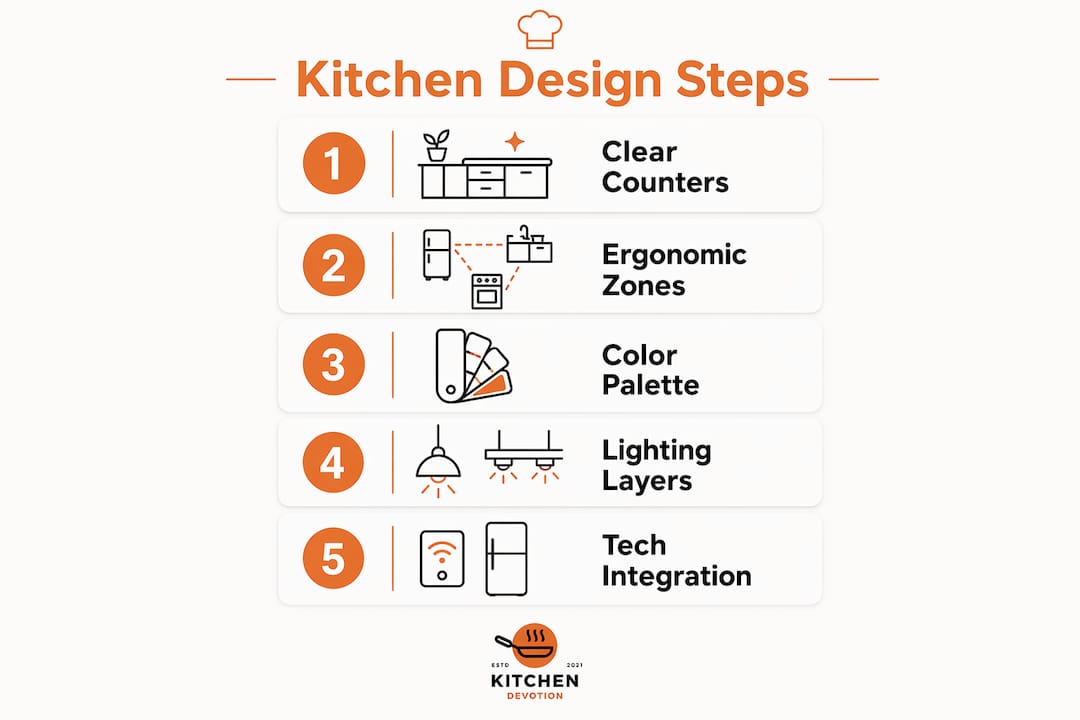
Ergonomic zoning is the practical application of this principle. It means organizing your kitchen into distinct activity zones: prep, cooking, cleaning, and storage. Each zone contains only what belongs to it. The result is a kitchen that flows naturally from one task to the next, which feels effortless and looks intentional. You can learn more about applying this through kitchen layout strategies that pair efficiency with visual appeal.
The trade-offs become clear when you look at design extremes. An overly minimalist kitchen, where every tool is hidden in a cabinet for the sake of visual cleanliness, creates a different problem. Hiding all tools for aesthetic cleanliness increases cognitive fatigue during use because you spend mental energy retrieving items instead of cooking. The photogenic kitchen you see on social media may look perfect in a photo but feel exhausting to actually use.
Here is a practical framework for balancing aesthetics and function in your own kitchen:
- Map your workflow first. Identify the three tasks you perform most often and make sure the tools for each are within arm’s reach of where you perform them.
- Choose dual-purpose items. A cast iron skillet on a wall-mounted rack is both a functional tool and a visual statement. A ceramic knife block serves storage and decor simultaneously.
- Apply the 80/20 rule to storage. Keep 80% of items behind closed doors. Display the 20% that are both beautiful and frequently used.
- Match hardware intentionally. Consistent finishes across cabinet pulls, faucets, and light fixtures create visual unity without extra effort.
- Test before you commit. Live with a layout change for two weeks before making it permanent. Function reveals itself in daily use, not in planning sketches.
Pro Tip: Before buying new decor, audit your current kitchen for items you never use. Removing three unused appliances from your counter will do more for your kitchen’s aesthetic and your cooking motivation than adding any new decorative element.
What are the 2026 kitchen design trends shaping aesthetic harmony?
The dominant 2026 kitchen design direction is called “Quiet Luxury,” and it represents a significant shift from the high-contrast, industrial-style kitchens that defined the previous decade. Quiet Luxury emphasizes muted palettes, tactile materials, and hidden technology to create calm, uncluttered environments that anticipate user needs rather than demand attention.
This trend is a direct response to overstimulation. After years of bold black hardware, exposed Edison bulbs, and open shelving packed with styled objects, designers and homeowners alike are gravitating toward spaces that feel quiet and controlled. The psychological payoff is real. Visual cohesiveness and matching finishes across kitchen elements reduce cognitive noise and stress. The brain reads a unified space as safe and ordered, which lowers baseline anxiety.
Color coordination is more precise than most homeowners realize. Exact color and finish matching across taps, sink wastes, soap dispensers, and hobs is not a perfectionist detail. It is a functional requirement for true aesthetic harmony. “Almost matching” finishes create visual noise that the brain registers as clutter, even when the surfaces themselves are clear. Hardware like the Luxe Furniture Handle in matched finishes is one practical way to achieve that precision across cabinet doors and drawers.
Technology integration is the other defining feature of 2026 kitchen design. Appliances like the Hafele 25L Integrated Convention Microwave sit flush with cabinetry and disappear visually when not in use. That approach maintains the visual calm that Quiet Luxury demands while preserving full functionality. Layered lighting completes the picture. Accent lighting under cabinets, decorative pendants above an island, and recessed ceiling lights each serve a different purpose. Together, they create atmosphere and support task-specific function simultaneously.
| Design Element | Traditional Industrial Style | Quiet Luxury Style |
|---|---|---|
| Color palette | High contrast: black, white, raw metal | Muted: warm stone, greige, soft sage |
| Hardware finish | Matte black, exposed bolt details | Brushed brass, satin nickel, exact-matched sets |
| Appliance visibility | Exposed, statement appliances | Integrated, flush-mounted, hidden when idle |
| Shelving | Open shelving with styled displays | Closed cabinetry with minimal visible storage |
| Lighting | Single overhead industrial pendants | Layered: task, ambient, and accent combined |
| Tactile materials | Concrete, raw steel, reclaimed wood | Honed stone, linen, warm oak, matte ceramics |
The shift from industrial to Quiet Luxury is not just a style preference. It reflects a growing understanding that the kitchen’s visual environment directly shapes how you feel while cooking and eating. For more on how color choices drive this effect, Kitchendevotion’s guide on kitchen color coordination covers the 2026 palette trends in detail.
How do you build an aesthetic kitchen that actually works?
Practical aesthetic improvement does not require a full renovation. The most effective changes are organizational and material-based, and most can be implemented without a contractor.
Start with decluttering as a design act. Clearing your counters is not just tidying. It is a design decision that immediately changes how your kitchen feels. Research supports the Blank Slate theory, which recommends keeping 80% of countertops clear and using the remaining 20% for tools that double as decor. A wooden cutting board, a quality knife block, or a small herb plant in a ceramic pot all serve this dual purpose. For specific strategies, Kitchendevotion’s guide on keeping countertops clutter-free offers practical product-backed solutions.
- Choose tools that earn their place visually. A matte black cast iron skillet hanging on a wall hook is functional storage and a design statement. A set of matching glass jars for dry goods replaces visual chaos with calm repetition.
- Layer your lighting intentionally. Install under-cabinet LED strips for task lighting, add a pendant or two above your primary work surface for atmosphere, and use dimmable overhead lights to shift the room’s mood from cooking mode to dining mode.
- Introduce natural materials in small doses. A bamboo utensil holder, a marble trivet, or a linen dish towel adds tactile warmth without requiring a renovation. These materials signal quality and comfort to the senses.
- Organize storage by frequency of use. Items you reach for daily belong at eye level and within arm’s reach. Items used weekly go in lower cabinets. Items used rarely go in upper cabinets or pantry storage. This principle, applied consistently, makes your kitchen feel effortless to use. Kitchendevotion’s resource on kitchen storage solutions covers this in depth for busy households.
- Open your kitchen visually where possible. Open kitchens with visual connection to living spaces enhance the perception of space and environmental control, which improves emotional comfort. Even a pass-through window or a removed upper cabinet can create that sense of openness.
The importance of kitchen decor lies not in adding more objects but in making deliberate choices about what stays and what goes. Every item in your kitchen either contributes to the visual story or competes with it.
Key takeaways
Kitchen aesthetics directly shapes both mental wellbeing and cooking performance, making thoughtful design one of the highest-return investments in your home.
| Point | Details |
|---|---|
| Aesthetics affects mental health | 40% of people report better mental health when their kitchen matches their personal style and needs. |
| Clear counters reduce fatigue | Keeping 80% of countertops clear lowers cognitive load and speeds up creative cooking. |
| Function and beauty are one goal | Efficient layouts that eliminate searching for tools reduce both physical and mental fatigue. |
| Quiet Luxury defines 2026 design | Muted palettes, matched finishes, and hidden technology create calm, high-performing kitchens. |
| Exact finish matching matters | “Almost matching” hardware finishes create visual noise the brain reads as clutter and stress. |
Why kitchen aesthetics deserve more credit than they get
By K. Connors
Most people treat kitchen aesthetics as the last item on the renovation checklist, something you address after the plumbing, the appliances, and the layout are sorted. That ordering is backwards. After spending years observing how people actually use their kitchens, I am convinced that the visual and sensory environment shapes behavior more than any single appliance or layout decision.
The most common mistake I see is what I call the “magazine trap.” Homeowners design their kitchens to look good in photos, which means hiding everything, matching every surface to a single palette, and keeping counters so bare they feel sterile. The result is a kitchen that photographs beautifully and functions miserably. You spend the first five minutes of every cooking session retrieving tools from cabinets, which drains the enthusiasm you had before you started.
The research on Quiet Luxury resonates with me because it finally names something I have observed for years. The kitchens people actually love to cook in are not the most dramatic ones. They are the ones that feel calm, organized, and personal. They have a few beautiful objects on display. The lighting is warm. The finishes match. Nothing is fighting for your attention.
My honest advice is to stop thinking about your kitchen as a showroom and start thinking about it as a workspace with a personality. The personality part matters as much as the workspace part. When those two things align, cooking stops feeling like a chore and starts feeling like something you actually want to do. That shift is worth more than any new appliance.
— K. Connors
Find appliances that match your kitchen’s aesthetic vision
Kitchendevotion curates kitchen appliances and tools that are designed to perform and look the part in a modern, thoughtfully styled kitchen. Whether you are building toward a Quiet Luxury aesthetic or simply want tools that earn their place on your counter, the right appliances make both goals easier to achieve.
From time-saving kitchen appliances that fit cleanly into contemporary kitchen style to cookware sets that double as visual statements, Kitchendevotion’s catalog is built around the principle that style and function belong together. Explore the full range and find tools that work as hard as they look good.
FAQ
How does kitchen aesthetics affect mood?
Kitchen aesthetics directly influence mood through visual coherence, lighting quality, and sensory design. Research shows that high-quality aesthetic environments enhance hedonic pleasure and make food taste better, while cluttered or incoherent spaces increase stress and fatigue.
What is the role of color in kitchen design?
Color is one of the most direct tools for shaping the emotional tone of a kitchen. Warm, muted tones like greige and soft sage promote calm, while high-contrast palettes increase visual stimulation. Exact color and finish matching across fixtures is critical because mismatched tones create cognitive noise even on clean surfaces.
What does “quiet luxury” mean in kitchen design?
Quiet Luxury is the dominant 2026 kitchen design trend defined by muted palettes, tactile natural materials, and hidden technology. It prioritizes visual calm and functional anticipation over bold statements, and it is supported by research showing that visual cohesiveness reduces stress and improves the cooking experience.
How much of my counter should stay clear?
The 80/20 rule for countertops recommends keeping 80% of your counter surface clear at all times. The remaining 20% should hold only tools that are both frequently used and visually appealing, such as a quality knife block or a ceramic utensil holder.
Can kitchen aesthetics improve cooking motivation?
Yes. A kitchen that aligns with your personal style and is organized for easy access directly reduces the friction that discourages cooking. Studies confirm that 40% of individuals report improved mental health when their kitchen supports their personal style, and that efficient layouts reduce the physical and mental fatigue that makes cooking feel like a burden.



No comment