Air fryer meals fall into four main categories: proteins, vegetable sides, frozen food revitalization, and complete sheet-pan style dishes that cook in 12–30 minutes, well under the time a traditional oven requires. That speed and flexibility make the air fryer one of the most practical appliances a busy home cook can own. The appliance works by circulating super-hot air around food, producing crispy textures without the excess oil that deep frying demands. Whether you are cooking chicken thighs on a Tuesday night or reviving last week’s frozen pizza, understanding the types of air fryer meals helps you get consistent, delicious results every time.
1. What are the main types of air fryer meals?
Air fryer cooking is best understood through four distinct meal categories. Each category has its own timing, temperature, and technique requirements. Knowing which category your recipe falls into is the fastest way to avoid common mistakes and get dinner on the table quickly.
- Protein-focused meals: Chicken, fish, beef, and shrimp cooked from raw to crispy or juicy perfection.
- Vegetable and side dishes: Roasted Brussels sprouts, zucchini chips, asparagus, and carrots with minimal oil.
- Frozen food revitalization: Cauliflower gnocchi, personal pizzas, and frozen snacks cooked faster and crispier than an oven allows.
- Complete multi-component meals: Proteins and vegetables cooked together in one basket or tray for a full dinner with minimal cleanup.
Air fryer versatility extends well beyond reheating frozen snacks. Scratch-made dishes benefit just as much from the technology as convenience foods do.
2. Protein-focused air fryer meals
Proteins are the strongest category for air fryer cooking. Chicken, salmon, steak, and shrimp all develop a satisfying crust on the outside while staying moist inside, something that is genuinely difficult to achieve in a standard oven without careful monitoring.
Chicken
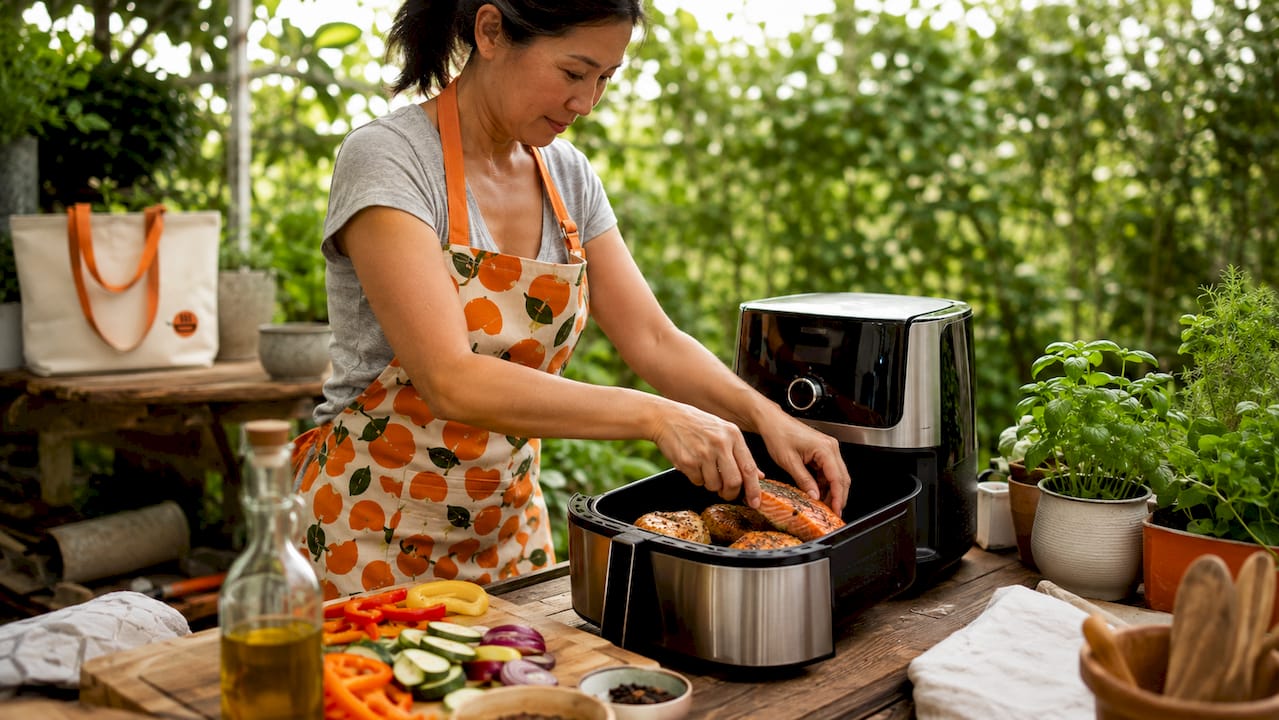
Chicken is the most popular protein for air fryer recipes, and for good reason. Wings, thighs, breasts, and nuggets all cook well at temperatures between 375°F and 400°F. Chicken must reach 165°F internally before serving. A meat thermometer takes the guesswork out of this completely.
Chicken nuggets are a weeknight staple that take roughly 15 minutes total, including 5 minutes of prep and 10 minutes of cook time. Rotisserie-style air fryers handle whole birds with ease, producing skin that rivals a restaurant result.
Salmon and seafood
Salmon fillets cook in about 10–12 minutes at 400°F and come out with a lightly crisped exterior and a tender center. Shrimp takes even less time, often finishing in 6–8 minutes. Both proteins benefit from a light brush of olive oil and simple seasoning before cooking.
Steak and beef
A rib-eye steak at 400°F reaches medium-rare in about 10–12 minutes, depending on thickness. The air fryer produces a crust similar to a cast-iron sear without the smoke or splatter. Burgers and meatballs also perform well, cooking evenly without the need to flip constantly.
Pro Tip: Cook in batches rather than crowding the basket. Overcrowding blocks hot air circulation and produces steamed, soggy food instead of crispy results.
3. Vegetable and side dish air fryer meals
Vegetables are one of the most underrated categories for air fryer cooking. The high-heat circulation caramelizes natural sugars quickly, producing a roasted flavor that takes 30–40 minutes in a conventional oven but only 10–15 minutes in an air fryer.
Best vegetables for air frying
- Brussels sprouts: Halved, tossed in olive oil and salt, cooked at 375°F for 12–15 minutes until the outer leaves are crispy.
- Asparagus: Thin spears cook in 7–9 minutes at 400°F. Thick spears need 10–12 minutes.
- Green beans: 8–10 minutes at 375°F produces a tender-crisp texture that holds up well as a side.
- Zucchini chips: Sliced thin, lightly breaded, and cooked at 400°F for 10–12 minutes for a satisfying crunch.
- Carrots: Cut into coins or sticks, 12–15 minutes at 380°F with a drizzle of honey and thyme.
Seasoning and layering
Seasoning vegetables before air frying makes a significant difference. A light coat of oil helps spices adhere and promotes browning. Garlic powder, smoked paprika, and lemon zest are reliable combinations that work across most vegetables. Avoid wet marinades, which create steam and prevent crisping.
Layering vegetables in a single layer is non-negotiable for good results. Stacking them causes uneven cooking and soft spots. If you have a large batch, cook in two rounds rather than one crowded basket.
Pro Tip: Frozen vegetables work well in the air fryer with no thawing required. Add 3–5 minutes to the standard cook time and shake the basket halfway through for even browning.
4. Frozen and convenience food air fryer meals
The air fryer genuinely improves frozen food. Where a microwave produces soggy textures and an oven takes 20–25 minutes to preheat and cook, an air fryer delivers crispy results in a fraction of the time with no preheating delay beyond 2–3 minutes.
Best frozen foods to air fry
- Cauliflower gnocchi: 15 minutes at 400°F produces a crispy exterior that a stovetop pan rarely achieves.
- Personal pizzas: 6–8 minutes at 375°F gives a crust that is genuinely crispy rather than soft and chewy.
- Frozen chickpeas: 15 minutes at 390°F turns them into a crunchy, protein-rich snack.
- Frozen zoodles (zucchini noodles): 8–10 minutes at 400°F removes excess moisture and creates a pasta-like texture.
- Frozen french fries and onion rings: 12–15 minutes at 400°F, far crispier than oven-baked versions.
- Frozen egg rolls and spring rolls: 8–10 minutes at 390°F for a shatteringly crispy shell.
Safety and packaging notes
Always check frozen food packaging before air frying. Some items are designed for oven or microwave use only and may contain materials that are not safe for air fryer temperatures. Remove all plastic wrapping and cardboard trays before placing food in the basket. Parchment liners designed for air fryers are a cleaner option for sticky or saucy frozen items.
Air fryers excel at producing healthier results from frozen snack foods by using hot air instead of submerging food in oil. That distinction matters for home cooks who want convenience without the calorie load of deep frying.
5. Complete air fryer meals combining proteins and sides
Complete meals cooked entirely in the air fryer are the most efficient use of the appliance. You get a full dinner, protein and vegetables together, in one basket with minimal cleanup. Sheet-pan style air fryer meals are preferred by busy households precisely because they cut both cooking time and dishwashing.
How to layer proteins and vegetables correctly
The biggest mistake home cooks make with complete meals is adding everything to the basket at the same time. Proteins and vegetables have different cook times, and ignoring that difference produces overcooked vegetables or undercooked meat.
- Start with vegetables. Cook them first at 400°F for approximately 3 minutes until they begin to heat through.
- Add the protein on top. Place the protein directly on the partially cooked vegetables. This staged cooking technique allows both components to finish at the same time without either one overcooking.
- Continue cooking together. Finish the combined basket for the remaining cook time, typically 8–15 minutes depending on the protein.
- Rest before serving. Allow breaded or coated foods to rest in the basket for 3 minutes after cooking. This sets the texture and prevents the crust from falling apart when plated.
Complete meal examples
- Salmon and broccoli: Broccoli florets for 3 minutes, then salmon fillet on top for 10–12 minutes at 400°F.
- Chicken thighs and root vegetables: Cubed sweet potato and carrots for 5 minutes, then bone-in thighs on top for 18–22 minutes at 380°F.
- Steak and asparagus: Asparagus spears for 3 minutes, then a seasoned rib-eye on top for 10–12 minutes at 400°F.
- Shrimp stir-fry: Bell peppers and snap peas for 3 minutes, then shrimp on top for 6–8 minutes at 390°F.
Pro Tip: Rest the entire basket, protein and vegetables together, for 2–3 minutes after the cook cycle ends. The residual heat continues cooking gently and the texture of both components improves noticeably.
Air fryer type comparison for complete meals
| Air fryer type | Best for | Capacity advantage |
|---|---|---|
| Single basket | Proteins, sides, small complete meals | Compact, fits 2–3 servings |
| Dual basket | Complete meals with separate timing | Cooks two components simultaneously |
| Oven-style | Sheet-pan dinners, batch cooking | Multiple racks for larger quantities |
| Rotisserie | Whole poultry, roasts | Even rotation for uniform cooking |
| Paddle-style | Stir-fry meals, grains | Automatic stirring prevents sticking |
6. Choosing the right air fryer type for your meal needs
The appliance you own shapes which air fryer meal ideas are practical for your household. There are five primary air fryer types, and each one has a clear strength.
Five primary air fryer types exist: basket-style single, basket-style dual, oven-style, paddle, and rotisserie. Dual-basket units are the strongest choice for complete meals because they let you cook proteins and vegetables at different temperatures simultaneously. That eliminates the staged cooking workaround entirely.
Oven-style air fryers use multiple racks and handle batch cooking better than any basket model. If you regularly cook for four or more people, an oven-style unit saves significant time. Paddle-style models are the right pick for stir-fry meals and dishes that need constant movement, since the paddle stirs food automatically throughout the cook cycle.
For home cooks focused primarily on proteins and simple sides, a single basket model in the 4–6 quart range covers most needs. Rotisserie models are worth the investment only if you cook whole chickens or large roasts regularly. Capacity, cooking flexibility, and your typical meal size are the three factors that should drive your decision.
Checking air fryer cooking times for your most common recipes before buying an appliance is a practical step that most home cooks skip. Knowing that salmon takes 10–12 minutes and Brussels sprouts take 12–15 minutes tells you whether a 4-quart basket fits your needs or whether you need a larger oven-style unit.
Key takeaways
Simple ingredients and minimal steps produce the most reliable air fryer meals, and matching your appliance type to your meal category is the single most effective way to get consistent results every time.
| Point | Details |
|---|---|
| Four meal categories | Proteins, vegetable sides, frozen foods, and complete meals cover every air fryer use case. |
| Internal temperature matters | Chicken must reach 165°F; use a meat thermometer for every protein cook. |
| Staged cooking for complete meals | Start vegetables 3 minutes early, then add protein on top to finish together. |
| Batch cooking beats crowding | Cook in two rounds rather than one full basket to get crispy, even results. |
| Match appliance to meal type | Dual-basket units suit complete meals; oven-style units suit batch cooking for larger households. |
What I have learned from cooking every type of air fryer meal
By K. Connors
Most home cooks treat the air fryer as a reheating device. That is the biggest waste of a genuinely capable appliance I have seen in years of cooking. The real value is in scratch-made proteins and vegetables, not frozen snacks.
The lesson that took me longest to accept is that simplicity wins every time. A chicken thigh with olive oil, garlic powder, and salt beats an elaborate marinade in the air fryer almost every time. The high heat does the heavy lifting. Complexity in the seasoning rarely adds enough to justify the extra prep.
Batch cooking changed how I use the appliance entirely. I cook proteins in two rounds on Sunday, store them, and build quick meals throughout the week. A dual-basket model made that process faster, but even a single-basket unit works if you plan the sequence. The weeknight dinner efficiency you gain from batch cooking is real and measurable in minutes saved per day.
The one mistake I see constantly is skipping the rest period after cooking. Three minutes in the basket after the cycle ends makes a noticeable difference in texture, especially for breaded items. Most people plate immediately and wonder why the crust is soft. Patience at the end of the cook is as important as temperature at the start.
If you are choosing an appliance, buy for your most common meal type, not your most ambitious one. A 4.5-quart basket handles two servings of protein and a vegetable side without issue. A dual-basket unit is worth the extra cost only if you regularly cook complete meals for a family. Buy the appliance that fits your actual cooking habits, not the one with the most features.
— K. Connors
Kitchendevotion’s picks for quick, healthy air fryer cooking
Kitchendevotion curates air fryers and kitchen appliances specifically for home cooks who want reliable results without spending hours in the kitchen. The collection covers every meal category covered in this article, from compact single-basket models suited to proteins and sides, to larger oven-style units built for batch cooking and complete meals.
Busy home cooks will find the time-saving appliances list a practical starting point for building a kitchen that works as hard as they do. For cooks ready to choose a specific model, the air fryer category page at Kitchendevotion filters by capacity, type, and budget so you can match the appliance to your actual meal needs quickly.
FAQ
What types of meals can you cook in an air fryer?
Air fryers handle four main meal categories: proteins like chicken and salmon, vegetable sides, frozen convenience foods, and complete multi-component meals combining proteins and vegetables in one basket.
How long do air fryer meals take to cook?
Complete air fryer meals cook in 12–30 minutes, which is significantly faster than a traditional oven for most recipes.
What is the best food to cook in an air fryer?
Chicken is the most reliable protein for air frying, reaching a safe internal temperature of 165°F in about 15 minutes with a crispy exterior that is difficult to replicate in a standard oven.
How do I prevent air fryer meals from turning out soggy?
Avoid overcrowding the basket and cook in batches when needed. Crowding blocks hot air circulation and produces steamed, soft food rather than crispy results.
Which air fryer type is best for complete meals?
Dual-basket air fryers are the strongest choice for complete meals because they allow proteins and vegetables to cook at different temperatures simultaneously, eliminating the need for staged cooking.




No comment