
A cohesive kitchen tool collection is defined as a curated set of durable, multipurpose tools that work together visually and functionally to support your cooking workflow. Most home cooks accumulate tools randomly over years, ending up with cluttered drawers and mismatched gadgets that slow them down. The better approach is deliberate curation: selecting tools with intention, organizing them by cooking zone, and maintaining the collection over time. This guide covers the foundational tools to own, how to organize kitchen tools for maximum efficiency, design tips for visual harmony, and a maintenance system that keeps your collection lean and purposeful.
What essential kitchen tools should every home cook start with?
The foundational “Big 4” tools are a chef’s knife, cutting board, cast iron skillet, and instant-read thermometer. Together, they cost under $100 and cover roughly 90% of typical home cooking tasks. That ratio matters: before spending money on specialty gadgets, locking in these four tools gives you a reliable base to build from.
Once the Big 4 are in place, the next layer of tools fills out the gaps in your daily cooking workflow. These include:
- Silicone spatula for stirring, folding, and scraping bowls clean
- Tongs (12-inch, locking) for flipping proteins and tossing pasta
- Ladle for soups, stews, and sauces
- Balloon whisk for emulsifying dressings and beating eggs
- Y-peeler for vegetables and citrus zest
- Box grater for cheese, ginger, and hard vegetables
- Colander for draining pasta and rinsing produce
These seven tools, added to the Big 4, give you coverage across prep, cooking, and finishing tasks without redundancy.
A complete 15-piece essential collection at mid-range quality typically costs $250 to $400. That budget gets you tools that last years rather than months, which matters for cohesion: a collection built on quality pieces stays consistent longer.
| Tool | Primary use | Estimated cost |
|---|---|---|
| Chef’s knife (8-inch) | Chopping, slicing, dicing | $30–$60 |
| Cast iron skillet (10-inch) | Searing, baking, stovetop to oven | $25–$45 |
| Instant-read thermometer | Meat, candy, bread doneness | $15–$30 |
| Silicone spatula set | Stirring, folding, scraping | $12–$20 |
| Balloon whisk | Emulsifying, beating, blending | $8–$15 |
Pro Tip: Avoid prepackaged utensil sets as your starting point. Prepackaged sets often include tools you will never use while missing the specific ones you need. Start with a high-quality core set and add individual tools based on how you actually cook.
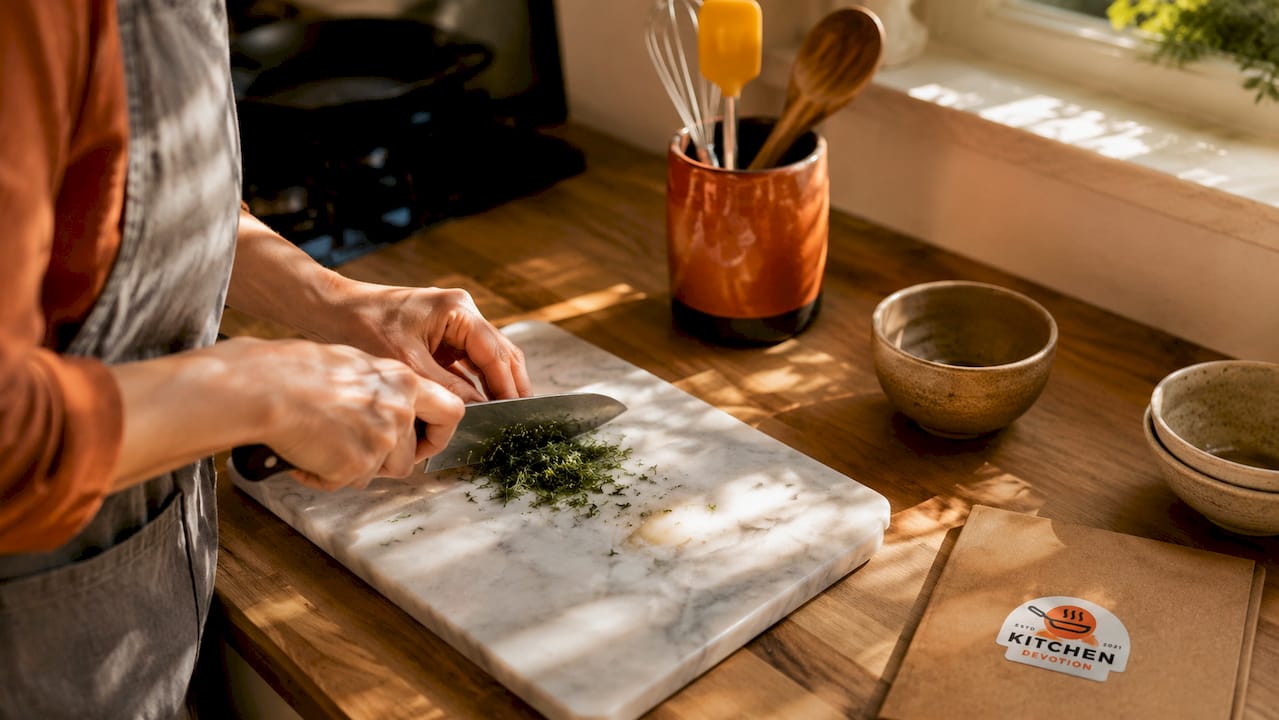
When selecting tools, prioritize materials that age well together. Stainless steel, silicone, and hardwood are the three most compatible material families for a cohesive look and consistent durability. Mixing these intentionally creates a collection that feels considered rather than assembled by accident.
Kitchendevotion’s prep tools guide for beginners offers a practical starting point if you are building your first collection from scratch.
How to organize kitchen tools for cohesion and accessibility
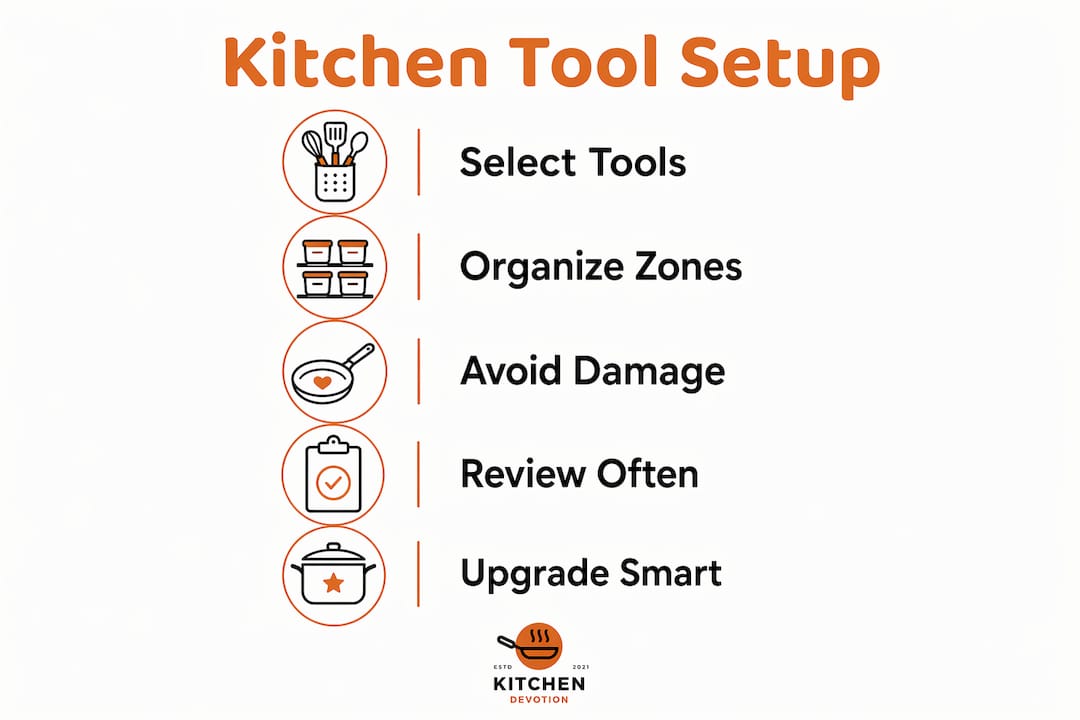
Tool organization is the second pillar of a cohesive collection. A well-selected set of tools loses half its value if you cannot find what you need quickly during cooking. The goal is a storage system where every tool has a designated place and returns to that place after use.
Metal tools should never touch each other in storage. Contact between metal surfaces causes scratching, dulling, and finish damage over time. Modular, adjustable drawer dividers solve this by giving each tool its own slot. This is not just about aesthetics: protecting edges and finishes extends the lifespan of quality tools significantly.
The most effective organizational framework is the cooking zone system. Organizing tools by zone means placing prep tools near the cutting board, cooking tools near the stove, and cleaning tools near the sink. This reduces the number of steps you take during cooking and lowers the mental load of remembering where things are.
Common storage mistakes to avoid:
- Overcrowding drawers so tools stack on top of each other, causing damage and making retrieval slow
- Storing knives loose in a drawer without a block, guard, or magnetic strip
- Keeping rarely used tools in prime real estate spots that should hold daily-use items
- Mixing tool categories without a system, so spatulas and whisks compete for the same space
Pro Tip: Use a wall-mounted rail with S-hooks or a countertop crock for the six tools you reach for every day. Keeping high-frequency tools visible and within arm’s reach of the stove cuts prep time and keeps your most-used pieces from getting buried.
Wall rails and countertop crocks also serve a design function. When your most-used tools are on display, their visual consistency becomes part of your kitchen’s aesthetic. This is where cohesive accessories and matching kitchen tools start to reinforce each other: the storage system and the tools themselves become one unified visual statement.
For deeper guidance on cabinet organization, Kitchendevotion’s resource on keeping cabinets organized covers shelf placement, drawer systems, and cabinet door storage in detail.
What practices help maintain and evolve your collection over time?
A cohesive kitchen tool collection is not a one-time project. It requires periodic review to stay lean, functional, and intentional. Without maintenance, collections drift back toward clutter through gift accumulation, impulse purchases, and tools that outlive their usefulness.
Conducting a manual audit every six months is the most effective maintenance practice. The audit takes about 20 minutes and answers three questions for every tool: Did I use this in the last six months? Is it still in good condition? Does it duplicate something else I own?
A structured audit process looks like this:
- Pull everything out of drawers, crocks, and cabinets so you see the full collection at once.
- Sort into three piles: keep, donate or give away, and replace.
- Assess condition on kept tools: check for warped handles, dull edges, cracked silicone, or rust.
- Identify gaps by thinking through your last month of cooking and noting any task where you improvised with the wrong tool.
- Make one deliberate purchase to fill the most important gap before the next audit cycle.
This process prevents the passive accumulation that kitchen experts consistently identify as the primary cause of cluttered, incoherent collections. The shift from reactive buying to deliberate selection is the single biggest mindset change that separates a purposeful collection from a junk drawer.
Pro Tip: When adding a specialty tool, apply the “one in, one out” rule. Before a new tool earns a permanent spot, identify which existing tool it replaces or whether it fills a genuine gap. This keeps the collection size stable and every piece earning its place.
Adding specialty tools works best when they extend the collection’s range without overlapping existing tools. A spider strainer, a fish spatula, or a bench scraper each handles tasks that no other tool covers well. These are worth adding once the core collection is solid. A mandoline slicer or a mortar and pestle make sense for cooks who work with specific cuisines regularly. The key is that each addition serves a defined purpose in your actual cooking, not a hypothetical one.
Investing in fewer, better-made multipurpose tools reduces clutter and improves the cooking experience over time. Ten tools you trust completely outperform thirty tools you reach for reluctantly.
What design tips make your kitchen tool collection look cohesive?
Visual cohesion in a kitchen tool collection comes from three design decisions: material consistency, color coordination, and storage presentation. Getting all three right creates a kitchen that looks intentional rather than assembled over time from random purchases.
Material consistency is the foundation. Choosing tools within two or three compatible material families creates immediate visual harmony. The most popular combinations are stainless steel with silicone accents, matte black with wood handles, and natural wood with brushed metal. Mixing five different handle materials across ten tools creates visual noise even when the tools are high quality.
Matching colors and materials across tools and storage containers creates a stylish, cohesive aesthetic without sacrificing function. This means your utensil crock, drawer dividers, and cutting board should share a finish or color family with your tools. A white marble cutting board, a white ceramic crock, and tools with light wood handles create a unified palette that reads as designed rather than default.
Design tips for visual cohesion:
- Choose a two-color palette for your tool collection and stick to it. Stainless and black is the most versatile combination for modern kitchens.
- Coordinate storage containers with tool finishes. A matte black crock with matte black-handled tools creates a clean, consistent look.
- Use wood accents deliberately. One or two wood-handled pieces add warmth without visual chaos. Five different wood tones create the opposite effect.
- Keep countertop tools minimal. Display only the tools you use daily. Everything else lives in a drawer or cabinet.
- Replace worn pieces promptly. A cracked handle or faded silicone disrupts the visual consistency of an otherwise cohesive set.
Minimalism reinforces cohesion more than any single design choice. A countertop with three well-chosen tools looks more intentional than one with twelve mismatched gadgets. The 2026 buying guide from Kitchendevotion covers how to evaluate tool sets for both design consistency and practical coverage before you buy.
The practical test for any design decision is simple: does this tool look like it belongs with the others? If the answer is no, it either needs a different placement or a different purchase.
Key Takeaways
A cohesive kitchen tool collection requires deliberate selection, zone-based organization, and a six-month audit cycle to stay functional, lean, and visually consistent.
| Point | Details |
|---|---|
| Start with the Big 4 | A chef’s knife, cutting board, cast iron skillet, and thermometer cover 90% of cooking tasks for under $100. |
| Build to 15 pieces | A complete mid-range collection of 15 tools costs $250–$400 and covers all core cooking, prep, and finishing needs. |
| Organize by cooking zone | Place prep tools near the cutting board, cooking tools near the stove, and use modular dividers to separate metal pieces. |
| Audit every six months | Remove unused tools, assess condition, and make one deliberate purchase to fill the most important gap. |
| Unify materials and colors | Choose two or three compatible material families and coordinate storage containers with tool finishes for visual cohesion. |
Why I stopped buying kitchen tools and started curating them
For years, my kitchen drawers were a graveyard of good intentions. A garlic rocker I used twice, four spatulas in three different materials, a mandoline still in its box. Every tool had a story about why I bought it. None of them had a story about why I kept it.
The shift happened when I pulled everything out and laid it on the counter. Seeing the full collection at once was clarifying in a way that opening a drawer never is. I had tools I genuinely loved and reached for every day, and I had tools that existed because I had not made a decision about them yet. That is not a collection. That is deferred decision-making stored in a drawer.
What I found after committing to deliberate curation is that cooking gets easier. Not because the tools are better, though they are, but because the friction disappears. When every tool has a place and every place has a tool you trust, the kitchen stops working against you. You stop improvising with the wrong spatula because the right one is exactly where you left it.
The hardest part is resisting the pull of novelty. Kitchen tools are marketed aggressively, and the promise of a single gadget solving a specific problem is genuinely appealing. My rule now is simple: a new tool has to replace something or fill a gap I have actually encountered in the last six months. That filter eliminates about 80% of the purchases I would have made before.
The other thing I underestimated was how much visual consistency matters to the cooking experience. A kitchen that looks organized feels organized, and that feeling changes how you approach cooking. It sounds superficial until you experience the difference between cooking in a cluttered space and cooking in one where everything is considered.
— K. Connors
Kitchendevotion’s curated picks for your kitchen collection
Building a collection that balances style and function is easier when you have a reliable starting point for product selection and organization guidance.

Kitchendevotion brings together curated product selections, buying guides, and organization resources designed specifically for home cooks. The stylish kitchen tools checklist gives you a ready-made framework for building a visually cohesive set from the ground up. For cooks ready to extend their collection into appliances, the cookware sets catalog covers options across materials, sizes, and price points. Every product featured on Kitchendevotion is selected for the balance of design quality and practical performance that a cohesive kitchen collection demands.
FAQ
What is a cohesive kitchen tool collection?
A cohesive kitchen tool collection is a curated set of durable, multipurpose tools that share compatible materials, colors, and functions. The collection is organized deliberately to support cooking workflow rather than accumulated randomly over time.
How many kitchen tools does a home cook actually need?
A complete essential collection of about 15 pieces covers all core cooking, baking, and finishing tasks. The foundational Big 4 tools alone handle roughly 90% of typical home cooking needs.
How do I keep metal kitchen tools from scratching each other?
Use modular, adjustable drawer dividers that assign each metal tool its own slot. Direct contact between metal surfaces causes scratching and dulling, so separation in storage is the most effective protection.
How often should I audit my kitchen tool collection?
Audit your collection every six months. Pull everything out, assess condition and usage, and remove or donate tools you have not used in that period.
What is the best way to create visual cohesion in kitchen tools?
Choose tools within two or three compatible material families, such as stainless steel with silicone or matte black with wood handles, and coordinate your storage containers with the same color palette.




No comment